


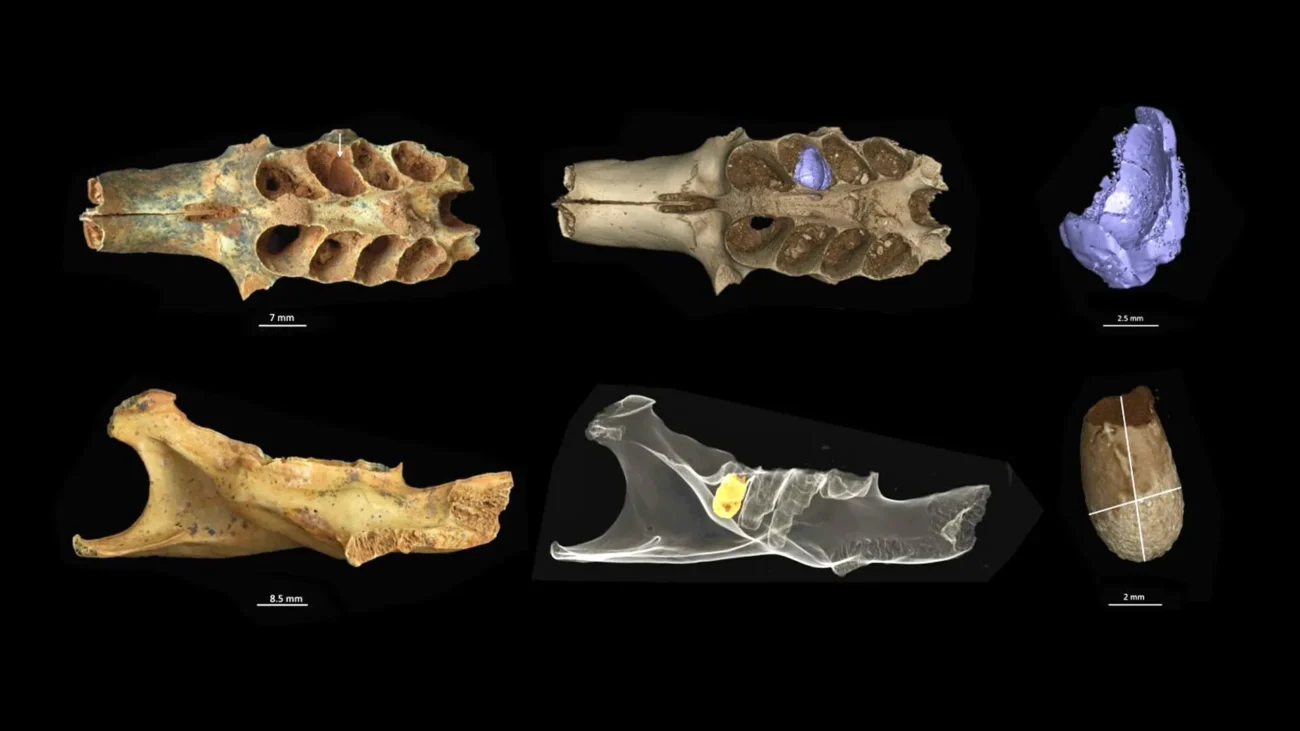
The silent chambers of a Caribbean cave have yielded a remarkable scientific narrative, piecing together a millennia-old story of predation, fossilization, and an extraordinary adaptation by burrowing bees. What began as a simple riddle – a barn owl, a hutia, and a bee entering a cave, with only two emerging – has blossomed into a profound discovery published in the esteemed journal Proceedings of the Royal Society B. The research unveils how the fossilized remains of a rodent, once prey for a giant barn owl, became the unintended nurseries for a species of burrowing bee, offering an unprecedented glimpse into ancient ecosystems and evolutionary ingenuity.
The Predatory Past: A Cave as a Larder
The foundational event in this prehistoric drama likely transpired thousands of years ago on the island of Hispaniola, the second-largest island in the Caribbean, shared by Haiti and the Dominican Republic. Giant barn owls, formidable avian predators of their time, utilized caves like the Cueva de Mono in the southern Dominican Republic as secure feeding grounds and nesting sites. These owls, known for their efficient hunting strategies, would capture prey and transport it back to their lairs to feed their young.
Among their common prey were hutias, a diverse group of large rodent species native to the Caribbean. The hutia mentioned in this account, a species now extinct on Hispaniola, would have been a substantial meal for a giant barn owl. The scenario described by paleontologists suggests a typical hunting expedition: an owl carrying a captured hutia into the cave. The owl would then dispatch its prey, and the remains, including bones, would be left behind as the owl attended to its offspring. Over generations, these feeding sites accumulated substantial deposits of skeletal material, interspersed with the cave’s natural clay-rich silt.
The Accidental Architect: A Bee’s Ingenious Nesting Strategy
Centuries, if not millennia, after the owl’s predatory reign subsided and the hutia’s remains began their slow transformation into stone, a new inhabitant entered the scene. A burrowing bee, driven by the primal instinct to reproduce, sought a suitable location to construct its nest. These bees, unlike their more commonly known solitary or social counterparts, are ground-nesters, excavating tunnels in soil or other soft substrates.
The bee, drawn to the darker, more sheltered recesses of the cave, began to excavate into the fine clay-rich silt that had accumulated. Its efforts were abruptly halted when it encountered the fossilized jawbone of a hutia. This encounter, however, proved fortuitous. The hutia’s jaw, like all mammalian jaws, contained alveoli – the small sockets where teeth were once firmly anchored. While the teeth themselves had long since vanished, these empty sockets remained.
To the bee, these alveoli presented an ideal, pre-fabricated nesting chamber. Their size, a fortunate coincidence, closely matched the dimensions required for a bee’s brood cell. Instead of expending energy and time digging a new tunnel from scratch in the often-challenging karst terrain outside, the bee found a ready-made, protected cavity. It proceeded to line the alveolus with a secretion, likely a waxy substance, to create a waterproof and structurally sound chamber for its eggs and developing larvae.
The Unearthing: A Paleontologist’s Keen Eye
The intricate fossil record, preserving this ancient interaction, might have remained hidden had it not been for the meticulous work of Lazaro Viñola Lopez, who excavated the fossils during his doctoral studies at the Florida Museum of Natural History. His research focused on the hutia species found in the Cueva de Mono, a site he recognized as a significant long-term feeding area for giant barn owls. The sheer volume of hutia fossils recovered from this single location underscored the owls’ consistent use of the cave over vast periods.
During the standard fossil cleaning process, paleontologists typically remove all surrounding sediment from the bone cavities, including the alveoli. However, Viñola Lopez, driven by his specific interest in the hutia species, adopted a more detailed observational approach. He noticed that one particular cavity within a hutia jawbone possessed an unusually smooth inner surface, unlike the rough, porous texture of bone.
This anomaly sparked his curiosity, drawing a parallel to a previous discovery he had made in Montana in 2014. While excavating dinosaur fossils, he and his colleagues had found wasp cocoons embedded within fossilized material. Initially, he theorized a similar explanation for the smooth-walled cavities in the hutia jaw – that they were the remnants of wasp nests. He even contemplated a brief scientific note on the presence of wasp nests within the mandibles.
The Correction: From Wasps to Bees, a Significant Shift
The hypothesis of wasp nests, while plausible, was challenged by a fellow doctoral student, Mitchell Riegler. Riegler, initially skeptical due to the perceived niche nature of the project, was eventually drawn into the investigation when a former advisor presented him with a week-long paper-writing challenge. This friendly competition spurred a deeper dive into the morphology of the observed structures.
The research team began to scrutinize their findings more closely, consulting literature on ichnofossils – traces of past biological activity. They discovered a crucial discrepancy: wasp nests are typically constructed from chewed plant material and saliva, resulting in rough, irregular walls. The smooth, polished interiors of the cavities found in the hutia fossils were inconsistent with wasp construction.
Further investigation and consultation with experts in modern bee behavior revealed the true identity of the nest builders. Burrowing bees, particularly species that utilize a waxy secretion to line their nests, produce precisely these smooth, waterproof inner surfaces. This critical observation transformed the discovery from a minor finding about insect nesting habits to a significant scientific revelation.
A Rare Behavior: Unprecedented Use of Fossil Structures
The reclassification of the nests from wasp to bee opened a new avenue of scientific inquiry. The documented behavior was not only rare but, in many respects, unprecedented. While there is one other known instance of burrowing bees nesting within a cave environment, there are no prior records of bees utilizing pre-existing fossil structures as nesting sites without significantly altering them. A previous report mentioned bees drilling into human bones, a far more invasive action than simply occupying natural cavities.
The researchers recognized the profound implications of their findings and expanded their study. They meticulously examined geological layers within the cave, consulted with entomologists specializing in modern bee species, and delved deeply into scientific literature. This period of intense research also coincided with a critical moment for the preservation of the site.
A Race Against Time: Rescuing Fossils from Development
The Cueva de Mono faced a grave threat when plans emerged to develop the surrounding land, which included converting the cave into a septic tank. Recognizing the imminent danger to the invaluable fossil record, the research team launched a rapid "rescue mission" to recover as many fossils as possible before the development could proceed. This urgent endeavor ensured that a substantial portion of the cave’s paleontological treasures, including the bee-inhabited fossils, were secured for future study.
Beyond the Jawbone: Diverse Fossil Nests
The final analysis revealed that the bee nesting behavior was not confined to the hutia jawbones. The researchers discovered these remarkable nests embedded in other fossilized remains within the cave. One nest was found within the pulp cavity of a sloth tooth, a testament to the presence of these large mammals in the Caribbean’s prehistoric past before their eventual extinction. Another nest was located within a hutia vertebra, occupying the space that once housed the animal’s spinal cord.
Sophisticated CT scans provided further insights into the nesting patterns. These scans revealed that some cavities contained multiple layers of nests, indicating reuse and efficient resource utilization. Instead of excavating new tunnels, certain bee species would occupy and reuse existing empty cavities, stacking nests one inside another, much like the iconic Russian nesting dolls. In one striking example, six distinct nests were found layered within a single hutia alveolus.
Environmental Pressures: The Karst Landscape and Soil Scarcity
The research team also proposed a compelling environmental explanation for this unusual behavior. The region surrounding the Cueva de Mono is characterized by karst topography – a landscape formed from soluble rocks like limestone, resulting in sharp, rugged terrain. This type of terrain often lacks stable, deep soil deposits.
"The area we were collecting in is karst, so it’s made of sharp, edgy limestone, and it’s lost all of its natural soils," explained Riegler, recalling his own personal experience with the treacherous terrain. "I actually fell on it at one point, so I can tell you all about it."
In such environments, any soil that does accumulate on the surface is prone to erosion and often washes into caves. These sheltered cave environments, therefore, could have provided some of the few viable locations for burrowing bees to establish their nests. The silt deposits within the cave, created by this natural process, offered the necessary substrate for the bees, and the fossilized bones provided the ideal nesting chambers.
A Continuing Legacy: Unlocking More Cave Secrets
The Cueva de Mono continues to be a treasure trove of scientific information. The researchers are actively studying other fossils recovered from the cave, with anticipation for further publications detailing additional discoveries. The work published in Proceedings of the Royal Society B represents a significant step in understanding the intricate interplay between ancient predators, their prey, geological processes, and the remarkable adaptability of life. This extraordinary finding underscores how even the most seemingly desolate or ancient environments can hold profound secrets, revealing the continuous, unexpected ways in which life finds a way to persist and thrive. The cave, once a stark reminder of prehistoric predation, has been revealed as a testament to nature’s enduring capacity for innovation, where the remnants of the past serve as the foundation for new life.

