


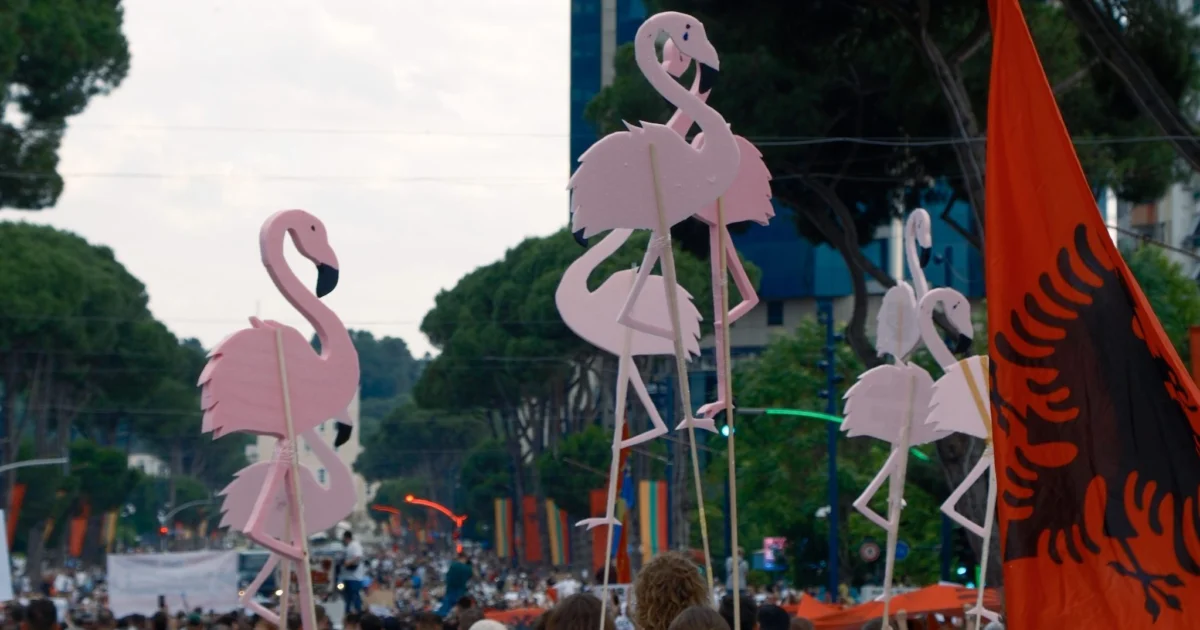
Thousands Rally in Tirana Against Luxury Tourism Development Threatening Pristine Mediterranean Ecosystem
Tirana, Albania – For four consecutive days, the streets of Albania’s capital, Tirana, have been a vibrant testament to public outcry, as thousands of citizens have mobilized to protest the potential destruction of the Vjosa Narta Protected Landscape. This ecologically vital area, considered one of the Mediterranean’s last intact coastal ecosystems, faces an unprecedented threat from a proposed luxury tourism development backed by foreign investors, notably including figures linked to Jared Kushner. The unfolding situation in Tirana transcends a mere environmental dispute, highlighting critical questions of democratic governance, the rule of law, and Albania’s trajectory towards European Union membership.
The Vjosa Narta wetlands are a jewel of biodiversity. They serve as a crucial sanctuary for hundreds of bird species, including the iconic flamingos, and provide a vital habitat for the critically endangered Mediterranean monk seal. Furthermore, the area’s beaches are essential nesting grounds for Loggerhead sea turtles, a species also facing significant global decline. Unlike much of the Mediterranean coastline, which has been heavily altered by development, Vjosa Narta has remained remarkably pristine. Environmental experts warn that any substantial alteration to this delicate ecosystem could trigger cascading, irreversible consequences for the myriad species that depend on it. The delicate balance of this unique natural heritage is precariously poised.
Beyond Ecology: A Fight for Democratic Participation
While the ecological ramifications are undeniably severe, the motivations for the widespread public mobilization extend beyond environmental preservation. The protests in Tirana underscore a more immediate and fundamental concern: the right of citizens to participate in decisions that shape their local environments, the landscapes they cherish, and the future they will bequeath to subsequent generations. This sentiment has been a driving force behind the sustained demonstrations, drawing a diverse cross-section of Albanian society into the public sphere.

The conflict over Vjosa Narta is frequently framed, and often deliberately so, as a binary opposition between conservation and development. This narrative, while politically expedient for certain interests, is fundamentally dishonest. It perpetuates a false dichotomy that casts nature not as the bedrock of prosperity, but as an impediment to it. However, the reality on the ground in Tirana reveals that these conflicts are deeply rooted in fundamental questions of democratic governance. The core issues at stake are: Who holds the ultimate authority over the utilization of shared natural resources? Which interests are prioritized in the decision-making process? And, crucially, whose voices are deemed significant enough to be heard? When the practical answer to these questions is consistently "not yours," the inevitable response is civic organization and public protest.
The Breakdown of the Democratic Pact
At its core, democracy operates on a foundational pact between citizens and their government. Citizens cede a degree of authority to the state in exchange for the responsible stewardship of common assets and resources. Natural heritage, including pristine ecosystems like Vjosa Narta, forms an integral part of this shared inheritance. The current situation in Albania suggests a significant erosion of this pact. Reports indicate a lack of transparency in the disposal of public assets, repeated violations of environmental laws, and a perceived failure of the judiciary to provide effective oversight and recourse. Such breaches of trust inevitably lead to a breakdown of the democratic contract, with public protest emerging as the subsequent and often necessary manifestation of citizen dissent.
The protests, some media outlets have begun to dub the "Flamingo Revolution," are not merely a local Albanian affair. They carry broader implications for the trajectory of environmental protection across Europe. Increasingly, environmental safeguards are being portrayed as obstacles to economic growth, and civil society organizations dedicated to their defense are dismissed as anti-progress radicals. The demonstrations in Tirana serve as a powerful counter-narrative, challenging this prevailing discourse and asserting the fundamental right of citizens to question and resist such assumptions. They demonstrate a growing unwillingness among the populace to passively accept decisions that threaten their natural heritage and their democratic rights.
EU Accession and the Test of Democratic Principles
Albania’s aspirations for European Union membership add another layer of complexity and significance to the unfolding events. The EU accession process is predicated on fundamental criteria that include the rule of law, democratic accountability, and the establishment of effective institutions. These are not merely administrative checkboxes to be ticked but represent the very essence of the political and legal framework upon which the European Union is built. The situation surrounding the Vjosa Narta development raises legitimate concerns about the seriousness with which Albania is upholding these commitments. The transparency, or lack thereof, in the decision-making process, the alleged disregard for environmental regulations, and the public’s struggle to have their voices heard cast a shadow over the nation’s progress towards meeting these crucial accession benchmarks.

The European Commission, in its annual reports on enlargement, consistently emphasizes the importance of good governance and the protection of fundamental rights, including environmental rights. The events in Tirana present a tangible test case for these principles, challenging the EU to assess whether candidate countries are genuinely integrating these values or merely paying lip service to them. The international community, including environmental organizations and human rights advocates, will be closely observing how the Albanian government and EU institutions respond to this multifaceted challenge.
A Chronology of Concern and Mobilization
While the specific timeline of the luxury tourism development proposal is still being scrutinized, public awareness and opposition appear to have coalesced in recent months.
- Initial Proposals and Investor Interest: Reports suggest that plans for a significant tourism development in the Vjosa Narta region have been in discussion for some time, attracting interest from various foreign investors. The involvement of entities linked to Jared Kushner’s investment firm has brought heightened international attention to the project.
- Growing Environmental Concerns: Local and international environmental organizations, including PPNEA (Protection and Preservation of the Natural Environment in Albania) and BirdLife Europe, have been vocal in raising alarms about the potential ecological damage of such a large-scale development in a protected area. They have presented scientific data highlighting the ecological significance of Vjosa Narta.
- Public Mobilization Intensifies: Over the past week, these concerns have translated into sustained street protests in Tirana. What began as a localized expression of dissent has rapidly grown into a significant public demonstration, indicating a widespread sense of unease and a demand for greater accountability. The protests have been characterized by their peaceful nature but also by their unwavering determination.
- Media Coverage and International Scrutiny: The "Flamingo Revolution," as some have termed it, has garnered increasing media attention, both domestically and internationally. This heightened visibility is crucial for amplifying the voices of the protestors and for putting pressure on the authorities to address the concerns raised.
Supporting Data and Ecological Significance
The Vjosa Narta Protected Landscape is not merely a picturesque stretch of coastline; it is a vital ecological corridor and a biodiversity hotspot.
- Biodiversity Hotspot: The wetlands host an estimated 250 species of birds, many of which are migratory and rely on Vjosa Narta as a crucial stopover point. This includes significant populations of Greater Flamingo (Phoenicopterus roseus), whose presence gives the protests their evocative name.
- Endangered Species Haven: The area provides a critical habitat for the Mediterranean monk seal (Monachus monachus), one of the world’s most endangered marine mammals. The presence of monk seals in such close proximity to human development underscores the fragility of their existence and the imperative to protect their homes.
- Loggerhead Turtle Nesting Sites: The beaches of Vjosa Narta are identified as important nesting sites for the Loggerhead sea turtle (Caretta caretta). The survival of this ancient species is directly linked to the preservation of undisturbed nesting habitats, free from the light pollution and physical disruption that large-scale development can bring.
- Unique Hydrological System: The Vjosa Narta is part of a larger river basin system, and its wetlands play a crucial role in maintaining water quality, flood regulation, and groundwater recharge for the surrounding region. Any disruption to this delicate hydrological balance could have far-reaching consequences.
- Comparison to European Coastal Development: Statistics from the European Environment Agency consistently show a trend of significant coastal habitat loss across Europe due to urbanization and tourism development. Vjosa Narta represents a rare opportunity to preserve such an ecosystem, rather than succumbing to the patterns of degradation seen elsewhere. For instance, a significant portion of Mediterranean coastlines have already been heavily urbanized, with estimates suggesting that over 50% of the Mediterranean coastline is classified as urbanized or subject to high development pressure. Preserving Vjosa Narta stands as a stark contrast to this prevailing trend.
Potential Reactions and Official Responses (Inferred)

While direct official statements from the Albanian government or the involved investors may be limited at this early stage, certain reactions can be logically inferred based on the context:
- Governmental Position: The Albanian government is likely to face pressure to balance its commitment to attracting foreign investment with its obligations to environmental protection and democratic principles. They may issue statements emphasizing the economic benefits of the development while potentially promising adherence to environmental regulations, though critics will be watching closely for concrete actions.
- Investor Stance: Foreign investors, particularly those with international profiles, are often keen to maintain a positive public image. They may release statements highlighting their commitment to sustainable development practices and adherence to local laws, while downplaying or refuting concerns about ecological impact. However, the involvement of figures associated with substantial international investment portfolios means that public scrutiny will be intense.
- Environmental Organizations: Organizations like PPNEA and BirdLife Europe are expected to continue their advocacy efforts, providing scientific evidence, lobbying policymakers, and mobilizing public support. They will likely call for a thorough and independent environmental impact assessment and advocate for alternative development models that do not compromise the integrity of the protected landscape.
- International Bodies: The European Union, given its accession criteria, will likely monitor the situation closely. They may issue statements urging transparency and adherence to the rule of law, potentially linking the outcome to Albania’s progress in its EU integration path.
Broader Implications and Analysis
The events in Tirana serve as a microcosm of a global tension between economic development imperatives and the urgent need for environmental conservation. The "Flamingo Revolution" is a powerful demonstration of how citizens are increasingly willing to challenge top-down development decisions that they perceive as undermining both their natural heritage and their democratic rights.
The narrative of "conservation versus development" is a powerful tool used to silence dissent and legitimize environmentally destructive projects. By framing environmental protection as an obstacle to prosperity, proponents of such projects can garner support from those seeking economic advancement. However, this framing ignores the fundamental truth that healthy ecosystems are the very foundation of sustainable economic activity and human well-being. The destruction of natural capital – the clean air, water, fertile soil, and biodiversity – ultimately undermines long-term prosperity.
The situation in Albania also highlights the critical role of independent media and civil society in holding power to account. The willingness of some media outlets to label the protests the "Flamingo Revolution" signifies a recognition of the broader significance of these events. It signals a pushback against the narrative that citizens will passively accept decisions that threaten their environment and their democratic voice.
Ultimately, the outcome of the Vjosa Narta situation will have far-reaching implications, not only for Albania but for the wider European region. It will be a test of whether governments can truly embrace sustainable development models that integrate environmental protection and democratic participation, or whether the allure of short-term economic gains will continue to lead to the irreversible degradation of invaluable natural heritage. The image of flamingos wading in pristine wetlands, monk seals resting on undisturbed beaches, and turtles nesting in safety are not abstract ideals; they are tangible realities that are still possible because a coastline was protected, and because, in Tirana, people are standing up and insisting that it must remain that way. The fight for Vjosa Narta is a fight for a sustainable future, a fight for democratic principles, and a fight for the very soul of a nation.

