


Maryland, recognized as the fifth greenest state, offers a rich tapestry of habitats that support a diverse avian population, including eight distinct species of woodpeckers. These vibrant and energetic birds, known for their striking plumage and industrious nature, play a crucial role in forest ecosystems. This comprehensive exploration delves into the world of Maryland’s woodpeckers, examining their unique characteristics, preferred habitats, dietary habits, and the ecological significance they hold within the Old Line State.
The Woodpecker’s Vital Role in Maryland’s Ecosystems
Woodpeckers are more than just visually appealing birds; they are essential architects of their environment. Through their constant drumming and excavation, they create cavities that serve as crucial nesting sites and shelters for countless other species, from small mammals and reptiles to other bird species that cannot excavate their own homes. Their foraging habits also contribute to forest health by controlling insect populations, particularly those that can damage trees. The presence and health of woodpecker populations can therefore serve as an indicator of the overall well-being of Maryland’s forested landscapes.
A Closer Look at Maryland’s Eight Woodpecker Species
Maryland is home to a fascinating array of woodpeckers, each with its own specialized niche and ecological contribution. Understanding these species provides a window into the intricate workings of the state’s natural heritage.
1. The Red-Cockaded Woodpecker: A Pine Forest Specialist
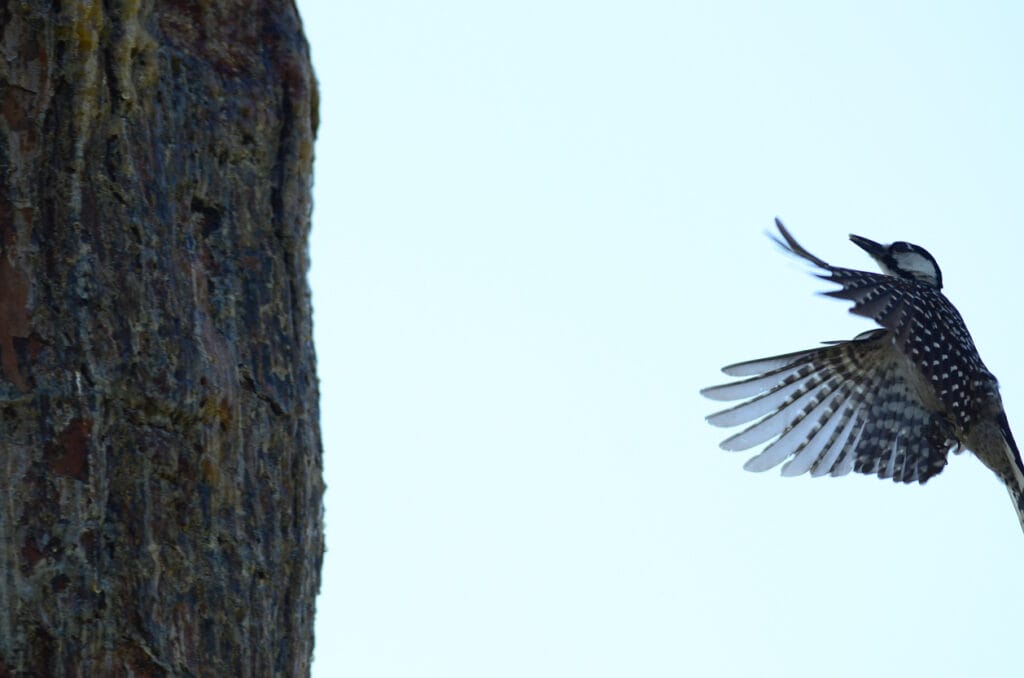
The Red-Cockaded Woodpecker (Picoides borealis) is a species of significant conservation concern, and while its primary range is further south, its presence in Maryland, particularly in specific longleaf pine ecosystems, is noteworthy. This small to medium-sized woodpecker is distinguished by a subtle red streak, or "cockade," on each side of its head, a feature most visible in males. Its plumage is predominantly black and white, with a striking black and white barred back and a black cap, complemented by white cheeks.
A defining characteristic of the Red-Cockaded Woodpecker is its obligate relationship with mature pine forests, particularly those dominated by longleaf pines. These birds excavate their nesting cavities exclusively in living pine trees, a process that is often facilitated by a fungal disease known as Red Heart Rot. This fungus softens the heartwood of the tree, making excavation more manageable for the woodpecker’s chisel-like bill. Their diet consists primarily of insects, such as ants, beetles, and caterpillars, which they glean from the bark and cambium of pine trees. They also supplement their diet with pine seeds and mast.
The conservation status of the Red-Cockaded Woodpecker is a critical issue. Habitat loss due to logging, development, and changes in fire regimes has led to significant population declines across its range. In Maryland, efforts to conserve and restore suitable longleaf pine habitats are vital for the survival of any resident populations. The species’ reliance on living trees for nesting makes it particularly vulnerable to habitat degradation.
2. The Yellow-Bellied Sapsucker: A Unique Sap-Drinker
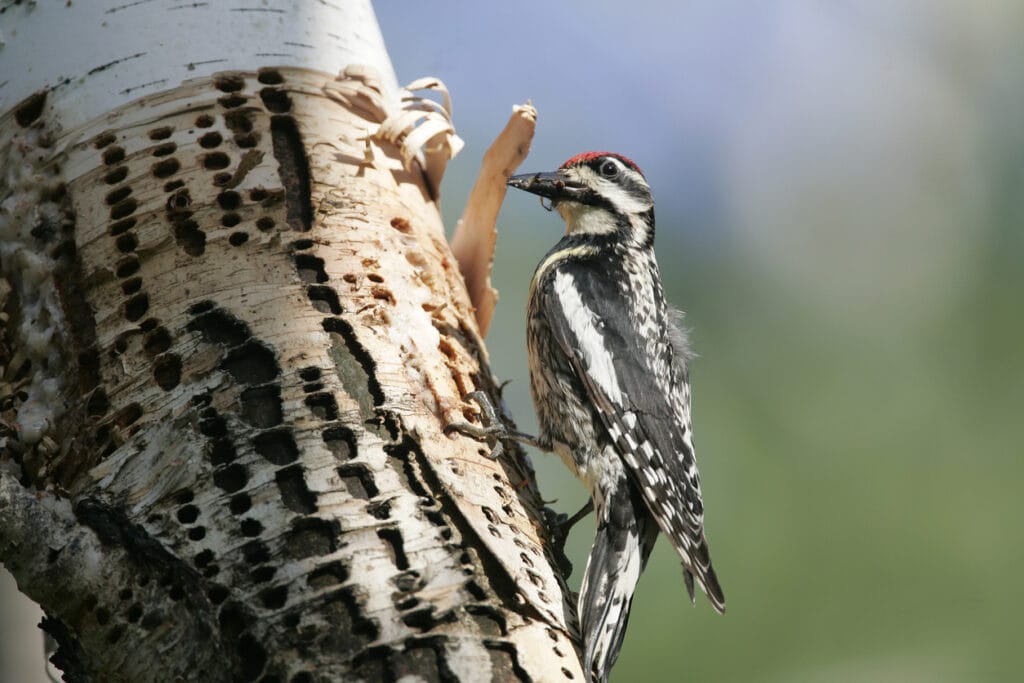
The Yellow-Bellied Sapsucker (Sphyrapicus varius) is a migratory species that can be observed in Maryland during its spring and fall migrations, and sometimes overwintering. Despite its name, the "yellow belly" is often a pale yellow, and the bird is predominantly black and white with distinctive white wing patches and a bold red forehead. Males also display a bright red throat, while females have a white throat.
These woodpeckers exhibit a unique feeding strategy. Instead of solely relying on insects found in tree bark, they drill small, neat, horizontal rows of holes, or "wells," into the bark of various tree species to feed on the sap that oozes out. Their specially adapted, brush-like tongues are perfect for lapping up this sugary liquid. They also consume the insects and ants that are attracted to the sap. Preferred host trees include yellow birch, sugar maple, red maple, and paper birch.
The sapsucker’s sap-drilling creates microhabitats that benefit other organisms. The wells can provide food for other birds, insects, and even bats, and can also serve as entry points for fungal infections that can eventually lead to tree decay, creating future cavity nesting opportunities. Their migratory nature means their presence in Maryland is seasonal, but their impact on the forest ecosystem is significant during their stay.
3. The Hairy Woodpecker: A Forest Dweller
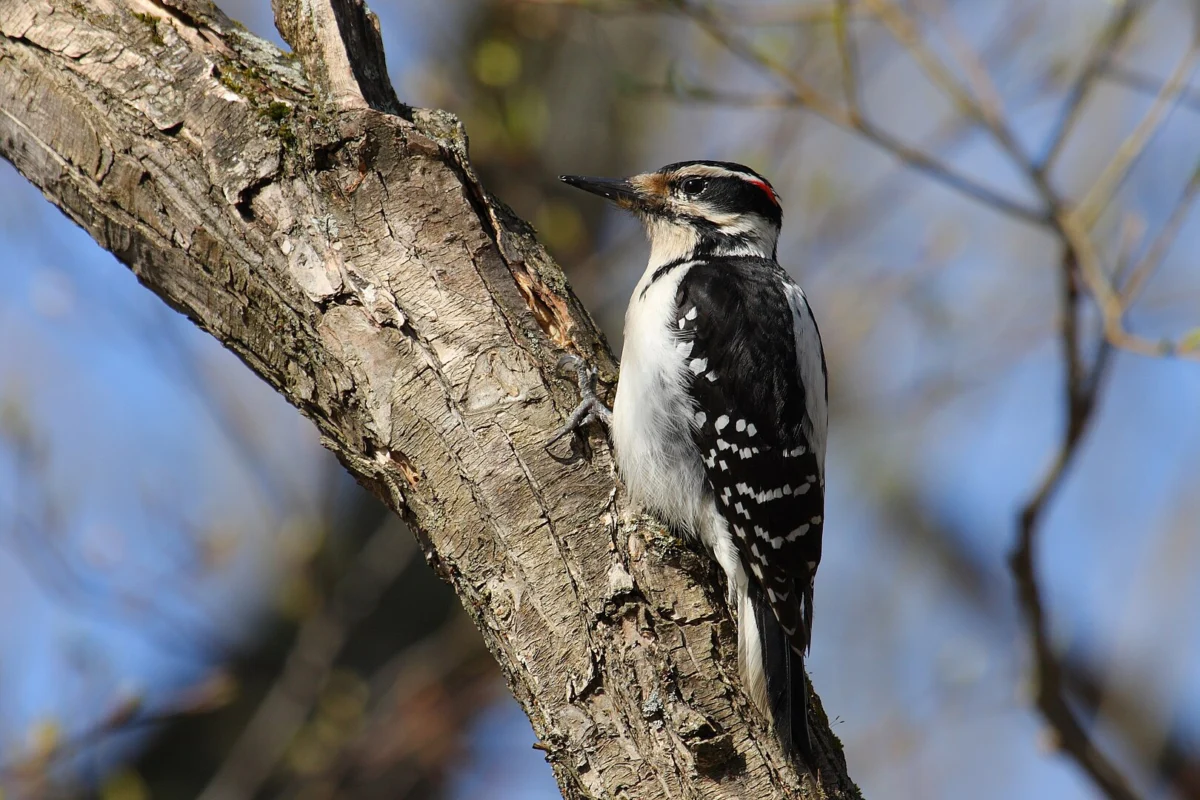
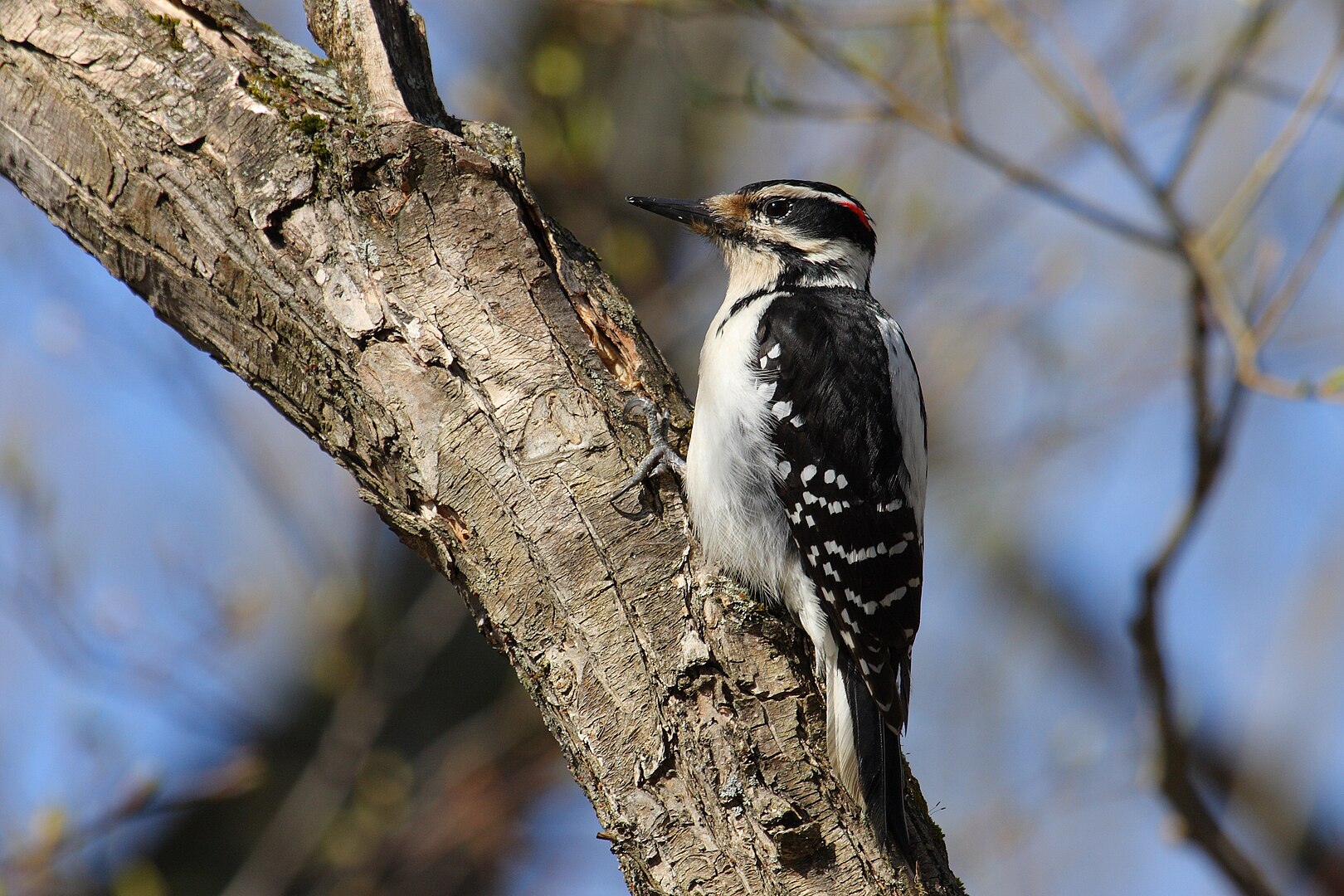
The Hairy Woodpecker (Picoides villosus) is a medium-sized woodpecker characterized by its striking black and white plumage, with a prominent white patch on its back. Adult males sport a distinctive red patch on the back of their heads. They possess a long, strong, chisel-like bill.
These woodpeckers are primarily found in mature forests, but their adaptability allows them to inhabit a variety of wooded environments, including swamps, urban parks, orchards, and suburban backyards. Their diet consists mainly of wood-boring insects, such as beetle larvae and ants, which they excavate from tree bark and wood. They will also consume spiders, millipedes, and other invertebrates.
A common point of confusion is differentiating the Hairy Woodpecker from its smaller cousin, the Downy Woodpecker. Key distinctions include the Hairy Woodpecker’s larger size and significantly longer, stouter bill. Their vocalizations also differ, with the Hairy Woodpecker producing more explosive, whinny-like calls compared to the Downy’s simpler calls. They nest in cavities excavated in dead trees or stubs, typically laying three to six eggs.
4. The Pileated Woodpecker: The Forest Giant
The Pileated Woodpecker (Dryocopus pileatus) is the largest woodpecker species in Maryland and North America, rivaling the size of a crow. Its most striking feature is its prominent, bright red, triangular crest that adorns its head. The bird’s plumage is predominantly black, with bold white stripes running down the sides of its neck and flanks. Adult males also have a distinctive red streak on their cheek.
These magnificent birds are most commonly found in large, mature forests, especially those with a significant presence of dead or dying trees. Their powerful bills allow them to create large, rectangular excavations in search of their primary food source: carpenter ants. They will also consume other insects, wild fruits, berries, and nuts.
The Pileated Woodpecker’s drumming is among the loudest of all woodpecker species, and their distinctive, loud, shrill calls are often heard before the bird is seen. They excavate new nesting cavities each year, typically in dead trees, and lay between three and five white eggs. Their presence is often an indicator of healthy, extensive forest ecosystems.
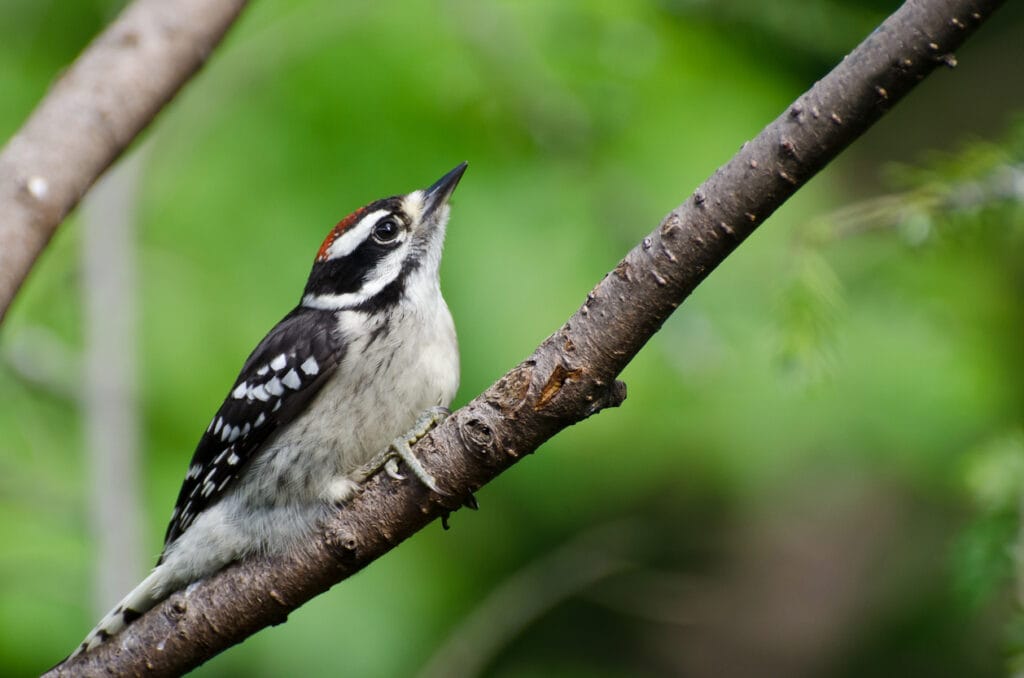
5. The Northern Flicker: A Ground-Foraging Specialist
The Northern Flicker (Colaptes auratus) stands out among Maryland’s woodpeckers due to its unique plumage. Unlike the typical black and white pattern of most woodpeckers, flickers display a beautiful combination of brown and gray with striking black spotting on their undersides. Both sexes have a distinctive black crescent on their breast and a red nape patch. A key identifier is the flash of bright yellow (in eastern populations, like Maryland) or red (in western populations) on their wing and tail feathers when they fly. Males also possess a black "mustache" stripe on their cheeks.
Flickers are unusual among woodpeckers in that they spend a significant amount of time foraging on the ground, seeking out ants and beetles. Their diet also includes berries, fruits, and seeds. Their zygodactyl feet, with two toes pointing forward and two backward, are well-adapted for climbing trees, but also for walking and hopping on the ground.
These birds are known for their repetitive, piercing calls and deep, resonant drumming. They nest in cavities excavated in dead trees or snags, and typically lay between five and eight white eggs. Their adaptability allows them to thrive in woodlands with open fields, as well as suburban areas.
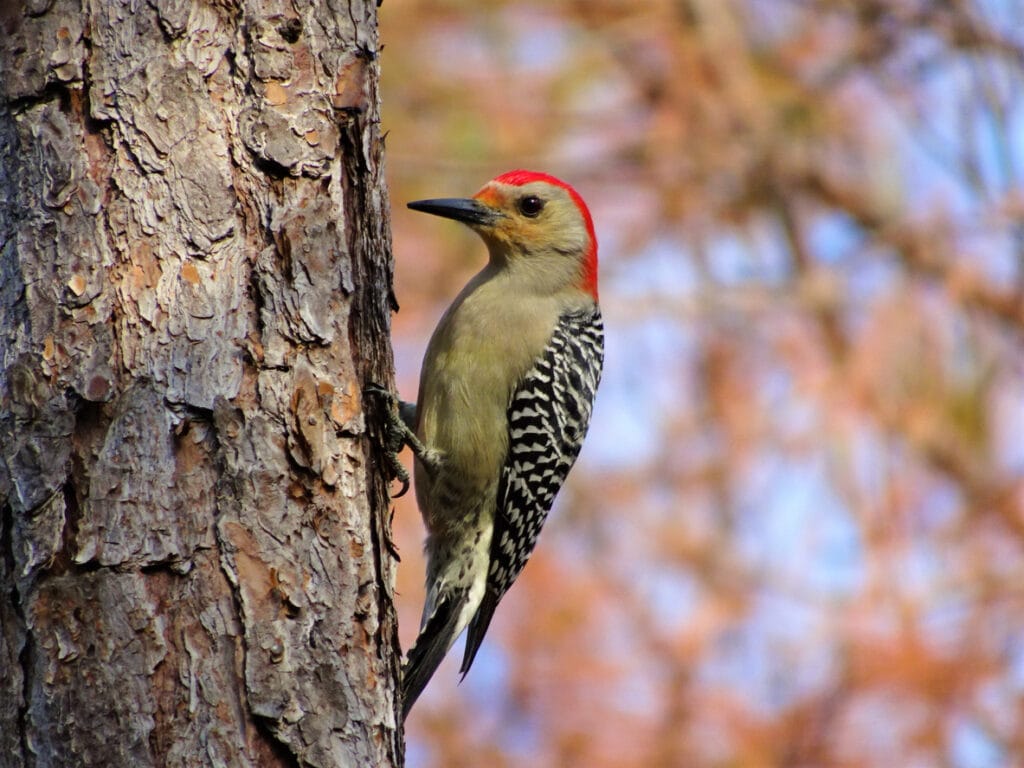
6. The Red-Bellied Woodpecker: A Common Backyard Visitor
The Red-Bellied Woodpecker (Melanerpes carolinus) is a common sight in Maryland, often found in woodlands, forests, and suburban backyards. Despite its name, the "red belly" is subtle, with a faint rosy wash on the underside, most noticeable in males. Their most prominent red coloration is on their head and nape. Their plumage is a striking black and white barring pattern on the back and wings, with a white belly. Adult females have red on the nape but not on the crown.

These adaptable woodpeckers have a diverse diet, including insects, spiders, nuts, fruits, and seeds. They are known to visit bird feeders, especially those offering suet or nuts. Interestingly, male and female Red-Bellied Woodpeckers can have differences in tongue length, which may allow them to forage for food in slightly different areas, potentially reducing competition during breeding season.
Red-Bellied Woodpeckers often reuse nesting cavities year after year, or excavate new ones in dead trees. They typically lay four or five white eggs. Their vocalizations are varied and often include loud trills and chuckles, along with characteristic drumming.
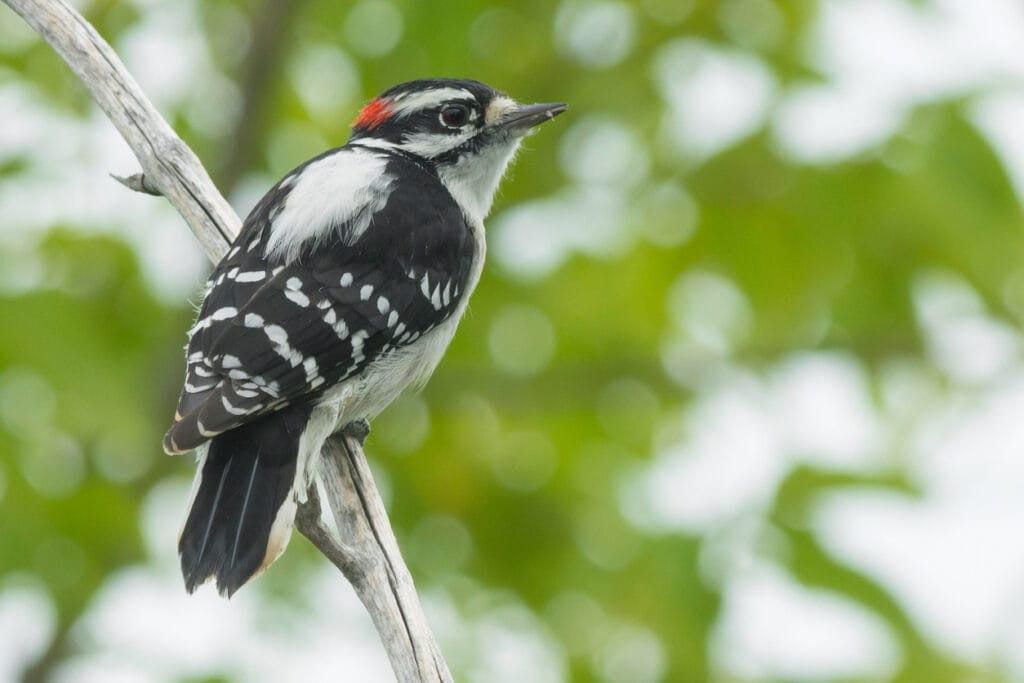
7. The Downy Woodpecker: The Smallest of the Bunch
The Downy Woodpecker (Dryobates pubescens) is the smallest woodpecker species found in Maryland and across North America. Its name derives from the soft, downy texture of its feathers, particularly on its back. It shares a similar black and white checkered plumage with the Hairy Woodpecker, featuring distinct black barring on its wings and a white patch on its back. Adult males can be identified by a small red patch on the back of their heads.
While similar in appearance to the Hairy Woodpecker, the Downy is significantly smaller and possesses a much shorter, more delicate bill. Another distinguishing feature is the presence of white spots on its tail feathers, which are absent in Hairy Woodpeckers.
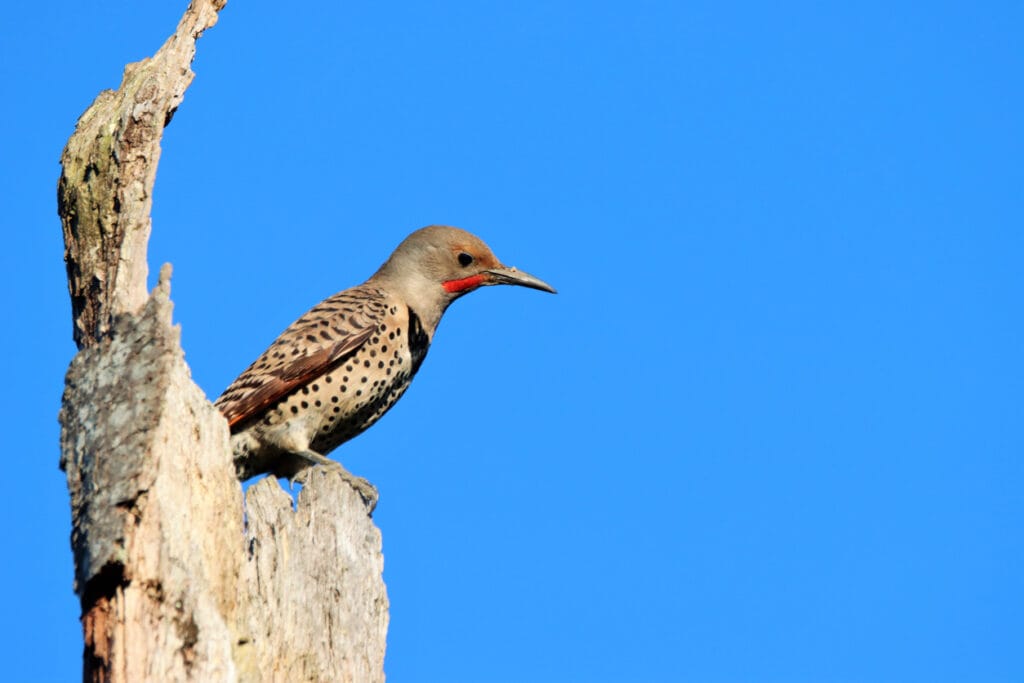
Downy Woodpeckers are highly adaptable and can be found in a wide range of habitats, including woodlands, forests, orchards, parks, and suburban backyards, often frequenting bird feeders. They are unique in that they not only peck trees but also forage for insects in long grass and weeds. Their diet includes nuts, larvae, acorns, berries, and grains. They nest in cavities, usually in dead trees or stubs, and lay between three and eight small white eggs. Their high-pitched calls and rattles make them identifiable even when hidden from view.
8. The Red-Headed Woodpecker: A Strikingly Colored Bird
The Red-Headed Woodpecker (Melanerpes erythrocephalus) is one of the most visually distinctive woodpeckers in Maryland, easily recognized by its entirely bright red head. This striking coloration is present only in adult birds; juveniles have brown heads that gradually turn red as they mature. Their plumage is a bold combination of black upperparts, a stark white belly, and wings that are half black and half white, creating a striking contrast.
Unlike many other woodpecker species, Red-Headed Woodpeckers are known for their ability to catch insects in mid-flight, a behavior known as "fly-catching." This allows them to diversify their diet beyond tree-dwelling insects. Their diet also includes nuts, seeds, wild fruits, and they have even been observed consuming small rodents. They are known for storing food in tree crevices, a behavior called "caching."
These woodpeckers can be quite territorial and have been known to aggressively defend their nesting sites, sometimes even destroying the eggs or nests of other bird species. They nest in tree cavities, often reusing those created by other woodpeckers or excavating their own. They typically lay four or five eggs.
Unfortunately, the Red-Headed Woodpecker has experienced significant population declines, estimated at around 70% between 1966 and 2014, primarily due to severe habitat loss. This makes observing them in Maryland an increasingly special occasion.
Conservation Efforts and Future Outlook
The presence of these eight woodpecker species highlights the ecological richness of Maryland. However, several species, notably the Red-Cockaded and Red-Headed Woodpeckers, face significant conservation challenges due to habitat loss and degradation.
Organizations like the Maryland Department of Natural Resources, Audubon Maryland-DC, and local conservation groups are actively involved in habitat restoration and protection efforts. These initiatives often focus on preserving mature forests, managing forest health through controlled burns where appropriate, and protecting key nesting and foraging areas. The success of these efforts is crucial not only for the woodpeckers themselves but also for the myriad of other species that rely on the habitats they help create and maintain.
Citizen science initiatives, such as those promoted by eBird, play a vital role in monitoring woodpecker populations. By reporting sightings, birdwatchers contribute valuable data that helps scientists understand population trends, distribution, and the effectiveness of conservation strategies. The Red-Bellied Woodpecker is currently considered one of the most common, while the Pileated Woodpecker can be reliably seen at places like the Pickering Creek Audubon Center.
Conclusion: Maryland’s Woodpecker Diversity
Maryland’s diverse landscapes, from its forested mountains to its coastal wetlands and even its suburban backyards, provide essential habitats for a remarkable variety of woodpecker species. Each species, from the diminutive Downy Woodpecker to the imposing Pileated Woodpecker, plays a unique and vital role in the state’s ecological balance. Understanding their behaviors, habitats, and dietary needs allows us to better appreciate these avian architects and to advocate for the conservation efforts necessary to ensure their continued presence for generations to come. The ongoing health of Maryland’s forests is intrinsically linked to the survival and thriving of these fascinating birds.

