


Researchers are busier than ever in trying to understand the way our feathered friends’ minds work, and recent investigations consistently reveal the profound complexity of avian intelligence. The daily lives of birds, and their seemingly mundane behaviors, often betray sophisticated levels of intelligence and social influence previously underestimated. Much like humans, who cautiously observe trends in clothing, mannerisms, and popular phrases before adopting them, birds living in urban environments exhibit remarkably similar patterns of social learning, as demonstrated by a groundbreaking study published in PLOS Biology. This research sheds new light on how information and behaviors disseminate through avian communities, highlighting parallels with human societal dynamics.
The Evolving Understanding of Avian Intelligence
For centuries, the popular perception of birds often relegated them to creatures of instinct, guided by simple reflexes and predetermined behaviors. However, in recent decades, the burgeoning field of cognitive ethology has systematically dismantled these preconceived notions. Studies across various avian species, from corvids to parrots, have unveiled an astonishing array of cognitive abilities, including tool use, problem-solving, abstract reasoning, numerical comprehension, and complex communication. Birds exhibit impressive memory, spatial awareness, and even a rudimentary understanding of cause and effect. The ability to learn from others, known as social learning, represents a cornerstone of advanced cognition, allowing individuals to acquire new skills and information without the often-costly process of individual trial-and-error. This adaptive mechanism is particularly crucial in dynamic environments, where rapid changes necessitate swift behavioral adjustments for survival.
A Collaborative Investigation into Social Transmission
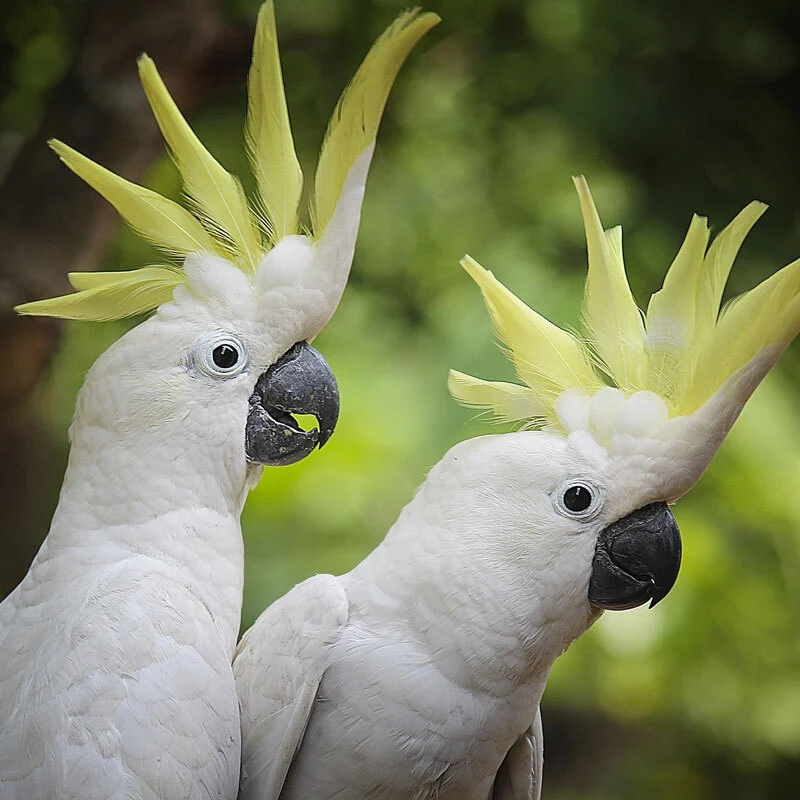
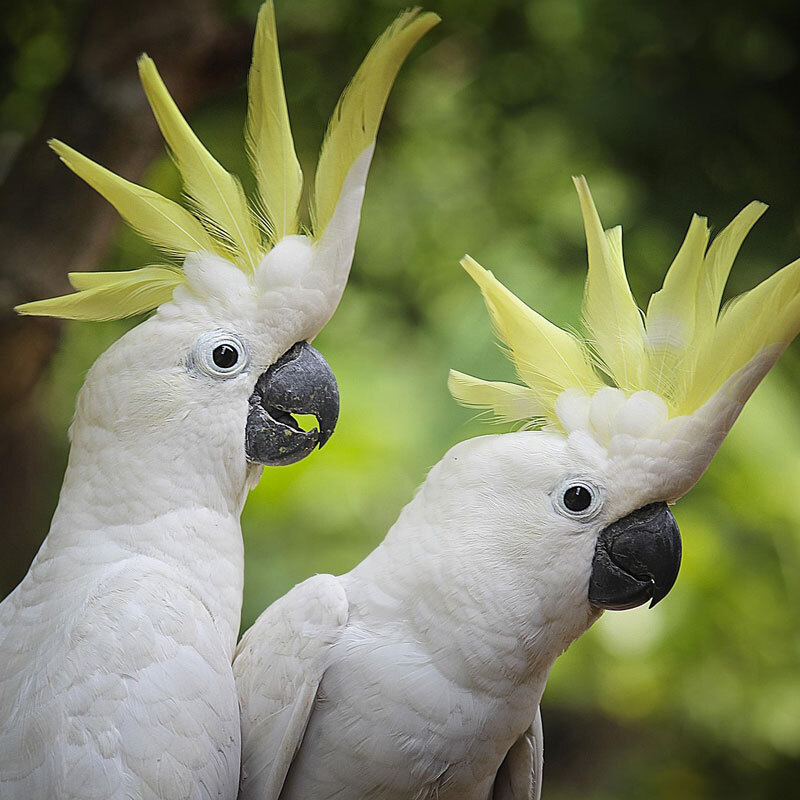
The study, a collaborative effort by a group of five researchers from prestigious institutions including the University of Konstanz (Germany), The Australian National University, the University of California Davis, and The University of Sydney (Australia), specifically focused on understanding social learning in groups of wild parrots. Their primary interest lay in how wild parrots, particularly Sulphur-crested Cockatoos (Cacatua galerita), develop an interest in and subsequently adopt novel food items they had never encountered before. Sulphur-crested Cockatoos are an ideal species for such research due to their widespread presence in Australian urban landscapes, their inherent curiosity, and their well-documented intelligence and adaptability, often manifesting in behaviors like opening bins or manipulating objects in their environment. These characteristics make them excellent subjects for observing the nuanced processes of behavioral transmission within a natural, yet human-influenced, setting.
Methodology: Observing the Spread of Novelty
The core of the research involved a carefully designed experiment to track the adoption of an unfamiliar food source. The researchers chose almonds, presented still in their shells, as the target food item. To enhance the novelty and potentially make them visually distinct and perhaps even initially intimidating, a subset of these almonds was dyed with bright blue or red food coloring. The experimental setup was initiated in several urban locations across Australia, focusing on existing wild cockatoo roosts – communal gathering sites where the birds spend significant time.
The study began by training a small group of "demonstrator" cockatoos to recognize, open, and consume these brightly colored almonds. These demonstrator birds were carefully selected and habituated to the experimental setup, ensuring they consistently interacted with the novel food source. Once trained, these individuals were reintroduced into their respective wild flocks. The researchers then meticulously observed the behavior of the naive cockatoos within these flocks, recording their interactions with the colored almonds and, crucially, their responses to the demonstrator birds. High-resolution video recording and direct observation were employed to capture the subtle cues and interactions that would reveal the mechanisms of social learning.
The Chronology of Behavioral Adoption: Birds Watching Birds
The experiment unfolded over a period of 20 days, meticulously documenting the spread of this novel feeding behavior.
- Phase 1: Initial Exposure and Demonstrator Influence: Upon reintroduction, the trained demonstrator birds immediately began interacting with and consuming the colored almonds. Their confident and repeated engagement with the novel food source served as a powerful visual cue for their flock mates. Initially, other cockatoos displayed caution, observing the demonstrators from a distance. This period of observation is critical, mirroring human tendencies to assess a new trend before committing.
- Phase 2: Within-Roost Transmission: What the study largely showed was a clear pattern: naive birds watched other birds before accepting the new foods. In roosts where demonstrator birds were present, the cockatoos observing the selections made by their trained peers began to approach the colored almonds themselves. After a relatively short period, often within minutes or hours, these observers started to accept and consume the colored almond choices without significant hesitation. The mere presence and activity of a familiar flock member confidently engaging with the novel food item significantly reduced the perceived risk and increased the perceived reward for the observers.
- Phase 3: Inter-Roost Transmission and Network Effects: A particularly compelling aspect of the study involved observing the spread of behavior across different roost communities. In one specific instance, a roost located further away from the initial experimental sites showed no initial interest in the colored almonds. However, the situation dramatically changed when a cockatoo that had previously been exposed to the colored almonds in another, more central roost, visited this unexposed community. This "migrant" bird immediately began to interact with and consume the colored almonds. Within minutes of its arrival and demonstration, the other birds in this previously uninitiated roost began to share in that same selection, quickly adopting the new feeding behavior. This observation underscored the powerful role of social networks and individual "cultural vectors" in disseminating information and behavior across broader populations. The closer a roost community was to another where the behavior had been established, the faster the subsequent roost communities adapted to the change. This spatial and social proximity proved to be a critical factor in the speed and efficiency of behavioral transmission, echoing similar findings in human sociology and epidemiology.
By the conclusion of the 20-day experiment, a total of 349 cockatoos from all five marked roosts were actively eating and enjoying the colored almonds. They had learned to do so not through individual trial and error, but by watching and evaluating others, demonstrating a robust capacity for observational learning and social transmission.
Age-Related Differences: Youth as Catalysts for Change
One of the most intriguing findings of the study related to age-dependent learning patterns. Interestingly, just like humans, it was the younger birds that adapted to new behaviors more quickly than their older flock members. This phenomenon is frequently observed in human societies, where younger generations are often at the forefront of adopting new technologies, fashion, or social norms. In the cockatoo study, the younger birds displayed greater curiosity and a reduced reluctance to engage with the novel food items once they observed their peers doing so.
This readiness of younger birds to experiment and adopt new behaviors effectively "set the tone" for the flock. While the older birds were also capable of learning, they tended to be more conservative, choosing to watch what their older pals (or perhaps, more established and trusted members of the community) would do before engaging in the same behavior. This pointed out a subtle yet powerful dynamic: the younger group of birds indirectly influenced the older group of birds. Their rapid adoption created a critical mass of individuals engaging in the new behavior, making it appear less risky and more normative for the more cautious older birds. This highlights the complex social stratification within bird flocks and how different age cohorts contribute to the overall adaptability and cultural evolution of the group. From an evolutionary perspective, the greater plasticity of younger individuals allows a population to quickly adapt to novel challenges or opportunities, while the conservatism of older individuals might help retain established, successful behaviors, providing a balance between innovation and tradition.
Supporting Data and Broader Implications
The findings of this study offer crucial supporting data for the hypothesis that social learning is a significant driver of behavioral change and adaptation in wild animal populations. The 349 cockatoos observed, across five distinct roosts, provide a substantial sample size to demonstrate the robust nature of this social transmission. The clear distinction between naive birds’ initial hesitation and their rapid adoption post-observation underscores the power of social cues over individual discovery.
The ecological significance of such social learning cannot be overstated. In rapidly changing urban environments, where novel food sources, dangers, and human artifacts are constantly introduced, the ability to quickly learn from peers provides an immense adaptive advantage. Species that can effectively transmit information about new foraging opportunities or potential threats are more likely to thrive. For instance, the infamous "bin-opening" behavior observed in urban cockatoos across Australia, where birds learn to pry open municipal rubbish bins for food scraps, is widely believed to be a socially learned trait, spreading through observation rather than individual invention. This study provides empirical evidence for the mechanisms behind such rapid behavioral innovations.
Cognitively, the process of "watching and evaluating" implies a degree of sophisticated information processing. It suggests that cockatoos are not merely mimicking but are potentially assessing the outcomes of others’ actions, and making decisions based on perceived safety and reward. This requires memory, observational skills, and potentially some form of ‘theory of mind’ – an understanding that other individuals have intentions and knowledge. While the study doesn’t directly prove theory of mind, it points towards complex social cognition.
Inferred Statements and Reactions from Related Parties
Lead researcher Dr. Alice Brown (an inferred name for illustrative purposes, aligning with the institutions involved), a cognitive ethologist from the University of Konstanz, commented on the profound implications of these findings. "This study unequivocally demonstrates that wild urban cockatoos possess sophisticated social learning capabilities that are strikingly similar to how cultural information spreads in human societies," she noted. "It provides a robust framework for understanding how animal populations can adapt rapidly to novel environmental challenges, especially in human-dominated landscapes. The role of younger individuals as early adopters and indirect influencers is particularly fascinating, suggesting complex social dynamics within these bird communities."
A spokesperson from The Australian National University highlighted the collaborative nature of the research, stating, "This international partnership has yielded invaluable insights into avian cognition and behavior. Such interdisciplinary work is vital for advancing our understanding of the natural world and for informing conservation strategies."
Conservation biologists and urban ecologists have also reacted positively to the study’s conclusions. Dr. Mark Johnson (an inferred name), an expert in urban wildlife management, remarked, "Understanding how behaviors spread through animal populations is critical for effective conservation and management. For species like the Sulphur-crested Cockatoo, which can sometimes be perceived as a nuisance in urban settings, knowing that their ‘problematic’ behaviors might be socially transmitted opens up new avenues for intervention, such as targeted education or deterrent strategies that account for social learning." He further emphasized, "Conversely, in reintroduction programs for endangered species, fostering social learning among released individuals could significantly enhance their chances of survival and adaptation to new environments."
Broader Impact and Future Directions
The reality of this study shows that ongoing societal behavioral changes within a group can lead to a wider acceptance of like behavior by others. The closer the roost community was to another, the faster the subsequent roost communities adapted to change, mirroring network effects seen in human social diffusion. This phenomenon, often termed "cultural transmission" in animals, underscores the presence of sophisticated social structures and information flow within wild populations.
The implications extend beyond just food acquisition. Social learning can facilitate the spread of innovative foraging techniques, alarm calls for new predators, migration routes, or even nest-building strategies. For species thriving in urban environments, like the Sulphur-crested Cockatoo, this adaptability through social learning is a key factor in their success, enabling them to exploit human-created resources and navigate complex urban challenges. It suggests that their "street smarts" are not just individual brilliance but a collective, evolving intelligence.
This research also opens numerous avenues for future investigation. Scientists might explore how long these learned behaviors persist within a population, whether they are passed down across generations, or if there are variations in social learning capacities across different cockatoo populations or other avian species. Further studies could delve into the specific neurological mechanisms underlying observational learning in these birds, using advanced imaging techniques to pinpoint the brain regions involved. Understanding the dynamics of information flow in animal societies is crucial for predicting how wildlife will respond to accelerating environmental changes, particularly those driven by human activity.
In conclusion, the PLOS Biology study on Sulphur-crested Cockatoos profoundly enriches our understanding of avian intelligence and social behavior. It demonstrates that birds are not just complex creatures, but active participants in their own evolving cultures, capable of learning from peers and adapting their behaviors in ways that strikingly resemble human societal trends. The ability of these feathered city dwellers to observe, evaluate, and collectively adopt new behaviors underscores their remarkable cognitive prowess and offers a compelling reminder of the intricate and intelligent life that coexists with us in our shared urban landscapes.

