


The landscape of avian ownership, breeding, and exhibition is increasingly defined by a complex web of local, state, and federal regulations that require constant monitoring and proactive engagement from the bird-keeping community. For organizations like the American Federation of Aviculture (AFA), the protection of the rights of bird owners is inextricably linked to an understanding of how modern legislation is drafted, introduced, and enacted. Historically defined as the proposing of laws, the legislative process has evolved into a sophisticated arena where specialized interest groups, lobbying organizations, and elected officials shape the future of animal husbandry. Today, the majority of proposed changes to the law arrive in the form of a "Bill," a document that serves as the blueprint for intended statutory changes. While these bills often include introductory summaries designed to explain the law’s intent to the public, these summaries can frequently be misleading, masking broader regulatory implications that may negatively affect bird owners, breeders, and exhibitors.
Understanding the Mechanics of Modern Legislation
To effectively navigate the legislative environment, stakeholders must first understand the origins of the bills that appear before governing bodies. While bills are formally introduced by elected representatives, they frequently originate from external lobbying organizations. In the realm of animal law, these entities often include animal rights and animal welfare organizations that maintain dedicated lobbying arms. These groups draft specific language and present it to sympathetic representatives for introduction into local, state, or federal systems. A critical point of concern for the AFA and similar organizations is that the agendas of these lobbying groups rarely align with the practical needs or views of the general public or the specialized avian community.
The AFA monitors these bills with a focus on identifying language that could have a deleterious impact on the keeping of pet birds, the operations of professional breeders, and the activities of those who exhibit birds for educational or competitive purposes. One of the primary challenges in legislative monitoring is the "hidden" impact of seemingly unrelated laws. For instance, a bill may not explicitly mention birds in its initial draft but may contain broad definitions of "animals" or "pets" that could later be interpreted to include avian species. This ambiguity creates a precarious situation for bird keepers who may find themselves in inadvertent violation of new statutes.
The Nuance of Local Ordinances and Civil Enforcement
The distinction between different levels of law is vital for the modern bird owner. While federal and state laws often deal with broad conservation or welfare standards, local laws—referred to as "ordinances"—typically govern the day-to-day realities of animal ownership within a specific municipality or county. These ordinances frequently start as "fair" or "common sense" measures, such as limiting the number of dogs or cats a household may own to prevent hoarding or public nuisances.
However, the AFA warns of a common legislative trajectory where an ordinance initially targeting common domestic mammals is later amended to include "all animals" or specific categories like birds. Consider the scenario of a dedicated canary breeder who maintains six pairs of birds for genetic diversity and show preparation. If a local ordinance is passed limiting households to six pets and is subsequently amended to include birds, that breeder is suddenly in violation of the law.
Unlike criminal laws, ordinances are generally civil matters. If a resident violates an ordinance—such as a prohibition against keeping an inoperable vehicle on a property or exceeding a pet limit—they are typically assessed fines rather than facing immediate arrest. However, the civil nature of these laws does not diminish their severity. If the violation is not corrected, the individual can be summoned to court, where a judge may impose escalating fines or even hold the individual in contempt of court, which can carry more significant legal consequences.
A Chronological Overview of Avian Regulatory Milestones
The history of avian legislation in the United States provides a roadmap of how regulatory oversight has expanded over the decades. Understanding this timeline is essential for recognizing current trends in legislative efforts.
- The Animal Welfare Act (1966): Originally focused on dogs, cats, and research animals, the AWA has seen numerous expansions. For decades, birds were largely excluded from specific AWA regulations, but recent legal mandates have forced the USDA to develop specific standards for birds.
- The Endangered Species Act (1973): This landmark federal law provided the framework for protecting species at risk of extinction. While vital for conservation, it also created a complex permitting system for the movement and sale of certain avian species across state lines.
- The Wild Bird Conservation Act (1992): This act significantly restricted the importation of many exotic bird species into the United States, shifting the focus of the American avian community toward sustainable domestic breeding programs.
- The USDA "Bird Rule" (2023): After years of litigation and public comment, the USDA’s Animal and Plant Health Inspection Service (APHIS) implemented new regulations under the Animal Welfare Act specifically for birds. This move represents one of the most significant shifts in avian regulation in decades, requiring many breeders and exhibitors to obtain federal licenses.
The Influence of Lobbying Organizations on Public Policy
The AFA and its partners in the animal-keeping community remain highly vigilant regarding the influence of anti-animal-use organizations. The amount of legislation being introduced at the local and state levels is currently at an all-time high. These bills often utilize emotive language, insinuating that their primary goal is the elimination of inhumane treatment or the management of animal overpopulation. While these are noble goals on the surface, the specific regulations written under these laws may effectively prohibit the keeping of certain types of birds or eliminate the ability of hobbyists to maintain their collections.
One specific area of concern is the "precedent effect." If a restrictive bird-keeping law is passed in one state, it becomes significantly easier for lobbying groups to propose similar legislation in other states, citing the previous law as a successful model. This "domino effect" means that a legislative battle in a distant state can eventually have a direct impact on bird owners across the country.
Statistical Insights into the Avian Industry and Regulatory Trends
The importance of monitoring legislation is underscored by the scale of bird ownership in the United States. According to data from the American Pet Products Association (APPA), millions of American households include birds as pets. The avian industry contributes significantly to the national economy through the sale of specialized feed, healthcare, housing, and equipment.
Despite this large footprint, the bird-keeping community is often fragmented, making it a target for cohesive lobbying groups that seek to restrict animal ownership. Data from legislative tracking services show that over the last five years, there has been a 30% increase in the introduction of "retail pet sale bans" and "species-specific prohibitions" at the municipal level. While these bans often target "puppy mills," the language is frequently broad enough to include pet stores that sell hand-raised parrots or finches, thereby cutting off the public’s access to healthy, domestically bred birds.
Official Advocacy Responses: The Role of the AFA Legislative Committee
The AFA Legislative Committee acts as a watchdog for the avian community. By collaborating with other animal-keeping organizations, the committee monitors legislative dockets across all 50 states. Their experience allows them to identify "red flag" language in bills that might seem irrelevant to birds at first glance.
A notable example is the "Local Circus Prohibition Act," which has appeared in various forms across the country. While these acts are ostensibly aimed at large exotic animals in traveling shows, the AFA has noted that the wording in these bills often allows for unchecked amendments. These amendments can later be used to include educational bird shows or even private exhibitions of raptors and parrots.
The AFA emphasizes that laws and ordinances cannot be amended without a formal vote by a city council, county board, state general assembly, or the US Congress. However, "Regulations"—the specific rules written to implement a law—can often be changed by administrative agencies without a direct vote by elected officials, provided a specific administrative process is followed. This distinction is why the AFA monitors both the halls of Congress and the offices of regulatory agencies like the U.S. Fish and Wildlife Service (USFWS) and the USDA.
The Broader Implications of Regulatory Creep
The long-term concern for the avian community is the gradual erosion of the right to keep and breed birds. This phenomenon, often described as "regulatory creep," involves the slow accumulation of small restrictions that eventually make bird keeping prohibitively expensive or legally risky. If bird owners do not stay informed and active, the business of aviculture and the joy of bird ownership could be systematically eliminated from American life.
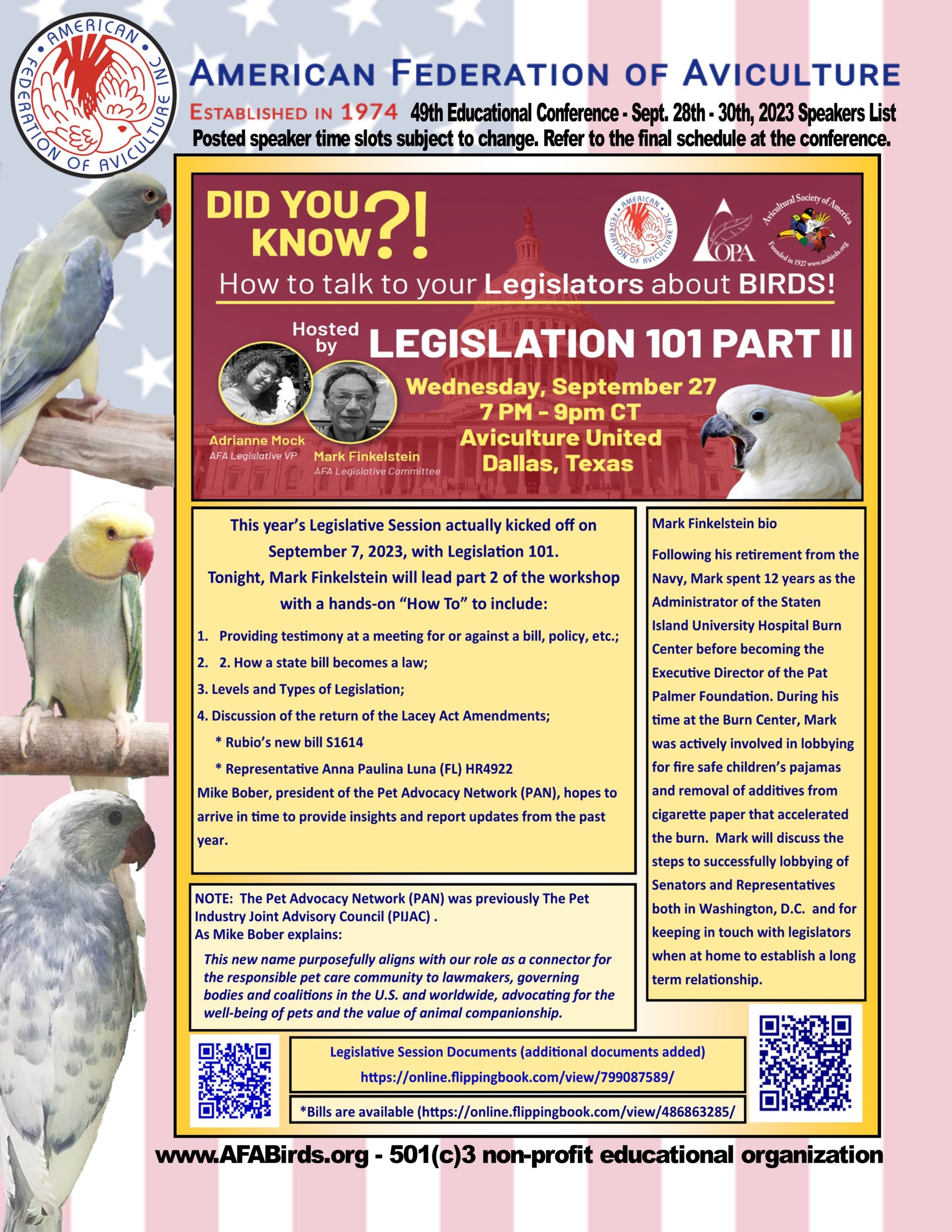
The AFA encourages all bird enthusiasts to take an active role in their local political environment. This includes keeping up with bills proposed in their home states and participating in educational opportunities like the "Legislation 101: Training Course" offered by the AFA. This course is designed to empower individuals with the tools needed to communicate effectively with their representatives and to understand the legal jargon that often obscures the true intent of proposed legislation.
Navigating Future Legislative Challenges
As the legislative environment becomes more complex, the need for a unified voice in the avian community has never been greater. The AFA’s "Current Legislative Issues" resource serves as a central hub for those looking to stay informed about pending laws that could affect their birds. By understanding the distinction between laws, ordinances, and regulations, and by recognizing the tactics used by lobbying organizations, bird owners can better defend their passion.
The future of aviculture depends on the ability of stakeholders to look beyond the immediate summary of a bill and analyze its long-term implications. Whether it is a federal change to the Endangered Species Act or a local zoning ordinance regarding noise and pet limits, every piece of legislation carries the potential to reshape the relationship between humans and birds. Vigilance, education, and collective action remain the most effective tools for ensuring that birds remain a vibrant part of our homes and our world.

