


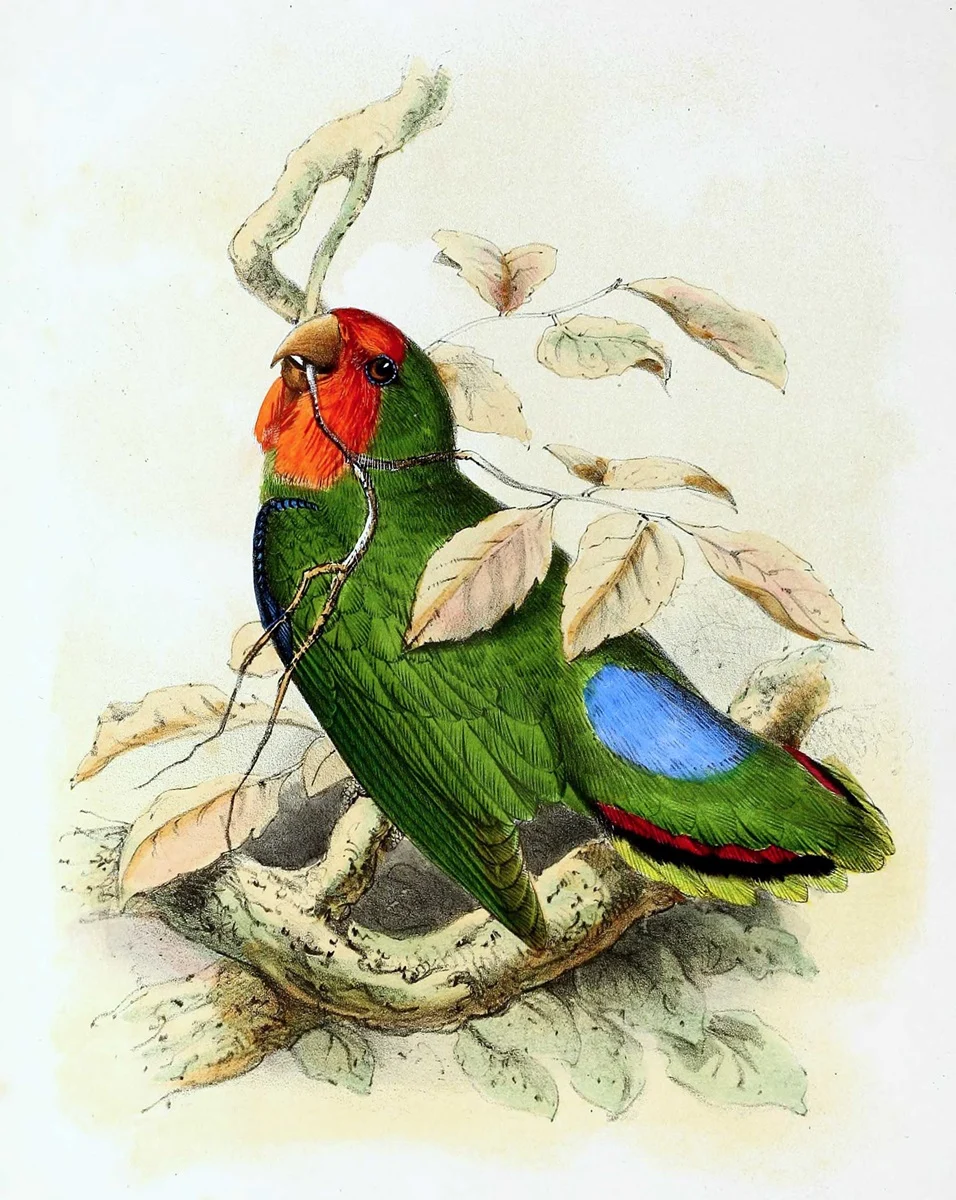
The Red-headed Lovebird, scientifically known as Agapornis pullarius, stands as a striking, yet largely unfamiliar, member of the lovebird genus. Unlike its more popular cousins, such as the Peach-faced Lovebird (Agapornis roseicollis) or Fischer’s Lovebird (Agapornis fischeri), which are among the most sought-after pet parrots globally, Agapornis pullarius is a species rarely encountered in aviculture due to its profoundly stress-prone nature. This article delves into the intricate details of this fascinating parrot, exploring its natural habitat, dietary preferences, unique behavioral traits, and the significant challenges associated with its conservation and captive management.
Conservation Status and Mounting Pressures
Despite its current classification by the IUCN Red List as a species of "Least Concern," the Red-headed Lovebird’s population dynamics present a more complex and worrying picture. Ornithologists and conservationists emphasize that this status belies the fact that the species is locally uncommon across much of its extensive natural range. Disturbingly, the overall population size is unfortunately projected to be decreasing, a trend driven by a confluence of anthropogenic factors.
Key threats include widespread habitat destruction, primarily stemming from agricultural expansion and logging activities that decimate the tropical savannah ecosystems these birds rely upon. Additionally, the Red-headed Lovebird is frequently targeted by farmers who view it as a crop pest, particularly due to its propensity to feed on agricultural grains like millet. Compounding these pressures is the persistent capture of wild birds for the international pet trade. A seminal 2018 study brought to light the alarming statistic that almost 40,000 Red-headed Lovebirds were exported from their natural range since 1975, highlighting the significant historical impact of this trade on wild populations.
Further underscoring this concern, Parr and Juniper (2010) in their comprehensive guide, "Parrots: a guide to parrots of the world," noted, "Abundance also varies owing to nomadic habits, but a genuine overall decline appears to have occurred in many areas this century. Trapped for live bird trade with large numbers in captivity outside range." This observation, made over a decade ago, suggests a long-standing issue that continues to challenge the species’ resilience. The "Least Concern" designation, while reflecting a broad distribution, risks fostering a false sense of security, potentially diverting critical conservation resources from a species facing genuine, localized threats. Experts advocate for more granular regional assessments and targeted conservation interventions to safeguard vulnerable populations.
Geographic Distribution and Preferred Habitat
Like all nine species within the genus Agapornis, the Red-headed Lovebird is indigenous to the African continent. Its natural range stretches across a broad, albeit patchy, band from western sub-Saharan Africa eastward through Central Africa. This distribution spans countries from Guinea in the west to Ethiopia in the east, indicating a significant but fragmented presence across diverse landscapes.
Within this expansive territory, Agapornis pullarius is largely sedentary, meaning it does not undertake extensive nomadic migrations, though localized movements in response to food availability are observed. The species exhibits a distinct preference for tropical lowland savannah environments. These areas are characterized by open grasslands interspersed with scattered trees and shrubs, providing both foraging grounds and nesting opportunities. Crucially, while the birds appreciate the presence of trees for shelter and roosting, they actively avoid dense primary forests, suggesting a reliance on more open canopy structures. They are typically found at altitudes up to 2,000 meters (approximately 6,550 feet), though observations suggest they generally inhabit lower elevations. In their natural setting, Red-headed Lovebirds typically move in pairs or small flocks, which can occasionally swell to a few dozen individuals, particularly around abundant food sources or roosting sites.
Distinctive Appearance and Subspecies

The Red-headed Lovebird is a visually captivating parrot, immediately identifiable by its striking coloration. Its body is predominantly a vibrant emerald green, providing excellent camouflage amidst tropical foliage. This verdant plumage contrasts sharply with its bright red face and beak, a defining characteristic that gives the species its common name. A subtle dash of blue adorns the lower back, while a small band of red is present on the tail feathers, adding further detail to its elegant aesthetic. Adult individuals typically reach up to 15 centimeters (6 inches) in length and weigh around 45 grams, making them small yet robust parrots. Their average lifespan in optimal conditions can extend to 20 years.
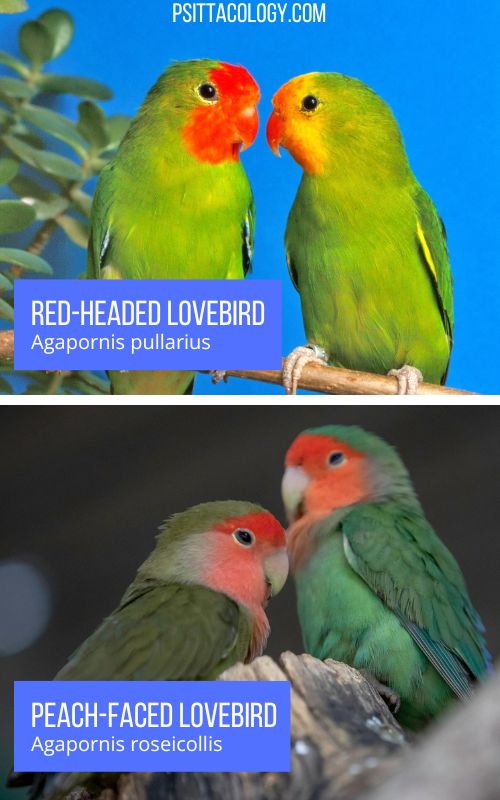
A common point of confusion arises when comparing the Red-headed Lovebird with the Peach-faced Lovebird (Agapornis roseicollis), which shares a similar body shape and a reddish facial mask. However, a key distinguishing feature lies in the beak color: Agapornis pullarius possesses a distinctly red beak, whereas A. roseicollis has a beige or horn-colored beak. This subtle difference is crucial for accurate identification, especially given the Peach-faced Lovebird’s significantly greater prevalence in aviculture.
Sexual dimorphism is also evident in Agapornis pullarius, allowing for visual differentiation between males and females. The male typically exhibits a more intensely colored, scarlet red face and beak. In contrast, the female’s facial coloration leans more towards an orange hue, less vibrant than the male’s, and her beak similarly shows a less intense reddish tone. This nuanced difference can be a valuable tool for experienced observers and breeders.
Two subspecies of the Red-headed Lovebird are recognized, each with slight geographical and morphological variations:
- Agapornis pullarius pullarius: The nominate subspecies, typically found across the central and western parts of the species’ range.
- Agapornis pullarius ugandae: Found in the easternmost parts of the range, including Uganda, and generally characterized by minor differences in plumage intensity or size.
Dietary Habits and Ecological Role
Like many psittacine species, Red-headed Lovebirds are primarily granivores, with a diet predominantly consisting of seeds. They show a strong preference for grass seeds, which are abundant in their savannah habitat. This dietary choice, however, brings them into direct conflict with human agricultural interests, as they readily consume cultivated crops such as millet, rice, and maize. This behavior often leads to their classification as agricultural pests by local farmers, contributing to the aforementioned persecution.
Beyond grass seeds, these adaptable lovebirds also supplement their diet with wild fruits, including figs and guava, whenever such resources are available. Their foraging strategies involve dexterously manipulating seeds with their beaks and feet, efficiently extracting the nutritious kernels. While their primary diet is seeds, the inclusion of fruits provides essential vitamins, minerals, and moisture. In their ecosystem, Red-headed Lovebirds play a role in seed dispersal, albeit potentially a limited one given their seed-eating habits. Their impact on local plant communities is an area that warrants further ecological study.
Challenges and Considerations in Aviculture
The Red-headed Lovebird’s presence in aviculture is notably sparse compared to other lovebird species like Fischer’s or Peach-faced lovebirds, which are ubiquitous in the pet trade. It is almost exclusively maintained by highly dedicated and experienced parrot enthusiasts, typically within specialized aviary settings. This rarity stems primarily from the species’ extremely nervous and stress-prone disposition, which makes it particularly challenging to keep successfully in captivity.
Wild-caught Agapornis pullarius are notoriously delicate; they can succumb to stress-induced shock from seemingly minor disturbances, such as sudden loud noises or abrupt changes in their environment. Their picky eating habits are another significant hurdle, as they may refuse food if housed with boisterous or aggressive cage mates. This sensitivity necessitates a quiet, stable environment and often dictates solo housing or pairing only with a compatible mate, rather than communal aviaries.

Unlike many other pet parrots, the Red-headed Lovebird is not typically suited for close human interaction or taming. Its inherent shyness means it generally remains a "look, but don’t touch" bird, making it an unsuitable choice for individuals seeking a companion parrot that can be handled. Prospective keepers must understand that the reward of keeping this species lies in observing its natural behaviors in a carefully managed, low-stress environment.
Housing and Environmental Needs
For experienced aviculturists fortunate enough to acquire captive-bred Red-headed Lovebirds (which are exceedingly rare to find for sale), specific housing requirements are paramount. These parrots thrive best in heated aviaries, ideally individually or in compatible pairs, to minimize stress from inter-species or intra-species conflict. The aviary should offer ample space for flight and contain naturalistic elements that mimic their wild habitat.
For indoor housing, a spacious cage is essential, with dimensions of at least 80 cm (30 inches) wide. The bar spacing should be appropriately small, around 1.25 cm (0.5 inches), to prevent escape or injury. The cage interior must be furnished with a variety of natural wood perches of varying diameters to promote foot health and provide enrichment. A quiet location, away from high-traffic areas, sudden noises, and direct drafts, is critical to ensure the birds’ well-being. Regular temperature and humidity control are also important, reflecting their tropical origins.
Captive Diet and Nutritional Management
Historically, Red-headed Lovebirds in captivity have been maintained primarily on dry or sprouted seeds. However, modern avian veterinary science strongly advocates for a more balanced and nutritious diet for all parrots, including Agapornis pullarius. A high-quality pelleted diet, formulated for small parrots, is generally considered the most nutritious option and should form the cornerstone of their daily intake. Pellets provide a complete and balanced array of vitamins, minerals, and macronutrients, addressing potential deficiencies associated with seed-only diets.
In addition to daily pellets, keepers should offer a premium seed mix as a supplement, along with a generous array of fresh vegetables. Leafy greens, such as kale, spinach, and romaine lettuce, are particularly beneficial. A selection of fresh fruits, offered in moderation due to their sugar content, can also be provided. Cooked grains like quinoa or brown rice, along with select foraged weeds (ensuring they are non-toxic and pesticide-free), further enrich the diet. During breeding periods or for birds requiring extra support, additional protein sources like boiled egg or mealworms can be beneficial, providing essential amino acids for egg production and chick development. Access to fresh water at all times is non-negotiable.
Enrichment and Behavioral Stimulation
Like all parrots, Red-headed Lovebirds are highly intelligent and require consistent mental and physical stimulation to prevent boredom and stress-related behaviors. Given their inherent nervousness, introducing new enrichment items must be done gradually and thoughtfully to avoid startling them.
Essential enrichment items include:
- Foraging Toys: These encourage natural foraging behaviors, keeping the birds engaged as they work to extract treats.
- Chew Toys: Providing various safe, destructible materials like untreated wood, natural fibers, and cardboard helps satisfy their natural urge to chew and keeps their beaks trimmed.
- Swings and Ladders: These offer opportunities for exercise and play, promoting physical agility.
- Natural Branches: Untreated branches from safe trees (e.g., apple, willow, eucalyptus) provide varied perching surfaces and additional chewing opportunities.
- Bathing Opportunities: A shallow dish of water or a light misting can encourage bathing, which is crucial for feather maintenance.
The noise level of Red-headed Lovebirds is generally considered low for a parrot species. However, like all psittacines, they are capable of producing loud calls if distressed or excited. Their typical calls are described as somewhat shrill. Recordings of their vocalizations can be explored on platforms like Xeno-Canto to understand their auditory communication better.
Reproduction in the Wild and Captivity
In their natural African habitat, Red-headed Lovebirds time their breeding season to coincide with the rainy season, when food resources are most abundant. A fascinating aspect of their reproductive biology is their unique nesting preference: they typically excavate nests within arboreal (tree-dwelling) termite or ant nests. These structures provide natural insulation and protection from predators. Occasionally, they may also utilize nests located on the ground or opportunistically inhabit tree hollows created by woodpeckers. The female is solely responsible for burrowing into the termitarium and lining the nest chamber with plant materials, such as grass leaves, to create a soft, secure environment for her clutch. Once the nest is prepared, she lays up to six eggs.
The species’ specific nesting requirements and nervous disposition make it notoriously difficult to breed successfully in captivity. Traditional nest boxes often fail to mimic the unique conditions of a termitarium, leading to breeding failures. However, dedicated aviculturalists, such as Dominique Veeckmans, have achieved breakthroughs by experimenting with alternative nesting solutions. Veeckmans and others have discovered that nest boxes constructed from cork, which provides a texture and insulation similar to termite mounds, can be effective in encouraging breeding pairs. This innovation highlights the importance of understanding a species’ natural history to replicate essential environmental cues in captivity. Successful captive breeding programs are crucial for maintaining a healthy genetic reservoir outside of declining wild populations, offering a potential safeguard against extinction, especially for a species so sensitive to environmental stressors.
Broader Implications and Future Outlook
The case of the Red-headed Lovebird encapsulates many of the broader challenges facing parrot conservation globally. Its "Least Concern" status, juxtaposed with clear evidence of population decline due to habitat loss, agricultural conflict, and the pet trade, underscores the need for dynamic and responsive conservation strategies. The significant number of birds exported since 1975, even without explicit CITES Appendix I listing, reveals the persistent pressure exerted by human demand.
The species’ extreme sensitivity to stress poses unique hurdles for both conservation and aviculture. Reintroduction programs for such a delicate bird would be extraordinarily challenging, emphasizing the critical importance of in situ conservation efforts to protect its natural habitats. For aviculturists, the Red-headed Lovebird serves as a reminder of the ethical responsibilities involved in keeping sensitive species. Its rarity in captivity, driven by its complex needs, highlights that not all attractive birds are suitable for general pet ownership. Instead, it remains a species best appreciated in its wild splendor, or by the most dedicated and knowledgeable experts committed to replicating its intricate natural requirements.
Continued research into the specific ecological roles of Agapornis pullarius, its population dynamics, and the effectiveness of localized conservation interventions is essential. Furthermore, responsible aviculture, focused on sustainable captive breeding and adherence to ethical standards, can contribute to species preservation by maintaining genetically diverse populations and raising awareness about the plight of these unique African parrots. The future of the Red-headed Lovebird hinges on a concerted effort to mitigate human impacts and deepen our understanding of this enigmatic and beautiful avian species.

