


Virginia’s diverse ecosystems, from the Appalachian Mountains to the Atlantic coast, provide a rich habitat for a fascinating array of wildlife, including eight distinct species of owls. These nocturnal and crepuscular hunters, often heard before they are seen, play a vital role in maintaining ecological balance. While some species, like the ubiquitous Great Horned Owl and Barn Owl, are found across the state, others are more elusive, gracing Virginia with their presence only occasionally. This comprehensive guide delves into the characteristics, habitats, behaviors, and conservation status of each of Virginia’s owl inhabitants, offering insights for both seasoned birdwatchers and curious nature enthusiasts.
Understanding Virginia’s Owl Population
Owls, belonging to the order Strigiformes, are renowned for their silent flight, exceptional hearing, and keen eyesight. Their adaptations for hunting in low-light conditions are remarkable, making them apex predators in many nocturnal environments. Virginia’s varied landscapes, including dense forests, open farmlands, coastal marshes, and mountainous regions, support a surprising diversity of these captivating birds.
The presence and abundance of owl species in Virginia are influenced by several factors, including habitat availability, prey populations, and climatic conditions. Understanding these dynamics is crucial for appreciating the ecological significance of each species.
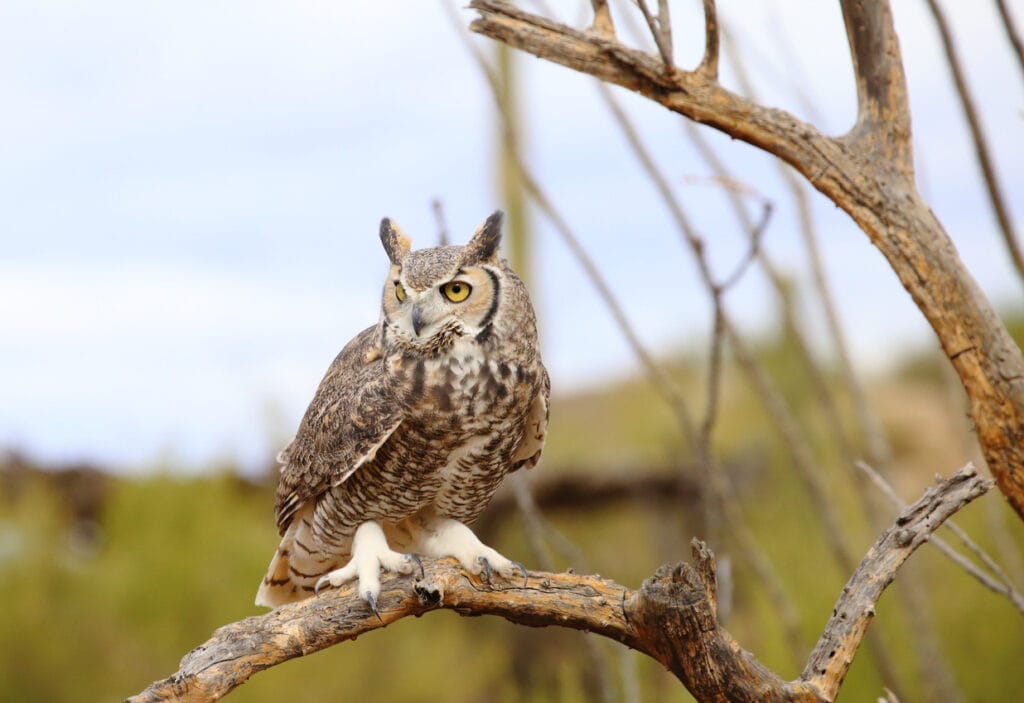
1. The Majestic Great Horned Owl ( Bubo virginianus )
The Great Horned Owl is arguably the most recognizable and widespread owl species in North America, and Virginia is no exception. Often featured in folklore and children’s stories, this powerful raptor is a permanent resident across the Commonwealth. Its imposing size and formidable presence make it a symbol of the wild.
Physical Characteristics: Adults typically measure between 18 to 26 inches in length with a wingspan of up to 4.5 feet. Their plumage is a mottled brown and gray, providing excellent camouflage against tree bark. The most distinctive feature, and the source of its name, is the prominent pair of ear tufts, which are not true ears but feathered projections that can be raised or lowered. Their large, piercing yellow eyes are adapted for low-light vision, and their sharp talons are capable of capturing prey much larger than themselves.
Habitat and Behavior: Great Horned Owls are highly adaptable and can be found in a variety of habitats, including dense forests, woodlands, open country with scattered trees, deserts, and even urban parks. They are primarily nocturnal hunters but are also known to be active during twilight hours (crepuscular) and occasionally during daylight. Their diet is incredibly varied, reflecting their opportunistic nature and predatory prowess. They consume a wide range of prey, including rodents, rabbits, squirrels, birds (including other raptors), snakes, amphibians, and even insects. Their aggressive nature and defensive capabilities mean they are best observed from a safe distance.
Conservation Status: The Great Horned Owl is listed as a species of Least Concern by the IUCN. Their adaptability and widespread distribution contribute to their stable population. However, habitat loss and degradation can pose localized threats.
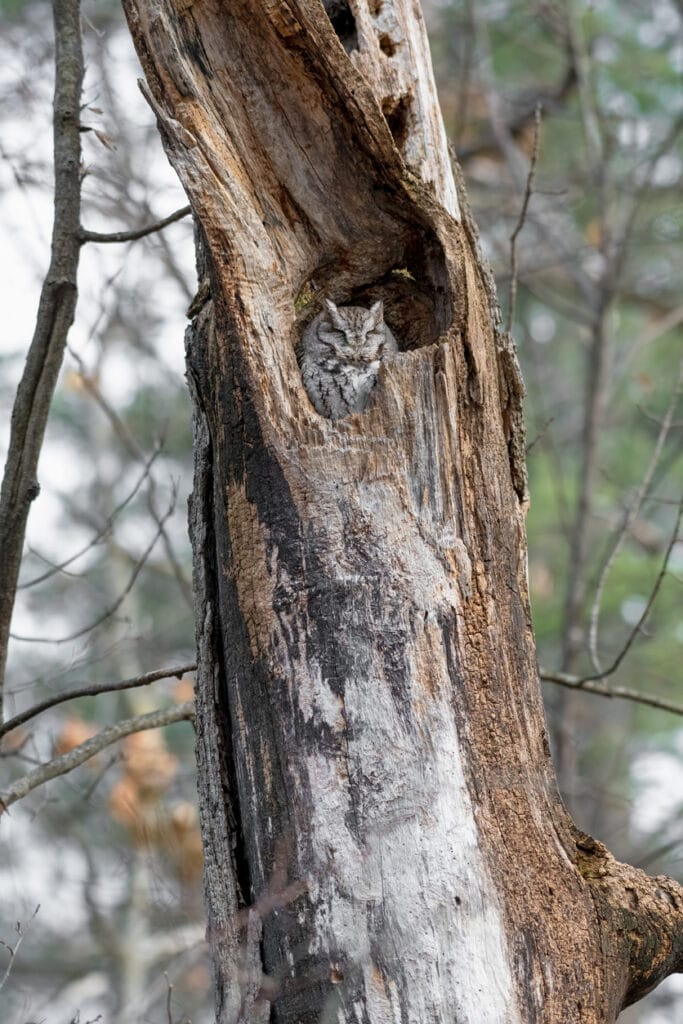
2. The Elusive Eastern Screech-Owl ( Megascops asio )
The Eastern Screech-Owl is a small, yet common, resident of Virginia, often overlooked due to its excellent camouflage and nocturnal habits. These charming owls are found in wooded areas, parks, and even suburban backyards with mature trees.
Physical Characteristics: Eastern Screech-Owls are diminutive, typically measuring only 6 to 10 inches in length with a wingspan of 20 to 24 inches. They exhibit two color morphs: a gray morph and a reddish-brown morph, both of which effectively blend with their surroundings. They possess prominent ear tufts, a short, square tail, and round wings. Their large, forward-facing eyes are typically yellow or greenish.
Habitat and Behavior: These owls inhabit deciduous and mixed forests, often nesting in tree cavities or artificial nest boxes. They are strictly nocturnal, their hunting forays beginning after sunset. Their diet consists mainly of small mammals like mice and voles, but they also consume insects, earthworms, frogs, and small birds. Their distinctive calls, a mournful whinny and a tremulous trill, are often the only indication of their presence. Unlike their larger cousins, screech-owls are less aggressive when encountered, often relying on their camouflage to avoid detection.
Conservation Status: The Eastern Screech-Owl is also listed as a species of Least Concern. Their ability to adapt to human-altered landscapes contributes to their continued presence. However, the loss of mature trees with suitable nesting cavities can be a concern in some areas.
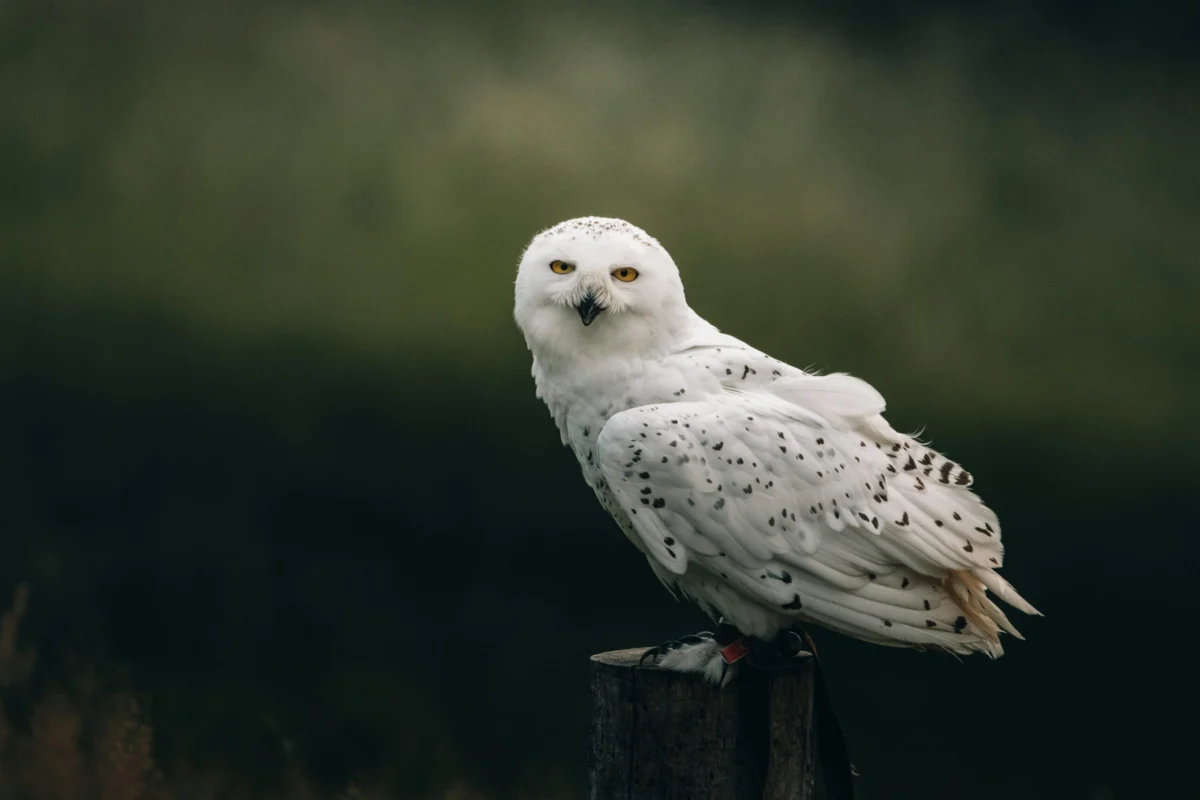
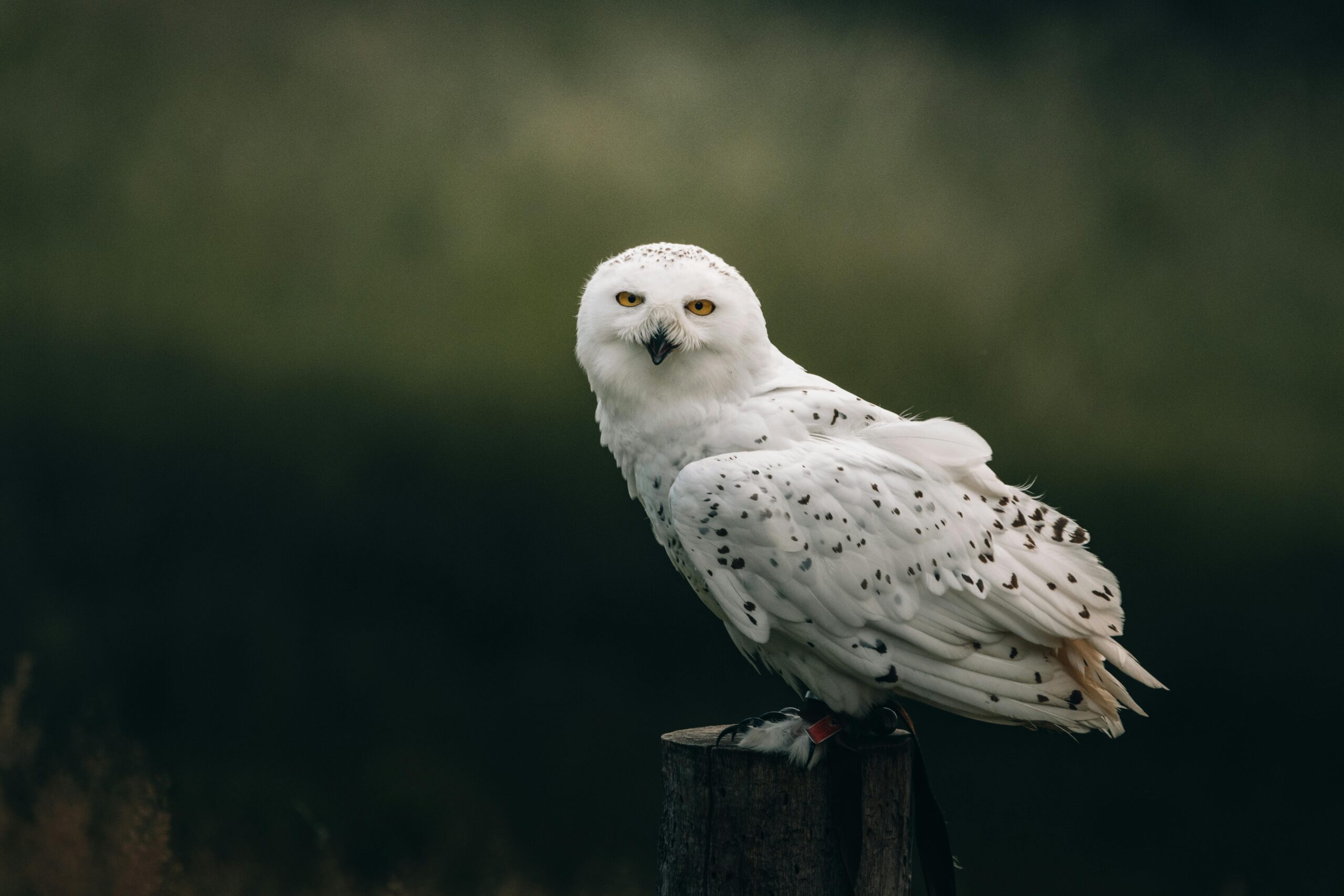
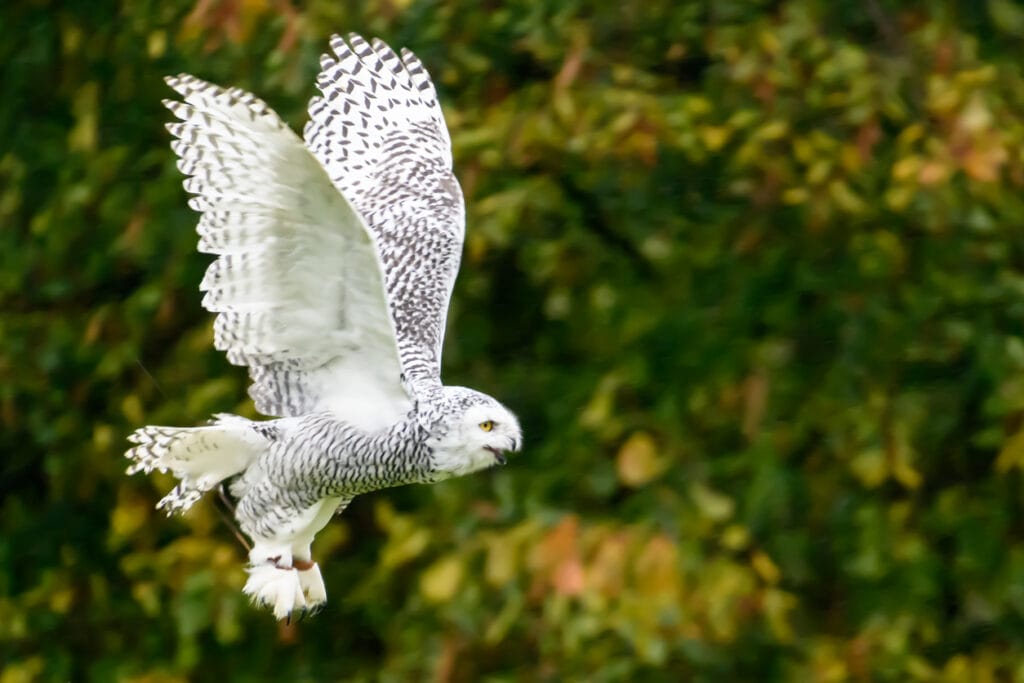
3. The Rare and Striking Snowy Owl ( Bubo scandiacus )
The Snowy Owl is an arctic resident that occasionally visits Virginia during periods of irruption, a phenomenon where large numbers of these owls migrate south in search of food. These sightings are infrequent but create a significant stir among bird enthusiasts.
Physical Characteristics: Snowy Owls are large, striking owls, comparable in size to Great Horned Owls, with lengths ranging from 20 to 28 inches and wingspans up to 5 feet. Adult males are almost entirely white, while females and younger birds have varying amounts of dark barring. Their dense plumage provides insulation against extreme cold. Their eyes are a deep yellow, and they possess a characteristic round facial disc.
Habitat and Behavior: In their arctic breeding grounds, Snowy Owls inhabit open tundra. During irruptions in more southerly regions like Virginia, they tend to favor open areas such as fields, marshes, and coastal dunes, where they can easily spot prey. They are diurnal hunters, actively foraging during daylight hours, which sets them apart from many other owl species. Their diet primarily consists of lemmings and voles, but they will also prey on other small mammals and birds. Snowy Owls are known for their boldness and can be quite defensive of their territory, even confronting larger predators.
Conservation Status: The Snowy Owl is currently listed as Vulnerable due to significant population declines, primarily attributed to habitat loss and changes in prey availability in their arctic breeding grounds. Irruptions to areas like Virginia are often linked to fluctuations in lemming populations.
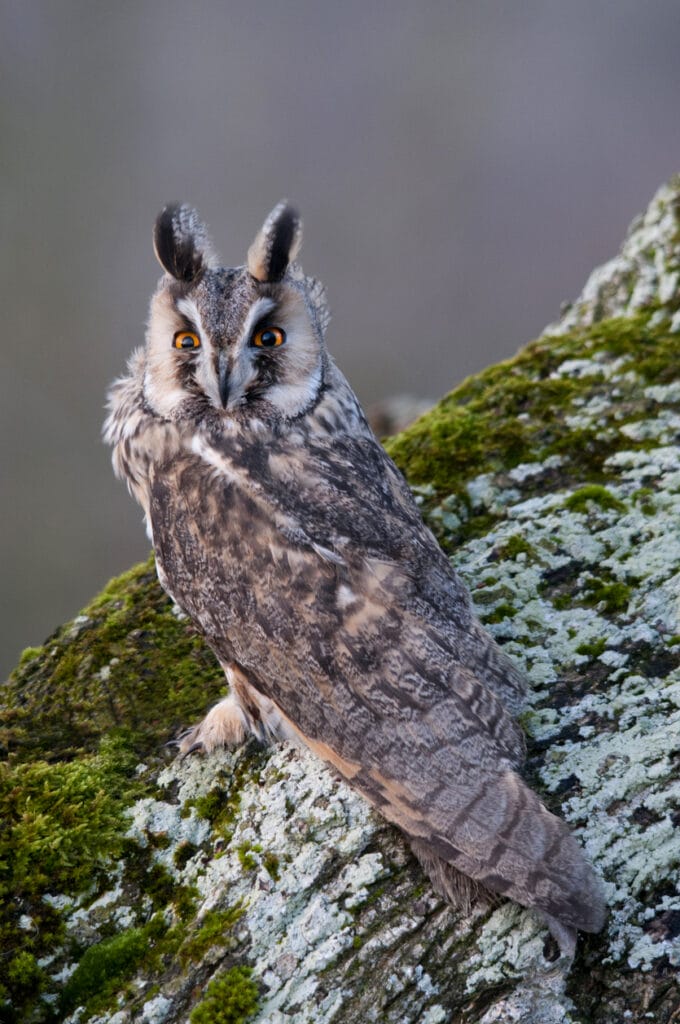
4. The Discreet Long-eared Owl ( Asio otus )
The Long-eared Owl is a medium-sized owl that is uncommon in Virginia, primarily found in the northern parts of the state during the winter months. Its name derives from its prominent ear tufts, which can be easily confused with those of the Great Horned Owl.
Physical Characteristics: Measuring about 13 to 16 inches in length with a wingspan of 33 to 39 inches, Long-eared Owls are slender. Their plumage is a cryptic mix of brown and gray streaking, with a distinct facial disc that is often described as pumpkin-colored. The most notable feature is their long, erect ear tufts, which are positioned close together on their forehead. Their eyes are a deep orange.
Habitat and Behavior: These owls prefer dense, mature woodlands, often near open areas like grasslands, meadows, or farmlands, which they use for foraging. They are primarily nocturnal and crepuscular hunters. Their diet consists mainly of small rodents, particularly voles and mice. Long-eared Owls are known for their ability to remain incredibly still, relying on camouflage for protection. They are also one of the more vocal owl species, producing a wide array of sounds, including hoots, barks, and screeches. During the day, they roost in dense vegetation, making them difficult to find.
Conservation Status: The Long-eared Owl is listed as a species of Least Concern globally, but its status in Virginia is considered more precarious due to its limited presence and seasonal occurrence. Habitat loss and disturbance in their preferred foraging and roosting areas can negatively impact local populations.
5. The Open-Country Specialist: Short-eared Owl ( Asio flammeus )
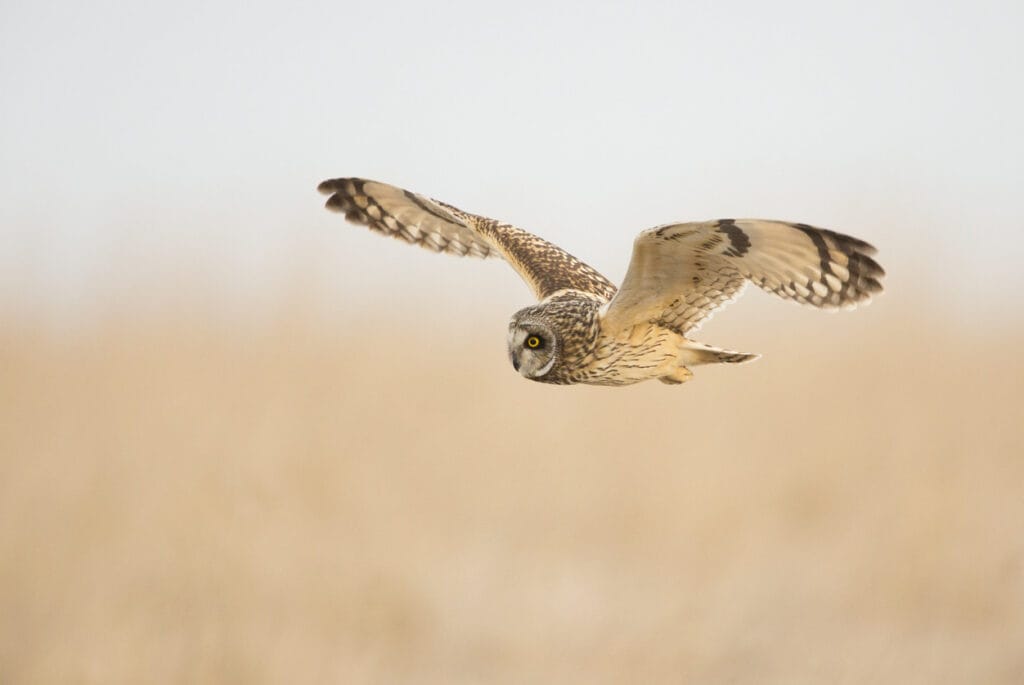
The Short-eared Owl is a medium-sized owl with a remarkably wide global distribution, and in Virginia, it can be found in open habitats across the state, though it is considered rare. Its name reflects its short ear tufts, which are often barely visible.
Physical Characteristics: These owls are similar in size to the Long-eared Owl, measuring around 13 to 17 inches in length with a wingspan of 33 to 40 inches. Their plumage is a mottled "flame-colored" brown, with buffy underparts and streaking. The most distinctive feature is their short ear tufts, which are usually held flat against their heads but can be raised when the bird is alert or agitated. Their eyes are small and yellow.
Habitat and Behavior: Short-eared Owls are primarily ground-dwellers, preferring open country such as grasslands, meadows, marshes, and agricultural fields. They are one of the few owl species that are diurnal, actively hunting during the day, often at dawn and dusk. Their diet consists mainly of small mammals like voles, mice, and lemmings, but they will also prey on small birds. They are known for their distinctive, moth-like flight pattern. Unlike many other owls, Short-eared Owls often nest on the ground, constructing simple scrapes lined with grass and feathers. Their calls are described as a raspy bark or meow.
Conservation Status: The Short-eared Owl is listed as a species of Least Concern globally, but its populations are facing declines in some regions due to habitat loss, particularly the conversion of grasslands to other land uses. In Virginia, their reliance on specific open habitats makes them vulnerable to environmental changes.
6. The Ghostly Barn Owl ( Tyto alba )
The Barn Owl, with its distinctive heart-shaped facial disc and ethereal appearance, is a familiar sight in many parts of Virginia, particularly in agricultural and open areas. It is a year-round resident, often associated with old barns and outbuildings.
Physical Characteristics: Barn Owls are medium-sized, measuring about 12 to 16 inches in length with a wingspan of 31 to 37 inches. Their most striking feature is their white, heart-shaped facial disc, which helps funnel sound to their ears. Their upperparts are typically a mottled tawny-gray, while their underparts are white or buffy. Their large, dark eyes are adapted for nocturnal hunting.
Habitat and Behavior: Barn Owls are well-adapted to human-altered landscapes and are commonly found in open fields, grasslands, marshes, and agricultural areas where their primary prey is abundant. They often roost and nest in man-made structures like barns, silos, steeples, and even abandoned houses, as well as in tree cavities and cliff crevices. They are strictly nocturnal hunters, employing their exceptional hearing to locate prey. Their diet consists almost exclusively of small mammals, particularly rodents like voles, mice, and shrews, making them highly beneficial for pest control. They are known for their silent flight and their eerie, rasping calls.
Conservation Status: The Barn Owl is listed as a species of Least Concern globally. However, in many parts of its range, including some areas of Virginia, populations have declined due to habitat loss, pesticide use (which reduces their prey base), and the destruction of nesting sites. Conservation efforts often focus on providing artificial nest boxes to support their populations.
7. The Tiny Northern Saw-whet Owl ( Aegolius acadicus )
The Northern Saw-whet Owl is one of the smallest owl species found in Virginia, making it incredibly challenging to spot. These diminutive owls are non-breeding visitors to the Commonwealth, typically appearing during the colder months.
Physical Characteristics: Northern Saw-whet Owls are tiny, measuring only 7 to 10 inches in length with a wingspan of 17 to 22 inches. They have disproportionately large heads, fluffy bodies, and large, piercing yellow eyes. Their plumage is a mix of brown and white, with streaking on their backs and barring on their chests. Their facial discs are subtly heart-shaped and brown.
Habitat and Behavior: These owls prefer dense woodlands, particularly mixed forests with coniferous and deciduous trees, and often near water sources. They are primarily nocturnal and crepuscular hunters. Their small size dictates a diet of small prey, including mice, voles, shrews, and insects. Their namesake call, a repetitive "toot-toot-toot," resembles the sound of a saw being whetted. Due to their size and secretive nature, they are rarely seen and even more rarely studied. Conservationists often use mist-netting and banding to monitor their populations.
Conservation Status: The Northern Saw-whet Owl is listed as a species of Least Concern globally. However, their migratory status and reliance on specific forest habitats make them susceptible to changes in those environments. In Virginia, their presence is transient, and understanding their wintering ecology is important for conservation.
8. The Vocal Barred Owl ( Strix varia )
The Barred Owl is a large, common owl found throughout Virginia, known for its distinctive "who cooks for you? who cooks for you all?" call. They inhabit a wide range of forested environments and are one of the most easily identified owls in the state.
Physical Characteristics: Barred Owls are substantial birds, measuring 16 to 19 inches in length with a wingspan of 3.3 to 4.1 feet. They are characterized by their dark, rounded heads, large, dark brown eyes, and a broad, heart-shaped facial disc. Their plumage is a striking pattern of brown and white barring on the chest and belly, with darker brown upperparts. Unlike many other owls, they lack prominent ear tufts.
Habitat and Behavior: These owls are highly adaptable and can be found in mature deciduous and coniferous forests, swamps, and riparian areas. They are known to be active both day and night (diurnal and nocturnal), making them more visible than many other owl species. Their diet is varied, including small mammals, birds, amphibians, reptiles, and fish. Barred Owls are known for their territorial nature, especially during the nesting season, and will defend their territory vigorously. Their calls are a prominent feature of the nocturnal soundscape in their habitats. They often nest in large tree cavities or old stick nests.

Conservation Status: The Barred Owl is listed as a species of Least Concern globally. Their adaptability to various forest types and their opportunistic feeding habits contribute to their stable populations across much of their range. However, the fragmentation and loss of mature forests can negatively impact their habitat availability.
Conservation Efforts and Future Outlook
The presence of these eight owl species in Virginia highlights the ecological richness of the Commonwealth. However, many of these birds face threats from habitat loss, fragmentation, pesticide use, and climate change. Conservation organizations and wildlife agencies in Virginia are actively involved in monitoring owl populations, protecting critical habitats, and educating the public about the importance of these avian predators.
Birdwatching initiatives, such as citizen science projects like eBird, play a crucial role in gathering data on owl sightings, distribution, and population trends. This information is vital for informing conservation strategies and ensuring the long-term survival of these magnificent birds. For instance, reports of irruptions by Snowy Owls help researchers understand migratory patterns and the factors influencing these events. Similarly, tracking the presence of rare species like the Long-eared and Short-eared Owls in specific regions of Virginia provides valuable insights into their habitat requirements and potential conservation needs.
The continued study and appreciation of Virginia’s owl population not only enrich our understanding of the natural world but also underscore our responsibility to protect these fascinating creatures and the diverse ecosystems they inhabit. By observing these owls from a respectful distance and supporting conservation efforts, we can ensure that their haunting calls continue to echo through Virginia’s forests for generations to come.

