


The National Institutes of Health (NIH) has officially announced the launch of a pioneering administrative body, the Office of Research Innovation, Validation, and Application (ORIVA), marking a significant shift in the landscape of American biomedical research. This new office is tasked with the specific mandate of advancing human-relevant, non-animal scientific methodologies, signaling a transition away from traditional animal-based models that have dominated the field for nearly a century. According to an official press release issued by the NIH on June 15, 2026, ORIVA will serve as a centralized hub to coordinate the development, validation, and implementation of New Approach Methodologies (NAMs), ensuring that United States research remains at the cutting edge of global scientific innovation.
The establishment of ORIVA comes at a critical juncture as the scientific community increasingly questions the reliability and predictive value of animal models in human medicine. For decades, the NIH has faced mounting pressure from both the scientific community and advocacy groups to modernize its research portfolio. By creating a dedicated office for non-animal science, the NIH aims to address the high failure rate of drugs in clinical trials—currently estimated at over 90%—by prioritizing research methods that more accurately reflect human biology.
Organizational Structure and Strategic Goals
ORIVA is structured to address two primary pillars of scientific inquiry: regulatory toxicity testing and fundamental biomedical research. The office will be divided into two specialized branches, each with a distinct but complementary focus.
The Division of Regulatory Toxicity Advancement will focus on the development of non-animal methods for assessing the safety of chemicals, pharmaceuticals, and consumer products. This division will work closely with other federal agencies, including the Food and Drug Administration (FDA) and the Environmental Protection Agency (EPA), to ensure that new testing protocols meet rigorous safety standards without the use of animal subjects. A major component of this division’s work will be the validation of these methods—a process that has historically been a bottleneck in the adoption of non-animal science.
The Division of Biomedical Research Innovation will focus on the "discovery" side of science. This branch will provide funding and resources for researchers developing organ-on-a-chip technologies, high-throughput screening, and complex 3D bioprinted human tissue models. These technologies allow scientists to study human diseases, such as Alzheimer’s, cancer, and heart disease, in a human-specific context, potentially leading to breakthroughs that have remained elusive using rodent or primate models.
In addition to research and development, ORIVA will be responsible for providing comprehensive training programs. These initiatives are designed to educate the next generation of scientists on how to utilize non-animal technologies, ensuring that the transition to modern science is supported by a workforce capable of navigating complex human-relevant data sets.
A Decades-Long Trajectory Toward Modernization
The creation of ORIVA is the culmination of a long-term evolution in both policy and technology. While animal testing became the "gold standard" following the Federal Food, Drug, and Cosmetic Act of 1938, the limitations of this approach have become increasingly apparent in the genomic era.
The timeline leading to the 2026 establishment of ORIVA includes several key milestones:
- 2007: The National Research Council published "Toxicity Testing in the 21st Century: A Vision and a Strategy," which first proposed a shift toward in vitro human cell-based assays.
- 2016: The Frank R. Lautenberg Chemical Safety for the 21st Century Act was signed into law, requiring the EPA to reduce and replace animal testing where possible.
- 2019: The EPA announced its goal to phase out all funding for mammalian testing by 2035, a move that sent ripples through the scientific community.
- 2022: The FDA Modernization Act 2.0 was passed by Congress, effectively ending the federal requirement that all new drugs be tested on animals before entering human clinical trials. This legislative change opened the door for the NIH to formalize its support for alternative methods.
- 2024-2025: Scientific advocacy groups, most notably PETA and its "Research Modernization NOW" initiative, intensified their collaboration with federal lawmakers and NIH officials to provide a roadmap for phasing out animal use in favor of more predictive human-relevant models.
PETA scientists have been particularly instrumental in this transition. Their "Research Modernization Deal" provided a comprehensive strategy for redirecting funding from failed animal experiments toward modern, human-relevant research. Elements of this roadmap have been integrated into ORIVA’s founding charter, reflecting a growing consensus that ethical science and effective science are increasingly one and the same.
The Scientific and Economic Rationale
The push for ORIVA is driven by more than just ethical concerns; it is rooted in rigorous data. Statistics from the pharmaceutical industry show that the vast majority of drugs that appear safe and effective in animals fail when they reach human subjects. Often, these failures are due to unforeseen toxicity or a lack of efficacy that animal models were unable to predict.
By focusing on human-relevant science, ORIVA aims to reduce the "valley of death"—the gap between basic laboratory research and the delivery of new treatments to patients. Proponents argue that technologies like "body-on-a-chip," which links multiple human organ models via a microfluidic system, can provide a much more accurate picture of how a human body will react to a new compound compared to a rat or a rabbit.
Furthermore, the economic implications are substantial. Animal testing is inherently slow and expensive, often requiring years of study and millions of dollars for a single compound. In contrast, many in vitro and in silico (computer-based) methods can provide results in a fraction of the time and at a lower cost once the initial infrastructure is in place. By streamlining the validation process through ORIVA, the NIH hopes to accelerate the pace of medical innovation while maximizing the return on taxpayer-funded research.
Official Responses and Industry Impact
The announcement has garnered widespread support from the scientific and advocacy communities. In a statement following the release, representatives from PETA emphasized that the establishment of ORIVA represents a "paradigm shift" in how the U.S. government approaches science. They noted that the office’s focus on coordination and funding will empower researchers who have previously felt tethered to animal models due to a lack of alternative infrastructure.
"This is a definitive step toward a future where science benefits all living beings," a PETA spokesperson stated. "By prioritizing humane, human-relevant research, the NIH is finally aligning its practices with the technological capabilities of the 21st century."
While the pharmaceutical industry has been cautious, many major firms have already begun investing heavily in non-animal technologies. The existence of a dedicated NIH office for validation provides these companies with the regulatory certainty they need to fully integrate NAMs into their drug development pipelines.
Remaining Challenges and Regulatory Friction
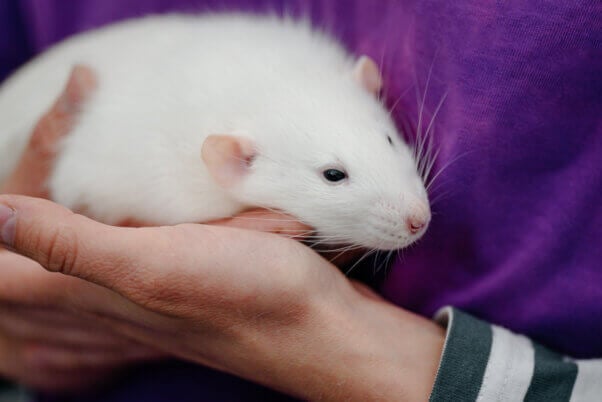
Despite the optimism surrounding ORIVA, significant hurdles remain. Regulatory inertia continues to affect various sectors. For example, the FDA currently maintains requirements for animal testing on certain consumer products, such as toothpaste. In these tests, approximately 200 rats are typically used to assess the safety of ingredients, despite the existence of human-cell assays that provide more relevant data for oral mucosa.
Advocacy groups are now leveraging the momentum of ORIVA’s launch to urge the FDA and other agencies to harmonize their requirements with the new NIH standards. Furthermore, U.S. residents and lawmakers are being called upon to support legislation that would further mandate the use of non-animal methods across all federal agencies. The goal is to ensure that the billions of dollars allocated to government research are not wasted on methodologies with high failure rates.
Implications for the Future of Science
The launch of the Office of Research Innovation, Validation, and Application signals that the United States is positioning itself as a leader in the global race for advanced biotechnology. As other regions, including the European Union, also move toward reducing animal use, the work done by ORIVA will likely set the international standards for validation and regulatory acceptance.
For patients, the establishment of this office offers the promise of safer and more effective treatments. By focusing on the unique complexities of human biology rather than the biology of other species, researchers can more accurately identify potential cures and side effects. For the scientific community, it provides a clear path forward for innovation, supported by federal funding and a robust framework for validation.
As ORIVA begins its operations, the focus will shift to its first round of grants and the specific non-animal methods it chooses to prioritize. The move marks the end of an era of total reliance on animal models and the beginning of a new chapter in biomedical history—one defined by precision, efficiency, and a renewed commitment to human-relevant science.

