


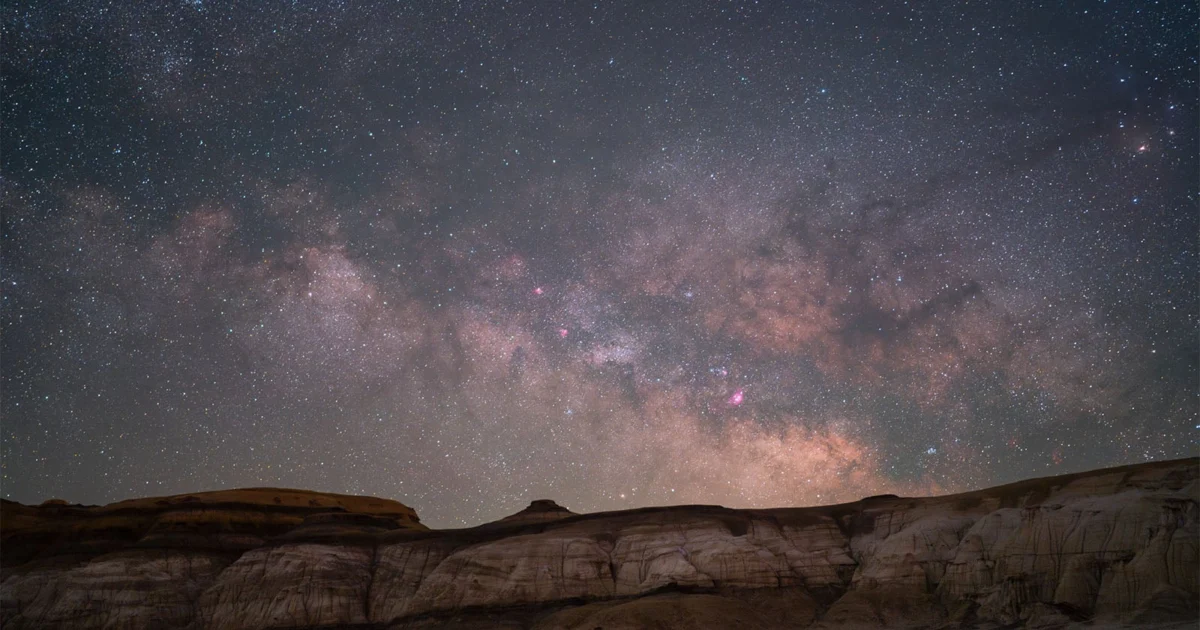
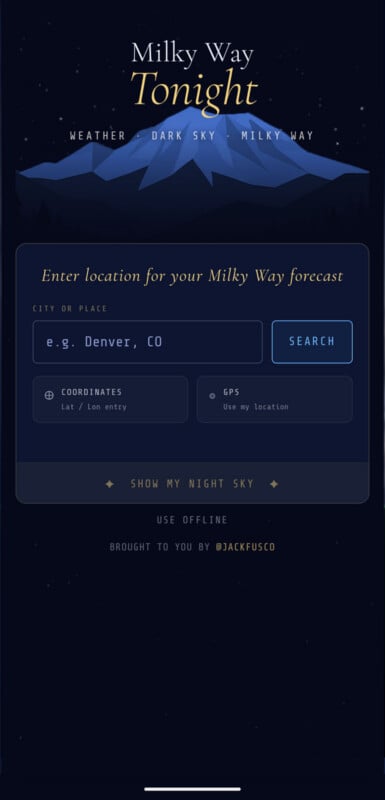
The pursuit of capturing the celestial beauty of the Milky Way has long been regarded as one of the most technically demanding disciplines within the field of photography, requiring a precise confluence of astronomical timing, meteorological cooperation, and specialized equipment settings. To address the inherent complexities of this niche, photographer Jack Fusco has launched Milky Way Tonight, a dedicated mobile application for iOS and Android designed to eliminate the trial-and-error often associated with night sky imaging. By synthesizing complex astronomical data into a simplified "go or no-go" interface, the application aims to lower the barrier to entry for novice photographers while providing a robust suite of technical tools for seasoned professionals.
The Challenges of Modern Astrophotography
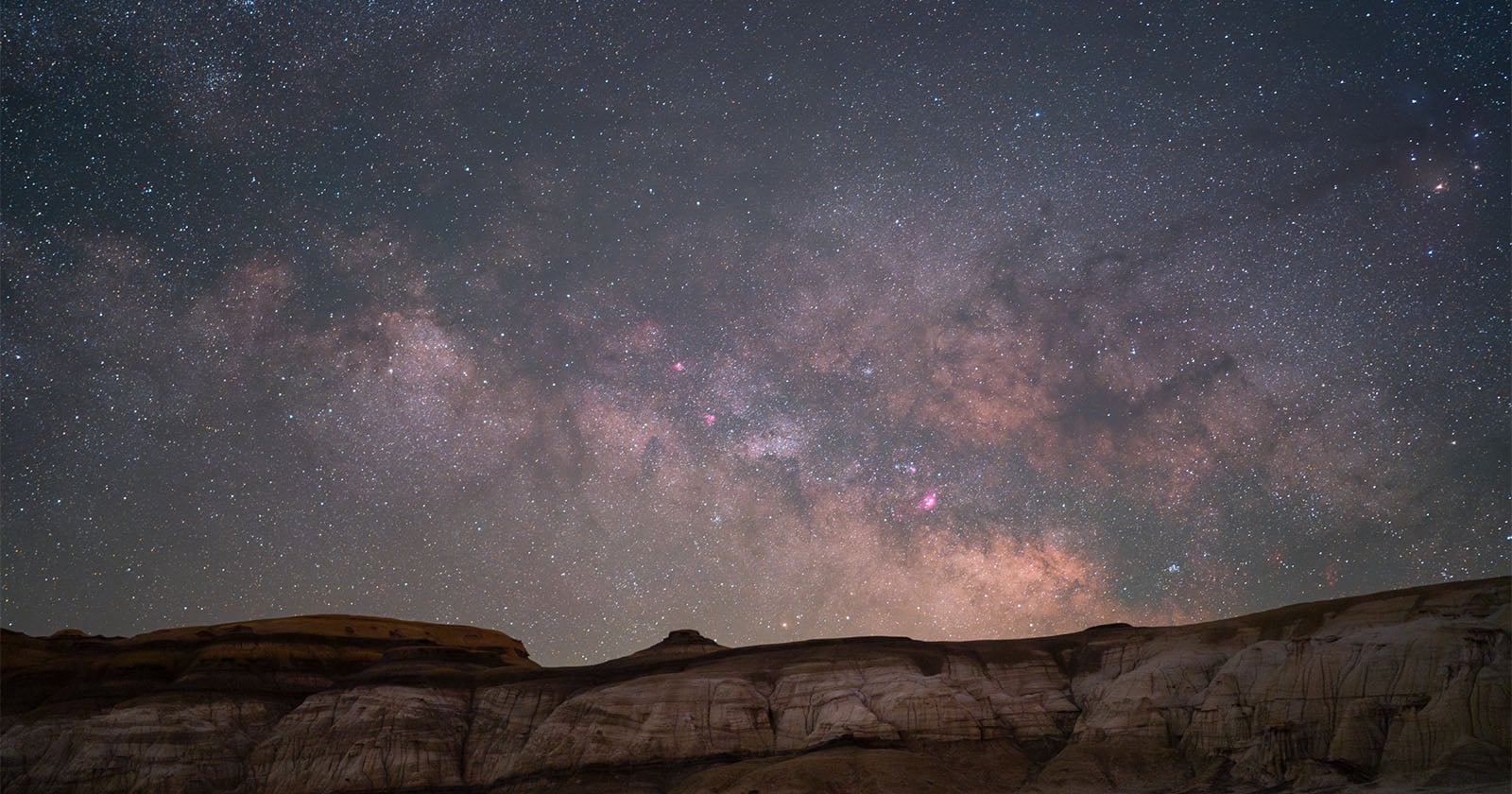
Astrophotography is unique in that its success is dictated by variables largely beyond the photographer’s control. Unlike studio or daytime landscape photography, where light can be manipulated or waited upon, the visibility of the Milky Way is governed by rigid celestial cycles. The primary "friction points" for photographers include the lunar cycle, atmospheric transparency, and the seasonal visibility of the Galactic Center—the brightest and most photogenic portion of our galaxy.
In many regions, light pollution further complicates the process, forcing photographers to travel long distances to "dark sky" locations. Without accurate planning, these excursions can result in wasted time and resources if the Moon is too bright, clouds move in unexpectedly, or the Galactic Center remains below the horizon during the window of total darkness. Milky Way Tonight was developed specifically to aggregate these disparate data points into a single, actionable forecast.
The Core Functionality: A Diagnostic Approach to the Night Sky
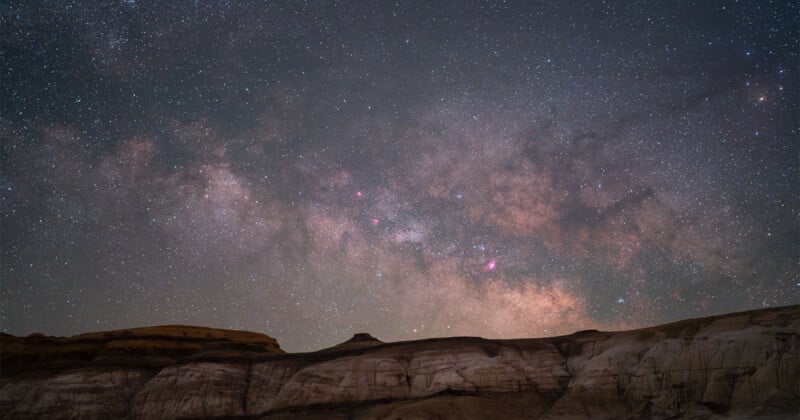
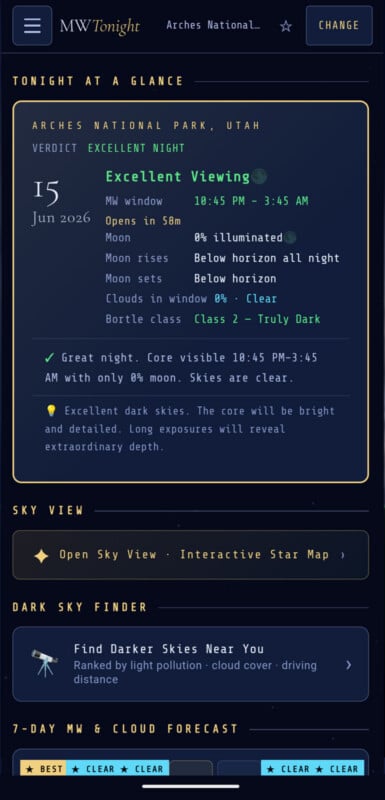
At the heart of Milky Way Tonight is a diagnostic engine that evaluates the quality of a given night for photography based on the user’s specific geographic coordinates. According to the developer, Jack Fusco, the app’s primary mission is to answer a single, fundamental question: is it a good night to go outside and take photos?
The application begins its analysis by calculating the exact timing of the Galactic Center’s ascent and descent. Because the Earth’s position changes relative to the stars throughout the year, the Milky Way’s core is only visible during specific months—typically from late February to October in the Northern Hemisphere. The app cross-references this visibility window with the current lunar phase. A full or near-full moon can wash out the faint light of the stars, rendering the Milky Way nearly invisible to a camera sensor.
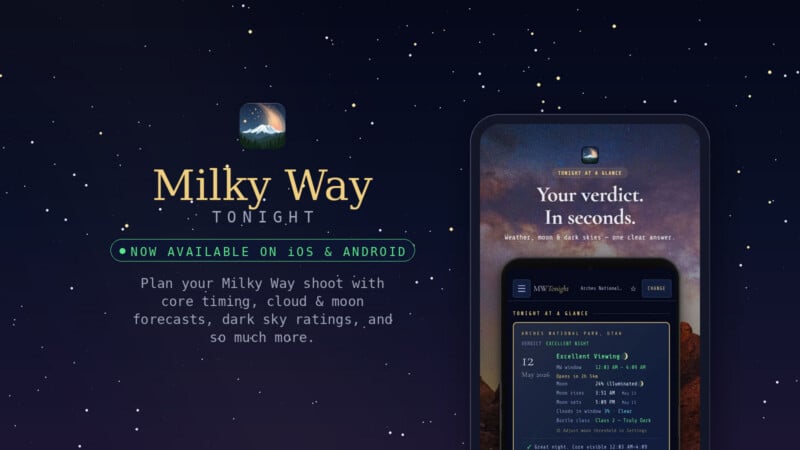
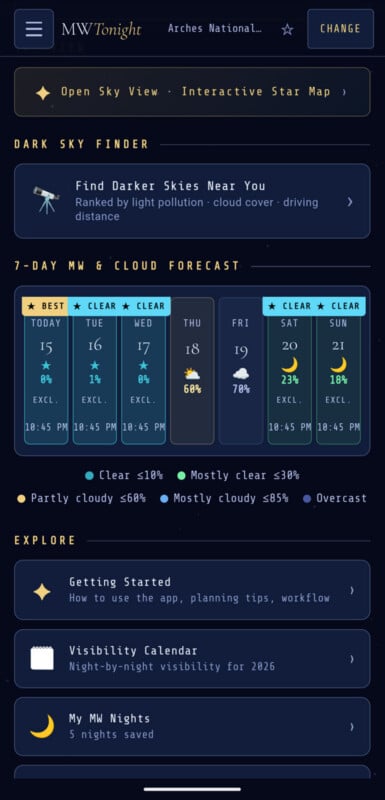
Furthermore, the app integrates real-time, hourly cloud cover forecasts. This is a critical feature, as even a thin layer of high-altitude cirrus clouds can obscure celestial details. By combining these three pillars—astronomical position, lunar interference, and local weather—the app delivers a simplified verdict. If conditions are sub-optimal, the software provides a timeline indicating when the next favorable window will occur, allowing photographers to plan their expeditions weeks or months in advance.
Advanced Technical Tools and Exposure Calculations
Beyond its role as a forecasting tool, Milky Way Tonight includes a comprehensive suite of utilities designed to assist in the field. One of the most significant technical challenges in astrophotography is determining the maximum exposure time before the Earth’s rotation causes stars to appear as "trails" rather than sharp points of light.
The application features a built-in exposure calculator that utilizes both the "Classic 500 Rule" and the more modern, precise "NPF Rule." The NPF rule is particularly valuable for users of high-resolution digital sensors, as it accounts for the camera’s pixel pitch, aperture, and focal length to provide a more accurate shutter speed limit. This ensures that photographers can maximize light gathering without sacrificing image sharpness.
Composition and Sky Visualization
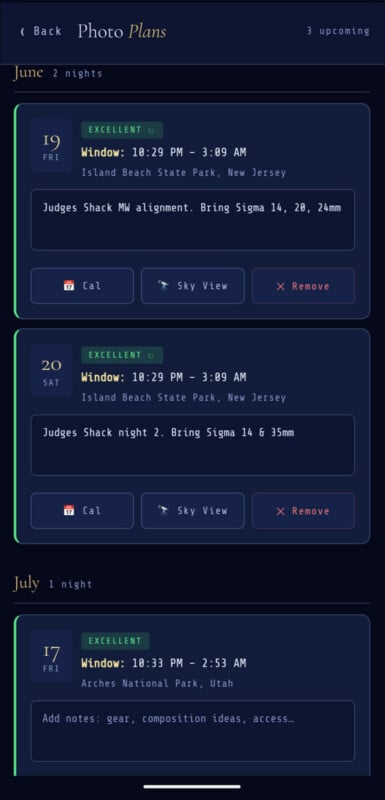
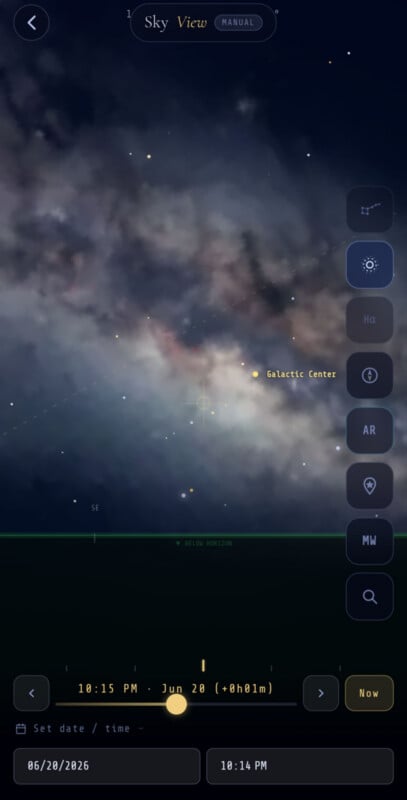
Composition in total darkness is notoriously difficult. Milky Way Tonight addresses this through a "Sky View" function, an augmented reality-style interface that allows users to visualize the position of the Milky Way relative to the landscape before the sun sets or while on-site. This tool is augmented by a composition planner that allows users to save reference photos and notes for future use.
For advanced users and those utilizing specialized equipment, the Sky View function can highlight regions of the sky with strong H-alpha (Hydrogen-alpha) emissions. H-alpha is a specific deep-red spectral line created by ionized hydrogen atoms, often found in nebulae and star-forming regions. While these emissions are largely invisible to the naked eye and standard consumer cameras, photographers using "astro-modified" cameras (where the internal IR-cut filter is removed or replaced) can capture vibrant pink and red hues in the night sky. The app’s ability to map these regions provides a significant advantage for those looking to produce high-end, scientifically informed imagery.
Strategic Planning and Environmental Data
A major hurdle for urban-based photographers is the identification of locations with minimal light pollution. Milky Way Tonight integrates "Dark Sky Finder" data, which utilizes the Bortle Scale—a numeric scale from 1 (excellent dark-sky site) to 9 (inner-city sky)—to help users locate nearby areas with sufficient darkness.
This integration allows for a dynamic planning workflow. If a photographer’s primary location is forecasted to be cloudy, they can use the app to search for a secondary "dark sky" site within driving distance that may have a more favorable weather outlook. This level of granular data is essential for the "chasing" aspect of landscape photography, where mobility is often the key to success.
Market Context and Developer Philosophy
The release of Milky Way Tonight comes at a time when many specialized photography applications have transitioned to subscription-based revenue models (Software as a Service or SaaS). In contrast, Jack Fusco has opted for a one-time lifetime license fee of $7.99. This pricing strategy has been noted by industry observers as a "user-first" approach, particularly for a hobbyist audience that may only use the app during the peak summer months.
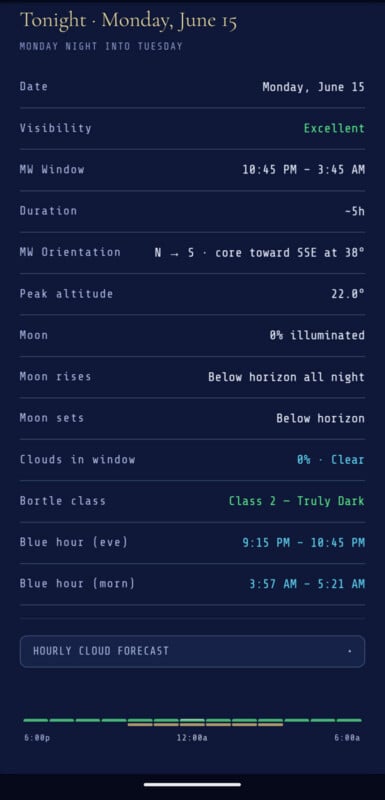
Fusco, an accomplished landscape photographer whose work has been featured by NASA and various international publications, emphasized that the app was built from a practitioner’s perspective. "My hope, and goal, while working on this was to ensure the app stayed very easy to use and understand while giving you all the information needed," Fusco stated. The design philosophy centers on "information at a glance," allowing a user to check the status of their shoot in seconds, while still offering "deep-dive" data for those who want to examine the raw astronomical metrics.
Implications for the Photography Community
The introduction of such streamlined tools reflects a broader trend in the imaging industry: the democratization of high-end technical knowledge. Historically, successful astrophotography required a deep understanding of celestial mechanics and manual calculations. By automating these processes, Milky Way Tonight allows photographers to focus more on the creative aspects of their work—such as foreground lighting, framing, and post-processing—rather than the logistics of "when and where."
Furthermore, the app’s ability to save and organize photography plans provides a structured workflow that mirrors professional production standards. Users can log their equipment (lenses, camera bodies, tripods) and specific settings for various locations, creating a personal database of successful shoots and lessons learned.
Technical Specifications and Availability
Milky Way Tonight is currently available for download on the Apple App Store and Google Play Store. It is compatible with most modern smartphones, utilizing GPS and internal gyroscopes to provide localized sky maps.
Key features at a glance include:
- Go/No-Go Forecast: A simplified rating system for nightly shooting conditions.
- 7-Day Detailed Forecast: Hourly breakdowns of cloud cover and visibility.
- Monthly Visibility Calendar: Long-term planning for the "Milky Way Season."
- Exposure Calculator: NPF and 500 Rule calculations based on sensor and lens data.
- H-Alpha Mapping: Specialized visualization for modified camera users.
- Light Pollution Integration: Access to global dark-sky maps.
- Composition Planner: Tools to save and reference future shooting locations.
As digital sensor technology continues to improve—offering higher ISO performance and better dynamic range—the demand for precise planning tools is expected to grow. Milky Way Tonight positions itself as a central hub for this growing community, bridging the gap between complex astronomical science and the art of landscape photography. For the price of a single premium coffee, the app offers a lifetime of automated scouting, potentially saving photographers countless hours of frustration and failed attempts in the field.

