


A groundbreaking study of exceptionally preserved dinosaur fossils, unearthed in eastern China, is revolutionizing our understanding of avian evolution and the development of flight. Researchers have identified ancient dinosaurs adorned with intricate feather structures that, despite their plumage, were incapable of flight. This discovery, detailed in the journal Communications Biology by Nature Portfolio, challenges long-held assumptions about the evolutionary trajectory of flight, suggesting that the ability to soar was not a linear progression but a more complex and dynamic process, potentially involving the loss of flight even after basic aerial capabilities had emerged.
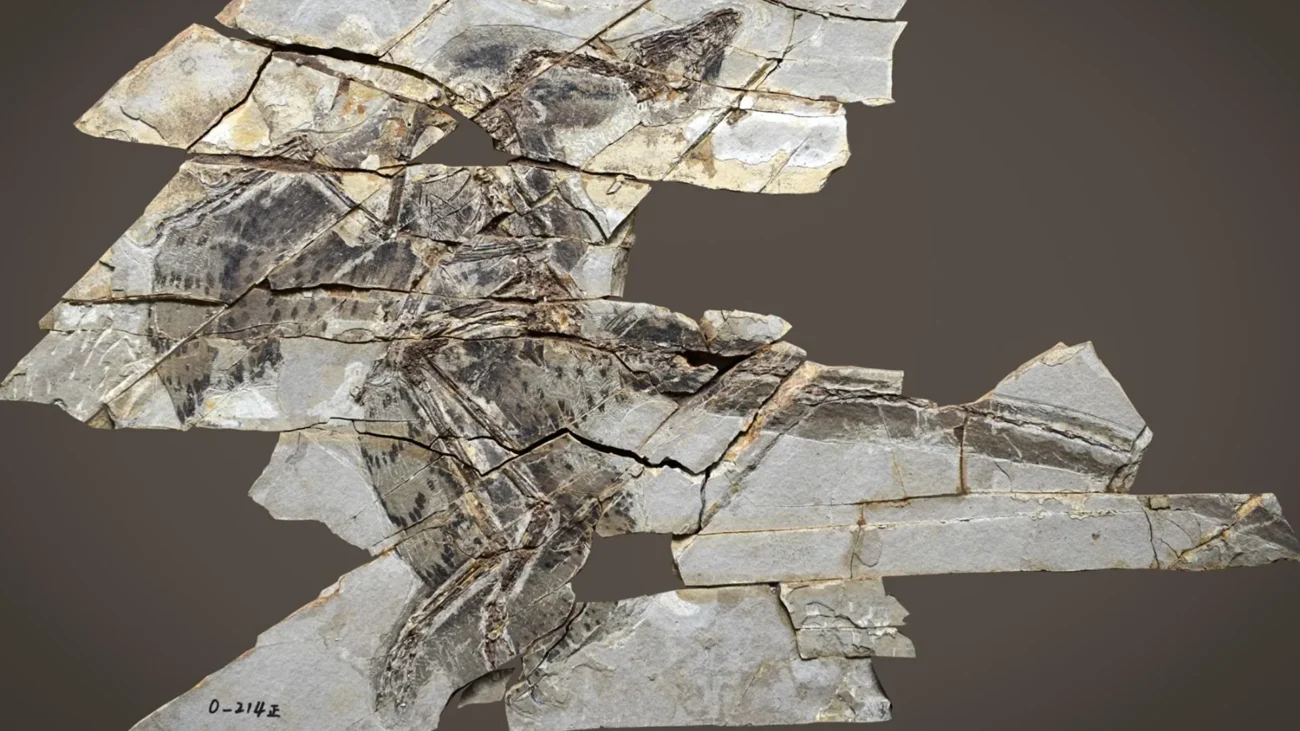
The research, spearheaded by Dr. Yosef Kiat, an ornithologist from Tel Aviv University’s School of Zoology and the Steinhardt Museum of Natural History, in collaboration with international colleagues from China and the United States, meticulously analyzed nine remarkably intact fossils of Anchiornis, a feathered dinosaur species that roamed the Earth approximately 160 million years ago during the Late Jurassic period. These specimens are of extraordinary scientific value, not only for their complete feather preservation but also for retaining their original coloration, a rarity that provides unprecedented insights into the physiology and behavior of these ancient creatures.
A Glimpse into the Jurassic: The Significance of Preserved Coloration
The exceptional preservation of Anchiornis fossils stems from unique geological conditions in Liaoning Province, China, a region renowned for its rich deposits of exceptionally fossilized fauna from the Mesozoic Era. This particular site has yielded a treasure trove of feathered dinosaurs, offering a window into a critical period of evolutionary history. The Anchiornis fossils studied exhibited wing feathers that were distinctly white with a prominent black spot at their tips. This specific coloration, meticulously documented, allowed the research team to scrutinize the structure and growth patterns of the feathers with a level of detail previously unattainable from fossil evidence.
"This finding has broad significance, as it suggests that the development of flight throughout the evolution of dinosaurs and birds was far more complex than previously believed," stated Dr. Kiat in a press release. "In fact, certain species may have developed basic flight abilities – and then lost them later in their evolution." This statement underscores the paradigm shift this research represents, moving away from a simple, unidirectional path toward flight to a more nuanced view of evolutionary adaptation and, in some cases, de-adaptation.
The Evolutionary Tapestry of Feathers: Beyond Flight
Dinosaurs diverged from other reptilian lineages around 240 million years ago. In the subsequent evolutionary eons, a significant development occurred: the emergence of feathers. These lightweight, protein-based structures served a multitude of purposes, including insulation for thermoregulation and, crucially, for locomotion. Around 175 million years ago, a pivotal group of feathered dinosaurs known as Pennaraptora emerged. This lineage is considered a distant ancestor to modern birds and holds the distinction of being the sole dinosaur group to survive the cataclysmic mass extinction event at the end of the Cretaceous period, 66 million years ago.
While scientists have long theorized that Pennaraptora evolved feathers primarily for flight, the current research on Anchiornis suggests a more intricate narrative. The possibility that some species within this group, despite possessing the anatomical precursors for flight, might have lost that ability over time mirrors the evolutionary paths of flightless birds observed today, such as ostriches, emus, and penguins. These modern examples demonstrate that flight is not an immutable evolutionary imperative; environmental pressures, resource availability, and predator dynamics can all favor the abandonment of flight in favor of other adaptations.
Unraveling the Secrets of Molting: A Functional Clue
The key to determining the flight capabilities of Anchiornis lay in a seemingly minor detail: the process of feather molting. Dr. Kiat, an expert in feather biology, explained the intricate lifecycle of feathers. "Feathers grow for two to three weeks," he elaborated. "Reaching their final size, they detach from the blood vessels that fed them during growth and become dead material. Worn over time, they are shed and replaced by new feathers – in a process called molting, which tells an important story."
The pattern of molting, Dr. Kiat explained, provides a critical functional indicator of flight ability. In birds that rely on flight for survival, molting occurs in a highly organized, gradual, and symmetrical manner. This carefully orchestrated process ensures that the bird maintains aerodynamic efficiency and can continue to fly even while undergoing feather replacement. This is achieved by shedding feathers in specific sequences, typically from the wings, in a way that preserves the integrity of the airfoil.
Conversely, in flightless birds, the molting process is often more random and irregular. Without the constant demand for sustained flight, the evolutionary pressure to maintain symmetrical feather replacement is significantly reduced. This irregular molting pattern allows for the shedding and regrowth of feathers without compromising the animal’s ability to move on the ground or in water.
The Anchiornis Case: Irregular Molting and Flightlessness
By meticulously examining the fossilized wing feathers of Anchiornis, the research team identified a continuous pattern of black spots along the wing edges. More importantly, they observed developing feathers where the black spots were out of alignment, indicating that these new feathers were in the process of growth. This observation, coupled with the overall arrangement of the feathers, revealed a molting pattern that was distinctly irregular rather than orderly.
"Based on my familiarity with modern birds, I identified a molting pattern indicating that these dinosaurs were probably flightless," Dr. Kiat stated. "This is a rare and especially exciting finding: the preserved coloration of the feathers gave us a unique opportunity to identify a functional trait of these ancient creatures – not only the body structure preserved in fossils of skeletons and bones."
The irregular shedding and regrowth of feathers, as evidenced by the misalignment of the black spots on developing feathers, strongly suggests that Anchiornis did not rely on its wings for sustained flight. If it had been capable of flight, the molting process would have been far more synchronized and symmetrical to maintain aerodynamic function.
Broader Implications: Rewriting the Narrative of Flight Evolution
The inclusion of Anchiornis in the growing roster of feathered dinosaurs that were not capable of flight has profound implications for our understanding of avian evolution. It suggests that the development of feathers and the subsequent evolution of flight were not a monolithic or strictly progressive march. Instead, it was a period of intense experimentation and adaptation, where lineages could develop complex feather structures and even rudimentary flight capabilities, only to later lose that ability due to shifting environmental pressures or evolutionary trade-offs.
"Feather molting seems like a small technical detail – but when examined in fossils, it can change everything we thought about the origins of flight," Dr. Kiat emphasized. "Anchiornis now joins the list of dinosaurs that were covered in feathers but not capable of flight, highlighting how complex and diverse wing evolution truly was."
This research contributes to a growing body of evidence that points to the multifaceted nature of feather evolution. While feathers are intrinsically linked to flight in modern birds, their initial emergence likely served other purposes, such as insulation, display, or gliding. The evolution of powered flight was a later, albeit significant, development that occurred within specific dinosaur lineages.
The findings also raise further questions about the evolutionary pressures that might have led to the loss of flight in species like Anchiornis. Were there specific ecological niches that favored terrestrial or arboreal lifestyles over aerial ones? Did changes in food availability, predator-prey dynamics, or climate render flight less advantageous or more energetically costly? These are avenues for future research that could further illuminate the complex interplay between morphology, behavior, and environment in shaping evolutionary trajectories.
The study by Dr. Kiat and his colleagues serves as a powerful testament to the insights that can be gleaned from exceptionally preserved fossils. By moving beyond skeletal analysis to examine functional traits revealed through preserved coloration and intricate biological processes like molting, scientists are continuously refining our understanding of life’s history, revealing that evolution is rarely a simple, linear path but a rich tapestry of innovation, adaptation, and sometimes, even reversal. The feathered, flightless Anchiornis is a compelling chapter in this ongoing narrative, underscoring the enduring complexity and wonder of evolutionary biology.

