


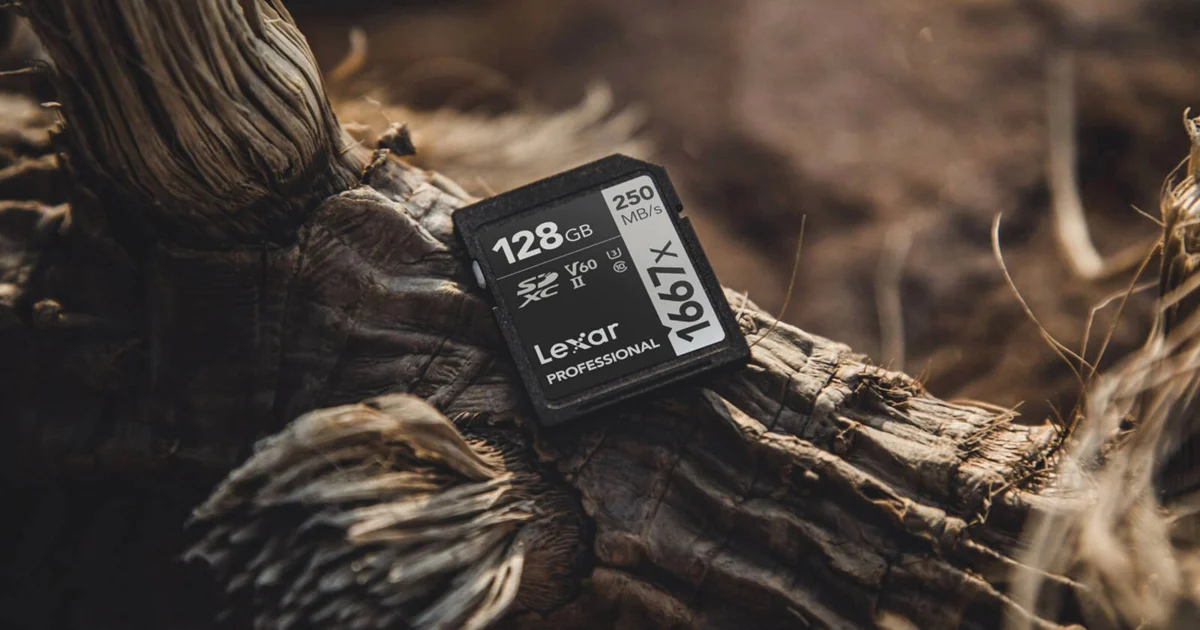
The professional photography and videography industry is currently grappling with a growing crisis of authenticity regarding one of its most essential tools: the SD memory card. A recent investigative report by Lee Morris of Fstoppers, titled “Your Memory Cards Are Probably Fake,” has ignited a firestorm of concern among creators who rely on high-performance storage to safeguard their work. The central thesis of the report is alarming, suggesting that counterfeit operations have become so sophisticated and pervasive that a significant portion of the global photography community may unknowingly be using fraudulent products. While the claim that "nearly every photographer is a victim" may appear hyperbolic, the technical and economic realities of the 2024-2025 memory market suggest that the risk is higher than ever before.
The Anatomy of the Memory Card Scam
The mechanics of a counterfeit memory card scam are rooted in a deceptive practice known as "firmware spoofing." Scammers typically acquire low-capacity, low-speed NAND flash memory chips—often 32GB or 64GB units with slow write speeds—and house them within plastic shells that mimic premium products, such as the SanDisk Extreme Pro or Lexar Professional series.
Crucially, the internal controller of these cards is programmed to report a much higher capacity and speed to the host device than what is physically present. When a photographer inserts a counterfeit 512GB card into their camera, the operating system confirms the 512GB capacity. However, once the user exceeds the actual physical capacity of the internal chip (e.g., 32GB), the card begins to overwrite existing data or fails to record new files entirely, leading to catastrophic data loss. This discrepancy often goes unnoticed until a professional is in the field, recording a critical event, only to find their files corrupted or missing.
The SanDisk Identity Crisis and Brand Vulnerability
SanDisk, a brand owned by Western Digital until their recent corporate separation, has become the primary target for counterfeiters due to its massive market share. However, the brand’s own recent business decisions have inadvertently aided scammers. SanDisk has frequently updated its packaging, card labels, and even its primary logo.
In late 2024, SanDisk underwent a major visual rebranding following its split from Western Digital. This constant evolution of design makes it nearly impossible for consumers to verify authenticity based on visual cues alone. As Lee Morris noted in his report, even seasoned professionals can be "tripped up" by these design shifts. When the legitimate manufacturer changes the look of its product every 12 to 18 months, a counterfeit card produced six months ago might look more "authentic" to a consumer than a genuine card with the newest branding.
Furthermore, SanDisk’s reputation has been under scrutiny following a series of high-profile failures in its portable SSD lineup in 2023 and 2024. This history of reliability issues has created a climate of confusion where users may attribute a card failure to "SanDisk quality" rather than realizing they have purchased a fraudulent product.
The Role of Major E-commerce Platforms
The proliferation of counterfeit memory cards is inextricably linked to the operational structures of major online marketplaces like Amazon and Walmart. While these platforms are authorized retailers for brands like SanDisk, Lexar, and Sony, their "third-party seller" ecosystems create significant vulnerabilities.
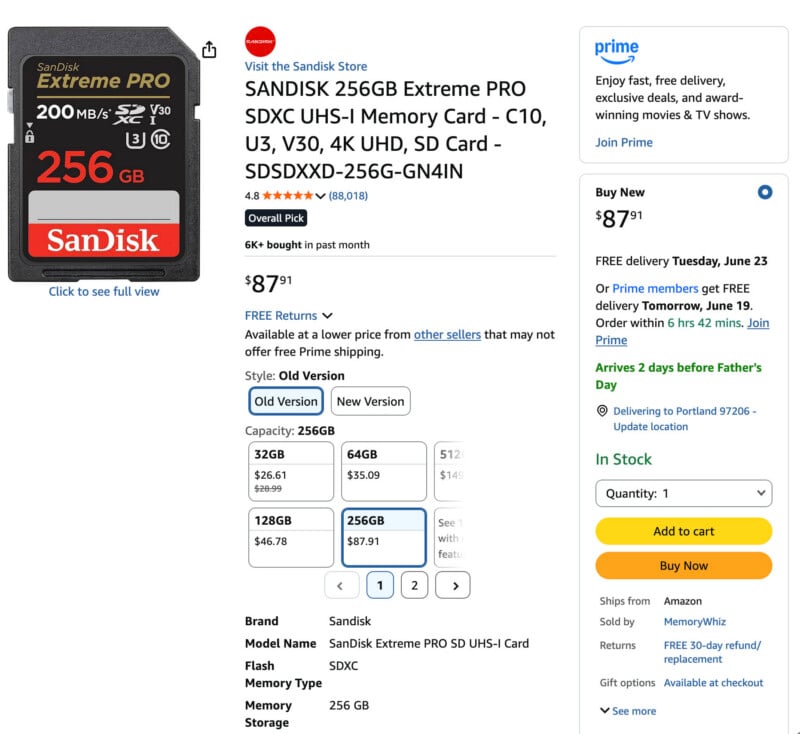
Investigation into Amazon’s current listings reveals a confusing landscape. For instance, a search for a "SanDisk SD card" may return a top result that is "fulfilled by Amazon" but "sold by" a third-party entity with a name like "MemoryWhiz" or "Stavy Sales." Because Amazon often commingles inventory—a practice where products from various sellers with the same SKU are stored in the same bin—a consumer who selects "Sold by Amazon" could theoretically receive a card provided to the warehouse by a fraudulent third-party seller.
The "Buy Box" on Amazon—the section of the page that allows for one-click purchasing—frequently rotates based on price and shipping speed. If a scammer lists a counterfeit card at a price just a few dollars lower than the MSRP, they may capture the Buy Box, leading thousands of customers to purchase fake goods without ever realizing they aren’t buying directly from the manufacturer.
Technical Analysis: Manufacturing vs. Relabeling
To understand why counterfeiting is so effective, one must look at the global supply chain for NAND flash memory. Chris Kooistra, Vice President of Marketing at OWC (Other World Computing), clarified the distinction between manufacturing and branding in an interview with PetaPixel.
"Only a handful of companies actually fabricate NAND," Kooistra explained. This includes giants like Samsung, SK Hynix, and Micron. Most other memory card brands are "integrators"—they purchase the raw flash chips and controllers and then add their own firmware and quality control measures.
Scammers exploit this by using the same "off-the-shelf" components that a mid-tier legitimate brand might use, but they skip the rigorous validation and "binning" processes. Binning is the method by which manufacturers test chips for speed and reliability; the highest-quality chips become "Pro" cards, while lower-quality chips are relegated to consumer-grade products. Counterfeiters take the lowest-grade chips—those that may have failed factory tests—and label them as "Extreme Pro" or "Gold Series" units.
Official Responses and Industry Pushback
When reached for comment, Lexar emphasized that protecting product authenticity is a top priority. However, the company also pointed out that consumer behavior often contributes to the problem. "eBay is not an authorized reseller of Lexar products," a spokesperson stated, noting that many of the cards identified as "fake" in viral videos are purchased from non-authorized channels or as "refurbished" items from unknown sources.
Lexar also raised questions regarding the transparency of the Fstoppers report, noting that the video appeared to be a paid collaboration with Salvage Data, a data recovery firm. This highlights a secondary industry that benefits from the failure of counterfeit cards: expensive data recovery services. Lexar countered by highlighting that they offer free image recovery software to their customers, a move designed to reinforce brand loyalty and mitigate the impact of accidental data loss.
OWC’s Kooistra suggested that the solution lies in the "ecosystem." OWC, for example, utilizes proprietary software called Innergize that runs health checks and firmware updates. This software only recognizes genuine OWC cards, effectively creating a digital "handshake" that verifies authenticity. "If a memory card were just a label on someone else’s product, there would be no reason for OWC to be in this category at all," Kooistra remarked.
How to Detect and Prevent Fraud
For photographers, the risk of using a counterfeit card is not just financial; it is professional. A wedding photographer losing the "first kiss" photos due to a $40 fake SD card faces potential lawsuits and irreparable reputational damage. To combat this, experts recommend a three-tier verification process:
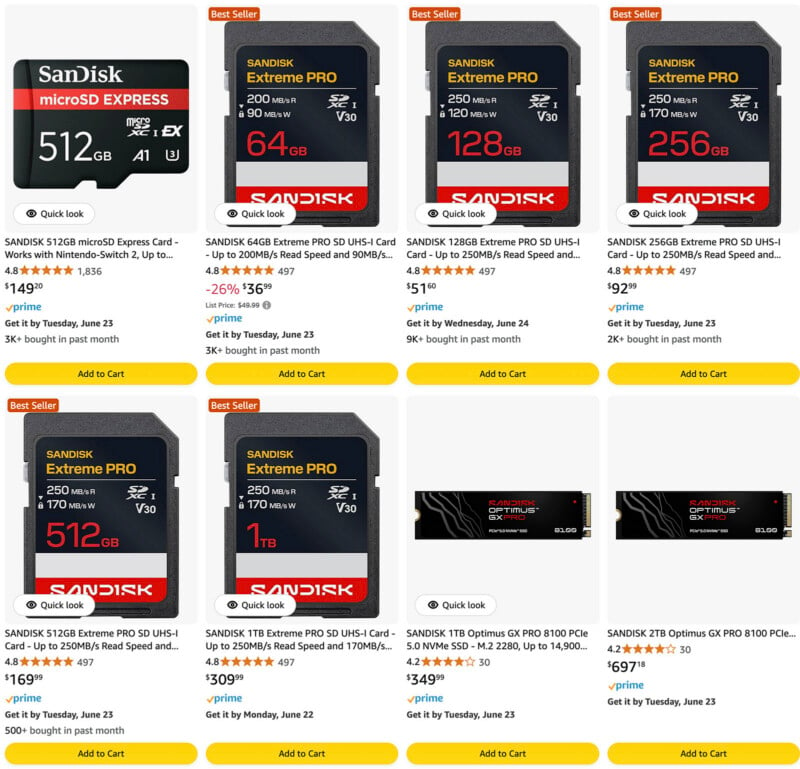
- Purchase Source Verification: Only buy from authorized retailers such as B&H Photo, Adorama, or directly from the manufacturer’s storefront. On Amazon, ensure the listing explicitly states "Ships from and Sold by Amazon.com."
- Capacity Testing: Upon receiving a new card, users should run software such as F3 (Fight Flash Fraud) or F3XSwift for Mac. These tools write data to every single sector of the card and then read it back to verify that the claimed capacity is physically present.
- Speed Benchmarking: Use tools like the Blackmagic Disk Speed Test or AJA System Test. If a card labeled as "300MB/s" consistently tops out at 90MB/s, it is likely a counterfeit or a mislabeled lower-tier product.
The Economic and Legislative Outlook
The counterfeit electronics market is estimated to be a multi-billion dollar global industry. As of 2024, more than 80% of U.S. households shop on Amazon, making it the primary gateway for these fraudulent goods. While Amazon has introduced initiatives like "Project Zero" to empower brands to remove counterfeit listings, the sheer volume of third-party sellers makes total enforcement nearly impossible.
The broader implication for the photography industry is a shift toward more secure, integrated storage solutions. We are seeing a rise in cameras with internal SSDs or proprietary storage formats that are more difficult to counterfeit than the ubiquitous SD card. Until then, the burden of proof remains on the consumer.
Conclusion
Counterfeit SD memory cards are undeniably a significant problem, but the "epidemic" described by some influencers is largely concentrated in high-risk purchasing environments. While scammers have become adept at mimicking packaging and spoofing firmware, they cannot replicate the performance and reliability of genuine high-grade NAND flash. The "rising cost of memory" may tempt photographers to seek out deals that seem too good to be true, but in the professional imaging world, the cheapest component in the bag should never be the one that holds the most value. Authenticity is not just about the logo on the plastic; it is about the integrity of the data stored within.

