


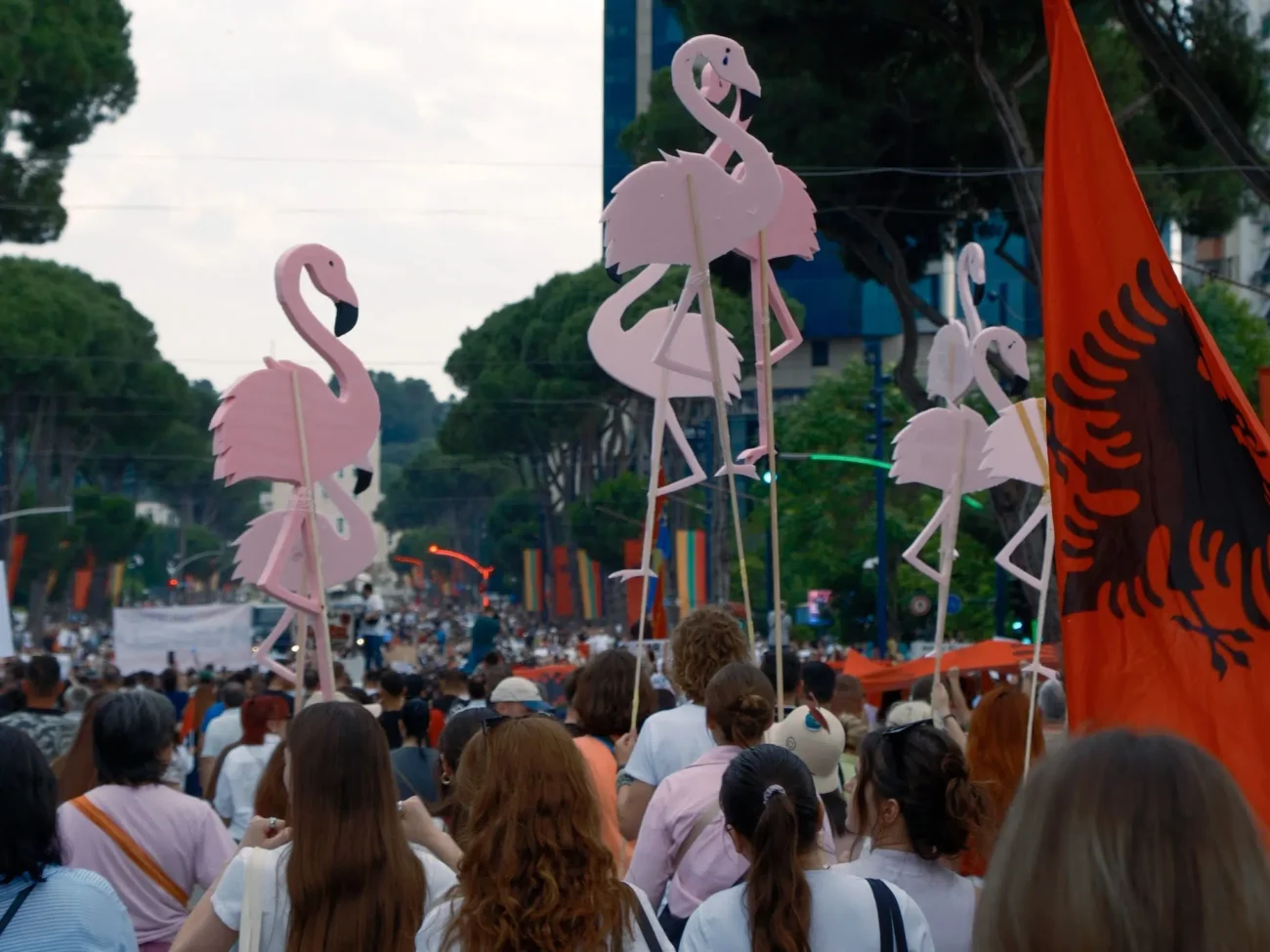
The European Parliament has adopted a strong resolution demanding an immediate cessation of destructive development within Albania’s Vjosa-Narta Protected Area, unequivocally stating that the rule of law and adherence to European Union environmental standards are non-negotiable prerequisites for the country’s accession. This decisive action signals a significant rebuke of recent legislative changes in Albania and underscores the Parliament’s commitment to upholding environmental integrity as a cornerstone of the EU enlargement process. The resolution specifically calls for the repeal of Albania’s 2024 amendments to the Law on Protected Areas, legislation widely criticized for facilitating the degradation of one of the Mediterranean’s most ecologically vital sites and sparking unprecedented public outcry.
Escalating Environmental Concerns and Public Uprising
The adoption of the resolution follows a period of intense public protest and growing international concern over the fate of the Vjosa-Narta Protected Landscape. Over the past 18 days, more than 100,000 Albanian citizens have participated in what has become globally recognized as the "Flamingo Revolution." This popular uprising is a direct response to the alleged illegal clearing of forests, ancient dunes, and critical protected habitats within the Vjosa-Narta area. The scale and persistence of these demonstrations highlight a deep-seated public demand for environmental protection and good governance, directly challenging the Albanian government’s actions.
The European Parliament’s resolution directly addresses the problematic amendments to the Law on Protected Areas, enacted in 2024. These amendments are perceived as enabling the construction of large-scale tourism infrastructure within protected zones and significantly weakening crucial environmental oversight mechanisms. Members of the European Parliament (MEPs) also voiced profound apprehension regarding Albania’s Law on Strategic Investments. This legislation’s accelerated permitting procedures are seen as a potential loophole that could bypass essential environmental scrutiny, particularly in ecologically sensitive regions like Vjosa-Narta.
A Call for Immediate Moratorium and Compliance
In a bid to halt further environmental damage, the resolution unequivocally calls for an "immediate moratorium on new permitting procedures, construction works and development interventions within protected areas." This moratorium is to remain in effect until the incompatible provisions of Albania’s amended Law on Protected Areas are repealed and full compliance with EU nature protection standards is demonstrably ensured. This stance emphasizes that the legislative framework governing protected areas must align with established European environmental benchmarks before any further development proceeds.
The call for a moratorium reflects a broader concern that the current trajectory of development in Albania is undermining its EU accession aspirations. The European Parliament’s message is clear: environmental protection and the rule of law are not optional extras but fundamental requirements for membership. This position contrasts sharply with the initial response from the European Commission, which has drawn criticism for what some perceive as a less stringent approach.
Contrasting Responses: Parliament vs. Commission
The European Parliament’s decisive action stands in stark contrast to the European Commission’s reported reaction to the alleged illegalities. On June 15th, Commissioner Oliver Varhelyi, in a statement, indicated that the Commission had received assurances from the Albanian government that an environmental impact assessment would be conducted. Critics argue that this statement overlooks the fact that significant illegal works have already commenced without proper permits, transparency, or any prior environmental assessment. The Parliament’s resolution, therefore, appears to demonstrate a more robust commitment to upholding EU environmental laws and accession criteria than the Commission’s initial engagement, signaling a potential divergence in approach and a stronger advocacy for environmental safeguards by the legislative body.
The Ecological Significance of Vjosa-Narta
The Vjosa-Narta Protected Landscape is not merely an Albanian national treasure; it is a site of immense ecological importance at a regional and European level. It constitutes part of the last remaining intact delta system in the Mediterranean, a fragile ecosystem increasingly under pressure from development. This landscape serves as a vital habitat for over 200 bird species and more than 70 endangered species. Furthermore, it lies along one of Europe’s most critical migratory bird corridors, making its preservation crucial for avian populations across the continent.
The area also provides essential sanctuary for iconic and vulnerable species such as the Mediterranean monk seal and the Loggerhead sea turtle. These species are subject to legal protection under EU Member States, including Greece, Italy, and Croatia, highlighting the transboundary implications of environmental degradation in the region. The health of Vjosa-Narta directly impacts biodiversity conservation efforts across the Adriatic and Ionian Seas, underscoring the shared responsibility for its protection.
A Chronicle of Alleged Violations
Since the beginning of May 2026, construction activities have reportedly been underway within the protected area without any publicly disclosed project plans, environmental impact assessments, public consultations, or valid permits. These actions are alleged to be in direct violation of Albania’s accession commitments under both the Environmental acquis – the body of EU environmental law – and Cluster 1, which pertains to the rule of law and fundamental rights.
This ongoing construction follows the earlier commencement of illegal works for the Vlora International Airport in November 2021, also within the same ecologically sensitive area. The cumulative impact of these developments raises serious concerns about Albania’s commitment to integrating EU environmental standards into its national legislation and practices. The lack of transparency and procedural irregularities surrounding these projects further fuels doubts about the government’s adherence to democratic principles and the rule of law, core tenets of the EU accession process.
Voices from the Frontlines of Conservation
The European Parliament’s decisive stance has been met with strong support from environmental organizations working on the ground. Joni Vorpsi, Head of Policy and Advocacy at PPNEA (Protection and Preservation of Natural Environment in Albania), emphasized the critical need for the moratorium. "The European Parliament’s call for an immediate moratorium is exactly what is needed in our fight to protect Vjosa-Narta," Vorpsi stated. "It gives Albanian authorities the time and the clarity to align with EU standards on nature protection and avoid irreversible mistakes that would set back Albania’s EU path. We want Albania in the European family, and that is precisely why we cannot afford to get this wrong." His statement underscores the desire for Albania’s European integration while insisting that this path must be paved with respect for environmental integrity and legal compliance.
Anouk Puymartin, Head of Policy at BirdLife Europe, echoed this sentiment, highlighting the Parliament’s alignment with public will. "Today the European Parliament has stood with the thousands of Albanians on the streets of Tirana," Puymartin remarked. "This vote sends the unambiguous message that you cannot join the EU while bulldozing protected wetlands and bypassing your own laws. Protecting Vjosa-Narta, and respecting the Birds and Habitats Directives, are a fundamental condition of EU accession. The Albanians protesting in Tirana already knew that defending nature and defending democracy are the same fight. Today, the European Parliament said so too." Her words draw a direct parallel between environmental activism and the broader struggle for democratic values, emphasizing that the fight for Vjosa-Narta is emblematic of a larger commitment to good governance and the rule of law.
Broader Implications for the Western Balkans
The developments surrounding the Vjosa-Narta Protected Area and the European Parliament’s response carry significant implications beyond Albania’s borders. There are growing concerns that other Western Balkan accession countries are closely observing these events and may be contemplating similar legislative changes that could prioritize rapid development over environmental protection.
Today’s vote by the European Parliament serves as a clear signal that such a legislative approach is incompatible with the requirements for EU membership. It establishes a precedent for the scrutiny of environmental laws and development practices within candidate countries, reinforcing the EU’s commitment to upholding its acquis communautaire. This sends a powerful message to the entire Western Balkan region that the path to European integration must be characterized by robust environmental governance, adherence to the rule of law, and respect for fundamental rights, including the right to a healthy environment. The Parliament’s firm stance aims to prevent a race to the bottom in environmental standards among aspiring EU members and to ensure that future enlargement is built on a foundation of sustainable development and shared democratic values.
The engagement of organizations like BirdLife Europe and PPNEA from the outset of this issue highlights the crucial role of civil society in advocating for environmental protection and transparency. PPNEA’s sustained campaign and active presence at the protests, coupled with BirdLife Europe’s advocacy efforts in Strasbourg, demonstrate a coordinated and persistent push for accountability. Their presence at the vote underscores the interconnectedness of international advocacy and local activism in shaping policy outcomes. The successful passage of this resolution represents a significant victory for these organizations and the citizens of Albania who have mobilized in defense of their natural heritage.
The European Parliament’s resolution on Albania’s 2025 Commission Report is more than just a critique of specific legislative acts; it is a strong affirmation of the EU’s core values and its unwavering commitment to ensuring that enlargement is a process that upholds, rather than compromises, the environmental and legal standards that define the Union. The fate of Vjosa-Narta has become a critical test case, and the Parliament’s firm stance provides a crucial framework for future environmental governance in the Western Balkans.

