


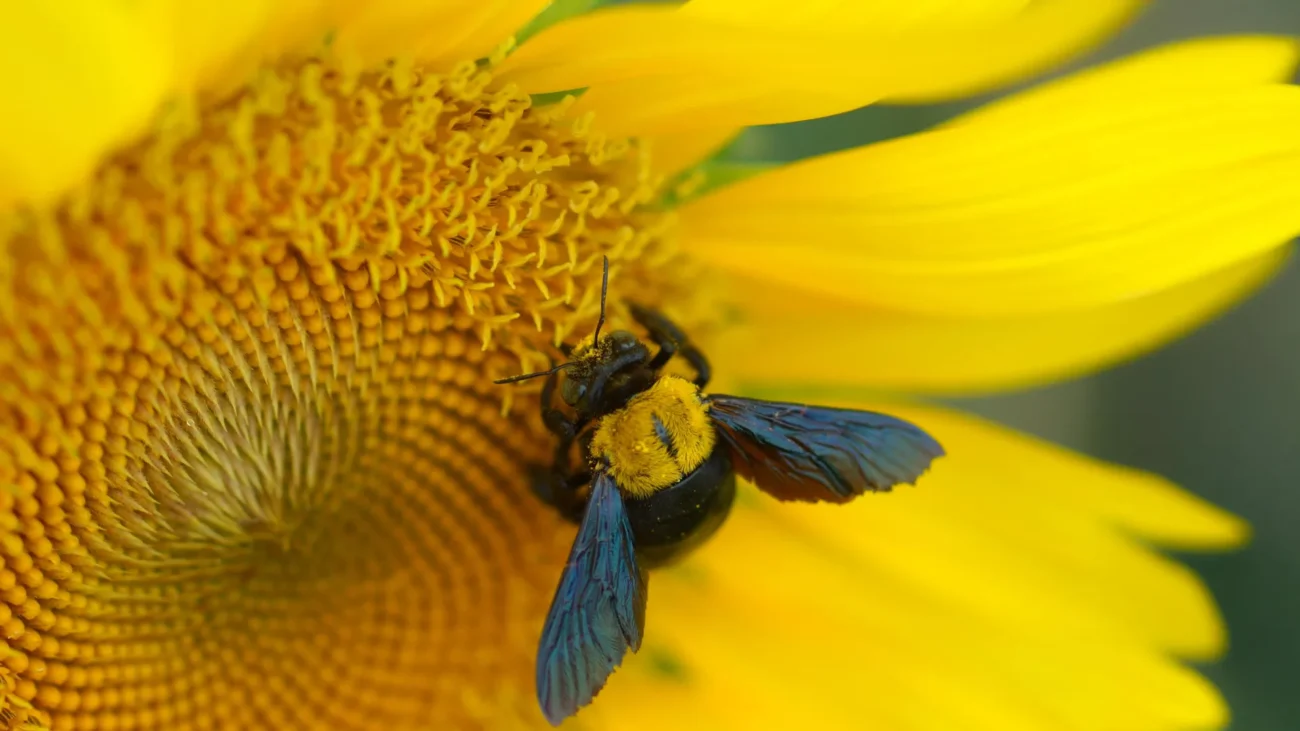
New research suggests that native bee species that build their nests inside plant stems may face the greatest immediate threat from rising temperatures linked to climate change. In contrast, bees that nest underground appear better equipped to avoid dangerous heat. This critical finding, stemming from a comprehensive study of Australian native bees, underscores the intricate relationship between nesting habits, environmental conditions, and species vulnerability in the face of a rapidly warming planet. The study, published in the esteemed journal Nature Communications, examined the heat tolerance of 95 native bee species across eastern mainland Australia, encompassing a wide climatic spectrum from the tropical north to the temperate south.
The collaborative effort involved a multidisciplinary team of researchers from prominent Australian institutions, including Macquarie University, The University of Sydney, La Trobe University, Flinders University, the University of Wollongong, Adelaide University, and The University of Queensland. Their investigation delved into the evolutionary pathways of heat tolerance in various bee species, aiming to provide a robust assessment of their susceptibility to the ongoing effects of climate change.
Understanding the Crucial Role of Nesting Habits
Australia is a global hotspot for native bee diversity, boasting approximately 1,700 distinct species. These remarkable insects exhibit a fascinating array of nesting strategies, broadly categorized into three main groups: ground nesters, wood nesters, and stem or cavity nesters. Ground-nesting bees excavate burrows in the soil, seeking refuge in the earth’s cooler depths. Wood-nesting bees utilize pre-existing cavities within dead wood, such as tree hollows or fallen branches, offering a more insulated environment. The third group, and the focus of this particular concern, are stem-nesting bees, which construct their nests within the hollow stems of plants or in small, pre-existing holes found in twigs.
Dr. Carmen da Silva, lead author of the study and a Research Fellow at the Pollinator Futures Research Centre at Macquarie University, elaborated on the stark differences in thermal exposure dictated by these nesting behaviors. "Bees that nest underground can effectively hide from extreme heat," Dr. da Silva explained. "As a result, they don’t experience temperatures as high as those that live above ground, particularly species that live in thin plant stems that offer very little insulation from the heat outside." This lack of insulation for stem-nesting species is a significant vulnerability. "Stem-nesting species appear to have the lowest capacity to escape unfavorable environmental temperatures and are likely to be the most impacted by anthropogenic climate change in the near term," she stated. The research unequivocally indicates that a species’ choice of nesting location plays a pivotal role in determining its ability to withstand escalating temperatures.
The Imperative of Bee Conservation: A Cornerstone of Ecosystem Health and Food Security
The findings of this study carry profound implications, extending far beyond the immediate survival of individual bee species. Dr. da Silva emphasized the overarching importance of protecting bees due to their indispensable role in both natural ecosystems and the global agricultural sector. "Bees are critical in ecosystems all over the world because of their role as pollinators, and they’re under threat from warming and drying climates," she asserted. Their ecological functions are multifaceted: bees are the primary agents responsible for the pollination of countless plant species, ensuring the reproduction and survival of flora that forms the base of many food webs.
In the agricultural realm, the impact is equally significant. Native bees are not only vital for pollinating crops that form the staple diet for many human populations but also for high-value niche crops. "Bees sustain native ecosystems and play a crucial role in agricultural crop production," Dr. da Silva highlighted. "Tropical native bees are vital pollinators for crops like macadamia nuts, avocados, mangos, and lychees." The economic and food security ramifications of declining bee populations, particularly those essential for these specific crops, are substantial and warrant urgent attention.
Geographical Patterns of Vulnerability: Tropical Bees at the Forefront of Climate Risk
Beyond nesting habits, the research also identified a discernible geographical pattern in species vulnerability. Bee species inhabiting regions closer to the equator, characterized by generally warmer climates, appeared to be more susceptible to the effects of climate change. Tropical bees, in particular, were found to face the highest overall risk. This finding might seem counterintuitive at first glance, but the researchers provide a clear explanation.
Dr. Vanessa Kellermann, a Senior Lecturer in the Department of Ecology, Plant and Animal Sciences at La Trobe University and a senior author on the study, addressed this apparent paradox. "Predicting which species will be vulnerable to climate change is one of the biggest challenges in ecology," Dr. Kellermann remarked. "We found bee species with the highest heat tolerance were not necessarily the safest from warming, because many of them already live in extremely hot environments." This suggests a physiological ceiling for heat adaptation. Species already existing at the upper limits of their thermal tolerance may have little to no capacity to cope with further temperature increases. Even a seemingly small rise in average temperatures could push these species beyond their physiological limits, leading to increased stress, reduced reproductive success, and ultimately, population decline. This highlights a critical nuance in climate change impact assessments: adaptation to current conditions does not automatically confer resilience to future, more extreme conditions.
Unveiling the Mysteries of Australia’s Native Bee Diversity
The research underscores a broader scientific imperative: the need for a deeper understanding of Australia’s incredibly diverse native bee populations. Many of these species remain poorly understood, making comprehensive vulnerability assessments challenging. "We still know so little about most of Australia’s amazing native bees," stated co-senior author Dr. Ros Gloag, a Senior Lecturer in Evolutionary Biology in the School of Life and Environmental Sciences at the University of Sydney. "This study helps us recognise that having a better understanding of native bee behavior is key to identifying the greatest threats to their wild populations."
The implications of this research are far-reaching for conservation efforts. By identifying specific nesting strategies and geographical locations that confer higher risk, conservationists and policymakers can prioritize targeted interventions. This might include habitat restoration focused on providing suitable nesting sites, the establishment of climate-controlled refugia, or the implementation of monitoring programs to track the health of at-risk populations.
Supporting Data and Scientific Context
The study’s findings align with a growing body of evidence documenting the negative impacts of climate change on insect populations globally. For instance, a meta-analysis published in Science in 2019 by Dr. Francisco Sánchez-Bayo and Dr. Kris Wyckhuys revealed a dramatic decline in insect biomass worldwide, with some regions experiencing losses of over 75%. While this Australian study focuses on specific vulnerabilities within a single insect order, it contributes crucial data to this larger scientific narrative.
The 95 species examined in the study represent a significant portion of the native bee fauna in eastern Australia, providing a robust dataset for statistical analysis. The researchers employed sophisticated methodologies, likely including field observations of nesting sites, physiological experiments to measure heat tolerance (such as critical thermal maxima), and potentially genetic analyses to understand the evolutionary basis of heat adaptation. The geographic spread of the study sites, from the humid tropics of Queensland to the temperate regions of Victoria and Tasmania, allowed for the assessment of species across a wide range of thermal regimes.
Data from the Bureau of Meteorology in Australia consistently shows an upward trend in average temperatures across the continent, with the last decade being among the hottest on record. For example, the average annual temperature for Australia has increased by over 1.4 degrees Celsius since national records began in 1910. This warming trend is particularly pronounced in northern Australia, exacerbating the challenges faced by tropical ecosystems and their inhabitants. The Intergovernmental Panel on Climate Change (IPCC) has projected further warming of 1.5 to 2 degrees Celsius by mid-century under current emission scenarios, intensifying the urgency of the threats identified in this study.
Broader Impact and Implications
The implications of this research extend beyond the immediate conservation of native bees. Pollinators are foundational to biodiversity and ecosystem stability. A decline in native bee populations can trigger cascading effects throughout ecosystems, impacting plant reproduction, seed dispersal, and the availability of food for other wildlife. Furthermore, the economic reliance on bee pollination for a significant portion of global food production means that the threats identified here have direct consequences for food security and agricultural sustainability.
The study’s emphasis on the interaction between nesting behavior and climate change also offers a valuable framework for understanding vulnerability in other insect groups. Many insects rely on specific microhabitats for nesting and thermoregulation. Changes in temperature and precipitation patterns, driven by climate change, can directly disrupt these critical life stages.
Future Research Directions and Conservation Strategies
The researchers advocate for continued, in-depth study of Australia’s native bees. Future research could focus on understanding the specific physiological mechanisms underlying heat tolerance in different species, identifying potential genetic resources for breeding more resilient pollinators, and mapping critical nesting habitats to inform land management and conservation planning.
Given the findings, a multi-pronged approach to conservation is likely necessary. This could include:
- Habitat Protection and Restoration: Focusing on preserving and enhancing natural landscapes that provide suitable nesting sites for vulnerable species, particularly those with stem-nesting habits. This could involve managing vegetation to ensure the availability of appropriate plant species with suitable stem structures.
- Climate Change Mitigation: The most effective long-term solution remains the global effort to reduce greenhouse gas emissions and limit the extent of future warming.
- Targeted Monitoring Programs: Establishing long-term monitoring programs for at-risk bee species, particularly in tropical regions and areas with a high prevalence of stem-nesting species, to track population trends and assess the effectiveness of conservation interventions.
- Public Awareness and Engagement: Educating the public about the importance of native bees and the threats they face can foster greater support for conservation initiatives and encourage landscape-level changes that benefit pollinators.
The study by da Silva and colleagues provides a crucial piece of the puzzle in understanding how climate change will reshape biodiversity. It highlights that while some species may possess a degree of inherent resilience, others, particularly those with specific nesting requirements, are precariously positioned. The fate of these vital pollinators, and by extension, the health of our ecosystems and the security of our food supply, hinges on our ability to translate this scientific knowledge into meaningful action.

