


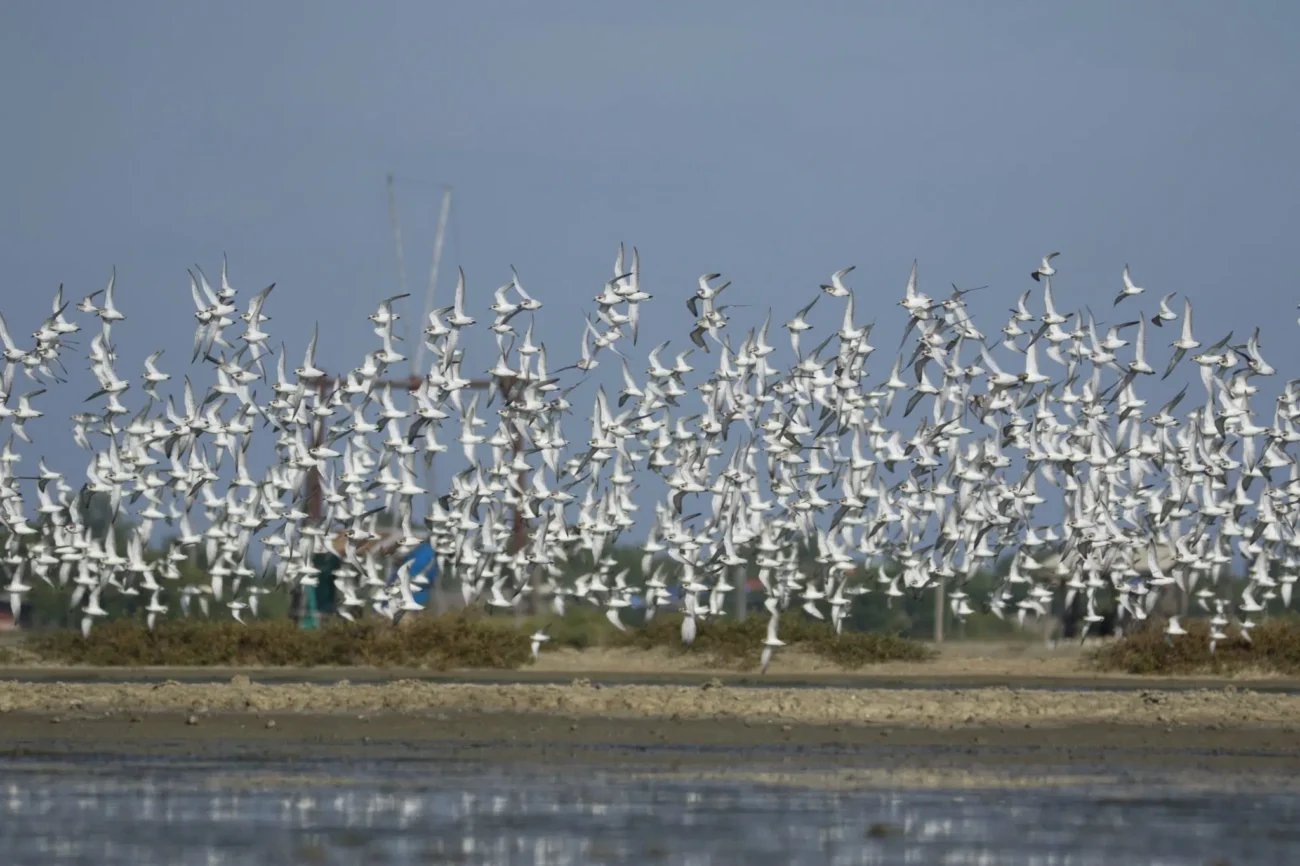
Against the vast, cerulean expanse of the Gulf of Thailand, a breathtaking spectacle unfolds. Hundreds, sometimes thousands, of shorebirds erupt from the coastal mudflats, their synchronized flight creating a mesmerizing, pixelated dance against the sky. These feathered travelers, a vibrant testament to the health of the East Asian-Australasian Flyway, have converged on the Pak Thale Nature Reserve in Southern Thailand for a singular, vital purpose: to feast on the abundant marine organisms that sustain them on their arduous journeys. However, this critical sanctuary, a linchpin in a global avian migration network, is now facing an unprecedented threat that could irrevocably alter its ecological significance and the livelihoods it supports.
A Vital Stopover on a Global Flyway
Each winter, Pak Thale Nature Reserve becomes a crucial refuelling and wintering ground for countless shorebirds undertaking extraordinary migrations. These intrepid birds embark on journeys spanning thousands of kilometers, originating from their summer breeding grounds as far north as the Arctic Circle. They rely on sites like Pak Thale as indispensable stopovers along the East Asian-Australasian Flyway, one of the planet’s four major migratory routes for birds. This flyway, stretching from Russia and Alaska down to Australia and New Zealand, is a complex network of wetlands, coastlines, and islands that millions of birds traverse annually. The ecological integrity of each stopover point is paramount for the survival of numerous species, many of which are already facing significant population declines.
The strategic importance of Pak Thale was recognized by the Bird Conservation Society of Thailand (BCST), a BirdLife International partner. In 2019, BCST proactively purchased 8 hectares of coastal land within the reserve, establishing it as a dedicated wildlife sanctuary. This initiative underscored the reserve’s critical role in conservation, particularly for Asia’s rarest avian inhabitants. The sanctuary has since become a magnet for some of the continent’s most elusive and endangered bird species, drawing not only ornithologists and researchers but also a growing number of birdwatchers eager to witness these natural wonders.
A Biodiversity Hotspot Under Siege
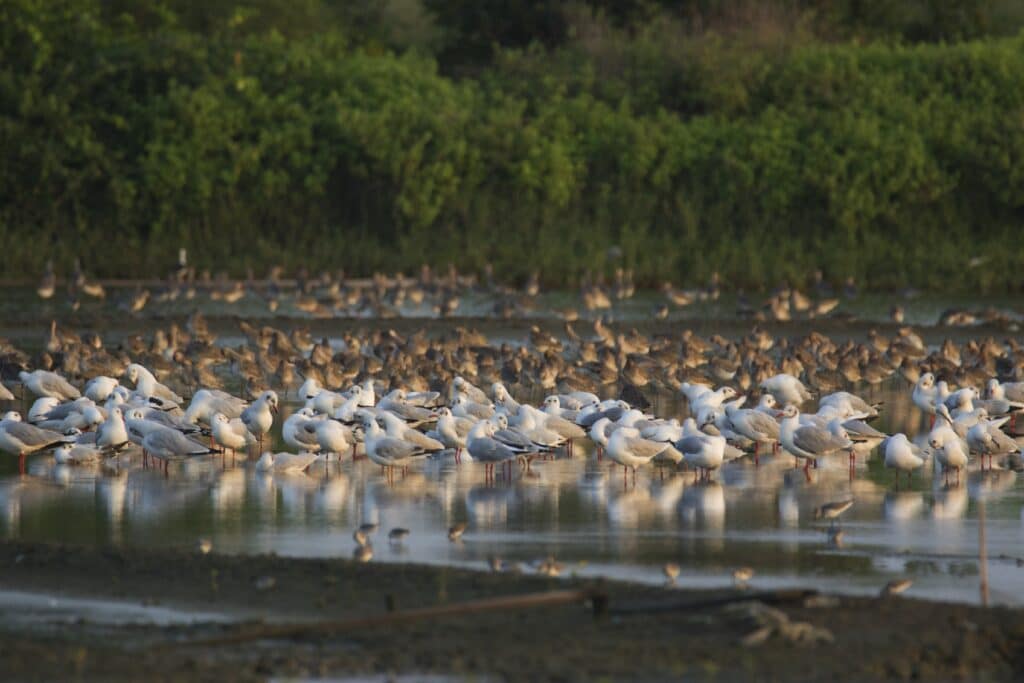
The relatively compact size of Pak Thale Nature Reserve offers birdwatchers unparalleled opportunities for observation. It is renowned for providing accessible viewing of several critically endangered and endangered species. Among these are the iconic Spoon-billed Sandpiper (Calidris pygmaea), a species with fewer than 500 adults remaining in the wild, making its conservation status a race against time. The reserve also provides refuge for the Endangered Far Eastern Curlew (Numenius madagascariensis), the Great Knot (Calidris tenuirostris), and the Spotted Greenshank (Tringa guttifer). Experts suggest that Pak Thale may be the only location in Southeast Asia where birdwatchers can reliably observe all of these threatened species within a single day.
Economic Boon and Community Empowerment
The ecological richness of Pak Thale has not only bolstered conservation efforts but has also translated into significant economic benefits for the local community. Ecotourism, driven by the allure of rare bird sightings, has emerged as a valuable income stream. Recognizing this potential, BCST has actively engaged with and empowered local residents. They have trained community members to serve as knowledgeable guides for the nature reserve, providing employment and fostering a sense of stewardship. Furthermore, BCST has collaborated with local salt farmers, helping them develop and market biodiversity-friendly salt. This initiative offers sustainable and profitable avenues for the farmers, demonstrating a harmonious coexistence between human economic activities and ecological preservation.

The Shadow of Industrial Development
The precarious balance of this thriving ecosystem and its supporting community was dramatically threatened with the announcement of a proposed oil refinery and power plant project slated for construction just kilometers away from the Pak Thale Nature Reserve. This development has sent shockwaves through the conservation community and local stakeholders, who foresee devastating consequences for both the avian inhabitants and the human population.
An oil refinery, even at a distance, poses significant risks of air and water pollution. Emissions from such facilities can contaminate the delicate coastal environment, impacting the invertebrates and small organisms that form the base of the food chain for migratory birds. Water pollution could directly harm aquatic life and render feeding grounds unusable. The proposed power plant introduces a different, yet equally perilous, threat: the risk of bird collisions with overhead electrical wires. Low-flying birds, particularly during their migratory flights or when navigating the area at dawn and dusk, could suffer fatal accidents.
The potential ecological damage directly translates into economic fallout for the community. Without the vibrant bird populations, the allure of ecotourism would diminish, leading to a loss of income for guides and local businesses. Similarly, the market for biodiversity-friendly salt, intrinsically linked to the health of the coastal ecosystem, would likely collapse.
The Cascading Impact on Migratory Birds
For migratory birds, the loss of a critical stopover site like Pak Thale is not a minor inconvenience; it is a potentially fatal blow. These journeys are physically demanding, requiring birds to replenish their energy reserves at carefully chosen locations along their routes. Finding alternative sites is not a simple matter of shifting their flight path. It demands adequate food availability and safe resting places, which are becoming increasingly scarce across the flyway.
The rapid pace of coastal development worldwide is leading to the degradation and disappearance of vital wetlands and intertidal zones. These are the very habitats that migratory birds depend upon for survival. As these rest stops vanish, the migratory birds are forced to undertake longer, more perilous legs of their journeys with depleted energy, increasing their mortality rates.
The implications for critically endangered species like the Spoon-billed Sandpiper are particularly dire. With fewer than 500 individuals remaining, the loss of a key feeding and resting site such as Pak Thale could have a devastating impact, pushing the species closer to the brink of extinction. The cumulative effect of habitat loss across the flyway is creating a crisis for numerous species, and Pak Thale represents a crucial battleground in this ongoing struggle.
A Call to Action: Preserving a Vital Ecosystem
The Bird Conservation Society of Thailand and its partners are mounting a concerted effort to raise awareness and galvanize support for the protection of Pak Thale. Their work involves engaging with local communities, disseminating information about the proposed development and its potential ramifications, and advocating for policy changes that prioritize environmental protection. The image of Niyom Thongmeun, the Pak Thale Manager for BCST, holding a sign that reads "This affects ecotourism and the bird habitat," powerfully encapsulates the community’s concern and their understanding of the interconnectedness of their well-being with the health of the natural environment.
Niyom Thongmeun’s poignant statement, "We cannot guarantee when the final migration of migratory birds will occur, because both humans and birds are facing the same fate. Let’s work together to stop the fossil fuel industry," underscores the urgency of the situation. It highlights the shared vulnerability of both human communities and wildlife in the face of unsustainable industrial expansion and the imperative for collective action.
Conservationists are urging the public to lend their voice to this critical cause. A petition has been launched, providing a platform for individuals worldwide to express their opposition to the proposed development and advocate for the preservation of Pak Thale Nature Reserve. The collective power of public support is seen as essential in influencing decision-makers and ensuring that this vital haven for migratory birds continues to thrive for generations to come.
Broader Implications and Future Outlook
The situation at Pak Thale is not an isolated incident; it is symptomatic of a global challenge where economic development often clashes with environmental conservation. The continued reliance on fossil fuels and the expansion of heavy industry in ecologically sensitive areas pose a significant threat to biodiversity and the natural systems that support human life.
The long-term implications of such development extend beyond the immediate ecological damage. It raises questions about sustainable development models, the valuation of natural capital, and the responsibility of governments and corporations to protect crucial ecosystems. The success or failure of efforts to protect Pak Thale will serve as a crucial indicator of our collective commitment to preserving the planet’s natural heritage and ensuring a sustainable future for both wildlife and humanity. The fight for Pak Thale is, in essence, a fight for the future of migratory birds and the delicate balance of our planet’s ecosystems.

