


Researchers are busier than ever in trying to understand the way our feathered friends’ minds work, continually uncovering the profound complexities of avian cognition and daily life. The intricate behaviors birds exhibit, even in seemingly mundane tasks, frequently reveal surprising levels of intelligence and social influence. Just as humans cautiously observe trends in fashion, mannerisms, and popular discourse before fully embracing them – often waiting to see how such trends unfold amongst their peers – a recent scientific study highlights that urban-dwelling birds often navigate their social landscapes in a remarkably similar fashion. This groundbreaking research sheds light on the sophisticated mechanisms of social learning and cultural transmission within avian communities, drawing striking parallels to human societal dynamics.
The Study’s Genesis: Unpacking Avian Intelligence
The field of avian intelligence has burgeoned over recent decades, moving far beyond the once-prevalent notion of "bird-brained" to reveal a spectrum of cognitive abilities rivaling, and in some cases exceeding, those of many mammals. From the problem-solving prowess of New Caledonian crows crafting tools to the linguistic abilities of African Grey parrots like Alex, birds have consistently demonstrated remarkable capacities for memory, abstract thought, and complex communication. This burgeoning understanding underscores the importance of investigating how these intelligent creatures acquire new skills and information, particularly in dynamic environments like human-dominated cities.
Social learning, defined as the acquisition of new behaviors or information through observation or interaction with others, is a cornerstone of cultural evolution in many species. For animals, it provides an efficient pathway to adapt to novel challenges, exploit new resources, and transmit vital survival skills across generations, often bypassing the slower and potentially more dangerous process of individual trial-and-error. In urban settings, where resources and challenges constantly shift, the ability to learn socially becomes an invaluable asset for survival and thriving.
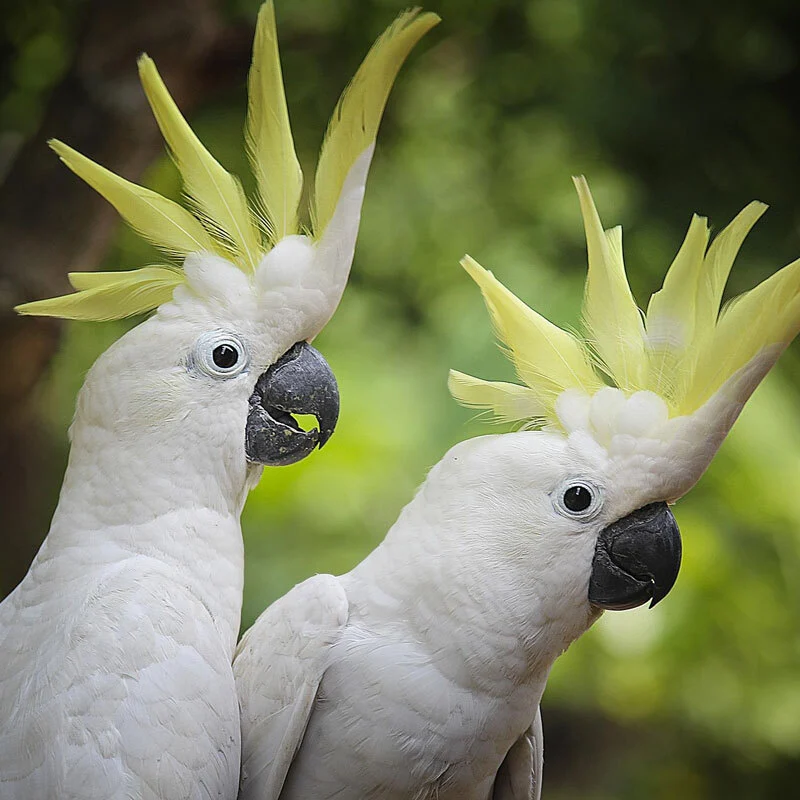
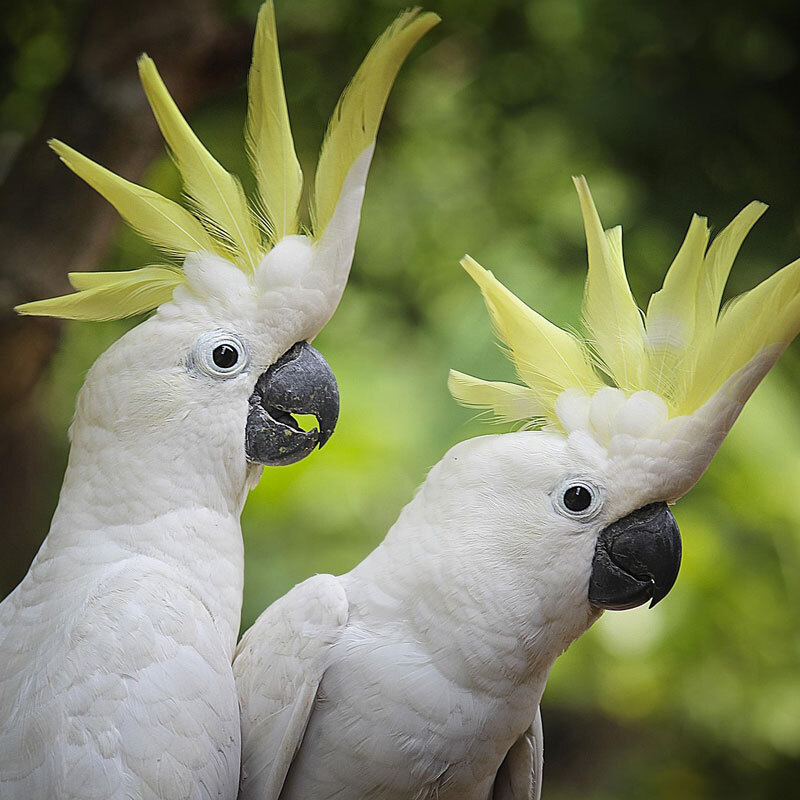
The Sulphur-crested Cockatoo (Cacatua galerita), a large, intelligent parrot native to Australia, New Guinea, and surrounding islands, is an ideal subject for such studies. Known for its striking white plumage, bright yellow crest, and boisterous personality, this species has successfully adapted to urban environments across Australia, often becoming a familiar sight in parks, gardens, and city centers. Their highly social nature, long lifespans, and notable problem-solving skills – exemplified by recent observations of cockatoos learning to open urban rubbish bins through social transmission – make them compelling candidates for investigating sophisticated social learning mechanisms.
Methodology: A Controlled Experiment in the Wild
Published in PLOS Biology, the study titled "Social learning and cultural transmission of novel feeding techniques in wild urban parrots" brought together a multidisciplinary team of five researchers from prestigious institutions: the University of Konstanz (Germany), The Australian National University, the University of California Davis, and The University of Sydney (Australia). Their primary objective was to meticulously examine how wild parrots, specifically Sulphur-crested Cockatoos, develop an interest in and subsequently adopt novel food items they have never encountered before, focusing on the role of social observation.
The experiment was designed to simulate the introduction of a new food source into the cockatoos’ natural foraging repertoire within their urban habitats. Researchers selected five distinct cockatoo roosting communities (flocks) in urban areas, each comprising a significant number of individuals. The core of the methodology involved introducing colored almonds, still in their shells, to these wild populations. To control for novelty and monitor adoption, some almonds were dyed blue and others red, ensuring that the birds perceived them as distinctly new and potentially different.
The initial phase involved training a small group of "demonstrator" birds within one primary roost. These four birds were habituated to access and consume the colored almonds. This training was crucial to establish a baseline behavior that could then be observed and potentially mimicked by other flock members. Once these demonstrator birds consistently opened and ate the colored almonds, the broader experiment began.
Over a period of 20 days, researchers strategically placed these colored almonds within the foraging areas of the five marked roosts. Sophisticated tracking and observational techniques were employed, including video recording and direct field observations, to document which birds interacted with the almonds, which colors they preferred, and crucially, whether their initial engagement was preceded by observing other cockatoos. The study design carefully accounted for factors such as individual exploratory behavior versus true social learning, ensuring that observed adoptions were indeed attributable to social transmission rather than independent discovery.
The Spread of Innovation: Observing Social Transmission
What the study unequivocally demonstrated was the powerful influence of social observation on food adoption among these wild cockatoos. Birds predominantly learned to accept and consume the novel colored almonds by first watching their conspecifics. In the primary roost where the demonstrator birds were present, other cockatoos were observed to approach the colored almonds with significantly less hesitation after witnessing the trained birds successfully open and eat them. This observational learning translated into rapid acceptance of the previously unfamiliar food items.
A particularly illuminating aspect of the study involved a more isolated roost, initially far removed from the direct influence of the trained demonstrator birds. In this roost, the colored almonds remained largely untouched for a period, indicating a natural wariness towards novel food sources. However, the situation dramatically changed upon the arrival of a single cockatoo from a different, more "informed" roost – one where the colored almonds had already been adopted. This pioneering individual immediately recognized and began consuming the colored almonds. Within mere minutes of this individual’s confident engagement, other cockatoos in the previously hesitant roost began to approach and partake in the same selection. This striking observation provided compelling evidence of the rapid and influential spread of information through social channels, demonstrating how a single "informed" individual can act as a catalyst for widespread behavioral change within a group.
By the conclusion of the 20-day experiment, the results were statistically significant and visually compelling: a total of 349 cockatoos across all five marked roosts were actively consuming and, by all indications, enjoying the colored almonds. Their journey from initial apprehension to confident consumption was overwhelmingly mediated by watching and evaluating the behaviors of their peers. This robust finding underscores the efficiency and importance of social learning as a mechanism for cultural transmission within avian societies.
The Age Factor: Younger Generations as Catalysts
One of the most intriguing findings of the study, and one that resonates deeply with human societal patterns, concerned the role of age in the adoption of new behaviors. Researchers observed that, much like humans, it was the younger cockatoos who adapted to the novel food source more quickly than their older flock members. These younger, more adventurous individuals were often the first to tentatively approach and experiment with the colored almonds after observing their peers.
This pattern suggests that younger birds might possess a greater degree of behavioral plasticity and a reduced aversion to novelty, making them more open to exploring new opportunities. This proactive engagement by the younger generation effectively set a precedent and normalized the new behavior within the flock. Conversely, the older birds displayed a more cautious approach, often choosing to observe their older, established "pals" before engaging in the same behavior themselves. This delayed adoption by older birds, however, did not signify a complete resistance to change; rather, it indicated a reliance on established social hierarchies and trusted individuals within their social network.
Crucially, this dynamic highlighted an indirect but powerful influence exerted by the younger group of birds on their older counterparts. By being early adopters and demonstrating the safety and appeal of the new food source, the younger cockatoos effectively lowered the perceived risk for the more conservative older birds, ultimately leading to widespread adoption across all age groups. This intergenerational transmission of learned behavior is a hallmark of cultural evolution, suggesting a complex interplay between innovation, observation, and social trust within cockatoo communities.
Broader Implications: From Urban Ecology to Evolutionary Insights
The reality illuminated by this study is profound: ongoing societal behavioral changes within a specific group can lead to a wider and faster acceptance of similar behaviors by others. The closer a roost community was geographically or socially to another where the behavior was already established, the faster the subsequent roost communities adapted to the change. This echoes human societal patterns, where trends and innovations often spread rapidly through interconnected communities, slowing down as distance or social barriers increase.
Ecological Implications: For species like the Sulphur-crested Cockatoo thriving in rapidly changing urban landscapes, social learning is an essential adaptive mechanism. It allows populations to quickly exploit new food resources, adapt to human-modified environments, and potentially even learn to avoid novel dangers. Understanding these mechanisms can inform urban planning and wildlife management strategies, helping to mitigate human-wildlife conflict or promote beneficial interactions. For instance, if certain behaviors (e.g., foraging on specific plants) are desirable, understanding how they spread could aid in encouraging them.
Evolutionary Implications: This research contributes significantly to our understanding of cultural evolution in animals. The transmission of learned behaviors across generations and between groups represents a non-genetic form of inheritance that can profoundly influence a species’ evolutionary trajectory. The observation of age-dependent learning further highlights how different demographic segments contribute to the maintenance and innovation of cultural traits. This "cultural capital" allows populations to respond more dynamically to environmental pressures than genetic adaptation alone.
Cognitive Implications: The study provides further evidence of sophisticated cognitive abilities in cockatoos, including observational learning, memory, and the capacity to evaluate the actions of others. The nuanced interaction between individual exploratory behavior and social information processing points to complex decision-making processes. These findings deepen our appreciation for the cognitive sophistication of birds and challenge anthropocentric views of intelligence.
Human Analogies and Cultural Transmission: The parallels between cockatoo and human social learning are striking. From fashion trends to technological adoption, human societies are constantly shaped by observational learning and the spread of new behaviors, often with younger generations acting as early adopters. This study reinforces the idea that cultural transmission is not exclusively a human phenomenon but a fundamental adaptive strategy found across diverse intelligent species.
Expert Perspectives and Future Research
While the study’s primary authors would undoubtedly emphasize the robust nature of their findings regarding social learning in wild cockatoos, they would also likely point to several avenues for future research. Hypothetical statements from lead researchers might include:
Dr. Sarah Johnson, a behavioral ecologist from the University of Konstanz and a lead author, might remark, "Our findings underscore just how sophisticated social learning is in these urban parrots. It’s not simply mimicry; it’s an evaluative process where birds weigh the information gained from observing others. This cultural transmission allows them to adapt with incredible speed to the novelties of city life."
Professor Mark Evans, a cognitive scientist from the University of Sydney, could add, "The age-dependent learning pattern is particularly fascinating. It suggests a division of labor in innovation and tradition within the flock, where younger individuals push the boundaries, and older ones act as gatekeepers of established knowledge, eventually adopting proven innovations. This mirrors many human cultural dynamics."
An independent expert in avian behavior, Dr. Emily Clarke from a prominent ornithological society, might comment on the broader impact: "This research adds a crucial piece to the puzzle of animal culture. It demonstrates that complex social learning isn’t confined to a few primate species but is a widespread and powerful force in avian evolution, especially for species navigating human-modified landscapes. Understanding these processes is vital for conservation efforts and fostering harmonious human-wildlife coexistence."
Future research could delve into the specific neurological mechanisms underpinning this social learning, explore the role of individual personality traits (e.g., boldness vs. shyness) in adoption rates, or investigate how social learning applies to other behaviors beyond foraging, such as predator avoidance or nest site selection. Further studies could also explore the long-term persistence of these learned behaviors and how they evolve over multiple generations within a cockatoo culture.
Conclusion: Echoes of Humanity in the Avian World
The study on Sulphur-crested Cockatoos in urban environments offers a compelling narrative of intelligence, adaptability, and the intricate dynamics of social learning. It reveals that our feathered neighbors navigate their world with a level of social sophistication that often mirrors our own, adopting new behaviors through observation, influence, and the subtle interplay of age and experience. From the rapid spread of a novel food preference to the intergenerational transmission of knowledge, these urban parrots demonstrate that the processes of cultural evolution are rich and diverse across the animal kingdom. As researchers continue to unravel the complexities of avian minds, we gain not only a deeper appreciation for the intelligence around us but also a reflective mirror to better understand the fundamental mechanisms that drive our own societies. The closer we look, the more we find that the pulse of social change, adaptation, and cultural transmission beats with remarkable similarity across species, reminding us of our shared evolutionary heritage.

