


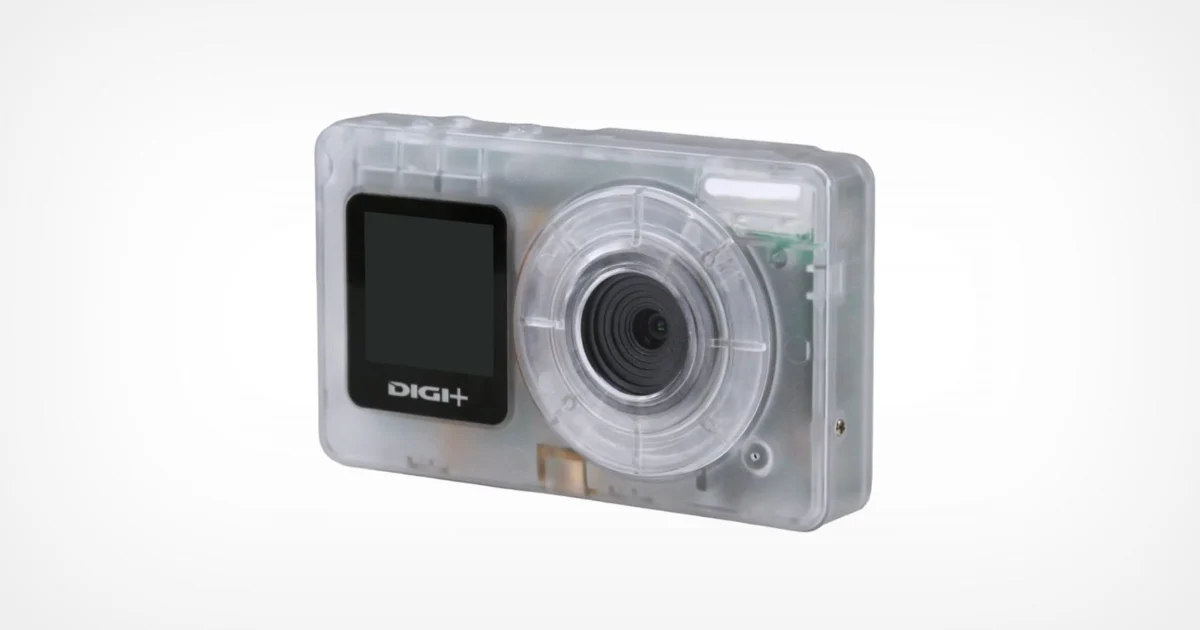
The Japanese consumer electronics market has recently seen a resurgence in retro-inspired hardware, a trend further solidified by the release of the DIGI+ Dual Display Digital Camera, model DGP-DCM01. This compact device, which blends the aesthetics of late-1990s transparency with modern secondary-screen functionality, has entered the market at a highly competitive price point, signaling a continued shift in consumer interest toward "lo-fi" photography and "Y2K" era design languages. Priced at a standard 7,980 yen—approximately $50 USD—the camera is currently available for a promotional price of 5,980 yen (around $37 USD) through July 8, according to reports from CAPA Camera Web. This launch highlights a growing niche in the imaging industry where "vibes" and physical form factors are prioritized over raw technical specifications and high-resolution output.
Technical Specifications and Hardware Architecture
The DIGI+ DGP-DCM01 is built around a modest 5-megapixel CMOS sensor. While this resolution is significantly lower than the standards set by contemporary smartphones and entry-level mirrorless cameras, it serves a specific segment of the market that seeks a nostalgic, less-processed image quality. The sensor is paired with a fixed 3.64mm lens, which provides a 75-degree field of view. When calculated against the sensor size, this provides an equivalent focal length of approximately 28mm on a 35mm full-frame format, making it an ideal wide-angle tool for street photography and social snapshots.
Technical analysis of the lens and sensor combination suggests a significant crop factor. With a 3.64mm actual focal length resulting in a 28mm equivalent, the crop factor sits at roughly 7.7x. This indicates that the CMOS sensor is likely a Type 1/2.3 or perhaps even smaller, a size commonly found in budget point-and-shoot cameras of the late 2000s or in modern entry-level action cameras. The device weighs a mere 102 grams, emphasizing its portability and its role as an everyday carry accessory rather than a professional imaging tool.
The most distinctive hardware feature of the DGP-DCM01 is its dual-display configuration. The rear of the camera houses a 2.4-inch LCD panel for standard menu navigation and image review. More unusually for this price bracket, the front of the camera features a secondary 1.3-inch display located adjacent to the lens. This front-facing screen is designed specifically for self-portraiture, allowing users to frame themselves accurately without the need for a complex articulating or flip-out screen mechanism, which would increase both the cost and the mechanical fragility of the device.
The Resurgence of the Translucent Aesthetic
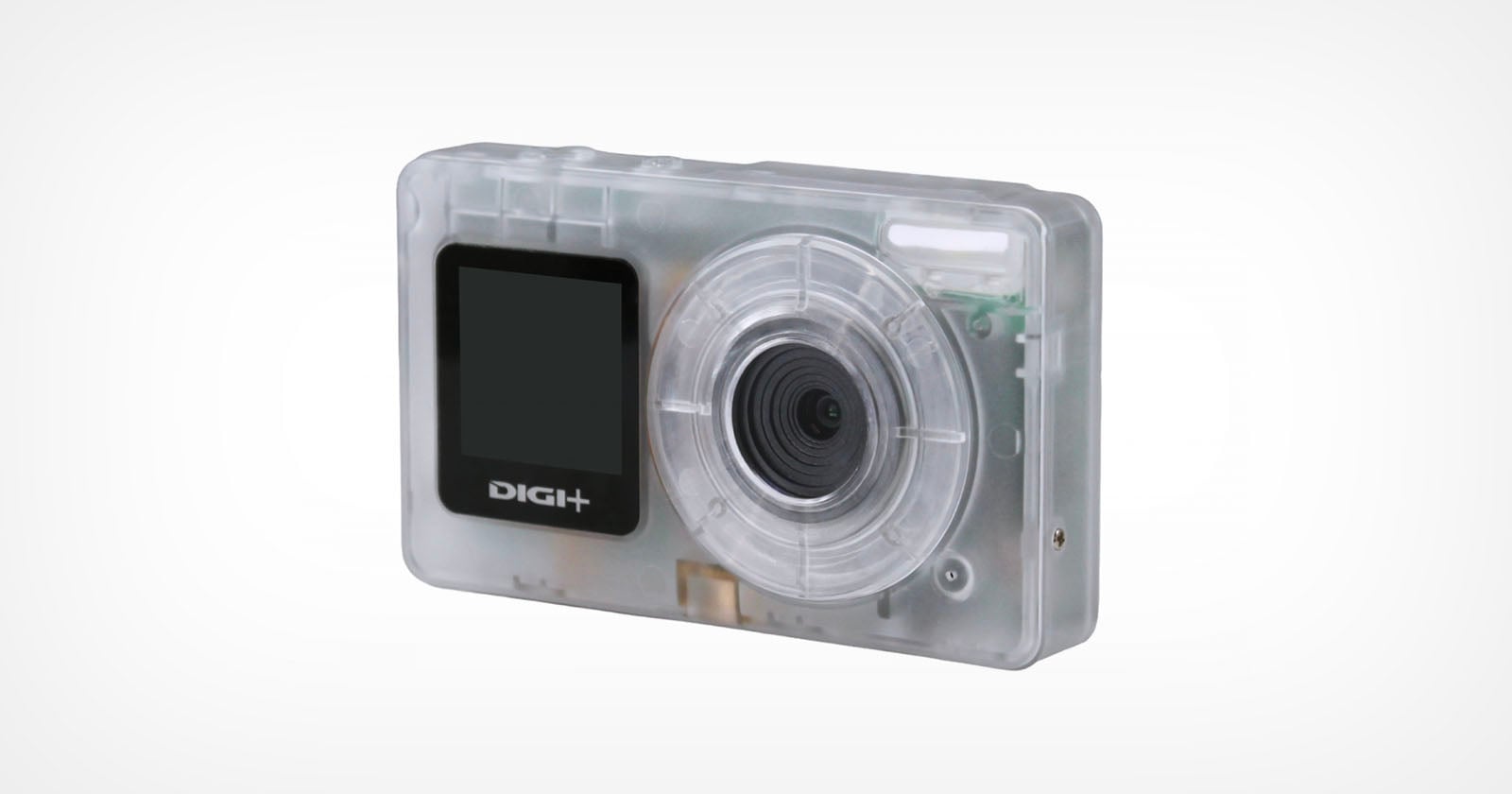
The design of the DIGI+ camera draws heavily from the "Clear Tech" or "Skeleton" trend that dominated the electronics industry between 1898 and 2002. The translucent plastic casing reveals the internal circuitry, battery housing, and ribbon cables, a look popularized by the original iMac G3, the Nintendo Game Boy Advance, and the "Atomic Purple" controllers of the Nintendo 64 era.
This design choice is not merely a nostalgic gimmick but a strategic response to the "Y2K" fashion revival currently sweeping global markets. For younger consumers, specifically Gen Z and younger Millennials, these aesthetics represent a departure from the sleek, minimalist, and often opaque designs of modern smartphones. The "see-through" nature of the DIGI+ DGP-DCM01 positions it as a fashion statement as much as a functional camera. This follows a broader industry movement where brands like Manual have launched the "Holo" camera, and Kodak has introduced "Millennium Edition" models, all leaning into the same translucent, retro-futuristic appeal.
Market Positioning and the "Digicam" Phenomenon
The launch of the DIGI+ comes at a time when the secondary market for vintage digital cameras has reached unprecedented heights. On platforms such as eBay, Depop, and Etsy, early 2000s point-and-shoot cameras from Canon, Nikon, and Sony are often selling for more than their original retail prices. This phenomenon is driven by a desire for "authentic" digital imperfections—grain, lens flare, and color science that differs from the AI-enhanced, ultra-sharp photos produced by modern iPhones and Android devices.
By pricing the DGP-DCM01 at $50 (and even lower during the launch window), the manufacturers are targeting the entry-level consumer who wants the "digicam look" without the risks associated with buying 20-year-old used hardware with failing batteries or degraded sensors. The DIGI+ offers a warranty-backed alternative that utilizes modern conveniences like USB charging and SD card compatibility, which are often hurdles when dealing with genuine vintage tech that might require proprietary cables or obsolete memory formats like xD-Picture Cards or early Memory Sticks.
Chronology of the Product Launch and Availability
The introduction of the DIGI+ DGP-DCM01 has followed a specific promotional timeline aimed at capturing the early summer shopping season in Japan:
- Early June 2024: Initial teasers and product listings appeared on Japanese retail sites, emphasizing the dual-screen functionality.
- Late June 2024: Official announcement and start of the "Early Bird" promotional period, dropping the price to 5,980 yen.
- July 8, 2024: Scheduled end of the promotional pricing. The camera will revert to its standard MSRP of 7,980 yen.
- Q3 2024: Expected expansion of availability through major Japanese electronics retailers such as Bic Camera and Yodobashi Camera, as well as international export via third-party vendors.
While currently focused on the Japanese domestic market, the global interest in translucent electronics suggests that third-party importers will likely make the device available to Western markets shortly after the initial launch phase.
Comparative Analysis: DIGI+ vs. Competitors
To understand the value proposition of the DIGI+ DGP-DCM01, it is necessary to compare it to other "vibe-centric" cameras currently on the market.
- Manual Holo ($95): The Holo offers a similar translucent design but at nearly double the price of the DIGI+. While the Holo focuses on a sleek, New York-based branding strategy, the DIGI+ provides more functional utility with its front-facing screen, which the Holo lacks.
- Paper Shoot Cameras ($120+): These cameras focus on environmental sustainability and a "distraction-free" experience. However, they lack any screen at all, making the DIGI+ a more versatile tool for those who still want the digital convenience of instant review.
- Used Market (Canon PowerShot/Nikon Coolpix): A used 10-12 megapixel camera from 2010 can often be found for $60-$100. While these offer superior image quality, they lack the "cool factor" of the translucent casing and the specific selfie-optimization of the DIGI+ dual-screen setup.
The DIGI+ effectively carves out a "budget-lifestyle" tier, providing the aesthetic of a boutique brand at the price of a generic toy camera, while maintaining enough technical competence to be usable for social media posting.
Broader Implications for the Imaging Industry
The success of products like the DIGI+ DGP-DCM01 suggests that the camera industry is bifurcating. On one end, professional manufacturers like Sony, Canon, and Nikon are pushing the boundaries of full-frame sensors, autofocus AI, and video bitrates. On the other end, a "New-tro" (New Retro) market is emerging where the objective is not perfection, but character.
Industry analysts suggest that the "death of the point-and-shoot," which was predicted a decade ago due to the rise of smartphones, was perhaps premature. Instead, the point-and-shoot is being reinvented as a tactile, intentional alternative to the smartphone. The act of carrying a dedicated device, pressing a physical shutter button, and dealing with the limitations of a 5MP sensor creates a "photographic experience" that many younger users find more engaging than the frictionless, automated process of mobile photography.
Furthermore, the inclusion of a front-facing screen on a $50 device may force other manufacturers to reconsider their entry-level designs. If a budget-oriented brand can integrate dual-screen technology at this price point, consumers may begin to expect similar selfie-friendly features in more expensive vlog-centric cameras that currently rely on more expensive mechanical hinges.
Conclusion
The DIGI+ Dual Display Digital Camera DGP-DCM01 represents a calculated intersection of nostalgia, social media utility, and aggressive pricing. While its 5-megapixel sensor and small CMOS format will not satisfy photography enthusiasts looking for high-fidelity images, the device is perfectly positioned to capture the hearts of the "digicam" subculture. Its translucent body serves as a bridge to the past, while its dual screens address the contemporary needs of the selfie-driven digital landscape. As the promotional period concludes in July, the market response in Japan will serve as a bellwether for whether the translucent, lo-fi trend has the staying power to influence global hardware design in the years to come. For now, the DIGI+ stands as a testament to the idea that in the modern tech world, sometimes looking back is the most effective way to move forward.

