


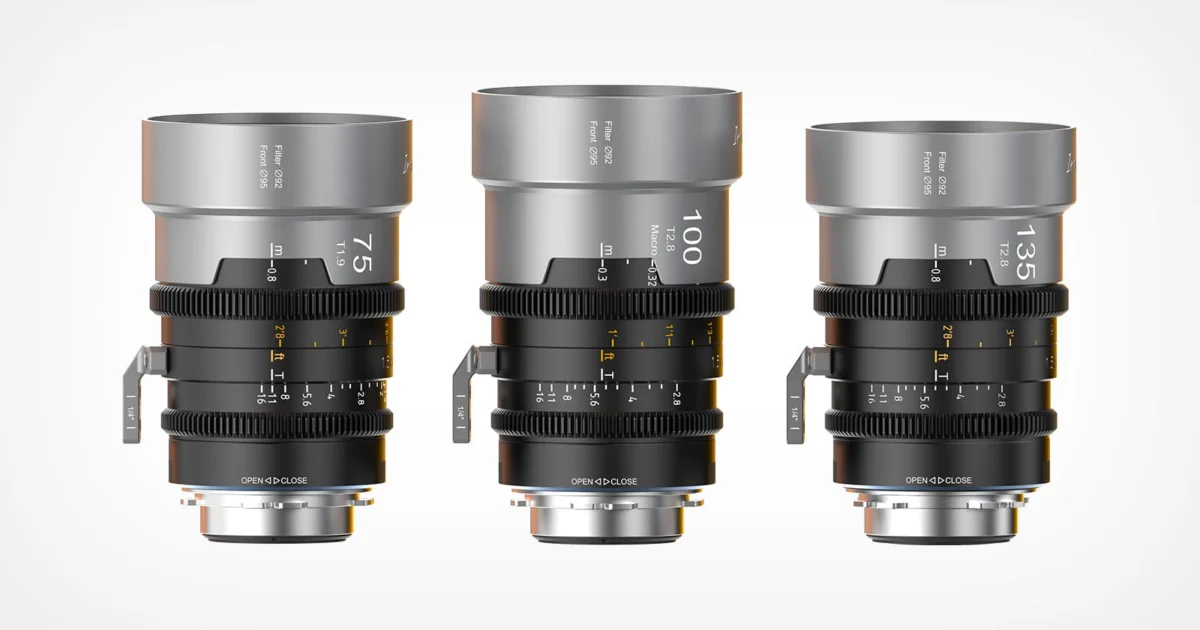
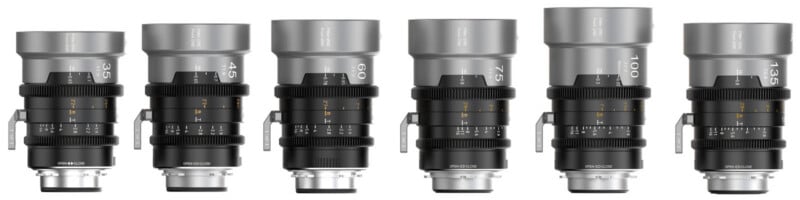
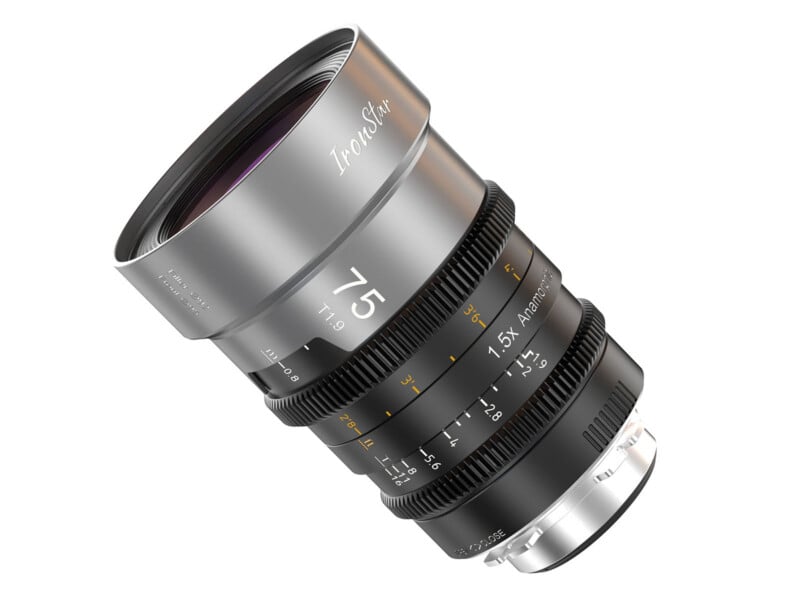
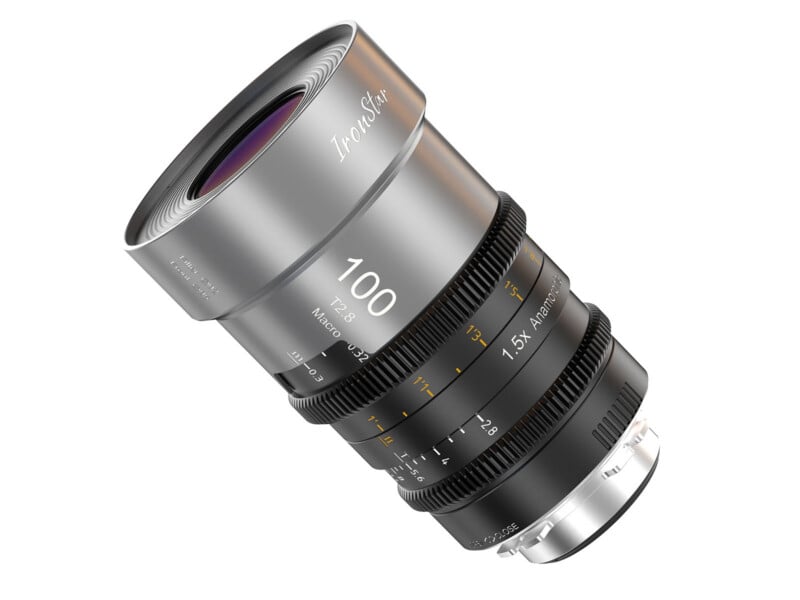
Sirui, a manufacturer that has rapidly become a pivotal force in the democratization of anamorphic cinematography, has officially announced a significant expansion to its IronStar series of 1.5x full-frame anamorphic lenses. Following the successful introduction of the 35mm, 45mm, and 60mm T1.9 primes last year, the company has unveiled three additional focal lengths: a 75mm T1.9, a 100mm T2.8 Macro, and a 135mm T2.8. This expansion completes a comprehensive six-lens ecosystem designed to meet the rigorous demands of both high-end commercial production and independent artistic filmmaking.
The IronStar series represents Sirui’s most ambitious effort to date in the full-frame cinema market. By offering a consistent 1.5x squeeze factor across all lenses, the series allows cinematographers to achieve the highly sought-after "widescreen look" characterized by oval bokeh and horizontal lens flares, without the extreme distortion sometimes associated with 2x anamorphic glass. The addition of longer focal lengths addresses a critical gap in the initial lineup, providing filmmakers with the tools necessary for tight portraiture, detailed product shots, and compressed narrative storytelling.
Detailed Specifications of the New Focal Lengths
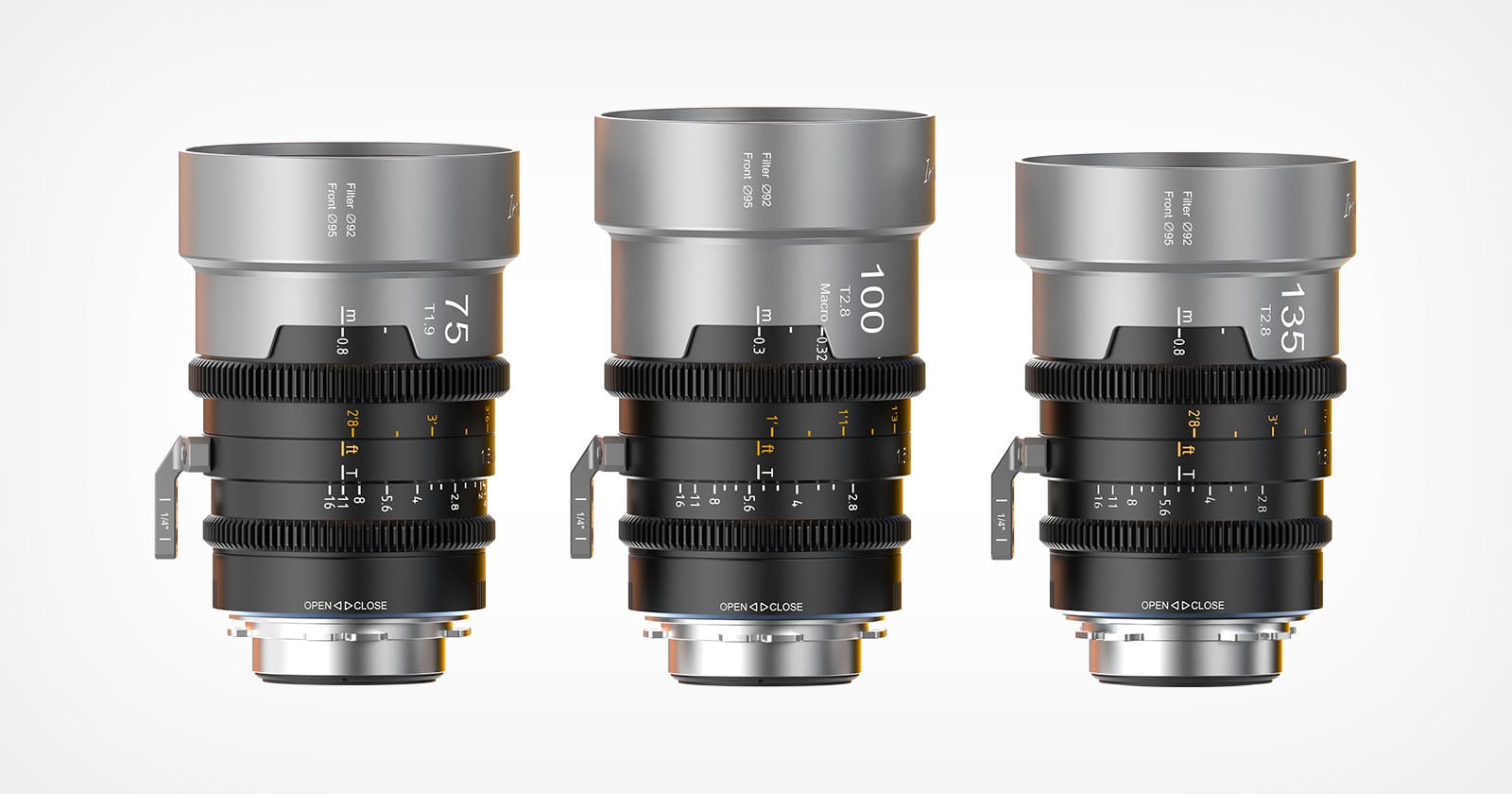
The new trio of lenses introduces specialized capabilities to the IronStar family. While the original 35mm, 45mm, and 60mm lenses all featured a fast T1.9 aperture, the new additions vary slightly to accommodate their longer focal lengths and specialized optical designs.
The 75mm T1.9 Prime
The 75mm T1.9 remains consistent with the fast aperture of the wider lenses. Sirui positions this lens as a primary tool for dialogue scenes and medium-close portraits. The 75mm focal length is widely considered a "sweet spot" in cinematography, offering a natural perspective that closely mimics human vision while providing enough compression to isolate subjects from the background. At T1.9, it offers exceptional low-light performance and a shallow depth of field that, when combined with the 1.5x anamorphic squeeze, produces a distinctively cinematic aesthetic.
The 100mm T2.8 Macro
Perhaps the most technically significant addition is the 100mm T2.8 Macro. Anamorphic lenses are historically notorious for poor close-focus capabilities, often requiring the use of diopters to capture detail. Sirui has circumvented this limitation by designing the 100mm as a dedicated macro lens. It boasts a minimum focusing distance of just 0.3 meters (0.98 feet). This allows for extreme close-ups of eyes, products, or textures with the signature anamorphic bokeh and flare. The shift to a T2.8 aperture was a necessary trade-off to maintain the macro functionality and physical consistency with the rest of the set.
The 135mm T2.8 Prime
The 135mm T2.8 serves as the telephoto powerhouse of the collection. It is designed to provide maximum subject separation and background compression. In narrative filmmaking, this focal length is essential for isolating characters in busy environments or creating a sense of intimacy from a distance. Like the 100mm, it utilizes a T2.8 aperture, which remains sufficiently fast for full-frame sensors while ensuring the lens barrel does not become prohibitively large or heavy.
Technical Consistency and Workflow Integration
A hallmark of professional cinema lens sets is physical uniformity, and the IronStar series adheres strictly to this principle. All six lenses in the lineup—from 35mm to 135mm—feature a standardized 95mm front diameter. This consistency is vital for camera assistants and cinematographers, as it allows for the quick swapping of matte boxes and filters without the need for adjustment or different adapter rings.
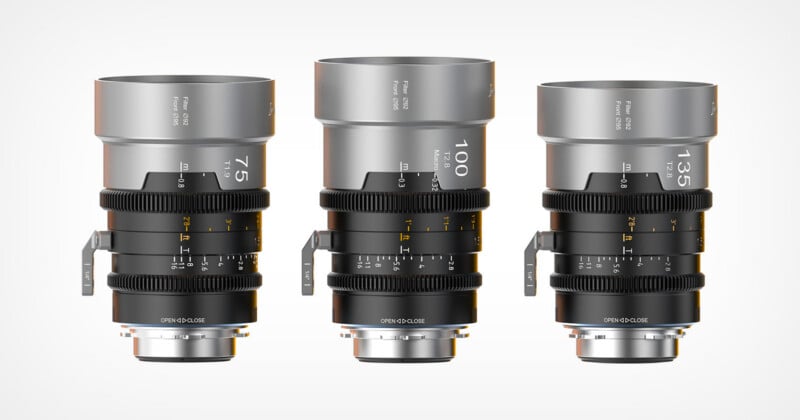
Furthermore, the focus and aperture control rings are positioned identically across the entire range. This "unified gear" design ensures that follow-focus motors and wireless lens control systems do not need to be repositioned when changing focal lengths. Such features are typically reserved for high-end cinema glass costing several times more than the Sirui IronStar series. While the 100mm Macro is physically longer than its siblings due to its complex internal optical movement, its control layout remains perfectly aligned with the rest of the set.
Optical Characteristics and Aspect Ratio Calculations
The 1.5x squeeze factor of the IronStar series is a strategic choice by Sirui. It strikes a balance between the subtle 1.33x squeeze (often used for 16:9 sensors to reach 2.35:1) and the more aggressive 2x squeeze traditional to 4:3 film formats.
On modern full-frame digital sensors, the 1.5x squeeze provides versatile output options:
- 3:2 Open Gate: When recording in 3:2 open-gate mode, a 1.5x de-squeeze results in a 2.25:1 aspect ratio, which is nearly identical to the classic 2.39:1 theatrical standard.
- 16:9 Mode: When used on a standard 16:9 sensor area, the 1.5x squeeze results in an ultra-wide 2.66:1 aspect ratio, offering an expansive field of view suitable for landscapes and epic vistas.
Beyond the aspect ratio, the lenses are engineered to deliver the "anamorphic soul" that digital sensors often lack. This includes elongated oval bokeh in out-of-focus highlights and controlled horizontal lens flares. While Sirui has not explicitly detailed the flare coatings for the new trio, the existing lenses are offered in both "Neutral" (clear/white) and "Blue" flare versions, and it is highly anticipated that the 75mm, 100mm, and 135mm will follow suit.
Chronology of Sirui’s Anamorphic Evolution
The announcement of the full IronStar set marks the culmination of a multi-year journey for Sirui. The company first entered the market with affordable 1.33x anamorphic lenses for APS-C sensors, which were met with massive success on crowdfunding platforms.
- July 2025: Sirui announces the first three IronStar full-frame lenses (35mm, 45mm, 60mm T1.9). These were priced aggressively at $999 each, undercutting traditional cinema brands by thousands of dollars.
- Late 2025: The first batch of IronStar lenses reaches the market, receiving praise for their build quality and "clean yet characterful" optical performance.
- April 2026: At the NAB (National Association of Broadcasters) Show, Sirui unveils the 75mm, 100mm, and 135mm additions, effectively doubling the lineup.
- Mid-to-Late 2026: The full six-lens set is expected to be available for retail and shipping, completing the ecosystem.
Market Context and Industry Reaction
The introduction of the IronStar series comes at a time when the "vintage" and "anamorphic" looks are more popular than ever, yet remains financially out of reach for many creators. Traditionally, a set of six full-frame anamorphic primes from brands like Cooke, Zeiss, or ARRI could cost upwards of $150,000.
By targeting a price point likely to hover around the $1,000 per lens mark, Sirui is positioning itself against other "budget" cinema lens manufacturers like Venus Optics (Laowa) and Blazar (formerly Great Joy). However, the IronStar series distinguishes itself through its faster T1.9 aperture on the wider end and the inclusion of a dedicated macro anamorphic lens, a rarity in this price bracket.
Industry reactions from early testers suggest that the IronStar lenses offer a "modern anamorphic" look—meaning they are sharp enough for 8K sensors but still retain the organic flaws that filmmakers desire. The interchangeable mount system (PL and EF) further increases their appeal, allowing the lenses to be used on everything from an ARRI Alexa or RED V-Raptor to a Canon C500 Mark II or a mirrorless camera with an adapter.
Broader Implications for Cinematography
The completion of the IronStar series has broader implications for the film industry. As professional-grade anamorphic glass becomes more accessible, the barrier to entry for achieving a "theatrical" look continues to drop. This allows independent filmmakers and small production houses to compete visually with larger studios.
Sirui’s statement during the launch emphasized this shift: “The introduction of 75mm, 100mm, and 135mm lenses completes the system, forming a fully expanded ecosystem that provides comprehensive support for both commercial and artistic cinematography.”
The inclusion of the 100mm Macro, in particular, is a response to the growing demand in the commercial sector. Food and product videography often require the shallow depth of field and unique flare characteristics of anamorphic lenses, but the inability to focus closely has always been a hurdle. By integrating macro capabilities directly into the 100mm prime, Sirui has simplified the workflow for commercial directors.
Availability and Future Outlook
Sirui expects the IronStar 75mm T1.9, 100mm T2.8 Macro, and 135mm T2.8 lenses to be available for purchase in the second half of 2026. While official pricing for the new trio has not been finalized, industry analysts expect them to remain near the $999 price point established by the first three lenses, potentially making the entire six-lens kit available for under $6,000.
As the digital cinema landscape continues to evolve, Sirui’s aggressive expansion into full-frame anamorphic optics suggests that the company is no longer just a budget alternative, but a serious contender in the professional lens market. With a complete focal range now available, the IronStar series is poised to become a staple for rental houses and owner-operators alike, further blurring the line between high-end cinema production and independent content creation.

