


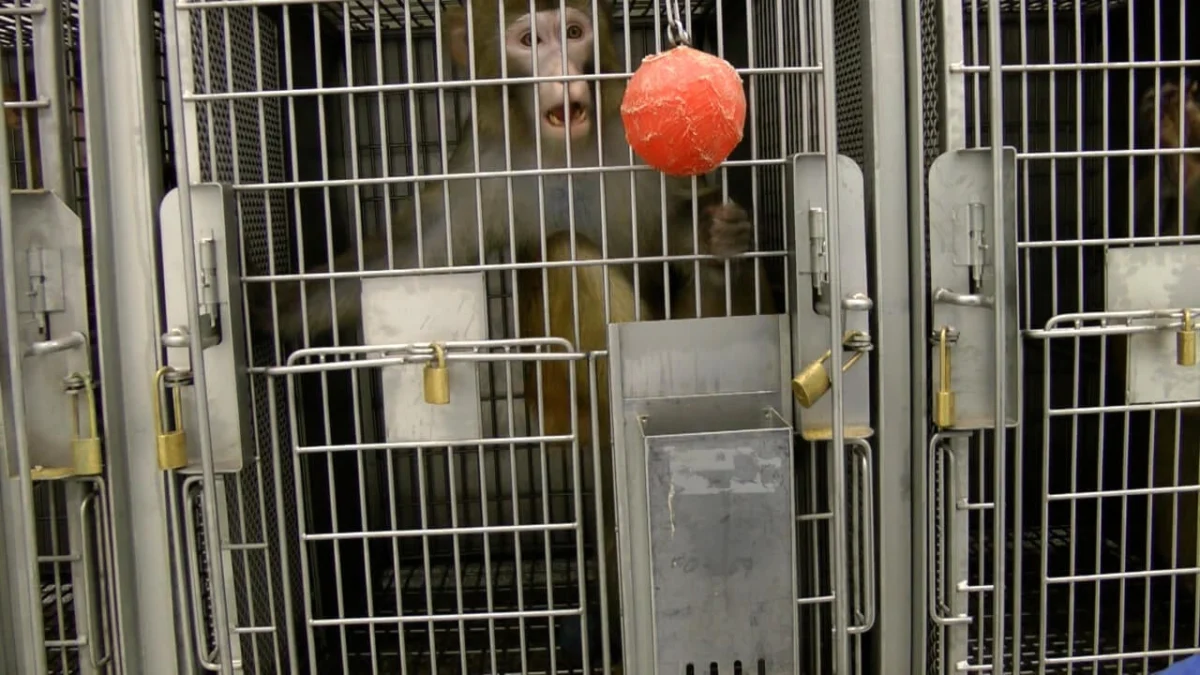
The University of Washington National Primate Research Center (WaNPRC) is facing renewed scrutiny following a series of reports detailing significant procedural errors and animal welfare concerns within its maternal-fetal medicine research division. Recent disclosures from internal oversight meetings suggest a pattern of administrative and technical negligence that critics argue undermines the scientific validity of high-cost, federally funded experiments. At the center of these allegations is Dr. Kristina Adams Waldorf, the associate director for research at the facility, whose laboratory has been linked to multiple instances of dosing errors and protocol deviations over several years.
Emerging Allegations of Procedural Negligence
According to records from a May 21, 2026, meeting of the University of Washington’s Institutional Animal Care and Use Committee (IACUC), Dr. Adams Waldorf’s team reportedly administered an incorrect dosage of a synthetic protein to pregnant macaques. The protein, a laboratory-created version of a naturally occurring biological agent, was intended to be part of a study investigating fetal development. During the committee hearing, it was revealed that the error was not detected until after the injections had been completed.
The IACUC, which serves as the primary internal regulatory body for animal research at the university, characterized the event as a "rare instance." However, the attending veterinarian and committee members noted that because the experiment was classified as "terminal"—meaning the animals were scheduled to be euthanized as part of the data collection process—the error did not necessarily result in "additional" suffering beyond the scope of the approved protocol. Dr. Adams Waldorf reportedly maintained that the dosage discrepancy could be accounted for during the final data analysis phase, suggesting the scientific integrity of the study remained intact.
Despite these assurances, advocacy groups, most notably People for the Ethical Treatment of Animals (PETA), have challenged the university’s characterization of the event. They argue that the failure to adhere to basic pharmacological protocols—such as verifying label concentrations before administration—represents a fundamental breakdown in laboratory safety and scientific rigor.
Chronology of Documented Errors: The 2024 Swine Flu Trial
The May 2026 incident is not an isolated event in the history of the Waldorf laboratory. Investigative reports and internal audits point back to a significant failure discovered in November 2024. At that time, it was revealed that a two-year study involving the H1N1 (swine flu) virus had been compromised by the consistent use of the wrong medication.
For the duration of the 24-month project, researchers reportedly administered an incorrect drug to the subjects, which included at least 10 macaques. The error was only identified after the conclusion of the trial, rendering the resulting data unusable for peer-reviewed publication or clinical application. This failure resulted in the loss of approximately $4 million in federal grant funding provided by the National Institutes of Health (NIH).
The 2024 incident raised serious questions regarding the level of oversight at the WaNPRC. Critics point out that for two years, multiple levels of staff—including principal investigators, laboratory technicians, and veterinary monitors—failed to verify the contents of the syringes or the medications being utilized. Despite the scale of the financial loss and the loss of animal life, there were no immediate public records indicating that Dr. Adams Waldorf faced suspension or that the laboratory’s operations were significantly curtailed.
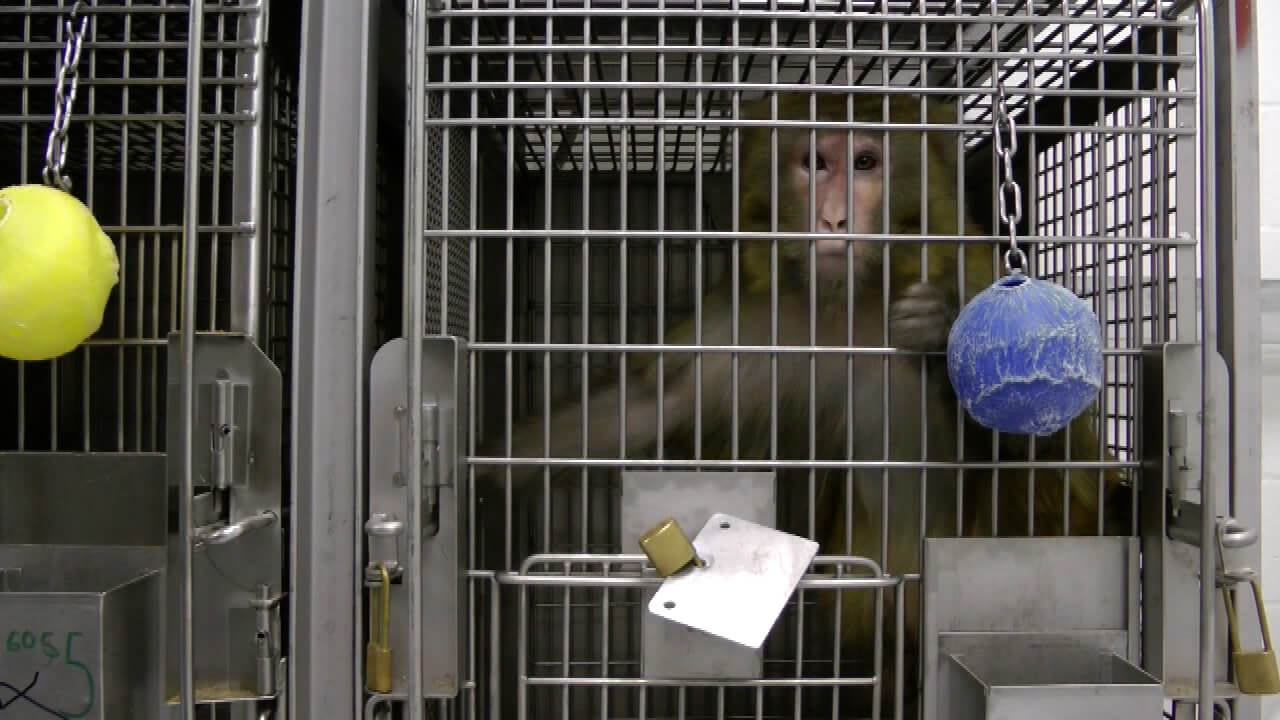
Financial and Ethical Implications of Research Failures
Dr. Adams Waldorf has built a prominent career focused on maternal-fetal infections, specifically studying how pathogens like the Zika virus and various strains of influenza affect fetal brain development. Over the past decade, her research initiatives have secured an estimated $26 million in NIH funding. The high stakes of this research, both financially and scientifically, make procedural errors particularly impactful.
The methodology employed in these studies is inherently invasive. It typically involves infecting pregnant macaques with pathogens, monitoring the progression of the infection through the third trimester, and then performing cesarean sections to extract fetal brain tissue for analysis. The ethical justification for such research rests on the assumption that the data produced will lead to breakthroughs in human medicine. When experiments are compromised by basic human error, such as incorrect dosing, the ethical "cost-benefit" analysis used by regulatory boards is thrown into question.
Furthermore, the financial burden of these errors falls largely on the American taxpayer. The $4 million lost in the 2024 swine flu experiment represents a significant portion of the federal budget allocated for infectious disease research. In response to these findings, PETA has filed formal complaints with the University of Washington’s Board of Regents and the NIH’s Office of Laboratory Animal Welfare (OLAW), calling for a comprehensive investigation into the facility’s management.
Regulatory Framework and the Role of Oversight Bodies
The oversight of animal research in the United States is governed by the Animal Welfare Act (AWA) and the Public Health Service (PHS) Policy on Humane Care and Use of Laboratory Animals. Institutions receiving federal funding must maintain an IACUC to review all research protocols and ensure compliance with federal standards.
However, the recent events at the University of Washington suggest a potential conflict of interest or "regulatory capture" within internal committees. The tendency of the IACUC to "circle the wagons" or minimize the impact of dosing errors as "rare instances" suggests that internal oversight may not be sufficient to address systemic negligence.
The Office of Laboratory Animal Welfare (OLAW) has the authority to suspend research, demand the return of grant funds, or revoke an institution’s "Assurance," which is required to receive NIH money. A formal investigation by OLAW would look into whether the WaNPRC has maintained a "culture of compliance." The repeated nature of the errors—specifically the two-year duration of the 2024 error—may serve as evidence that the facility lacks the necessary internal controls to guarantee animal safety and data accuracy.
The Broader Context of WaNPRC’s Operational History
The controversies surrounding Dr. Adams Waldorf are part of a larger, more complex history at the University of Washington’s primate center. The facility has faced numerous challenges over the years, including infrastructure issues, disease outbreaks within the monkey colonies, and leadership transitions.
In recent years, the center has also faced criticism for its hiring practices. For instance, the appointment of Dr. Michele Basso was met with significant pushback due to her previous history of animal welfare violations at other institutions. This pattern of hiring and retaining researchers with documented records of procedural failures has led some critics to describe the WaNPRC as an institution where "the standard is the floor."
The WaNPRC is one of seven National Primate Research Centers in the United States. These centers are intended to be hubs for high-level biomedical research that cannot be performed in other models. However, as the scientific community increasingly turns toward non-animal alternatives—such as organ-on-a-chip technology, sophisticated computer modeling, and human-derived stem cell research—the relevance and ethics of large-scale primate centers are being re-evaluated.
Scientific Integrity and the Reproducibility Crisis
Beyond the animal welfare concerns, the errors in the Waldorf lab contribute to the broader "reproducibility crisis" in biomedical science. For research to be valuable, it must be reproducible by other scientists. When a laboratory cannot accurately document or execute its dosing protocols, the resulting data is at best questionable and at worst fraudulent.
In the case of the Zika virus research, accurate dosing is critical. The goal is to understand how specific viral loads impact the blood-brain barrier in a fetus. If the dose of the virus or the neutralizing proteins is incorrect, the entire experimental model collapses. This not only wastes money and lives but also misleads other researchers who may base their own work on these flawed findings, potentially delaying the development of actual treatments for human patients.
Implications for Future Primate Research
The calls for an investigation into the WaNPRC come at a time of heightened public and political interest in the transparency of federal research. There is a growing movement, supported by various legislative initiatives, to modernize the research landscape. The "Research Modernization Deal," a strategy proposed by advocacy groups and supported by some members of the scientific community, outlines a transition away from animal models in favor of human-relevant methods.
Proponents of this shift argue that the physiological differences between species often lead to "false positives" in animal trials, where a drug appears effective in a monkey but fails or proves toxic in a human. When these biological discrepancies are compounded by human error and poor laboratory management, the argument for maintaining large-scale primate research facilities weakens.
As of June 2026, the University of Washington has not issued a formal statement regarding the specific calls for an OLAW investigation. However, the Board of Regents is expected to address the matter in upcoming sessions. The outcome of these investigations will likely have significant implications for the future of the WaNPRC, the career of Dr. Kristina Adams Waldorf, and the broader standards of accountability for federally funded animal research in the United States.
The situation serves as a stark reminder that in the high-stakes environment of biomedical research, the distance between groundbreaking discovery and catastrophic failure is often measured by the simple act of reading a label. For the monkeys involved and the taxpayers funding the work, the consequences of that distance are profound.

