


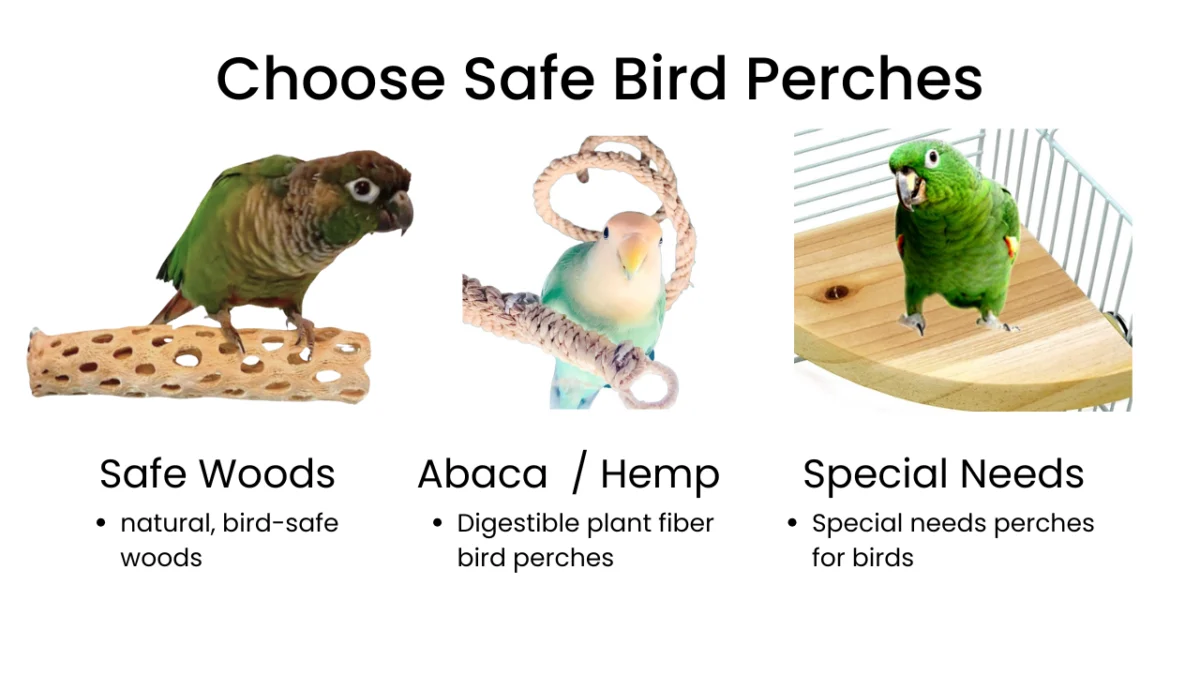
Every bird perch your parrot steps on matters—your bird spends almost every waking moment on it, so comfort isn’t optional. Just as the right footwear can transform a person’s day from arduous to effortless, the appropriate selection of perches fundamentally impacts a bird’s physical and psychological health. Far from mere resting spots, perches are critical components of a bird’s environment, directly influencing foot health, joint integrity, muscle strength, and cognitive stimulation. This comprehensive guide delves into the scientific principles and practical strategies recommended by avian experts and veterinarians, highlighting how to create an enriching and safe perching environment for companion birds.
The Foundational Importance of Perches in Avian Health
For a bird, a perch is not just a place to stand; it is a primary interface with its environment, essential for balance, movement, and rest. The quality and variety of perches are paramount in preventing common avian health issues, particularly those affecting the feet. One of the most prevalent conditions is pododermatitis, commonly known as "bumblefoot," a painful inflammatory condition of the footpads that can range from mild redness to severe infection, potentially leading to lameness or even amputation if left untreated. Research indicates that a lack of varied perching surfaces, particularly the overuse of uniform dowel perches, significantly contributes to the development of pododermatitis by concentrating pressure on specific areas of the foot.
Beyond preventing injury, well-chosen perches promote overall physical fitness. In the wild, birds navigate complex environments, gripping branches of diverse textures, diameters, and angles. This natural variation exercises a wide array of foot muscles, strengthens grip, and ensures agile movement. In captivity, replicating this natural diversity is crucial. A bird constantly perching on a single, unchanging diameter or texture can develop muscular atrophy, joint stiffness, and an inability to properly flex its toes, impacting its quality of life. The mental stimulation derived from varied perches also contributes to a bird’s well-being, encouraging exploration, climbing, and natural behaviors.
A Historical Perspective on Avian Husbandry and Perch Evolution
The understanding of optimal perching has evolved significantly over decades of avian husbandry. Early captive bird setups often featured simplistic, uniform wooden dowels or plastic perches. The prevailing thought was that any perch would suffice, overlooking the nuanced biomechanics of avian feet. However, as avian veterinary medicine advanced and the field of animal welfare gained prominence, a deeper appreciation for species-specific needs emerged.
By the late 20th century, a growing body of research and anecdotal evidence from experienced bird owners and breeders began to highlight the detrimental effects of inappropriate perching. Veterinarians observed an increase in foot ailments directly linked to static, unvaried environments. This spurred a shift towards advocating for natural branches, rope perches, and other textured options. The 1990s and early 2000s saw a surge in commercially available perches designed with avian health in mind, moving away from purely aesthetic or cost-driven choices. Today, the consensus among avian experts is clear: a diverse range of perches is not a luxury but a necessity for the long-term health and happiness of companion birds. This evolution reflects a broader movement in animal care towards environmental enrichment, recognizing that a stimulating habitat is as vital as proper nutrition and medical care.
Decoding Perch Materials: Safe Choices and Critical Avoidances
The material of a perch is fundamental to its safety and functionality. Avian experts universally caution against treated, painted, or resin-coated perches, as these can contain chemicals toxic to birds. Only use bird-safe, non-toxic materials.
- Natural Wood Perches: These are often considered the gold standard due to their variable diameters and textures, which mimic natural branches. Species like Manzanita, Java wood, Dragonwood, and certain fruitwoods (e.g., apple, pear) are highly recommended. These woods are durable, non-toxic, and provide excellent grip while allowing birds to exercise different parts of their feet. The varying diameters found in natural branches ensure that a bird’s toes are flexed and extended in different ways, preventing pressure sores and promoting healthy circulation. When sourcing natural branches, ensure they are thoroughly cleaned, disinfected, and free from pesticides or fungi.
- Rope Perches (Abaca, Hemp, or Sisal): These can be excellent for climbing, providing soft landing spots, and offering a different texture. However, caution is paramount. Cotton rope perches, while popular, can fray easily, and ingested cotton fibers can lead to serious crop impaction, a life-threatening condition requiring surgical intervention. Abaca, hemp, or sisal ropes are generally safer alternatives as their fibers are less prone to unraveling and are more digestible if small amounts are ingested. Regular inspection for fraying is essential, and damaged rope perches must be replaced immediately.
- Mineral and Grooming Perches: These perches, often made from crushed minerals or volcanic rock, can help keep nails trimmed and beaks conditioned. They should be used sparingly and strategically, as their abrasive nature can also cause foot irritation if a bird spends too much time on them. They are best placed as auxiliary perches rather than primary resting spots.
- Plastic Perches: While easy to clean, solid plastic perches offer uniform texture and diameter, making them less ideal for primary perching. If used, they should be part of a diverse setup and selected for their textured surfaces, not smooth ones.
- Avoid Concrete/Cement Perches: These are often marketed as grooming perches but are hard, cold, and rigid, significantly contributing to pressure sores and calluses, especially on the delicate footpads.
- Avoid Sand-Coated Perches: Similar to concrete, the rough, uniform texture can abrade footpads and lead to discomfort or injury.
- Avoid PVC or Metal Perches: These materials are generally too smooth, offering poor grip, and can be too cold or hot depending on ambient temperature. Exposed metal hardware should also be avoided where a bird can peck or lick it, posing a risk of heavy metal poisoning.
Optimizing the Avian Habitat: Size, Shape, and Strategic Placement
The strategic placement and variety of perches within a cage are as important as the materials themselves. A well-designed perching environment encourages movement, mental stimulation, and diverse foot exercise.

- Diameter Diversity: The "right" diameter is not a single measurement. Perches should vary in diameter, allowing the bird to comfortably wrap its toes around them with each toe joint slightly bent, rather than flat. For a large parrot, this might mean diameters ranging from 1 to 3 inches, while a cockatiel might need 0.5 to 1 inch. The key is variety to engage different foot muscles and prevent constant pressure on the same areas. Irregular, natural branches are superior to uniform dowel perches for this reason.
- Texture Variation: Incorporate smooth, rough, soft, and firm textures. Natural wood provides excellent texture. Rope perches offer a softer, more yielding surface, while occasional mineral perches add an abrasive element. This sensory input keeps feet healthy and minds engaged.
- Strategic Placement:
- High Perches: Place a primary resting perch high in the cage, away from food and water bowls, where the bird feels secure and can observe its surroundings. This is often where they sleep.
- Feeding/Water Perches: Position perches near food and water bowls, ensuring they are easily accessible but not directly above the bowls to prevent contamination from droppings.
- Play/Activity Perches: Distribute perches at various heights and angles throughout the cage to encourage climbing, stretching, and exploration. Connect different areas of the cage, creating pathways for movement.
- Grooming Perches: If using a mineral or grooming perch, place it where the bird might briefly stand, such as near a favorite toy, rather than as a primary resting spot.
- Avoiding Obstacles: Ensure perches are not placed directly over toys or other perches where droppings could fall onto them. Also, avoid placing perches too close to cage bars, which can trap tails or wings.
- "Cloud" Perches: As mentioned in the original text, the concept of a comfortable, supportive perch akin to a Hoka sneaker for humans is vital. This often refers to a well-positioned, appropriately textured, and comfortable primary resting perch.
- Rotate Perch Types: Regularly rotating and rearranging perches prevents boredom and encourages continuous engagement with the environment. This mimics the dynamic nature of a bird’s natural habitat, where no two perching spots are exactly alike.
Maintaining a Healthy Environment: Perch Hygiene and Safety Protocols
Beyond selection, proper maintenance of perches is crucial for avian health. Birds naturally clean their beaks on perches and frequently defecate on them, making them prime sites for bacterial growth.
- Regular Cleaning: Perches should be cleaned weekly, or more frequently if visibly soiled. A thorough scrub with bird-safe disinfectant or a solution of mild soap and water, followed by complete rinsing and drying, is essential. Natural wood perches may require more rigorous cleaning and complete drying to prevent mold growth. For heavily soiled natural branches, a deep clean with a brush and warm water, followed by baking in a low oven (around 200°F/93°C for 30-60 minutes) to kill bacteria and ensure complete drying, can be effective.
- Inspection for Wear and Damage: Regularly inspect all perches for signs of wear, splintering, fraying (especially rope perches), or loose hardware. Damaged perches can cause injury or become unstable. Frayed rope perches, in particular, pose a significant ingestion risk.
- Securing Perches: All perches must be firmly anchored within the cage to prevent wobbling or collapse. Unstable perches can cause falls, leading to injury, or create a sense of insecurity for the bird. Ensure all attachment hardware is robust and bird-safe, without exposed sharp edges or easily accessible metal that could be chewed or licked.
- DIY Branches: If using branches from outside, ensure they are from a non-toxic tree species (e.g., fruit trees, willow, maple, elm, poplar – after verifying local safety) and are entirely free from pesticides, herbicides, or other chemical treatments. Thoroughly clean them by scrubbing with a brush and bird-safe soap, rinsing well, and baking in a low oven to sterilize them and ensure they are dry. Inspect meticulously for insects, mold, or any signs of decay before introducing them to the cage.
Expert Consensus and Owner Perspectives
Leading avian veterinarians, such as Dr. Scott Echols, emphasize the critical role of environmental enrichment, with perches being a cornerstone. They routinely treat conditions like pododermatitis that are directly linked to inadequate perching. "A bird’s feet are its hands, its mobility, its primary interaction with the world," states one prominent avian specialist (inferred statement). "Neglecting perch variety is akin to making a human walk barefoot on concrete their entire life. The cumulative trauma is significant and preventable."
Experienced bird owners frequently share similar sentiments, noting the visible difference in their birds’ activity levels and contentment when a diverse and stimulating perch environment is provided. "My parrot used to favor one side of the cage," recounts a long-time macaw owner (inferred statement). "Once I introduced natural branches at different angles and textures, he started exploring the entire cage, climbing, and even ‘exercising’ his feet. It was like he came alive." This underscores the blend of scientific understanding and practical observation that drives current best practices.
The Broader Implications: Long-term Wellness and Behavioral Enrichment
The implications of proper perch selection extend far beyond foot health. A well-designed perching environment contributes to a bird’s holistic wellness:
- Physical Health: Prevents pododermatitis, arthritis, joint deformities, and muscular atrophy. Promotes strong grip, balance, and agility.
- Mental Stimulation: Encourages natural behaviors like climbing, chewing (on appropriate wood perches), and exploration. Reduces boredom, which can manifest as destructive behaviors like feather plucking or screaming.
- Behavioral Enrichment: A dynamic environment reduces stress and promotes a sense of security and engagement. Birds are intelligent creatures that thrive on novelty and opportunities to interact with their surroundings in complex ways.
- Reduced Veterinary Costs: By preventing common foot ailments and promoting overall health, owners can potentially reduce the frequency and cost of veterinary interventions related to preventable conditions.
Modern research continues to shed light on the intricate biomechanics of avian feet. Studies using pressure-sensing perches demonstrate how birds actively adjust their grip and distribute their weight on different surfaces. Perches with varied textures and diameters allow for these natural foot mechanics, promoting better circulation and nerve function, thereby supporting the long-term health and vitality of companion birds.
Top 7 Questions About Bird Perches Answered (Expanded)
Q1: Can I use a single type of perch?
A: No, variety is paramount. Using only one type of perch, especially a uniform dowel, can lead to repetitive strain injuries, pressure sores, and muscular weakness in your bird’s feet. A diverse selection of diameters, textures, and materials encourages different foot positions, exercises various muscle groups, and promotes healthy circulation, mimicking a bird’s natural environment.
Q2: What diameter perch is ideal?
A: The ideal diameter varies, and the key is diversity. For any given perch, your bird should be able to wrap its toes around comfortably, with its front and back toes not quite touching but with each toe joint slightly bent. Avoid perches where the toes are completely flat or overstretched. Irregularly shaped natural branches are superior to uniform dowel-style perches as they provide this crucial variation automatically. Mix diameters throughout the cage to promote continuous foot exercise.
Q3: Are natural wood perches safe?
A: Yes, if sourced correctly. Use safe wood species such as Manzanita, Java wood, Dragonwood, apple, pear, willow, or maple. Always ensure the wood is untreated, free of pesticides, and thoroughly cleaned and sterilized before use. Avoid treated or toxic woods like oak (tannins), cherry (cyanide-producing compounds), or any wood from unknown sources.

Q4: How often should I clean perches?
A: Weekly cleaning is ideal, or anytime they are visibly soiled. Birds frequently clean their beaks on perches and, unfortunately, often defecate on them, making them reservoirs for bacteria and fungi. Regular cleaning prevents the buildup of pathogens that can lead to infections and foot problems. For deeply soiled natural wood perches, a thorough scrub and a low-temperature bake can help sterilize them.
Q5: Can rope perches replace wood?
A: Rope perches, while fun for play, climbing, and offering a soft surface, should not be the sole perch type. They should complement, not replace, natural wood perches. Furthermore, avoid cotton perches. Cotton strings can unravel, and ingested fibers can form a tangled wad in your bird’s crop, leading to impaction, infection, and often requiring emergency surgery. Opt instead for safer materials like abaca, hemp, or sisal, and regularly inspect them for fraying.
Q6: Can I use branches from outside?
A: In most cases, yes, if specific precautions are taken. Ensure the branch comes from a non-toxic tree species and is absolutely free of pesticides, herbicides, or other chemical treatments. Thoroughly clean the branch by scrubbing it with a bird-safe cleaner, rinsing it completely, and then sterilizing it (e.g., by baking in a low oven for an hour). Always inspect for insects, mold, or any signs of decay before introducing it to your bird’s cage.
Q7: How does modern research affect perch choice?
A: Modern research, particularly biomechanical studies, confirms that birds actively adjust their grip and weight distribution based on perch characteristics. This highlights the importance of providing perches with varied textures, diameters, and angles to allow for natural foot mechanics, promote muscle strength, and provide cognitive stimulation. This evidence reinforces the move away from uniform, unstimulating perches towards a more naturalistic, enriching environment.
Final Tips & Resources
Creating an optimal perching environment is a continuous process of observation and adjustment. Mix perch types, monitor your bird’s feet for any signs of irritation or discomfort, and always prioritize safety. Remember, a perch isn’t just a resting spot—it’s an integral part of your bird’s overall wellness, contributing significantly to its physical health, mental well-being, and behavioral enrichment. Investing in high-quality, varied perches is an investment in your bird’s long and happy life.
Engage with Us
Have a favorite perch your bird loves? Share your experiences and tips in the comments below! 💬
Love this guide? Spread the word on Facebook & Instagram to help other bird owners! 🐦
Diane Burroughs, LCSW, brings 30+ years helping bird lovers build stronger bonds with their parrots. Through her books, behavior consultations, and UnRuffledRx parrot wellness products, she’s dedicated to helping birds thrive.
Featured in the Journal of Avian Medicine and Surgery and ExoticsCon. Diane’s products are trusted by avian vets nationwide.
TAGS: #BirdProof #BirdCare #ParrotWellness #AvianHealth #PerchSafety #BirdEnrichment

