


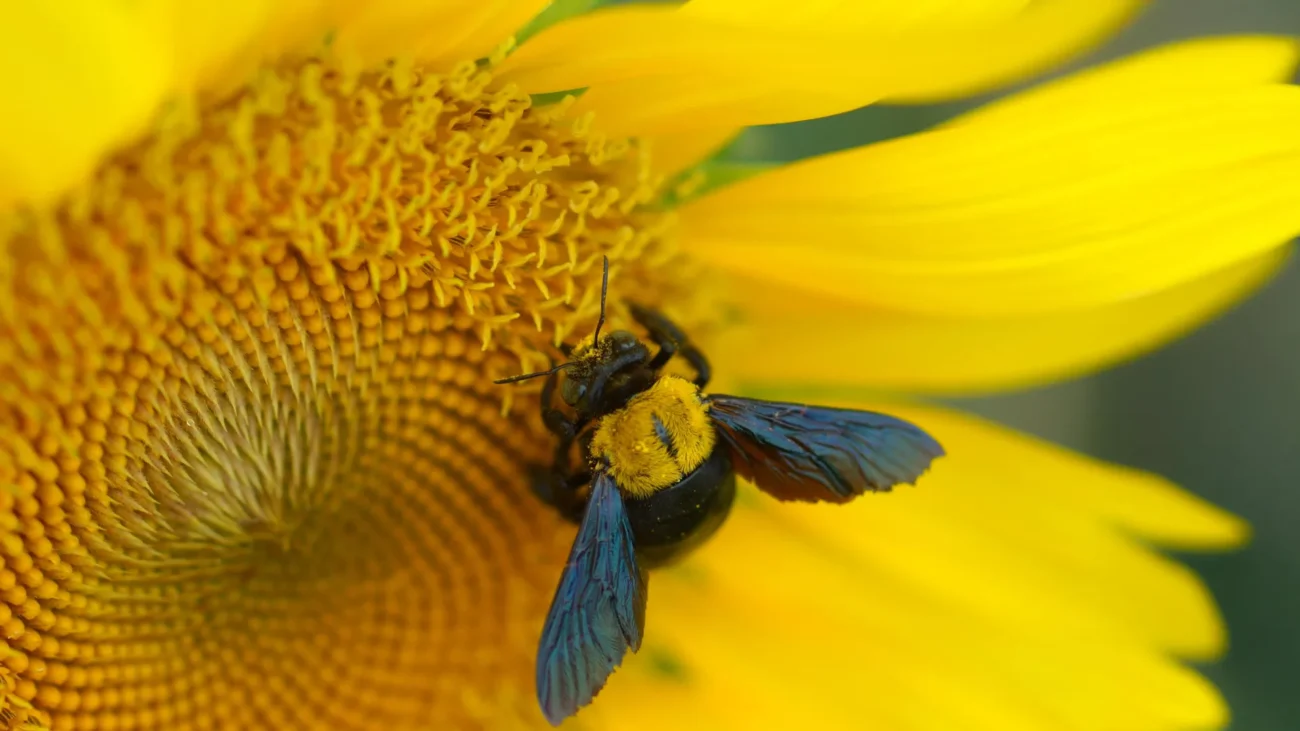
New research published in the esteemed journal Nature Communications has unveiled a critical vulnerability within Australia’s diverse native bee populations, identifying species that construct their nests within plant stems as facing the most immediate and significant threat from escalating global temperatures. In stark contrast, bee species that utilize underground nesting sites appear to possess a more robust defense mechanism against the detrimental effects of extreme heat. This groundbreaking study, conducted by a consortium of leading Australian universities, offers a crucial insight into the complex interplay between climate change, bee ecology, and the vital role these pollinators play in both natural ecosystems and agricultural productivity.
The comprehensive investigation involved an in-depth examination of heat tolerance across 95 distinct native bee species. These species were meticulously surveyed across a broad geographical spectrum in eastern mainland Australia, encompassing the distinctly different climatic zones from the sun-drenched tropical north to the more temperate southern regions. The collaborative effort brought together researchers from Macquarie University, The University of Sydney, La Trobe University, Flinders University, the University of Wollongong, Adelaide University, and The University of Queensland. Their collective objective was to unravel the evolutionary pathways of heat tolerance in various bee lineages and to precisely assess their susceptibility to the escalating challenges posed by a warming climate.
Understanding the Crucial Link: Nesting Habits and Heat Exposure
Australia boasts an extraordinary diversity of native bees, with an estimated 1,700 species contributing to the health of its unique flora. These industrious insects have evolved a fascinating array of nesting strategies, broadly categorized into three primary groups: subterranean nesters, wood-nesters, and stem-nesters. Subterranean nesters excavate intricate burrows within the soil, providing a buffered environment. Wood-nesters seek refuge in pre-existing cavities, such as tree hollows or decaying fallen branches. The third group, stem-nesters, ingeniously utilize hollow plant stems or small, pre-existing holes within twigs and branches as their domicile.
Dr. Carmen da Silva, the lead author of the study and a Research Fellow at the Pollinator Futures Research Centre at Macquarie University in Sydney, elaborated on the critical implications of these differing nesting strategies. "Bees that nest underground are afforded a natural insulation from extreme heat," Dr. da Silva explained. "As a result, they do not experience the same temperature spikes as their above-ground counterparts. This is particularly true for species that inhabit thin plant stems, which offer minimal protection from the external thermal onslaught."
The study’s findings underscore this crucial distinction. Species that nest within plant stems appear to have a significantly diminished capacity to escape unfavorable environmental temperatures. This inherent limitation renders them particularly vulnerable to the immediate impacts of anthropogenic climate change. "Stem-nesting species appear to have the lowest capacity to escape unfavorable environmental temperatures and are likely to be the most impacted by anthropogenic climate change in the near term," Dr. da Silva stated unequivocally. The research unequivocally demonstrates that the choice of nesting location is a pivotal factor in determining a bee species’ resilience to rising global temperatures.
The Indispensable Role of Bees: Why Their Survival Matters
The urgency of this research is amplified by the indispensable ecological and economic roles that bees fulfill. Dr. da Silva emphasized the profound importance of safeguarding bee populations. "Bees are critical in ecosystems all over the world because of their role as pollinators, and they’re under threat from warming and drying climates," she asserted. Their tireless work is the linchpin for the reproduction of countless plant species, underpinning the biodiversity and stability of natural landscapes.
Beyond their ecological significance, bees are foundational to global food security. They are vital for the successful cultivation of a vast array of agricultural crops. "Bees sustain native ecosystems and play a crucial role in agricultural crop production," Dr. da Silva highlighted. "Tropical native bees, for instance, are vital pollinators for crops such as macadamia nuts, avocados, mangoes, and lychees." The economic implications of a decline in these pollinator populations are substantial, potentially impacting global food supplies and the livelihoods of millions.
Geographic Disparities: Tropical Bees Face Amplified Climate Risks
The study also unearthed a significant geographical pattern in vulnerability. Bee species that inhabit regions closer to the equator, characterized by naturally warmer climates, exhibited a heightened susceptibility to the impacts of climate change. Tropical bee species, in particular, were identified as facing the most substantial overall risk.
Dr. Vanessa Kellermann, a Senior Lecturer in the Department of Ecology, Plant and Animal Sciences at La Trobe University and a senior author of the study, underscored the inherent complexities in predicting which species will bear the brunt of global warming. "Predicting which species will be vulnerable to climate change is one of the biggest challenges in ecology," Dr. Kellermann commented. "We found bee species with the highest heat tolerance were not necessarily the safest from warming, because many of them already live in extremely hot environments."
This observation is critical. It suggests that species already adapted to high temperatures may have reached their physiological limits. Even incremental increases in average temperatures could push these populations beyond their adaptive capacity, leaving them with little buffer to cope with additional thermal stress. This phenomenon, known as exceeding thermal optima, can lead to reduced reproductive success, increased mortality rates, and ultimately, population decline.
Unlocking the Secrets of Native Bee Behavior: The Path Forward
The researchers underscore that a significant knowledge gap persists regarding the intricate lives and behaviors of Australia’s remarkably diverse native bee populations. This deficit makes comprehensive conservation efforts challenging. "We still know so little about most of Australia’s amazing native bees," stated co-senior author Dr. Ros Gloag, a Senior Lecturer in Evolutionary Biology in the School of Life and Environmental Sciences at the University of Sydney. "This study helps us recognise that having a better understanding of native bee behavior is key to identifying the greatest threats to their wild populations."
The findings of this study provide a crucial starting point for targeted conservation strategies. Future research could focus on identifying specific stem-nesting species at highest risk and exploring potential mitigation measures. These could include habitat restoration initiatives that favor more resilient nesting sites, the development of shade structures in agricultural areas where these bees are crucial pollinators, or even the exploration of assisted migration for critically endangered populations, though such measures are complex and require extensive ethical and ecological consideration.
Broader Implications for Biodiversity and Agriculture
The implications of this research extend far beyond the immediate concern for native bees. It serves as a stark reminder of the cascading effects that climate change can have on entire ecosystems. Pollinators are keystone species; their decline can trigger a domino effect, impacting plant communities, herbivore populations, and ultimately, the overall health and resilience of the environment.
For the agricultural sector, the findings signal a need for proactive adaptation strategies. Reliance on native bee pollination for certain crops, particularly in warmer regions, could become increasingly precarious. This necessitates a diversification of pollination strategies, potentially including the integration of managed honeybee populations (though they too face climate-related challenges) or the development of crop varieties less dependent on specific pollinators. Furthermore, investing in research to understand and support native bee populations is not merely an environmental imperative but an economic necessity.
A Call for Enhanced Monitoring and Conservation
The study, initiated in the early 2020s with data collection spanning several years, highlights the ongoing urgency of climate action. The research team employed a combination of field observations, physiological measurements of heat tolerance, and sophisticated modeling techniques to arrive at their conclusions. The timeline of the research, from initial conception to publication, reflects the meticulous and time-consuming nature of ecological studies of this magnitude.
Official responses from environmental bodies and agricultural organizations are anticipated as the implications of this research are more widely disseminated. Conservation groups have long advocated for increased protection of native flora and fauna, and this study provides concrete data to bolster their calls for action. Agricultural bodies may need to reassess pollination strategies and invest in research that supports pollinator health within farming landscapes.
In conclusion, the research published in Nature Communications offers a compelling and urgent message: the delicate balance of Australia’s ecosystems is being directly challenged by climate change, with specific vulnerabilities emerging within its invaluable native bee populations. The identification of stem-nesting bees as particularly at-risk species underscores the need for targeted conservation efforts, a deeper understanding of bee ecology, and a renewed commitment to mitigating the drivers of climate change. The survival of these tiny, yet vital, creatures is intrinsically linked to the health of our planet and the sustainability of our food systems.

