


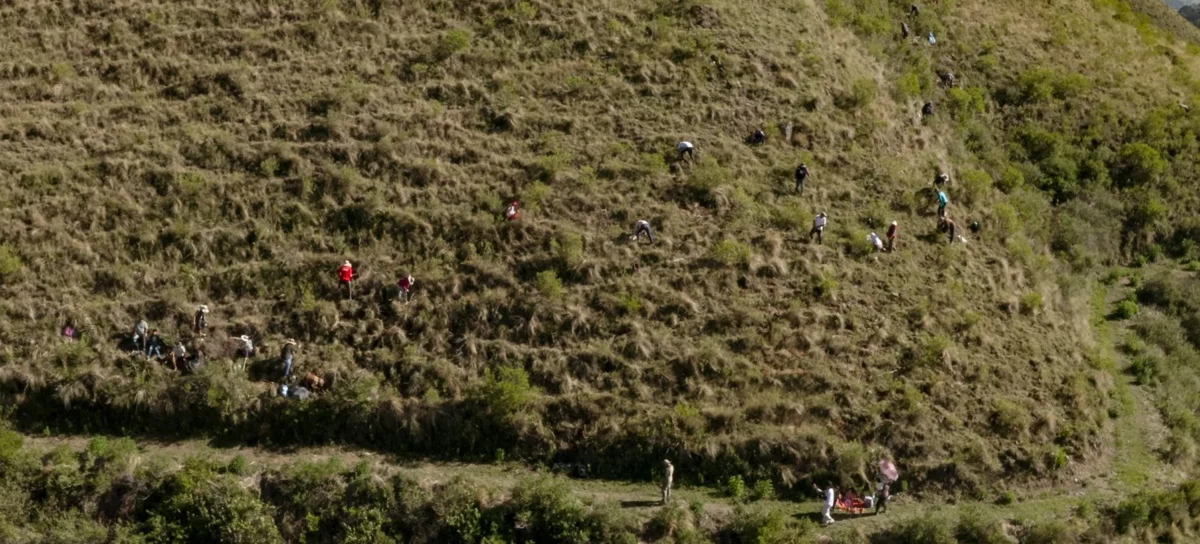
Asociación Armonía, a key partner in Bolivia, is spearheading the development of long-term sustainable finance mechanisms for the critical ecosystems within Tunari National Park. This initiative aims to secure the future of the park’s vital Kewiña forests and ensure the water security of over a million people in the Cochabamba metropolitan region. The project represents a significant shift towards community-led conservation and sustainable resource management, addressing decades of environmental degradation and socio-economic challenges.
The Fragile Jewel of the Andes: Tunari National Park
Perched on the southern slopes of the Andes, Tunari National Park is home to more than 80% of Bolivia’s remaining ancient Kewiña forest. These high-altitude woodlands, clinging precariously to steep ridges, are not merely picturesque landscapes. They are ecological powerhouses, essential for stabilizing the rugged terrain, regulating crucial water flows that sustain downstream communities, and providing refuge for unique endemic wildlife. Among these is the Near Threatened Cochabamba Mountain-finch, a species found nowhere else on Earth. The park’s role as a watershed guardian is paramount, directly supplying the water needs of the burgeoning Cochabamba metropolitan area, a region inhabited by over a million people.

However, these vital ecosystems have been under relentless pressure for decades. A confluence of threats, including recurring wildfires, rampant deforestation, and encroaching urban expansion, have pushed the park’s delicate balance to the brink. Compounding these environmental pressures has been a history of strained relationships between the local communities residing within the park’s boundaries and the park’s managing authorities. This historical friction has often hindered the implementation of effective, long-term conservation strategies.
A Paradigm Shift: Community Empowerment and Sustainable Finance
The current narrative surrounding Tunari National Park is one of burgeoning hope and proactive change. Restoration efforts are gaining momentum, with local communities increasingly taking on leadership roles. Central to this evolving dynamic is a groundbreaking concept: a Payment for Ecosystem Services (PES) mechanism. This innovative financial model is designed to channel sustained, long-term funding into critical restoration activities and watershed protection initiatives.
This ambitious undertaking is being championed by Asociación Armonía, a respected conservation organization, with crucial support from the Forest Impact Accelerator. The Accelerator program, dedicated to investing in forest conservation, has been instrumental in facilitating the development of this forward-thinking financial framework.

The Genesis of a Sustainable Financial Model
For several years, Asociación Armonía, in close collaboration with local communities, has been diligently working on restoring degraded sections of the Tunari protected area. Their efforts have yielded impressive results: over 1.25 million trees have been planted, with a significant portion, more than half, established in the Tiquipaya municipality. Beyond reforestation, the initiative has seen the strengthening of community wildfire brigades, the construction of vital reservoirs to secure water resources, and the creation of new frameworks to foster community participation in watershed management.
A pivotal achievement in this ongoing restoration journey has been the reinforcement of the Organismo de Gestión de Cuencas (OGC), a watershed governance body. The OGC plays a critical role in coordinating restoration activities and devising sustainable development strategies for communities living within the park. This collaborative approach has been instrumental in rebuilding trust among communities, park authorities, and conservation organizations. Notably, women leaders have emerged as influential figures, shaping the direction and effectiveness of these vital conservation efforts.
Despite these successes, a persistent challenge loomed large: the inherent disparity between the long-term nature of ecological restoration and the often short-term funding cycles of traditional conservation projects. Without a stable, predictable source of long-term financing, the gains achieved through dedicated restoration efforts were vulnerable to erosion. This realization underscored the urgent need for a financial model that could ensure the enduring health and resilience of the Tunari National Park ecosystem.

The Payment for Ecosystem Services (PES) Mechanism: A Detailed Framework
The proposed PES mechanism is designed as a transparent and accountable system for channeling funds directly into the conservation and restoration of the Tunari watershed. At its core, the system envisions collecting small, regular contributions from downstream users who benefit from the ecological services provided by the park. These contributions would be channeled into a robust, transparent trust fund governed by an independent body. The resources generated by this fund would then be strategically invested in three primary areas:
- Forest Restoration and Reforestation: Investing in the planting and nurturing of native tree species, particularly the resilient Kewiña, to expand forest cover, enhance biodiversity, and stabilize slopes. This includes supporting community-led nursery operations and planting initiatives.
- Watershed Management and Water Security: Implementing measures to protect and improve water quality and regulate water flow. This could involve the construction and maintenance of water infrastructure, the protection of water sources, and the implementation of sustainable agricultural practices in upstream areas.
- Sustainable Livelihoods and Community Development: Supporting the development of alternative, sustainable income-generating activities for local communities that are aligned with conservation goals. This could include ecotourism, sustainable agroforestry, or the production of non-timber forest products, thereby creating economic incentives for conservation.
This multi-faceted approach ensures that the PES system not only finances ecological restoration but also fosters socio-economic well-being within the communities that are the frontline stewards of the park. For the communities themselves, the mechanism serves as a formal recognition of their invaluable role as custodians of the watershed. For urban residents, it offers a tangible and practical pathway to contribute to the preservation of the ecosystems that ensure their water supply. For both public and private sector partners, it establishes a transparent and reliable framework for sustained investment in landscape restoration and ecological resilience.
Upon full implementation, this innovative PES mechanism is projected to generate an estimated £3 million annually, dedicated specifically to the vital tasks of watershed protection and ecological restoration within the Tunari National Park.

Building the Institutional Foundation for Success
While the financial mechanism is a cornerstone of the initiative, its long-term success hinges on robust institutional frameworks and genuine community engagement. With the ongoing support of the Forest Impact Accelerator, Asociación Armonía is actively assisting communities in developing ten-year sustainable development strategies. These strategies are crucial for identifying specific restoration priorities and identifying viable income-generating opportunities that align with conservation objectives.
A multi-stakeholder platform is being established to oversee the initiative, ensuring that decisions are guided by a broad consensus and reflect the needs and aspirations of all involved parties. Concurrently, efforts are underway to bolster the park administration’s capacity. This includes enhancing monitoring systems to track ecological changes, strengthening wildfire prevention and response capabilities, and improving overall coordination among different agencies and stakeholders.
A New Blueprint for Watershed Protection

The transformative work unfolding in Tunari National Park extends far beyond the simple act of planting trees. It is about constructing a durable, self-sustaining system that intricately links ecological restoration, empowered community leadership, and consistent, long-term financial support. Once operational, the PES mechanism has the potential to fundamentally reshape the management of the Tunari watershed. Instead of relying on the unpredictable ebb and flow of short-term project funding, the region will benefit from a locally supported, enduring financial system that actively rewards environmental stewardship. This will ensure the continued protection of the ancient Kewiña forests that have been the lifeblood of the Andean region for centuries.
A Legacy of Collaboration and Support
Since the inception of this vital project in 2020, a number of dedicated donors have played an indispensable role in its advancement. Profound gratitude is extended to Accion Andina, the Darwin Initiative (through direct funding and the Accelerator program), Trillion Trees – BirdLife International, and FFBT (Flanders State of the Art – Agency Nature & Forest). Their collective commitment has been instrumental in bringing this ambitious vision to fruition.
The Forest Impact Accelerator, itself a testament to collaborative conservation, has successfully operated for five years, made possible by the generous support of the Hempel Foundation, the Waterloo Foundation, and the King Charles III Charitable Fund. In addition to this foundational support, the Accelerator has facilitated the sourcing of an additional £6 million in funding through close collaboration with its partner organizations. This comprehensive investment has yielded substantial benefits, positively impacting 38,000 local people, enhancing the protection of 400 threatened species, and influencing over 1 million hectares of critical habitat.

This year marks a significant milestone with the awarding of a substantial Darwin Initiative Extra grant, secured through the UK government’s Biodiversity Challenge Awards. This prestigious program is dedicated to advancing global biodiversity conservation, alleviating poverty, and addressing the multifaceted challenges posed by climate change. The £4,978,335 grant will serve to significantly expand and scale up the achievements to date, aiming to secure 1 million hectares of Key Biodiversity Areas while simultaneously generating tangible economic benefits for 200,000 local people. This underscores the profound international recognition and support for the innovative approach being pioneered in Bolivia’s Tunari National Park.

