


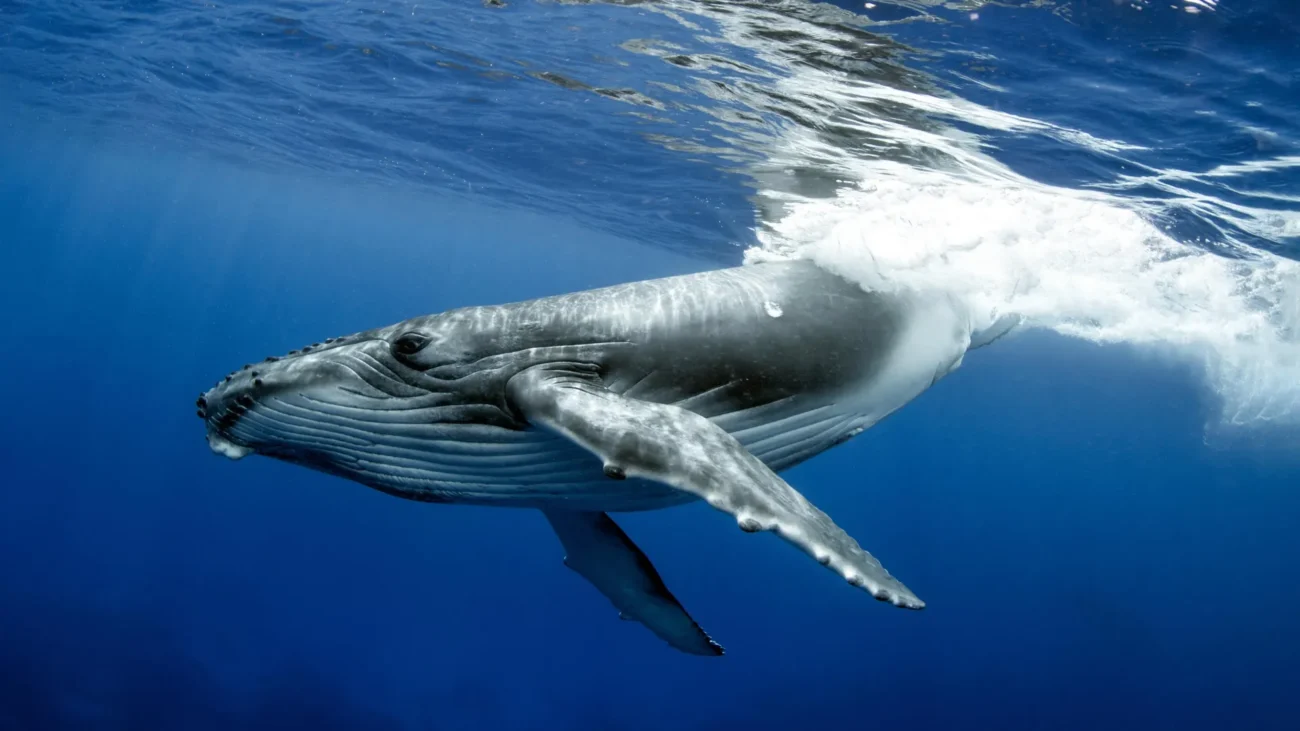
Scientists have documented an extraordinary feat of whale migration for the first time, confirming that humpback whales traveled between breeding grounds in eastern Australia and Brazil across more than 14,000 kilometers of open ocean. This discovery marks the greatest confirmed distance ever recorded between sightings of individual humpback whales anywhere in the world, offering unprecedented insights into the migratory capabilities and interconnectedness of these majestic marine mammals. The findings, published in the prestigious journal Royal Society Open Science, underscore the critical importance of long-term research, international collaboration, and citizen science in unraveling the mysteries of the ocean.
A Tale of Two Oceans: Unraveling a Monumental Journey
The groundbreaking research identified two individual humpback whales that undertook journeys of astonishing length, connecting populations separated by vast oceanic expanses and distinct hemispheres. The initial identification of these remarkable migrations was made possible by the meticulous comparison of tens of thousands of photographs of humpback whale tails, or flukes. Each whale possesses a unique pattern of pigmentation and nicks on its fluke, akin to a human fingerprint, allowing scientists to identify and track individuals over extended periods.
One whale, first photographed in Hervey Bay, Queensland, Australia, in 2007, was subsequently sighted in the same region in 2013. Years later, in 2019, this same individual was identified near São Paulo, Brazil. The minimum straight-line distance between these two geographically disparate breeding grounds is approximately 14,200 kilometers (about 8,820 miles), a distance comparable to traveling from Sydney, Australia, to London, England. Researchers emphasize that this figure represents a minimum, as the precise migration route taken by the whale remains unknown and likely involved considerably more travel.
Even more extraordinary was the journey of a second humpback whale. This individual was first documented in 2003 off Brazil’s Abrolhos Bank, a renowned humpback whale nursery located along the coast of Bahia. At the time of its initial sighting, the whale was observed in a lively group of nine adult whales. Twenty-two years later, in September 2025, this same whale was sighted alone in Hervey Bay, Australia. The documented distance between these two sightings was a staggering 15,100 kilometers (approximately 9,380 miles), establishing a new world record for the longest known movement of an individual humpback whale.
The Power of Collaboration: Decades of Data and Citizen Science
The extraordinary discoveries are the culmination of decades of dedicated research and the invaluable contributions of citizen scientists worldwide. The study drew upon a massive dataset of 19,283 high-quality fluke photographs collected between 1984 and 2025. These images were sourced from both professional researchers and enthusiastic members of the public through the global whale tracking platform, Happywhale.
"Discoveries like this are only possible because of investment into long-term multi-decadal research programs and international collaboration," stated Stephanie Stack, a PhD candidate at Griffith University and a co-author of the study. "These whales were photographed decades apart, by different people, in opposite parts of the world, separated by two different oceans, and yet we can connect their journey."
The process of identifying these long-distance travelers involved sophisticated automated image recognition software, which initially flagged potential matches between fluke photographs. These potential matches were then meticulously reviewed and manually verified by scientists to ensure the accuracy of the findings.
Dr. Cristina Castro, lead researcher from the Pacific Whale Foundation, highlighted the profound impact of citizen science on this research. "This kind of research highlights the value of citizen science," Dr. Castro commented. "Every photo contributes to our understanding of whale biology and, in this case, helped uncover one of the most extreme movements ever recorded." This sentiment underscores the democratization of scientific discovery, where the passion and dedication of individuals can lead to monumental breakthroughs.
A Rare Phenomenon: Understanding the Significance of Isolated Exchanges
Despite the remarkable distances covered by these two individuals, researchers were keen to emphasize the rarity of such extensive transoceanic migrations. Across more than four decades of data encompassing nearly 20,000 identified humpback whales, only these two whales were found to have traveled between the eastern Australian and Brazilian breeding regions. This accounts for a minuscule 0.01 percent of the whales included in the records, indicating that these intercontinental journeys are exceptionally uncommon.
This rarity, however, does not diminish their importance. Scientists believe that even these infrequent exchanges play a crucial role in the long-term health and resilience of whale populations. "Despite their rarity, these exchanges matter for the long-term health of whale populations," Ms. Stack elaborated. "Occasional individuals moving between distant breeding grounds can help maintain genetic diversity across populations and may even carry new song styles from one region to another – humpback whale songs are known to spread culturally across ocean basins, much like music trends in human populations."
The introduction of new genetic material and cultural elements, such as song, can invigorate isolated populations, preventing inbreeding and fostering adaptability. This concept is akin to introducing new bloodlines into a domestic animal population to enhance its overall health and vigor.
The "Southern Ocean Exchange" Hypothesis and Future Implications
The findings provide compelling support for what researchers refer to as the "Southern Ocean Exchange" hypothesis. This theory posits that humpback whales from different breeding populations may converge in shared feeding grounds in the Antarctic Ocean. During their return migration, some individuals may deviate from their usual routes, potentially ending up in entirely new breeding areas. The observed transoceanic journeys are consistent with this hypothesis, suggesting a complex network of interactions and movements within the global whale population.
Looking ahead, researchers are considering how climate change might influence these migratory patterns. Shifts in Antarctic sea ice extent and alterations in the distribution of Antarctic krill, the primary food source for humpback whales, could potentially lead to changes in whale migration routes and an increase in these rare intercontinental crossings. As oceanographic conditions evolve, whales may be compelled to explore new feeding grounds and, consequently, discover new breeding destinations.
The study, titled "First evidence of bidirectional exchange between distant humpback whale breeding populations in eastern Australia and Brazil," represents a significant leap forward in our understanding of humpback whale behavior and the intricate connectivity of marine ecosystems. It highlights the critical need for continued investment in scientific research, the fostering of international cooperation, and the recognition of the indispensable role of citizen science in safeguarding these magnificent creatures and their vast oceanic habitats. The record-breaking journeys serve as a powerful reminder of the enduring mysteries that the ocean still holds and the profound discoveries that await us when we dedicate ourselves to exploring them.
Context and Background: The Humpback Whale’s Global Odyssey
Humpback whales (Megaptera novaeangliae) are renowned for their extensive migrations, undertaking some of the longest annual journeys of any mammal on Earth. Typically, these whales travel between nutrient-rich polar feeding grounds during the summer months and warmer tropical waters for breeding and calving during the winter. Eastern Australia and Brazil are well-established breeding grounds for distinct humpback whale populations. The population that breeds off the coast of eastern Australia primarily feeds in Antarctic waters, while the whales that breed off Brazil also utilize Antarctic feeding areas.
Historically, it was understood that these populations generally adhered to their respective migratory corridors. However, anecdotal evidence and sporadic sightings had hinted at the possibility of interbreeding or occasional cross-oceanic movements. This new research provides the first definitive, scientifically robust evidence of such extreme long-distance exchanges between these specific breeding grounds. The identification of individual whales across such vast distances is a testament to the power of photo-identification techniques, which have been a cornerstone of whale research for decades. These techniques, combined with advanced computational analysis and the global reach of citizen science initiatives, have now unlocked a new level of understanding regarding the interconnectedness of whale populations across entire ocean basins.
The initial sighting of the record-breaking whale in Brazil in 2003, amidst a group of nine adults, suggests it was likely a mature individual engaging in reproductive activities. Its reappearance in Australia in 2025, some 22 years later, indicates a remarkable longevity and a potential to undertake multiple extraordinary migrations throughout its life. Similarly, the Australian whale’s journey to Brazil and subsequent return to Australian waters further illustrates the complex and perhaps opportunistic nature of these migratory behaviors. The implications for genetic diversity and the potential for cultural transmission of behaviors, such as song dialects, are profound. This research not only expands our knowledge of individual migratory capabilities but also offers critical insights into the resilience and adaptability of humpback whale populations in a rapidly changing world.

