


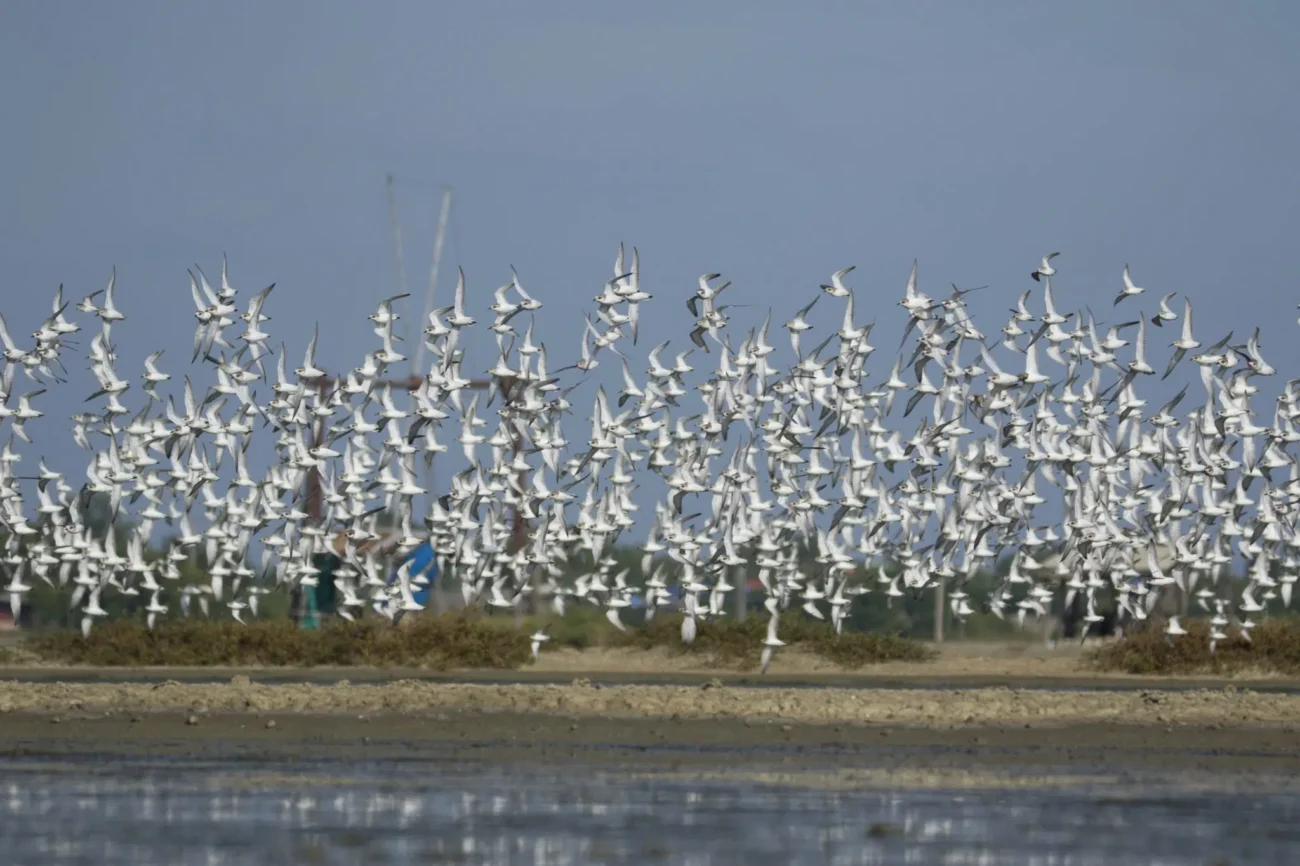
The cerulean expanse of the Gulf of Thailand, a canvas for an annual spectacle of nature, is currently under an unprecedented threat. Hundreds of shorebirds, their small white and grey wings a blur against the sky, take flight from the mudflats of Pak Thale Nature Reserve in Southern Thailand. This vibrant tableau, a critical refueling and wintering ground for avian migrants on the East Asian-Australasian Flyway, faces an existential challenge from proposed industrial development. The construction of an oil refinery and power plant mere kilometers from the reserve’s delicate ecosystem could have devastating consequences for the thousands of birds that rely on it, as well as the local community that has built its economy and identity around its preservation.
The Critical Stopover: Pak Thale’s Ecological Significance
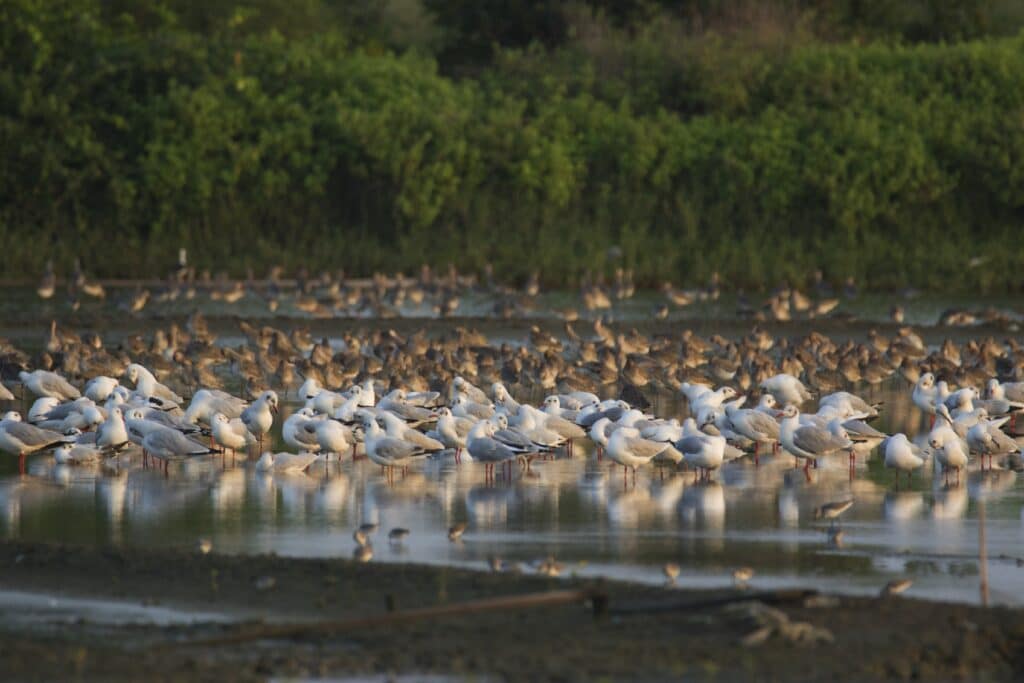
Every winter, a remarkable migratory phenomenon unfolds at Pak Thale. Birds, having journeyed from their Arctic breeding grounds, descend upon the reserve’s rich coastal mudflats, a vital stopover point on one of the planet’s major migratory routes. The East Asian-Australasian Flyway, stretching across continents and oceans, is a lifeline for an estimated 50 million migratory birds annually. Pak Thale, with its abundant food sources, provides a crucial opportunity for these birds to rest, refuel, and prepare for the arduous remainder of their journey.
The ecological importance of Pak Thale is underscored by the presence of several critically endangered and endangered species that find refuge there. Among these are the Spoon-billed Sandpiper ( Calidris pygmaea ), with fewer than 500 adults remaining in the wild, the Far Eastern Curlew ( Numenius madagascariensis ), and the Great Knot ( Calidris tenuirostris ), both listed as endangered. The Spotted Greenshank ( Tringa guttifer ) also frequents these vital wetlands. For birdwatchers and ornithologists, Pak Thale offers a rare and accessible opportunity to observe such a diverse array of rare and threatened species, often within a single day, making it a globally significant birdwatching destination.
A Community’s Commitment to Conservation
Recognizing the profound ecological value and the potential for sustainable economic development, the Bird Conservation Society of Thailand (BCST), a BirdLife International partner, took proactive measures in 2019. They purchased eight hectares of coastal land adjacent to the existing reserve, formally designating it as a wildlife sanctuary. This initiative was driven by a long-term vision to protect the migratory birds and their habitat, while simultaneously fostering a symbiotic relationship with the local community.
BCST’s engagement with the Pak Thale community has been multifaceted and impactful. They have actively trained local residents to become expert guides, enhancing the ecotourism experience and providing a direct economic benefit from the presence of the birds. This has fostered a sense of ownership and stewardship among the community members. Furthermore, BCST has collaborated with local salt farmers, a traditional livelihood in the region, to develop and promote the sale of "biodiversity-friendly salt." This innovative approach encourages sustainable farming practices that minimize environmental impact, allowing farmers to market their produce at a premium, directly linking economic prosperity to ecological health. This model of conservation-driven development has been hailed as a success, demonstrating that environmental protection and community well-being can go hand in hand.

The Looming Threat: Industrial Development
The harmonious balance at Pak Thale has been shattered by the recent announcement of plans to construct an oil refinery and a power plant in close proximity to the nature reserve. The proposed development, situated just kilometers from this critical avian habitat, has sent ripples of alarm through the conservation community and the local populace.
The immediate concern is the potential for severe environmental contamination. An operational oil refinery poses a significant risk of air and water pollution through emissions, spills, and industrial runoff. Such pollutants can degrade the quality of the mudflats, impacting the invertebrate populations that form the base of the food chain for migratory birds. The power plant, while perhaps less directly polluting in terms of chemical discharge, presents its own set of dangers. Low-flying migratory birds, particularly during their nocturnal or crepuscular movements, face a heightened risk of collision with live electrical wires, a hazard that has proven fatal for countless birds globally.
The Cascading Ecological and Economic Impact
The proposed industrial complex threatens to dismantle the very foundations of Pak Thale’s ecological and economic significance. The estimated 270 bird species that currently utilize the reserve as a vital stopover and wintering site could be driven away by habitat degradation and increased disturbance. This loss would not only be a blow to global biodiversity but would also cripple the local ecotourism industry, which has become a cornerstone of the community’s economy. Without the birds, the income generated from birdwatching tours, accommodation, and related services would evaporate.
Similarly, the market for biodiversity-friendly salt, a testament to the successful integration of conservation and livelihood, would likely collapse. The association of the region with thriving wildlife is the primary driver of this niche market. Industrial pollution would not only destroy the habitat but also tarnish the reputation of the region, making it impossible to market products as sustainably produced and environmentally friendly.
A Dire Warning for Migratory Birds
The impact of losing a critical stopover site like Pak Thale extends far beyond the immediate vicinity. For migratory birds, the availability of suitable resting and feeding grounds is not a matter of convenience but of survival. These arduous journeys demand significant energy expenditure, and the ability to replenish reserves at strategically located sites is paramount.
Across the East Asian-Australasian Flyway, coastal wetlands are facing unprecedented pressure from rapid coastal development, urbanization, and industrialization. This relentless loss of habitat means that the "rest stops" available to migratory birds are becoming increasingly scarce and fragmented. For species already teetering on the brink, such as the critically endangered Spoon-billed Sandpiper, the loss of even one vital site like Pak Thale could have catastrophic consequences, pushing them closer to extinction. The current wild population of Spoon-billed Sandpipers is so small that any significant mortality event or habitat loss at a key site could have a disproportionately large impact on the species’ long-term survival.
A Call to Action and Community Resilience
The news of the proposed industrial development has galvanized opposition from conservation organizations and the local community. Niyom Thongmeun, Pak Thale Manager for BCST, expressed the gravity of the situation: “We cannot guarantee when the final migration of migratory birds will occur, because both humans and birds are facing the same fate. Let’s work together to stop the fossil fuel industry.” This statement highlights the interconnectedness of the environmental and human dimensions of the crisis.
BCST has been actively working with community members, including salt farmers like Niyom, to raise awareness about the threat. Signs have been erected, such as Niyom’s, which clearly state, “This affects ecotourism and the bird habitat.” These local voices are crucial in demonstrating the direct impact of the proposed development on the lives and livelihoods of the people who call Pak Thale home.
In response to this pressing threat, a petition has been launched, urging the public to lend their voice to the cause. The call is for collective action to ensure that Pak Thale remains a sanctuary for migratory birds and a thriving home for its human inhabitants. The petition seeks to influence decision-makers and highlight the global importance of protecting this vital ecological corridor.
Broader Implications and the Future of Conservation
The situation at Pak Thale is emblematic of a larger global challenge: the tension between industrial development and the urgent need for biodiversity conservation. As human populations grow and economies expand, the pressure on natural habitats intensifies. The proposed development in Thailand raises critical questions about the prioritization of economic gains over long-term ecological sustainability and the well-being of vulnerable species.
The case of Pak Thale underscores the importance of robust environmental impact assessments, transparent public consultation processes, and the effective enforcement of environmental protection laws. It also highlights the critical role of non-governmental organizations like BCST in advocating for conservation and working with local communities to build sustainable alternatives to destructive development. The success of conservation efforts often hinges on the ability to demonstrate tangible economic benefits derived from a healthy environment, a principle that has been successfully applied at Pak Thale through ecotourism and biodiversity-friendly salt production.
The outcome of the proposed development at Pak Thale will have far-reaching implications, not only for the thousands of migratory birds that depend on this critical habitat but also for the future of conservation in Southeast Asia and beyond. It serves as a stark reminder that protecting these vital ecological corridors requires sustained vigilance, unwavering advocacy, and a collective commitment to safeguarding our planet’s natural heritage for future generations. The fight to save Pak Thale is not just about preserving a bird sanctuary; it is about defending a model of coexistence between humans and nature and asserting the intrinsic value of biodiversity in a rapidly changing world.

