


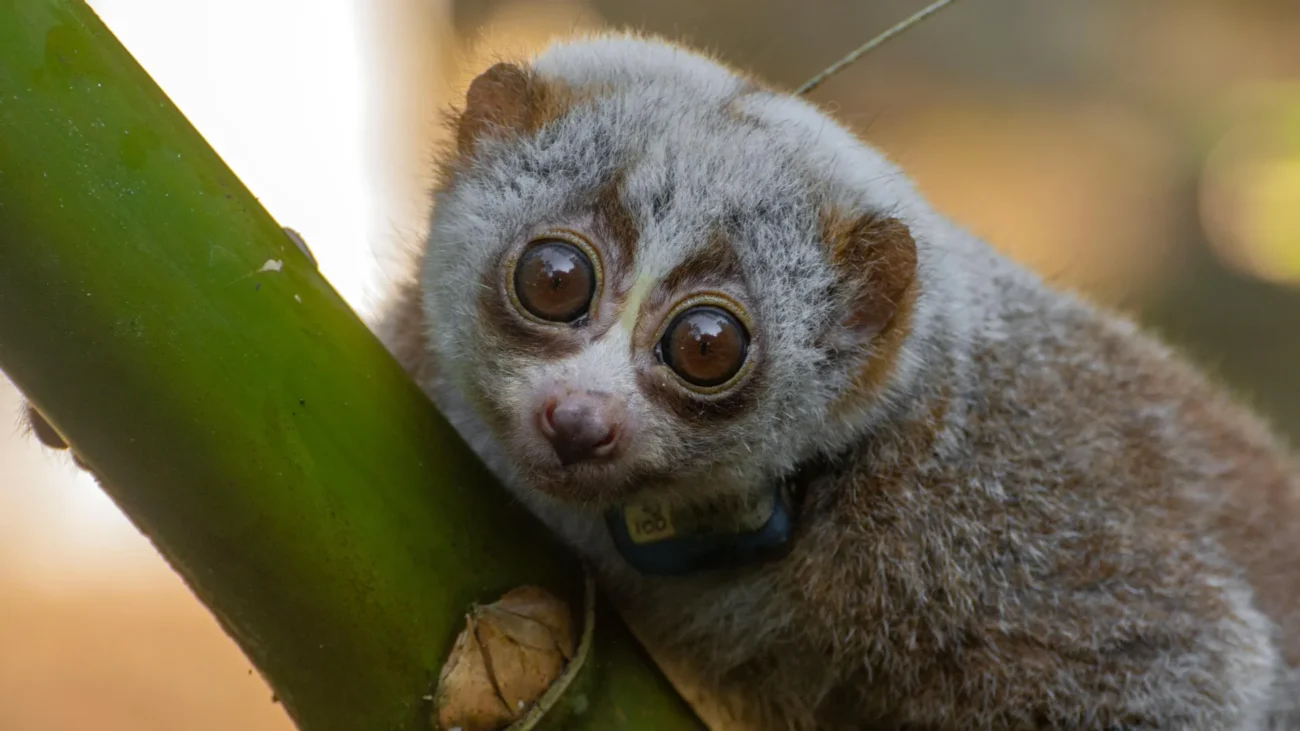
A groundbreaking scientific study has shattered the long-held assumption that returning rescued wildlife to their natural habitats invariably leads to a successful conservation outcome. The research, published in the esteemed journal Global Ecology and Conservation, reveals a stark reality: in numerous instances, animals released after periods of captivity face profound risks, transforming the intended sanctuary of the wild into what researchers ominously describe as a "death trap." This compelling investigation, spearheaded by Professor Anna Nekaris OBE, a renowned primatologist from Anglia Ruskin University, in collaboration with experts from the conservation organization Plumploris e.V. and the University of Western Australia, meticulously examined the post-release fate of Bengal slow lorises (Nycticebus bengalensis) in Bangladesh.
The Tragic Fate of Rescued Bengal Slow Lorises
The study’s findings are particularly poignant given the plight of the Bengal slow loris. These primates, characterized by their large, endearing eyes and seemingly gentle demeanor, have unfortunately become highly sought after in the illegal wildlife trade. This insatiable demand has propelled them to the grim status of being among the most heavily trafficked primates globally. Their precarious situation is underscored by their inclusion in the International Union for Conservation of Nature’s (IUCN) Red List, with all slow loris species categorized as Critically Endangered, Endangered, or Vulnerable. This threatened classification necessitates frequent rescue operations and subsequent release efforts, ostensibly to bolster dwindling wild populations and facilitate species recovery.
However, the new research presents a sobering counter-narrative to these well-intentioned conservation endeavors. The scientific team deployed radio collars on nine Bengal slow lorises, carefully tracking their movements after their release into a national park in northeastern Bangladesh, a site previously utilized for wildlife reintroductions. The results were, to put it mildly, devastating. Of the nine animals released, a mere two survived. Three succumbed within a harrowing ten days of their return to the wild, and an additional four perished within a six-month period. A grim discovery awaited the researchers when they managed to recover four of the seven deceased lorises. Autopsies revealed consistent evidence of fatal injuries inflicted by other slow lorises, pointing to brutal territorial conflicts as the primary cause of death.
Understanding the Deadly Dynamics of Slow Loris Territories
The study’s revelations shed critical light on the complex and often violent social structures of slow lorises. These primates are inherently territorial, a trait exacerbated by their unique biological characteristic: they are the world’s only venomous primates. Possessing specialized teeth, they can deliver a potent toxic bite. The recovered Bengal slow lorises bore unmistakable bite wounds across their heads, faces, and extremities, serving as stark evidence of deadly territorial encounters that ultimately led to their demise.
Further analysis revealed a disturbing correlation between the duration of captivity and post-release survival rates. Lorises held in captivity for extended periods exhibited significantly shorter lifespans after being released. Intriguingly, the released animals displayed heightened activity levels and an increased alertness compared to their wild counterparts. The two surviving lorises, in contrast to those that perished, demonstrated a propensity for traversing larger territories. This behavior suggests that their survival was contingent upon their ability to leave established territories and actively avoid confrontations with resident slow lorises. This adaptability, while crucial for survival, also indicates a significant disruption to their natural behaviors and social integration.
The Broader Implications for Wildlife Rescue and Rehabilitation
The stark findings regarding the Bengal slow loris raise urgent questions about current wildlife rescue and release protocols, particularly for smaller and less charismatic species. While large, iconic animals such as big cats often benefit from intensive post-release monitoring, many smaller species are released with little to no follow-up observation. This oversight frequently leaves conservationists in the dark about the true success rates of these interventions.
Professor Anna Nekaris OBE, Senior Author and Professor of Ecology, Conservation and Environment at Anglia Ruskin University, emphasized the critical need for a paradigm shift in our approach to wildlife rehabilitation. "It’s assumed that returning confiscated or rescued animals to the wild is always a positive conservation story," she stated. "Our research shows that for highly territorial species like slow lorises, releasing them into areas that are already densely populated can be a death trap." Professor Nekaris further elaborated, "Many rescued endangered species are often released because the public expects it, but for animals such as the Bengal slow loris, this is not always the best course of action. Without fully understanding the animal’s behavior, its time spent in captivity, and the density of resident populations at the release site, reintroductions may do more harm than good."
A Call for More Rigorous and Species-Specific Release Strategies
The study’s lead author, Hassan Al-Razi, team leader of Plumploris e.V. Bangladesh, highlighted the prevailing issues within Bangladesh’s rescue and release practices. "Rescue and release have become an increasingly common practice in Bangladesh. Many wild animals, including slow lorises, are rescued and subsequently released back into the wild," Al-Razi noted. "However, in many cases, these releases are conducted inappropriately. For forest-dwelling species, release sites are often selected based on logistical convenience rather than ecological suitability. As a result, certain forests have effectively become dumping grounds for rescued animals and are no longer appropriate release sites."
Al-Razi concluded with a broad warning: "Although our research has focused on the Bengal slow loris and demonstrated the consequences of such practices, we believe similar patterns likely affect many other species." This sentiment underscores the universal applicability of the study’s conclusions, urging conservationists worldwide to re-evaluate their methodologies.
Towards a Future of Informed Conservation
The researchers advocate for a more nuanced and scientifically rigorous approach to wildlife release programs. Successful reintroductions, they argue, necessitate meticulous planning and a deep understanding of both the species and its intended habitat. Key elements for improved success rates include:
- Thorough Suitability Assessments: Evaluating the physical and psychological condition of each individual animal prior to release is paramount. This includes assessing their health, ability to forage, and social integration skills.
- Ecological Site Evaluation: Release sites must be chosen not for convenience, but for their ecological viability. This involves detailed habitat assessments to ensure the availability of food, water, shelter, and a suitable social environment. Factors like population density of resident conspecifics, presence of predators, and potential for human-wildlife conflict must be thoroughly investigated.
- Long-Term Monitoring: Implementing comprehensive, long-term monitoring programs is crucial to track the fate of released animals. This data is vital for understanding survival rates, identifying challenges, and adapting future release strategies. Advanced technologies like GPS tracking, camera traps, and direct observation can provide invaluable insights.
- Species-Specific Rehabilitation Guidelines: Recognizing that each species has unique behavioral and ecological needs, rehabilitation and release protocols must be tailored accordingly. This might involve pre-release conditioning to reintroduce natural foraging behaviors or gradual acclimation to the wild environment.
The study’s implications extend beyond the Bengal slow loris, serving as a critical wake-up call for the global conservation community. It highlights that the act of rescue, while noble, is only the first step. The subsequent release phase, if not executed with scientific precision and a profound understanding of ecological realities, can inadvertently perpetuate the very threats that led to the animal’s initial endangerment. The "death trap" scenario described by Professor Nekaris and her colleagues is a somber reminder that well-intentioned conservation efforts must be underpinned by robust data and a commitment to species-specific, ecologically sound practices to truly contribute to the long-term survival of endangered wildlife. The future of many species hinges on our ability to move beyond assumption and embrace a more informed, evidence-based approach to their rehabilitation and reintegration into the wild.

