



The American Federation of Aviculture (AFA) has maintained a rigorous record of ornithological study, captive breeding advancements, and legislative advocacy through its flagship publication, Watchbird magazine, which serves as a primary historical ledger for the avicultural community. Spanning more than forty years, the Watchbird archive represents one of the most significant collections of bird-related knowledge in the United States, documenting the transition of aviculture from a niche hobby into a sophisticated discipline involving conservation science, veterinary medicine, and international policy. The archive, which begins with Volume 1 in 1974 and continues through the mid-2010s, provides an exhaustive look at the challenges and triumphs faced by bird breeders, researchers, and enthusiasts during a period of radical change in environmental law and animal husbandry.
The AFA was founded in 1974 as a response to potential legislative threats that could have severely restricted the rights of individual bird owners and breeders. Watchbird was established almost immediately as the organization’s voice, ensuring that members remained informed of both scientific developments and political movements. By analyzing the complete run of the magazine, one observes a clear trajectory: the early issues focused heavily on the basics of cage-bird care and the establishment of a national network of bird clubs, while later volumes delved into complex DNA sexing techniques, the emergence of avian viral diseases, and large-scale field conservation projects in the Amazon and Southeast Asia.
The Formative Years and the Birth of a National Movement
The inaugural issues of Watchbird, published in 1974 and 1975, arrived at a critical juncture for the American bird-keeping community. During this era, the United States was beginning to implement more stringent regulations regarding the importation of exotic species. The magazine served as a vital tool for disseminating information on how to comply with new Department of Agriculture (USDA) and Fish and Wildlife Service (FWS) protocols. In these early volumes, such as Volume 1 and Volume 2, the content was characterized by a sense of urgency. The AFA sought to unify disparate local bird clubs into a cohesive national entity capable of lobbying in Washington, D.C.
Throughout the late 1970s, represented in the archive by Volumes 3 through 6, Watchbird expanded its scope to include detailed species profiles. These articles were often written by the pioneers of American aviculture—individuals who were successfully breeding species that had previously been considered "impossible" to propagate in captivity. The documentation of the first captive breedings of various parrot, finch, and softbill species provided a blueprint for future generations. This period also saw the introduction of more formal veterinary columns, reflecting a growing awareness that the health of captive populations required specialized medical knowledge distinct from traditional poultry science.
The Golden Age of Captive Breeding and Technical Advancement
As the archive moves into the 1980s, specifically Volumes 7 through 16, a shift toward technical sophistication becomes evident. This decade is often referred to as the "Golden Age" of aviculture in the United States. With the importation of many species still legal but increasingly regulated, the emphasis in Watchbird shifted toward establishing self-sustaining captive populations. The magazine began publishing groundbreaking research on neonatal care, hand-rearing formulas, and the nutritional requirements of psittacines.

Data from this era of the archive shows a high frequency of publication, with many years featuring six full issues (e.g., 1982, 1983, and 1985). This high output was necessary to keep pace with the rapid innovations occurring in the field. Notable contributors began using the magazine to report on the use of endoscopy for sexing birds—a major leap forward from the surgical or behavioral methods previously used. The 1980s issues also reflect the community’s growing involvement in international conservation. The AFA began to fund "in-situ" projects, and Watchbird provided the platform to report these efforts back to the membership, bridging the gap between those who kept birds at home and those who studied them in the wild.

Legislative Upheaval and the Shift Toward Conservation
The early 1990s, documented in Volumes 17 through 20, represent perhaps the most tumultuous period in the history of American aviculture. The passage of the Wild Bird Conservation Act (WBCA) in 1992 effectively ended the commercial importation of most CITES-listed bird species into the United States. The Watchbird issues from 1991 to 1993 provide a blow-by-blow account of the legislative battles surrounding this act. The magazine served as a forum for intense debate, featuring legal analyses, calls to action, and strategies for how the AFA could adapt to a "closed-door" environment where new genetic material could no longer be easily acquired from the wild.
Following the implementation of the WBCA, the archive shows a marked increase in articles focused on "cooperative breeding programs." Volumes 21 through 26 (1994–1999) highlight the AFA’s efforts to formalize pedigrees and studbooks for rare species. The tone of the magazine became more academic and conservation-oriented. There was a significant focus on the "AFA Red Siskin Project" and other initiatives designed to save species from extinction through a combination of captive breeding and habitat protection. During this time, the magazine also began addressing the "overpopulation" of certain common parrot species, reflecting a maturation of the hobby where animal welfare and rescue began to receive as much attention as breeding.
The Digital Transition and Modern Challenges
As the archive enters the 21st century, starting with Volume 27 in the year 2000, the influence of the internet begins to reshape the publication. The frequency of issues began to consolidate, moving from six issues per year to four, as seen in the transition from 2002 to 2004. This shift reflected a broader trend in print media, where the immediate nature of online forums and websites began to supplement the deeper, peer-reviewed style of the quarterly magazine.

However, the quality of information in Watchbird remained high. Issues from the mid-2000s (Volumes 30–35) are notable for their focus on emerging avian diseases, such as Proventricular Dilatation Disease (PDD) and Avian Influenza. The magazine became a critical resource for biosecurity protocols, helping breeders protect their aviaries from global health threats. The archive also documents the AFA’s continued vigilance against restrictive legislation at the state and local levels, including battles over "invasive species" lists that often included common pet birds.
The final years represented in the provided archive, specifically the combined Volumes 41 and 42 (2014–2015), show a publication that had successfully integrated modern conservation ethics with traditional avicultural expertise. The articles from this period often highlight high-tech research, such as genome sequencing of parrots and the use of satellite telemetry to track migrated species in the wild.
Data and Chronological Summary of the Archive
The Watchbird archive serves as a quantitative record of the AFA’s reach. An analysis of the volume structure reveals the following publication trends:
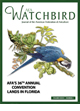
- 1974–1979 (Volumes 1–6): Establishing the foundation. High frequency of issues (up to 6 per year) focused on organizational growth and basic husbandry.
- 1980–1989 (Volumes 7–16): The technical boom. Content focused on medical breakthroughs (endoscopy, incubation) and species-specific breeding success.
- 1990–1999 (Volumes 17–26): The legislative era. Heavy focus on the Wild Bird Conservation Act and the professionalization of captive breeding through studbooks.
- 2000–2015 (Volumes 27–42): The conservation and digital age. Focus on global health, biosecurity, and the integration of aviculture with field biology.
Throughout this timeline, Watchbird maintained a consistent commitment to its "peer-contributed" model. Unlike commercial pet magazines, Watchbird relied on the expertise of veterinarians, field biologists, and master breeders who shared their findings without the influence of corporate advertisers. This gave the archive a level of credibility that remains respected in the scientific community today.

Community Reaction and Legacy
While the archive is a factual record, it also reflects the emotional heart of the avicultural community. The reactions of AFA members to various events are woven into the "Letters to the Editor" and "President’s Message" sections of each volume. When the Spix’s Macaw was declared extinct in the wild, Watchbird became the place where the community mourned and simultaneously organized to support the remaining captive birds. When new mutations of cockatiels or lovebirds were established, the magazine was the venue for celebration and the setting of standards.
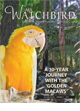
Ornithologists and historians have frequently cited the Watchbird archive as a vital resource for understanding the history of human-avian interaction in the late 20th century. By preserving these records, the AFA has ensured that the "tribal knowledge" of early breeders is not lost. The transition of these records into a digital gallery format allows a new generation of researchers to access forty years of data on clutch sizes, incubation periods, and dietary trials that would otherwise be buried in out-of-print paper copies.
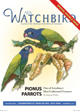
Broader Impact and Future Implications
The legacy of the Watchbird archive extends beyond the world of bird breeding. It provides a case study in how a specialized community can organize to provide its own education, regulation, and advocacy. The data contained within these volumes has been used to inform CITES decisions, influence USDA transport regulations, and assist in the recovery of endangered species.

As aviculture moves further into the 21st century, the challenges remain significant. Climate change, habitat loss, and the continued threat of zoonotic diseases require a high level of scientific literacy among bird keepers. The Watchbird archive stands as a testament to the community’s ability to evolve. By looking back at the 1974–2015 records, current AFA members can see the roots of their modern practices and understand the importance of maintaining a rigorous, documented approach to the care and conservation of birds.
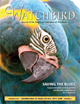
In conclusion, the American Federation of Aviculture’s Watchbird magazine archive is more than a collection of back issues; it is a comprehensive history of a movement. It chronicles the transformation of a hobby into a vital component of global conservation efforts. As the AFA continues its work, this archive serves as both a roadmap and a reminder of the enduring bond between humans and the avian world. The digital availability of these volumes ensures that the wealth of knowledge gathered over four decades will continue to educate and inspire those dedicated to the protection and propagation of birds for years to come.

