


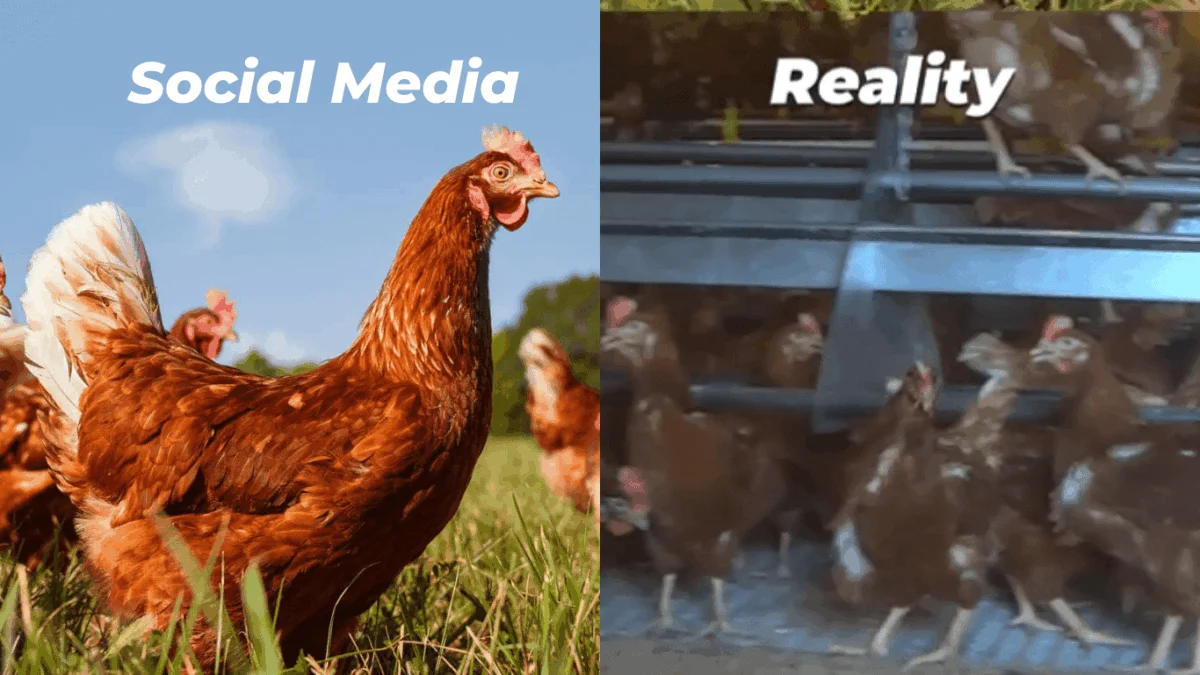
The collapse of a large-scale poultry structure at a Kansas-based supplier for Vital Farms has prompted a renewed investigation into the welfare standards of the pasture-raised egg industry. The incident, which occurred at Triple C Infinity Eggs in Winfield, Kansas, resulted in the entrapment of thousands of hens and has raised significant questions regarding the structural integrity of facilities used by producers marketed under high-welfare labels. Following reports from whistleblowers and animal advocacy organizations, the event has become a focal point for critics who argue that the reality of commercial egg production often contradicts the "humane" and "ethical" branding presented to consumers.
The incident at Triple C Infinity Eggs involved the structural failure of a primary shed, which reportedly housed a significant portion of the facility’s 45,000-bird population. According to initial reports, approximately 10,000 birds were trapped within the wreckage when the roof and support systems gave way. The collapse resulted in immediate fatalities due to crushing, while subsequent reports indicated that burst water lines within the facility led to flooding, creating a risk of drowning for the survivors trapped beneath the debris. The facility, located in Cowley County, serves as a contract supplier for Vital Farms, a publicly traded company that has built its brand identity on the promise of superior animal welfare and transparent farming practices.
Chronology of the Incident and Emergency Response
The timeline of the event began in mid-June 2026, when a whistleblower contacted People for the Ethical Treatment of Animals (PETA) regarding the conditions at the Winfield site. The informant alleged that the sheds at Triple C Infinity Eggs were poorly constructed and that the owner had expressed an inability or unwillingness to provide adequate care for the birds following the structural failure. By the time the report reached advocacy groups, the situation had escalated, with claims that thousands of birds were being left without access to food or water as the facility struggled to manage the wreckage.
On the Tuesday following the collapse, representatives from PETA arrived at the scene to assess the damage and attempt a rescue of the surviving hens. During this intervention, 36 birds were removed from the site. Observers on the ground described a scene of significant distress; the remaining standing sheds were reportedly overcrowded, with high levels of noise and a pervasive odor of ammonia, which is often indicative of poor ventilation and high waste accumulation. These descriptions stand in stark contrast to the "pasture-raised" imagery typically associated with the Vital Farms brand, which emphasizes outdoor access and natural behaviors.
The owner of Triple C Infinity Eggs publicly confirmed the facility’s relationship with Vital Farms, stating that the company had been apprised of the situation. However, the proposed solution to the crisis became a secondary point of contention. According to the farm owner, the recommendation from the corporate level was to "gas" the remaining hens—a process the industry refers to as depopulation or "mass euthanasia"—to quickly resolve the logistical burden of the collapsed infrastructure.
The Discrepancy in Labeling and Consumer Expectations
Vital Farms has long positioned itself as a leader in the ethical food movement. Its marketing materials frequently use terms such as "happy hens," "certified humane," and "pasture-raised." Central to its branding is the "Girls on Grass" campaign, which suggests that every hen under its supply chain enjoys 108 square feet of outdoor space and lives a life significantly better than those in conventional battery cage or cage-free systems.
However, the incident in Kansas highlights a persistent criticism of the "humane-washing" phenomenon. While "pasture-raised" implies an outdoor lifestyle, the reality of commercial-scale operations often necessitates the use of large indoor sheds for nesting, nighttime shelter, and protection from inclement weather. If these sheds are poorly maintained or overcrowded, the welfare benefits of the outdoor access may be negated. The whistleblower’s report of 45,000 chickens in a single operation suggests an industrial scale that complicates the "small farm" narrative often used in premium egg marketing.
Furthermore, the industry’s approach to "end-of-life" scenarios remains a sensitive topic for consumers. Vital Farms’ corporate literature describes the end of a hen’s laying cycle as "retirement," asserting that they consider the end of the birds’ lives to be as "sacred" as the rest of their time on the farm. In practice, however, "retirement" usually involves selling the birds to pet food manufacturers or utilizing "acceptable methods of euthanasia," such as carbon dioxide (CO2) gassing.
Technical Analysis of Industry Standard Euthanasia
The suggestion to gas the birds at the Triple C facility aligns with standard industry practices for depopulation during emergencies or at the end of a flock’s economic viability. The American Veterinary Medical Association (AVMA) provides guidelines for the euthanasia of poultry, noting that CO2 inhalation is a common method. However, animal welfare scientists have frequently pointed out the physiological distress associated with this process.
When birds are exposed to high concentrations of carbon dioxide, they experience "air hunger" or dyspnea. This leads to gasping, head-shaking, and vigorous wing-flapping as the birds struggle to breathe before losing consciousness. While the industry categorizes this as humane because it can be performed en masse, welfare advocates argue that it is a process of convenience rather than compassion. The contrast between the marketing term "sacred retirement" and the mechanical reality of CO2 gassing represents a significant gap in transparency that has led to legal challenges against premium egg producers in the past.
The Biological Reality of the Modern Laying Hen
To understand the context of the Kansas incident, it is necessary to examine the biological demands placed on hens in the modern egg industry. A wild jungle fowl, the ancestor of the domestic chicken, typically lays between 10 and 15 eggs per year, primarily for reproduction. In contrast, hens used in commercial production—including those on pasture-raised farms—have been selectively bred to produce between 320 and 350 eggs annually.
This extreme productivity places a massive physiological strain on the birds. Producing an eggshell requires a significant amount of calcium; if the bird’s diet does not perfectly supplement this, the body leaches calcium from its own bones. This often leads to osteoporosis and "cage layer fatigue," making the birds more susceptible to fractures and injuries. By the time a hen’s production slows down—usually after 18 to 24 months—she is considered "spent." At this stage, the birds are no longer profitable to feed, leading to the "retirement" or culling processes observed in the Vital Farms supply chain.
Corporate Responsibility and Legal Precedents
Vital Farms has faced legal scrutiny regarding its marketing claims prior to the Kansas shed collapse. In 2021, a class-action lawsuit was filed alleging that the company misled consumers about its treatment of hens. The plaintiffs argued that despite the "pasture-raised" label, many birds spent significant portions of their lives indoors in conditions that did not align with consumer expectations of "humane" farming. While Vital Farms has consistently defended its practices, citing its "Certified Humane" accreditation, the Kansas incident provides fresh evidence for those seeking more stringent oversight of labeling.
The "Certified Humane" label, administered by Humane Farm Animal Care (HFAC), does have specific requirements, such as the 108-square-foot-per-bird rule for pasture-raised hens. However, critics note that these standards are often self-reported or verified through scheduled audits, which may not capture the day-to-day realities of facility maintenance or emergency management. The structural failure of the shed in Winfield suggests a lack of oversight regarding the physical infrastructure of contract farms, which could pose a liability for the parent company.
Broader Implications for the Poultry Industry
The fallout from the Triple C Infinity Eggs collapse is expected to influence consumer behavior and regulatory discussions. As transparency in the food supply chain becomes a higher priority for the public, "humane-washing" is increasingly viewed as a form of consumer fraud. If a company charges a premium price based on ethical claims, it is held to a higher standard of accountability when those claims are called into question.
Market analysts suggest that incidents like these may accelerate the growth of the plant-based egg market. As consumers become disillusioned with the complexities and occasional contradictions of the "humane" egg industry, many are seeking alternatives that bypass animal agriculture entirely. Companies like Just Egg have seen increased market share as they position themselves as the only truly "cruelty-free" option.
Conclusion and Future Outlook
The investigation into the Kansas shed collapse is ongoing. Animal welfare groups continue to call for Vital Farms to provide a full accounting of the incident and to reconsider its depopulation protocols. For the agricultural sector, the event serves as a cautionary tale about the risks of rapid expansion and the reliance on contract growers who may not have the resources to maintain infrastructure to the standards promised by corporate marketing.
As the egg industry moves forward, the pressure for genuine transparency will likely result in more rigorous third-party monitoring and perhaps a standardizing of terms like "pasture-raised" at the federal level. For now, the "happy hens" of Winfield, Kansas, remain a stark reminder of the industrial realities that often exist just behind the farmhouse-style packaging found on grocery store shelves. The 36 birds rescued by PETA represent a fraction of those affected, but their story has amplified a national conversation about the true cost of a "humane" egg.

