


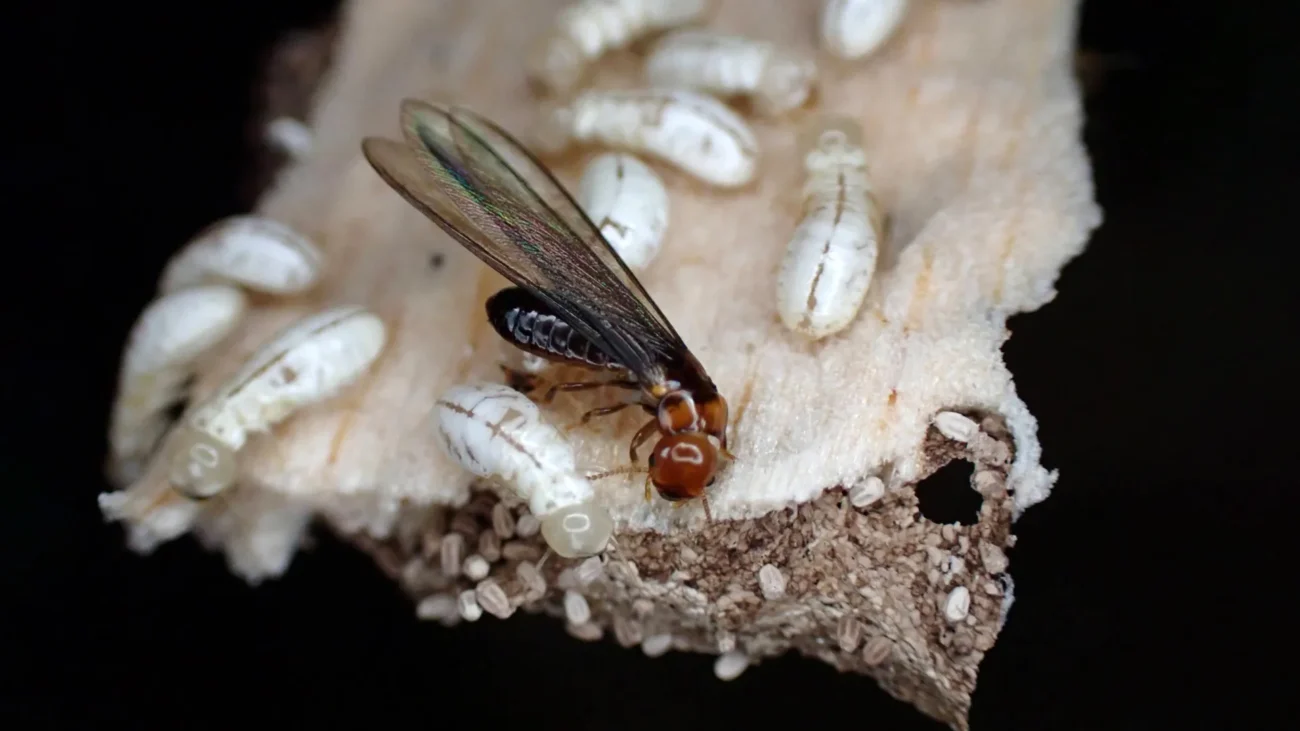
Drywood termites are among the most elusive and destructive structural pests known to modern property management. Unlike their subterranean counterparts, which maintain a constant, fragile connection to the damp earth below, drywood termites live entirely hidden within the very material they consume. Beams, structural framing, hardwood flooring, and antique furniture serve simultaneously as their nests, fortresses, and food sources. For decades, managing these clandestine colonies has relied heavily on broad, disruptive methods such as whole-structure fumigation—a process requiring households to evacuate, foodstuffs to be sealed or discarded, and properties to be completely tented. However, groundbreaking entomological research originating from the University of California, Riverside (UCR) is shifting the paradigm away from brute-force chemical interventions toward precision tactics that exploit the pests’ own biology, social habits, and microscopic signatures.
The Chronology of UCR’s Breakthrough Termite Research
The systematic evolution of UCR’s recent pest control strategies represents a multi-year effort by entomologists to dismantle the biological advantages of drywood termites. The timeline of discovery highlights a methodical approach moving from chemical testing to behavioral manipulation and, ultimately, accurate diagnostic detection:
- May 2024: UCR researchers publish findings regarding pinene, a naturally occurring, fragrant chemical found in trees. Laboratory tests demonstrate that pinene acts as an olfactory cue, successfully luring western drywood termites away from unmanaged areas toward targeted insecticide sites, significantly boosting mortality rates.
- 2025: A pivotal study published in the Journal of Economic Entomology reveals that bistrifluron, an insect growth regulator and chitin synthesis inhibitor, achieves near-total mortality rates (95.7% to 99%) in western drywood termites through delayed action and social transmission.
- April to October 2025: A University of California patent application is filed and subsequently published, detailing the integration of alpha or beta pinene into localized insecticide injections to optimize spatial efficiency and reduce overall chemical volumes.
- 2026: Follow-up visual observations by the UCR research team highlight high-resolution imagery and video capturing western drywood termites engaged in proctodeal trophallaxis—the hindgut-to-mouth feeding behavior critical for nutrient sharing and microbial exchange.
- Post-2025 Study Period: UCR investigators expand their work into diagnostics, analyzing bacterial DNA degradation within drywood termite fecal pellets to establish a biological clock that differentiates active infestations from historical debris.
The Biological Vulnerability: Targeting the Inevitable Molt
At the heart of the 2025 entomological breakthrough is bistrifluron, a compound that weaponizes a fundamental biological certainty: insects must grow, and to grow, they must molt. Unlike humans and other mammals, which possess internal skeletal systems that expand naturally with tissue growth, insects are encased in a rigid external armor known as an exoskeleton. This structural shell is largely composed of chitin, an exceptionally durable natural polymer that provides both physical protection and robust anchor points for internal musculature. Chitin is widespread in the natural world, appearing in fungal cell walls, fish scales, and the anatomical structures of cephalopods like squids and octopuses.
For a juvenile or growing western drywood termite, this armor cannot stretch indefinitely. Throughout their life cycle, drywood termites must execute approximately seven distinct molts, shedding their tight, antiquated exoskeleton and replacing it with a newly synthesized, larger protective casing.
Bistrifluron intercepts this cycle by functioning as a chitin synthesis inhibitor. Rather than acting as an immediate, knockdown neurotoxin that slays insects on contact, it insidiously prevents the synthesis of the critical polymer required for the upcoming molt. Nicholas Poulos, a doctoral student in UCR’s Department of Entomology and corresponding author of the 2025 study, emphasizes the environmental and biological safety profile of the compound.
"This chemical is more environmentally friendly than ones traditionally used for drywood termite infestations," Poulos noted, pointing out that its precise molecular targeting restricts its activity exclusively to insects, leaving humans and mammals completely unharmed.
Dong-Hwan Choe, a UCR entomology professor and senior author of the research, underscored the inescapable trap this chemical creates for the pest. "Once the termites reach a certain stage, they have to molt. They cannot avoid that," Choe explained. "With a lethal dose of this chemical, they’ll try to shed their old exoskeleton but won’t have a new one ready to protect them."
Laboratory Data and the Mechanics of Delayed Mortality
The controlled laboratory experiments conducted by the UCR team yielded compelling statistical data regarding the efficacy of bistrifluron compared to alternative chitin synthesis inhibitors, including chlorfluazuron and noviflumuron. When termites were subjected to continuous exposure on treated wood at a concentration of 0.1 percent, bistrifluron achieved an astonishing mortality rate of approximately 99 percent over a 60-day testing window. Even when given a direct choice between treated and untreated wood sections, the insects experienced roughly 95.7 percent mortality.
Significantly, the delayed action of the compound is not a scientific drawback, but rather its primary tactical advantage. Fast-acting conventional poisons often kill foragers instantly upon contact, neutralizing the individual before it can return to the nest or interact with colony mates. Bistrifluron, conversely, allows contaminated individuals to continue their normal routines, feeding and moving through subterranean and structural galleries while the chemical quietly accumulates within their systems.
The Social Weapon: Weaponizing Termite Behavior
Perhaps the most startling revelation of the UCR investigation involved secondary transmission—the phenomenon where a minor fraction of an exposed population successfully eradicates an entire untreated colony.
Termites are intensely social insects characterized by high rates of interaction, grooming, and food-sharing behaviors. To track how substances disseminate through a colony, the researchers utilized dyed foodstuffs. The results demonstrated that within 24 to 48 hours, biochemical material ingested or encountered by a small cohort of treated termites was successfully transferred to untouched nestmates deep within the harborage.
The downstream consequences of this social dynamic were profound. In experimental groups where merely 5 percent of the termite population was initially exposed to bistrifluron, the colonies ultimately reached 100 percent mortality by day 90. Groups featuring a 50 percent initial exposure rate mirrored this complete mortality trajectory.
Subsequent visual studies conducted in 2026 illuminated the exact mechanical vector behind this phenomenon: proctodeal trophallaxis. In this specialized feeding interaction, one termite receives fluid material directly from the hindgut of another. While this behavior evolved to efficiently transmit vital nutrients and wood-digesting gut microbes across the colony, pest control researchers have effectively turned this evolutionary adaptation against the pest. The behavior ensures that even localized applications permeate deep into hidden galleries, neutralizing hidden queens, soldiers, and workers that never made direct contact with the treated substrate.
Complementary Strategies: Luring Pests to Their Fate
Bistrifluron represents only one pillar of UCR’s broader campaign to modernize drywood termite management. In parallel studies, researchers have investigated the utility of pinene—a volatile, fragrant hydrocarbon naturally emitted by coniferous trees.
To a western drywood termite navigating the dark, sealed confines of structural timber, the scent of pinene acts as an evolutionary beacon, signaling a rich and viable feeding zone. By blending alpha or beta pinene into localized insecticide applications, the research team demonstrated an ability to actively draw termites out of remote galleries and directly toward treated localized zones.
Published data from these trials reveal a dramatic performance increase: standard aqueous fipronil treatments yielded approximately 70 percent mortality on their own, but when combined with the pinene attractant, efficacy surged past 95 percent. A University of California patent application submitted in 2025 outlines the commercial integration of pinene into localized injection protocols. If successfully commercialized, this olfactory lure could allow pest control technicians to space application holes significantly farther apart, simultaneously reducing labor hours, minimizing chemical volumes, and cutting operational costs for homeowners.
Addressing Practical Hurdles: Formulation and Detection
Despite the promising laboratory metrics, researchers acknowledge that practical hurdles remain before bistrifluron can transition seamlessly into consumer pest control products. In the initial UCR trials, the chemical compound was dissolved in acetone—a volatile solvent that allows uniform distribution across test wood before evaporating entirely. While effective in a controlled laboratory setting, acetone’s high flammability and potent chemical odor render it unsuitable for routine residential deployment. Poulos and his team are actively engineering alternative chemical formulations that maintain the high efficacy of bistrifluron while ensuring safety and regulatory compliance for residential use.
Compounding the challenge of treatment is the age-old dilemma of accurate detection. Drywood termites constantly eject tiny, hard, hexagonal fecal pellets from their timber galleries, creating visible piles that often serve as the first warning sign for homeowners. However, a major diagnostic pitfall exists: accumulated fecal pellets can persist inside wall voids and structural beams for months or even years after a colony has naturally died out or previously been eradicated. Consequently, the mere presence of frass does not confirm an active, ongoing infestation.
To solve this diagnostic bottleneck, recent UCR research has turned to microbiology. Poulos and his colleagues analyzed fresh western drywood termite pellets alongside samples aged for three, six, and one year. Their findings revealed that bacterial DNA within the frass experiences a dramatic, measurable decay over time, dropping as much as 190-fold between fresh samples and those aged for twelve months. Furthermore, specific bacterial families identified consistently in fresh Douglas-fir-derived pellets vanished entirely as the samples degraded.
This discovery opens the door to developing rapid, field-deployable diagnostic tools. By analyzing the microbial signatures of frass, pest control professionals could soon determine with scientific certainty whether a structural infestation is actively consuming the property, thereby justifying targeted intervention rather than speculative, full-scale remediation.
Broader Impacts, Economic Implications, and Global Spread
The urgency driving these technological advancements extends far beyond regional nuisance control. Native to the southwestern United States and northwestern Mexico, the western drywood termite is an economic juggernaut in states like California, where structural damage and preventive treatments cost property owners billions of dollars annually. Furthermore, human commerce—specifically the global transport of raw lumber, pallets, and second-hand wooden furniture—has systematically expanded the geographic footprint of the species. Established introduced populations of drywood termites have now been documented in Hawaii, Florida, New York, parts of Canada, China, Japan, South Korea, and Australia.
As global climate patterns shift and urban centers continue to expand, entomologists warn that these resilient pests will likely establish footholds in novel ecological zones. The traditional reliance on whole-structure fumigation, while thorough, carries notable economic disadvantages: high consumer costs, mandatory tenant displacement, strict food-handling protocols, and a total lack of residual chemical protection against newly arriving swarming termites.
By synthesizing low-impact insect growth regulators like bistrifluron, integrating olfactory lures like pinene, and developing precise microbial detection metrics, the scientific community is laying the groundwork for a generational shift in structural pest management. Instead of treating houses as sealed gas chambers, future pest control may rely on microscopic biological precision—turning the termite’s own biology, social feeding habits, and natural instincts into the ultimate instruments of its undoing.

