


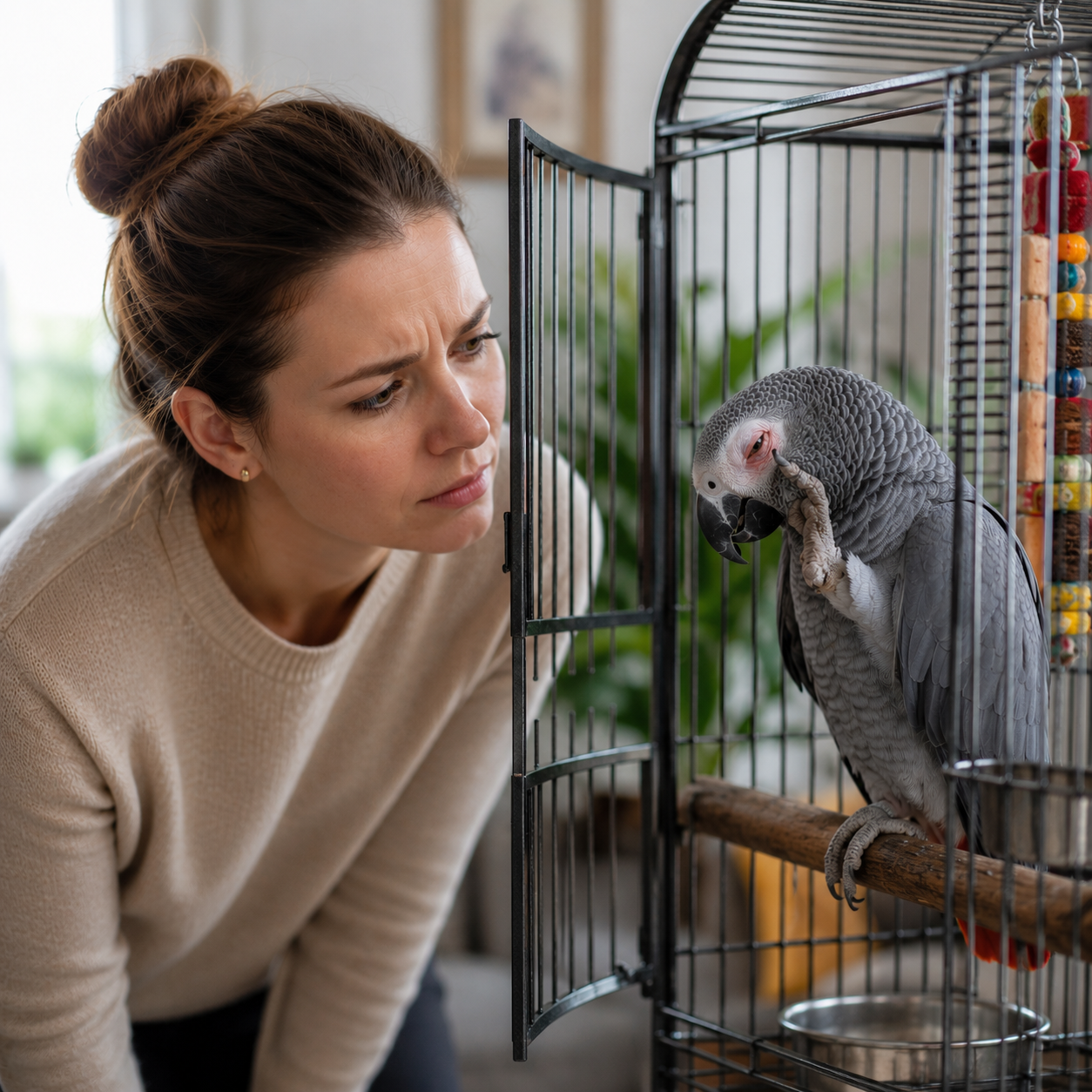
When a parrot repeatedly rubs its eye against a perch, toy, cage bar, or its own foot, the behavior often triggers immediate concern among avian caregivers. While the casual observer might mistake this action for routine preening, clinical observations suggest that persistent eye rubbing is rarely a benign grooming habit. In the context of avian medicine, healthy parrots do not typically engage in repetitive, focused rubbing of the ocular area. Instead, this behavior often serves as a primary clinical indicator of underlying irritation, ocular trauma, or systemic infection. Distinguishing between normal grooming and pathological distress is essential for timely intervention, as avian patients are evolutionarily predisposed to mask symptoms of illness until a condition has reached a critical stage.
The Physiology of Avian Ocular Protection
To understand why eye rubbing is a red flag, one must first consider the unique anatomical features of the avian eye. Unlike mammals, which rely heavily on eyelids for moisture and protection, birds possess a nictitating membrane—a thin, translucent third eyelid. This structure functions similarly to an automotive windshield wiper, sweeping across the corneal surface to remove particulate matter and distribute tear film. Under normal conditions, this physiological mechanism is highly efficient at maintaining ocular hygiene.
Furthermore, parrots perform daily preening rituals that involve cleaning the feathers surrounding the eyes. A healthy bird may occasionally touch the area to clear away loose dander or to manage a maturing pin feather. However, this is distinct from the aggressive or repetitive rubbing associated with distress. When a bird focuses exclusively on one eye, it indicates a localized issue. If the behavior is bilateral, it often points to environmental stressors or systemic health challenges.
Chronology of Symptoms and Clinical Significance
The timeline of eye irritation is a critical diagnostic factor for avian veterinarians. Acute, sudden onset of eye rubbing often suggests a physical foreign body, such as a seed hull, a splinter of wood, or aerosolized dust particles. Conversely, chronic, intermittent rubbing that occurs over several weeks may signal more complex issues, such as chronic sinusitis, nutritional deficiencies, or slow-developing infections.
In a clinical setting, veterinarians categorize symptoms into stages. The initial phase is characterized by localized rubbing without obvious visual changes. If left unaddressed, this frequently progresses to the second stage, where owners may observe secondary clinical signs, including:
- Ocular Discharge: The presence of serous, mucoid, or purulent fluid accumulating at the commissure of the eye.
- Periorbital Swelling: Inflammation of the tissues surrounding the eye, often indicating a deeper infection in the infraorbital sinuses.
- Blepharospasm: Persistent squinting or the inability to keep the eye fully open, which is a classic manifestation of corneal pain.
- Cloudiness or Opacity: Changes in the appearance of the lens or cornea, indicating potential injury or inflammatory response.
Environmental and Nutritional Context
A significant portion of avian ocular issues originates from the home environment. Because birds possess a highly efficient respiratory system and sensitive mucous membranes, they are disproportionately affected by poor air quality. Common household irritants such as cigarette smoke, scented candles, aerosolized cleaning agents, and high-dust environments (often caused by cockatoo or cockatiel dander) can trigger severe ocular inflammation.
From a nutritional perspective, the importance of Vitamin A cannot be overstated. Avian health experts consistently note that birds maintained on seed-only diets—which are typically deficient in Vitamin A—suffer from squamous metaplasia. This condition leads to the thickening of the lining of the sinuses and the tissues surrounding the eye. Over time, this makes the ocular surface more susceptible to bacterial invasion and irritation. While nutritional correction will not resolve an acute corneal scratch, it remains the foundation of long-term ocular health and immune resilience.
Diagnostic Analysis and Veterinary Intervention
When an owner presents a bird for persistent eye rubbing, the veterinary diagnostic process is methodical. The practitioner first performs an examination of the globe and the surrounding adnexa. This may include a fluorescein stain test, which uses a specialized dye to highlight corneal abrasions or ulcers that are invisible to the naked eye.
If the surface of the eye is intact, the focus shifts to the adnexa and the sinuses. Because the avian infraorbital sinus is physically adjacent to the eye, an infection in the sinus can easily compress the orbit, causing the bird to rub the area in an attempt to alleviate the pressure. This underscores why topical eye drops alone are frequently insufficient; if the root cause is a systemic respiratory infection, the bird will require targeted systemic medication, such as antibiotics or antifungals, rather than simple eye ointments.
The Risks of At-Home Management
A common point of tension in avian care is the temptation to perform "first aid" on a symptomatic eye. Clinical experts strongly advise against the use of over-the-counter eye washes, human-grade medications, or herbal remedies. The pH of a bird’s eye is specific, and many human products can cause severe chemical irritation, potentially leading to permanent scarring or vision loss. Furthermore, the act of attempting to flush an eye can induce high levels of stress, which, for a bird already suffering from pain, can lead to a state of shock or further physical injury.
The recommended course of action is immediate consultation with an avian-certified veterinarian. In the interim, the owner should focus on stabilizing the environment: removing potential irritants, ensuring the bird is hydrated, and maintaining a quiet, dimly lit space to prevent further agitation of the affected area.

Broader Implications for Avian Wellness
The broader implications of persistent eye rubbing involve recognizing that birds are masters of concealment. In the wild, displaying signs of weakness invites predation. Consequently, by the time a parrot is visibly rubbing its eye, the condition has likely been present long enough to overcome the bird’s natural instinct to appear healthy.
Data from avian hospitals indicates that early intervention is the single most important factor in preventing long-term ocular damage. Cases of simple foreign body irritation typically resolve within 24 to 48 hours following professional removal and appropriate aftercare. In contrast, untreated ocular infections can lead to panophthalmitis—an infection of all ocular structures—which may result in the loss of the eye itself.
Conclusion: A Proactive Care Philosophy
The health of a parrot’s eyes is a direct reflection of its overall physiological and environmental status. While occasional, fleeting grooming behavior is normal, the repetition of this behavior signals a need for investigation. Owners are encouraged to maintain a proactive stance: observe the eyes for symmetry, monitor the bird’s general activity levels, and ensure that the environment is free of respiratory irritants.
By understanding the physiological differences between grooming and pathological distress, caregivers can make informed decisions that safeguard their bird’s vision. When in doubt, the most prudent course of action is to document the frequency and duration of the rubbing and seek the guidance of a qualified avian veterinarian. Consistent, informed monitoring remains the most effective tool in preventing minor irritations from escalating into chronic or debilitating health crises. For those navigating these concerns, the focus should remain on rapid assessment, avoiding the pitfalls of self-medication, and prioritizing a veterinary-led recovery plan to ensure the long-term well-being of the avian companion.

