


Minnesota, a state renowned for its abundant natural landscapes and rich biodiversity, is home to a remarkable array of woodpecker species. These distinctive birds, characterized by their specialized beaks and captivating drumming, play a vital role in forest ecosystems. Their ability to peck at speeds of up to 20 times per second, with head movements exceeding 15 miles per hour, is a testament to their unique adaptations. For bird enthusiasts and nature lovers in Minnesota, understanding these eight species offers a deeper appreciation for the avian life that graces the state’s woodlands, backyards, and parks. This guide delves into the characteristics, habitats, behaviors, and conservation status of each of Minnesota’s resident woodpeckers, providing a comprehensive overview for both novice observers and seasoned ornithologists.
The Ubiquitous Downy Woodpecker: A Backyard Favorite
The Downy Woodpecker (Dryobates pubescens) stands as the smallest member of Minnesota’s woodpecker family, yet it is one of the most frequently encountered species across the United States. These diminutive birds, weighing less than an ounce, are often smaller than American Robins, a characteristic that aids them significantly in their foraging. Their small stature allows them to access food sources in tight crevices and on smaller branches where larger woodpeckers cannot reach, making them highly adaptable to various forest types and even urban environments.
Physical Characteristics and Foraging Habits:
Downy Woodpeckers exhibit a striking black and white plumage. Their wings and crowns are predominantly black, often with distinct white barring. A key identifying feature, particularly in males, is a vibrant red patch on the back of their head. Females share the black and white pattern but lack this red coloration. Their undersides are typically white. As bark foragers, they are frequently observed clinging to tree trunks and branches, meticulously searching for their primary food source: small insects, particularly ants and the larvae of wood-boring beetles.

Habitat and Social Behavior in Minnesota:
In Minnesota, Downy Woodpeckers are a common sight wherever trees are present. Their adaptability means they can be found in mature forests, suburban backyards, and even city parks, especially if bird feeders are available. Due to their small size, they often associate with flocks of other small birds, such as chickadees, for added protection against predators. This interspecies flocking behavior highlights their social nature and reliance on collective vigilance for survival.
Vocalization and Drumming:
The Downy Woodpecker possesses a delightful call, characterized by a series of quick, high-pitched chirps. This vocalization is often accompanied by light, rapid drumming. Unlike some of their larger relatives, their drumming is not exceptionally loud, making them a less intrusive presence in residential areas. Their relatively slow drumming rate and less powerful pecking are consistent with their smaller size and specialized foraging niche.
The Robust Hairy Woodpecker: A Larger Cousin
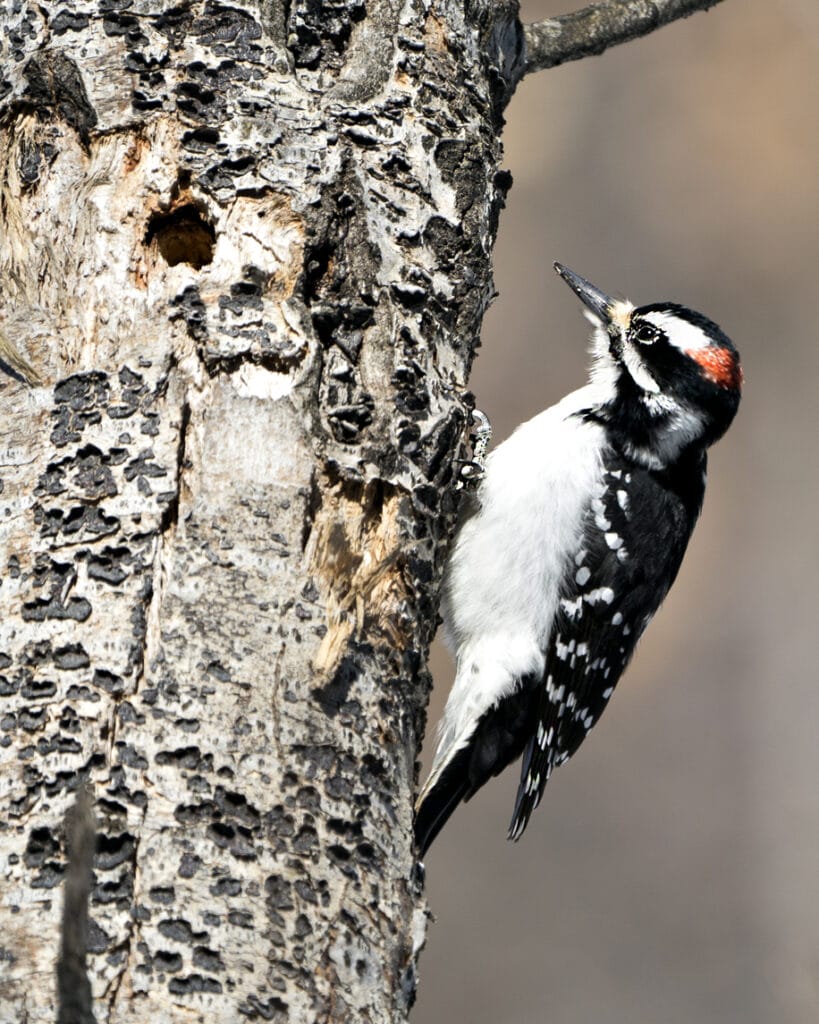
The Hairy Woodpecker (Dryobates villosus) shares a striking resemblance to the Downy Woodpecker, leading to frequent confusion between the two. However, the Hairy Woodpecker is significantly larger, with a body size approximately 40% greater and nearly triple the weight of its smaller counterpart. This size difference is the most immediate distinguishing feature, though subtle details can further differentiate them.
Distinguishing Features and Habitat Preference:
Both species share the characteristic black and white plumage and the male’s red occipital patch. However, Hairy Woodpeckers possess noticeably longer and more robust bills, adapted for excavating deeper into wood. Their backs also appear straighter, contributing to a more "soldierly" posture. While Downy Woodpeckers thrive in a variety of wooded habitats, Hairy Woodpeckers show a preference for larger, mature trees, and consequently, they are found less frequently in heavily urbanized areas and small parks. They are more commonly observed in extensive forests and larger woodlands.
Year-Round Presence and Vocalizations:
Hairy Woodpeckers are year-round residents in Minnesota, sharing this residency with Downy Woodpeckers. Their calls and drumming patterns are similar to those of the Downy, but they are generally louder and more forceful, reflecting their larger size and musculature. Differentiating between the two species, especially from a distance, can be challenging and requires careful observation of bill length, overall size, and posture. With practice, birdwatchers can learn to identify these subtle yet important differences.
The Striking Black-backed Woodpecker: A Denizen of Burned Forests
The Black-backed Woodpecker (Picoides arcticus) is a medium-sized woodpecker, comparable in size to the Hairy Woodpecker, but it is considerably less common across the United States, with its stronghold in Canada. In Minnesota, however, they can be found year-round, particularly in the northern regions bordering Canada, where cooler climates prevail.
Unique Plumage and Sexual Dimorphism:
As its name suggests, the Black-backed Woodpecker is predominantly black. Distinctive white patches adorn its wings, and its belly is typically white. A striking feature is its black crown, accented by two white lines near the bill that resemble a mustache. A key identifier for distinguishing sexes is a yellow patch on the forehead of males. Juvenile Black-backed Woodpeckers of both sexes possess this yellow patch, which gradually disappears in adult females.
Ecological Niche and Foraging Behavior:
These woodpeckers exhibit a remarkable camouflage, blending seamlessly with the dark bark of trees, especially those in recently burned forests. This preference for burned or fire-affected areas is not coincidental; it is directly linked to their primary food source. Black-backed Woodpeckers are adept at locating and excavating wood-boring beetles, which are abundant in dead or dying trees, particularly after a fire. They employ a unique foraging technique, drilling test holes to find beetle tunnels and then using their exceptionally long tongues to extract their prey.

Vocalization:
The call of the Black-backed Woodpecker is among the quietest of the woodpecker species. It typically consists of a single, quick chirp, followed by a brief pause, then another chirp. This subtle vocalization contributes to their elusive nature, making them a rewarding find for dedicated birdwatchers.
The Distinctive Yellow-bellied Sapsucker: A Sap Drinker
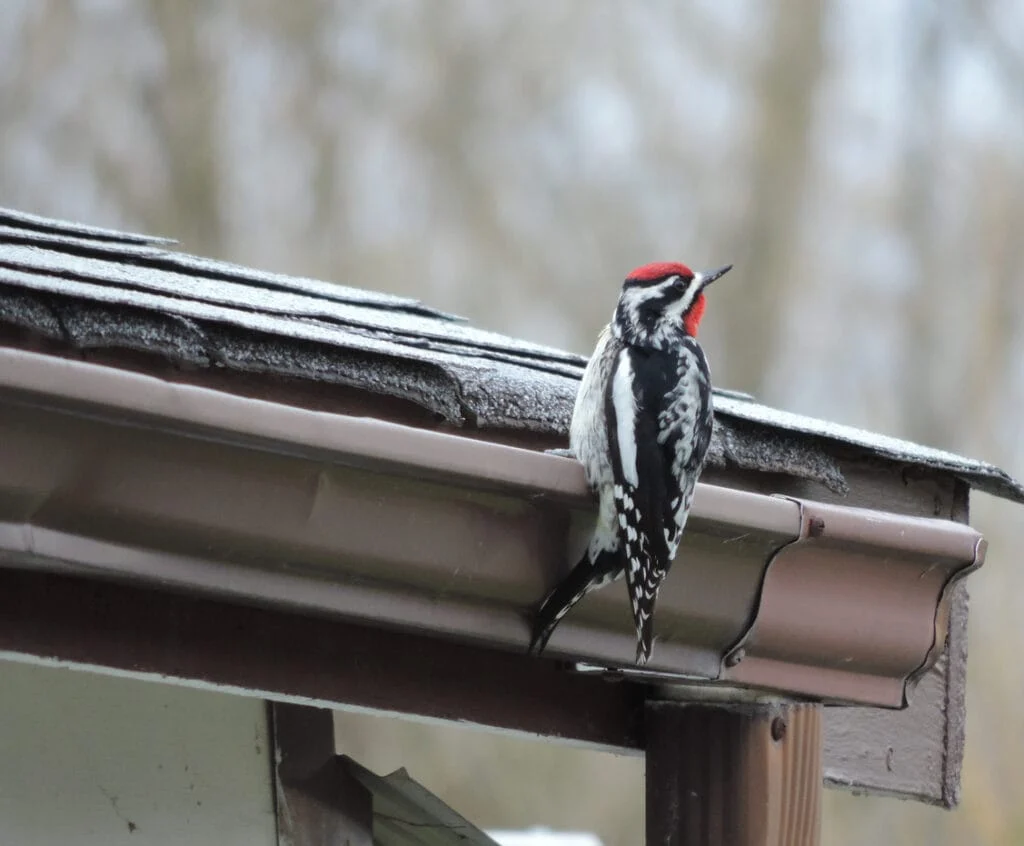
The Yellow-bellied Sapsucker (Sphyrapicus varius) is a robin-sized woodpecker with a visually appealing plumage. While they breed in the northern regions of Minnesota, they are also observed in the southern parts of the state during their migration, ensuring their presence for a significant portion of the year.
Appearance and Unique Feeding Strategy:
Yellow-bellied Sapsuckers display a black and white pattern across their bodies, though without a highly defined or consistent design. Both males and females sport a red forehead patch, but only males have a prominent red throat. The species earns its name from a small yellow patch on its chest. However, their most distinguishing characteristic is their unique feeding method. They meticulously drill rows of small, evenly spaced holes, known as "sap wells," into tree barks to feed on the tree sap. While they also consume insects and fruits, tree sap forms the cornerstone of their diet.
Ecological Interactions:
The sap wells created by Yellow-bellied Sapsuckers are a vital resource for other species, notably hummingbirds like the Ruby-throated Hummingbird. Unable to create their own sap wells, these smaller birds often wait for the sapsuckers to finish their feeding before accessing the sugary liquid. This symbiotic relationship highlights the interconnectedness of species within an ecosystem.

Vocalization:
The Yellow-bellied Sapsucker has a distinctive call that sounds like "pew pew pew." The duration and repetition of this call are variable, with the bird continuing until it chooses to stop. This seemingly unpatterned vocalization adds to the charm and unique character of this species.
The Versatile Northern Flicker: A Ground Forager
The Northern Flicker (Colaptes auratus) is a large woodpecker, slightly smaller than a crow, and is a common sight in Minnesota throughout the year. They are found in a variety of habitats, including woodlands, parks, and suburban backyards, demonstrating their adaptability to human-modified landscapes.
Plumage and Distinguishing Features:
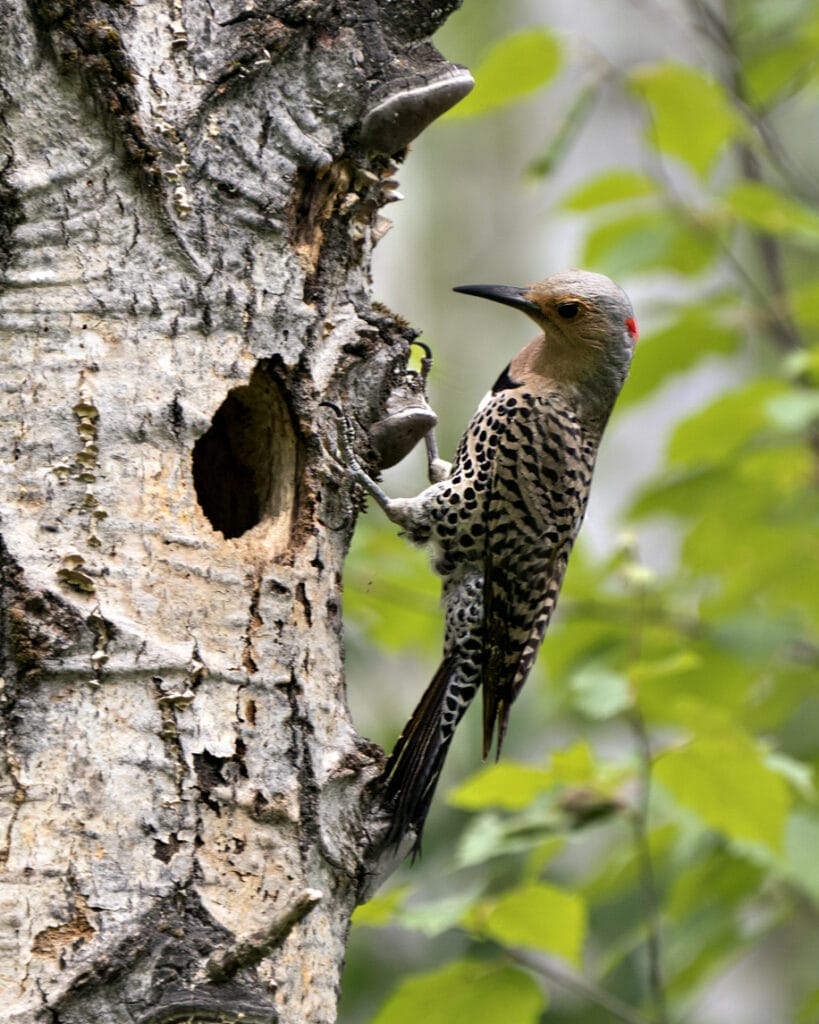
Northern Flickers possess a beautiful and intricate plumage. Their bodies are typically gray, adorned with black spots. A notable feature is a red patch on the nape of their neck. They also sport a distinct black crescent-shaped patch on their chest. Males can be identified by a black stripe on their cheeks, while females have a black patch in the same location.
Unusual Foraging Behavior:
A distinctive behavior of the Northern Flicker is its tendency to forage on the ground. Unlike most woodpeckers that primarily seek food on tree trunks and branches, flickers spend a significant amount of time searching for ants and other insects in leaf litter and on open ground. This ground-foraging habit can sometimes lead to them being inadvertently startled by humans.

Intense Drumming for Mating:
Northern Flickers are known for their rapid drumming, especially during the mating season. To attract a mate, they will often combine their calls with intense drumming, sometimes on resonant surfaces like metal objects. This competition for mates can result in exceptionally loud drumming, and their adaptability to urban environments means they may drum on man-made structures, creating a percussive sound that can be surprisingly loud, akin to "machine-gun drumming."
The Visually Striking Red-headed Woodpecker: A "Flying Checkerboard"
The Red-headed Woodpecker (Melanerpes erythrocephalus) is one of Minnesota’s most easily identifiable woodpeckers, primarily due to its striking red crown. This vivid coloration, combined with its distinctive body pattern, has earned it the nickname "flying checkerboard."
Distinctive Appearance:
The adult Red-headed Woodpecker is characterized by its brilliant red head that covers its entire crown. Its body plumage features a bold pattern of black and white, with large white patches on the wings that are highly visible in flight. This contrasting pattern gives them the appearance of a flying checkerboard. Juvenile Red-headed Woodpeckers lack the red crown and blue wing feathers; instead, they have dark brown feathers that gradually mature into the adult coloration.
Habitat and Diet:
Red-headed Woodpeckers are most commonly observed in Minnesota during the breeding season, from spring through summer. However, in the southeastern part of the state, they can be found year-round. They typically inhabit open woodlands, forest edges, and areas with dead trees, where they forage on tree bark. As omnivores, their diet is diverse, including fruits, seeds, insects, and occasionally the eggs of other birds.
Vocalization:
Their call is notably loud and harsh-sounding, often described as a "jumpscare" call. This initial loud vocalization is frequently followed by a few softer chirps that are more pleasant to the ear. This combination of a startling call and distinctive visual appearance makes the Red-headed Woodpecker a memorable species to observe.
The Elusive American Three-toed Woodpecker: A Rarity in Minnesota
The American Three-toed Woodpecker (Picoides dorsalis) is one of the rarest woodpecker species encountered in Minnesota and the broader United States. Minnesota is among the select few states where this elusive bird can be spotted, and sightings are typically confined to the northeastern parts of the state.
Unique Anatomical Feature:
The species earns its name from a unique anatomical adaptation: it possesses only three toes instead of the typical four found in most woodpeckers. This reduction in toes, specifically the absence of one of the hind toes, allows the bird to lean back slightly more on tree surfaces. This altered posture provides them with increased leverage, contributing to a more forceful drumming.
Habitat and Foraging:
American Three-toed Woodpeckers are often found in boreal forests and areas with a significant presence of coniferous trees. They are particularly attracted to forests that have experienced recent burns, similar to the Black-backed Woodpecker, as these conditions create favorable habitats for their primary prey: beetles and ants. Their powerful drumming is employed to excavate into tree bark to reach these insect larvae.

Vocalization and Juvenile Calls:
The call of the adult American Three-toed Woodpecker is a single, loud chirp. In contrast, juveniles are considerably more vocal, emitting a continuous stream of chirps until they are fed. This difference in vocal behavior between adults and juveniles is a common characteristic among many bird species.
The Majestic Pileated Woodpecker: The State’s Largest
The Pileated Woodpecker (Dryocopus pileatus) commands attention as the largest woodpecker species in Minnesota, rivaling the size of crows. These impressive birds are found year-round in the state, favoring woodlands, forests, and backyards equipped with bird feeders.
Impressive Size and Distinctive Crest:
Pileated Woodpeckers are characterized by their predominantly black plumage, accented by white stripes along their neck and crown. The most striking feature is their prominent, colorful crest atop their heads. Males are further distinguished by a red patch on their cheeks, while females lack this coloration.
Conservation Status and Habitat Decline:
While not considered rare, Pileated Woodpeckers are not as abundant as some other species. Their numbers have been impacted by habitat loss, particularly the extensive removal of eastern forests during the 19th century. Conservation efforts aimed at preserving mature forests are crucial for the continued presence of this magnificent bird.

Loud and Defensive Calls:
Pileated Woodpeckers are known for their loud, resonant calls that sound like "wak wak wak wak." The speed and intensity of these calls can vary, often indicating the bird’s defensive posture. Faster and louder calls suggest a higher level of agitation or territoriality. Their powerful drumming, capable of creating substantial holes in trees, is a testament to their size and strength.
Conclusion: Coexisting with Minnesota’s Woodpeckers
Minnesota’s woodpeckers have demonstrated a remarkable ability to adapt and coexist with human populations. However, their wild nature should always be respected. While providing food and water sources like bird feeders can be beneficial, attempting to capture or domesticate these birds is ill-advised. They are integral components of the natural landscape and are best observed and appreciated in their wild state, contributing to the ecological health and aesthetic beauty of Minnesota’s diverse environments. Understanding their unique adaptations, behaviors, and habitats allows for a richer appreciation of these dynamic avian inhabitants. The ongoing presence and diversity of woodpeckers in Minnesota serve as a vital indicator of the health of its forest ecosystems and a source of wonder for all who venture into its natural spaces.

