


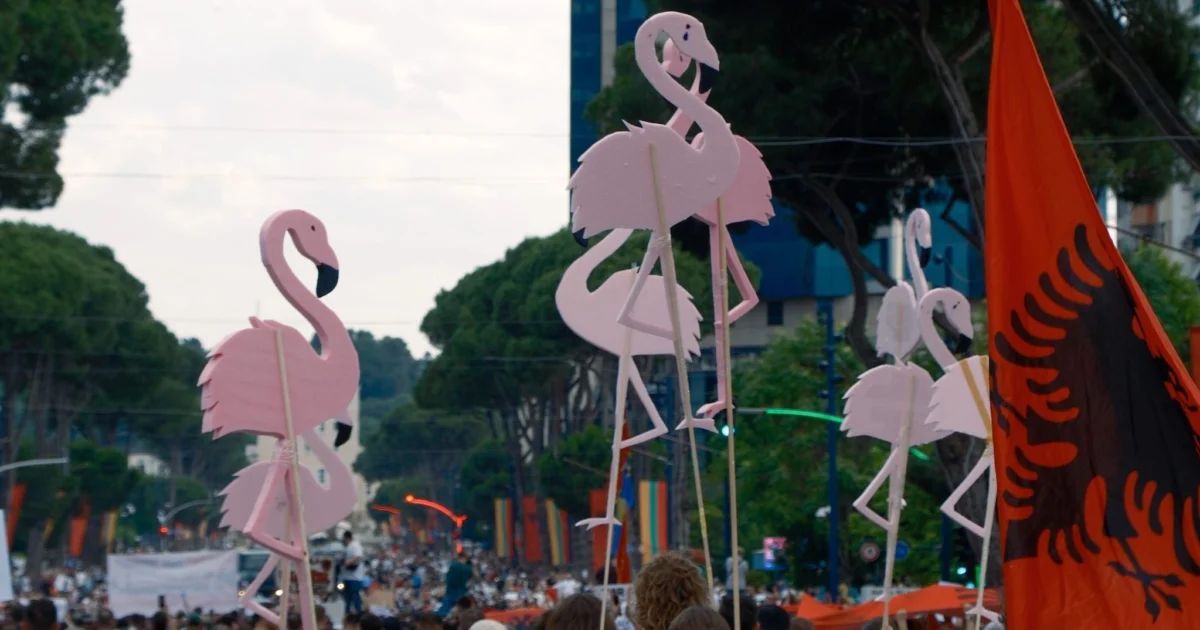
The streets of Tirana have become a focal point of dissent, as thousands of citizens have taken to the pavement for four consecutive days to voice their vehement opposition to a proposed luxury tourism development that threatens the Vjosa Narta Protected Landscape. This vital coastal ecosystem, considered one of the Mediterranean’s last intact havens, is facing irreversible damage from a project backed by foreign investors, notably including entities linked to Jared Kushner. The protests, however, transcend mere environmental concerns, highlighting deeper issues of democratic governance and the public’s right to participate in decisions shaping their shared natural heritage.
A Crucial Ecosystem Under Threat
The Vjosa Narta wetlands are a biodiversity hotspot of immense ecological significance. They provide sanctuary to hundreds of bird species, including the iconic flamingo, and are a critical breeding ground for the critically endangered Mediterranean monk seal. Furthermore, its pristine beaches serve as vital nesting sites for Loggerhead sea turtles, a species also facing significant population decline. Unlike much of the Mediterranean coastline, which has succumbed to extensive development, Vjosa Narta has remained remarkably untouched, a testament to its ecological resilience and the natural beauty it preserves. Environmental experts warn that any substantial alteration to this delicate ecosystem could trigger cascading, irreversible consequences, jeopardizing the survival of countless species that depend on its unique conditions.
The scale of the proposed development, described as "vast," raises immediate concerns about habitat destruction, water pollution, and the disruption of migratory routes. The specific details of the project, such as the extent of land acquisition, the types of infrastructure planned, and the projected water and energy demands, remain a point of contention and a source of anxiety for the local population and environmental advocates. The potential for increased human activity, waste generation, and the introduction of invasive species further exacerbates the ecological risks.
Beyond Ecology: The Fight for Democratic Voice

While the ecological imperative to protect Vjosa Narta is undeniably strong, the protests in Tirana underscore a more immediate and fundamental concern: the right of citizens to have a meaningful say in decisions that impact their lives and the future of their country. The current situation is not merely a conflict between conservationists and developers, but a profound illustration of a breakdown in democratic processes.
The narrative that pits environmental protection against economic prosperity is a false dichotomy that has been increasingly employed to justify development projects that disregard ecological and social impacts. This framing often serves to marginalize public concerns and consolidate power in the hands of a select few, effectively silencing dissenting voices. In the case of Vjosa Narta, the public feels excluded from a decision-making process that will irrevocably alter a landscape they cherish and rely upon.
The Breakdown of Democratic Stewardship
At the heart of the ongoing demonstrations lies a fundamental question of governance: who holds the authority to determine the fate of shared natural resources? The protests are a direct response to a perceived erosion of democratic principles, where the interests of foreign investors and powerful developers appear to supersede the will and well-being of the local population.
The essence of democracy rests on a compact between citizens and their government. Citizens cede certain authorities to the state in exchange for responsible stewardship of common assets. Natural heritage, such as the Vjosa Narta wetlands, is undeniably part of this common inheritance. When public assets are divested without transparency, when environmental regulations are circumvented, and when judicial oversight fails to uphold the law, this foundational pact begins to fracture. The subsequent public outcry and organized protest are a natural consequence of this breakdown.
A "Flamingo Revolution" with Broader Implications

The protests in Tirana, which some media outlets have already begun to dub the "Flamingo Revolution," carry significant implications that extend far beyond Albania’s borders. Across Europe, environmental protections are increasingly being reframed as impediments to economic growth, and civil society organizations advocating for these protections are often dismissed as anti-progress. The demonstrations in Tirana serve as a powerful counter-narrative, challenging this prevailing assumption and demonstrating that citizens will not passively accept the erosion of their environmental rights and democratic participation.
The timing of these protests is particularly pertinent given Albania’s aspiration to join the European Union. The accession process hinges on adherence to fundamental criteria such as the rule of law, democratic accountability, and the establishment of effective institutions. Events unfolding in Tirana, particularly concerning the potential disregard for environmental laws and public consultation, raise legitimate questions about the seriousness with which these commitments are being upheld. The EU’s own foundational principles are rooted in robust democratic governance and the protection of shared European heritage, making the situation in Albania a test case for the integrity of the accession process.
A Chronicle of Escalating Concerns
The unfolding situation in Vjosa Narta is not a sudden eruption but rather a culmination of growing concerns over environmental governance in Albania. While the precise timeline of the proposed development project and the initiation of public protests is still being fully documented, the core issues have been brewing for some time.
- Pre-development Scrutiny: Environmental organizations and local communities have historically raised alarms about the vulnerability of the Vjosa Narta ecosystem. This has likely included lobbying efforts, public awareness campaigns, and submissions of scientific data highlighting the ecological importance of the area.
- Investment Announcements and Project Unveiling: The involvement of foreign investors, including entities associated with Jared Kushner, likely marked a significant escalation in the perceived threat. The announcement of a "vast luxury tourism development" would have triggered immediate concern, particularly if details regarding its scale and environmental impact were not adequately communicated or addressed.
- Allegations of Procedural Irregularities: The current protests suggest that the public believes key procedural steps, such as transparent public consultations, thorough environmental impact assessments, and adherence to legal frameworks, may have been bypassed or inadequately implemented.
- Sustained Public Mobilization: The fact that protests have continued for four consecutive days indicates a deep-seated commitment and a high level of public mobilization. This suggests that previous avenues for expressing dissent or seeking redress may have been perceived as insufficient.
- International Scrutiny: The "Flamingo Revolution" moniker indicates that the events are gaining international attention, potentially putting pressure on the Albanian government and investors from international bodies and environmental advocacy groups.
Supporting Data and Expert Perspectives
The ecological significance of Vjosa Narta is not an abstract concept. Scientific studies have consistently highlighted its unique biodiversity. For instance, data from ornithological surveys in the region have documented hundreds of migratory and resident bird species, many of which are of conservation concern. The presence of flamingos, in particular, signifies a healthy wetland ecosystem capable of supporting large populations of these sensitive birds.

The Mediterranean monk seal (Monachus monachus) is one of the world’s rarest marine mammals, with an estimated population of fewer than 700 individuals. Vjosa Narta’s role as a potential breeding or foraging ground for this species underscores its critical importance for global conservation efforts. Similarly, the Loggerhead sea turtle (Caretta caretta) faces numerous threats, including habitat loss and pollution. The protection of its nesting beaches in Vjosa Narta is paramount to the species’ survival.
Reactions from Related Parties (Inferred)
While direct statements from all parties involved may not be publicly available, certain reactions can be logically inferred from the context:
- Environmental Organizations: Organizations like PPNEA (Protection and Preservation of Natural Environment in Albania) and BirdLife Europe and Central Asia are likely to be at the forefront of the advocacy efforts, providing scientific data, legal expertise, and mobilizing public support. Their statements would emphasize the ecological imperative, the violation of environmental laws, and the need for sustainable development.
- Local Communities: Residents living in and around Vjosa Narta are expected to be vocal in their opposition, citing concerns about their livelihoods, traditional practices, and the loss of a cherished natural heritage. Their focus would be on the immediate impact of the development on their daily lives and the future of their region.
- Government Officials: The Albanian government would likely defend its development policies, potentially emphasizing job creation, economic growth, and foreign investment as priorities. They might also argue that the development plans include environmental mitigation measures, though these would be subject to scrutiny by environmental groups.
- Foreign Investors: Investors, including those linked to Jared Kushner, would likely highlight the economic benefits of their proposed project, such as tourism revenue and infrastructure development. They might also assert that their investments adhere to all legal requirements and international standards.
Analysis of Implications: A Crossroads for Albania and Europe
The events in Tirana represent a critical juncture for Albania, both domestically and in its international relations.
- Domestic Governance: The protests are a stark indicator of public dissatisfaction with the current governance model. If the government fails to adequately address the concerns raised, it risks further alienating its citizens and undermining public trust in its institutions. The resolution of this conflict will set a precedent for how future development projects are managed and how public participation is valued.
- EU Accession: As previously mentioned, the situation directly impacts Albania’s EU accession bid. The EU places significant emphasis on environmental protection and the rule of law. A perceived failure to uphold these principles in the Vjosa Narta case could lead to increased scrutiny from Brussels and potentially delay or complicate accession negotiations. It also raises questions about the EU’s own role in ensuring that candidate countries adhere to its environmental standards and democratic values.
- The Future of Mediterranean Ecosystems: The potential loss of Vjosa Narta would be a significant blow to Mediterranean biodiversity. It would reinforce a worrying trend of ecological degradation across the region, making the protection of remaining intact ecosystems even more urgent. The "Flamingo Revolution" could inspire similar movements in other parts of the Mediterranean facing similar threats.
- The Power of Citizen Action: Ultimately, the protests highlight the enduring power of citizen action in holding governments and powerful entities accountable. The image of thousands of people taking to the streets, driven by a conviction to protect their natural heritage and their democratic rights, serves as a powerful reminder that even the most ambitious development plans can be challenged when a united public stands against them.
The vibrant images of flamingos wading in the shallows, the rare sight of a monk seal hauling out on a pristine beach, and the hopeful prospect of a Loggerhead turtle finding its nesting site intact are tangible realities that hang in the balance. These natural wonders are not mere ecological footnotes; they are vital components of a healthy planet and a testament to what can be preserved when a protected coastline remains so, and when the people of Tirana, and indeed Albania, insist that it stays that way. The "Flamingo Revolution" is not just about a landscape; it is about the fundamental principles of stewardship, democracy, and the right to a sustainable future.

