


Many companion parrots, from the smallest budgie to the largest macaw, face a common health challenge: a diet dominated by seeds, leading to a condition often termed "seed addiction." While bird owners instinctively understand that a foundation of high-quality pellets and fresh foods offers superior nutrition, transitioning a bird away from its preferred, often unhealthy, seed-heavy diet is rarely straightforward. Birds exhibit a spectrum of behaviors when faced with dietary change—some are naturally curious and respond well to encouragement, others are cautious and thrive on routine, while a cunning few are master strategists, expertly picking around new foods, overturning bowls, or simply holding out until their owner yields. This inherent variability underscores why a rigid, one-size-fits-all approach to pellet conversion is not only ineffective but potentially harmful. Instead, success hinges on selecting a conversion method precisely tailored to the individual bird’s personality and behavioral patterns, ensuring both nutritional improvement and the bird’s safety.
The Historical Context and Modern Avian Nutrition Imperative
For decades, the standard diet for pet birds was primarily seed mixes, largely due to convenience and a lack of scientific understanding regarding avian nutritional requirements. However, extensive research in avian medicine has unequivocally demonstrated that a seed-only diet is nutritionally deficient, typically high in fat and low in essential vitamins, minerals, and amino acids. This imbalance contributes to a myriad of serious health issues, including obesity, liver disease, kidney dysfunction, respiratory problems, feather abnormalities, and compromised immune systems. Pelleted diets, developed through scientific formulation, are designed to provide complete and balanced nutrition in every bite, offering a consistent and reliable dietary foundation. The shift from anecdotal feeding practices to evidence-based nutrition marks a critical advancement in pet bird welfare, with avian veterinarians universally advocating for pelleted diets as the cornerstone of a healthy avian lifestyle. The challenge, therefore, lies not in the what to feed, but in the how to safely and effectively implement this crucial dietary change.
Evidence-Based Strategies: A Paradigm Shift in Diet Conversion
Recognizing the widespread difficulty in converting seed-addicted birds, the avian community has sought structured, research-backed solutions. A pivotal avian study, published by Cummings, Hess, Spielvogel, and Kottwitz in 2022 in the Journal of Avian Medicine and Surgery, meticulously evaluated three distinct pellet conversion methods for seed-fed psittacine birds: "Birdie’s Choice," "Slow and Steady," and "Tough Love." This research was not intended to coerce birds into eating but to establish structured methodologies while rigorously monitoring key physiological and behavioral indicators. Throughout the study, parameters such as appetite, droppings, activity levels, body weight, and overall body condition were closely observed, providing a scientific framework for safe and effective diet transition. This study represents a significant step forward, moving beyond speculative advice to provide bird owners with validated strategies.
Choosing the Right Path: Matching Method to Avian Temperament
The core principle derived from this research is that the most successful conversion method aligns with the bird’s natural reactions to new stimuli and its established behavioral patterns. Owners are encouraged to assess their bird’s typical responses to novelty before embarking on any dietary change. Does the bird eagerly investigate new objects, freeze in caution, or immediately search for familiar comfort foods? These observations are far more indicative of the appropriate conversion strategy than the bird’s species, age, or an owner’s desire for rapid results. Committing to a chosen method from the outset, rather than haphazardly mixing foods or oscillating between different approaches, provides both the bird and the owner with a predictable structure, mitigating stress and preventing emotional, fear-driven decisions that can derail the process.
1. Birdie’s Choice: For the Curious and Social Forager
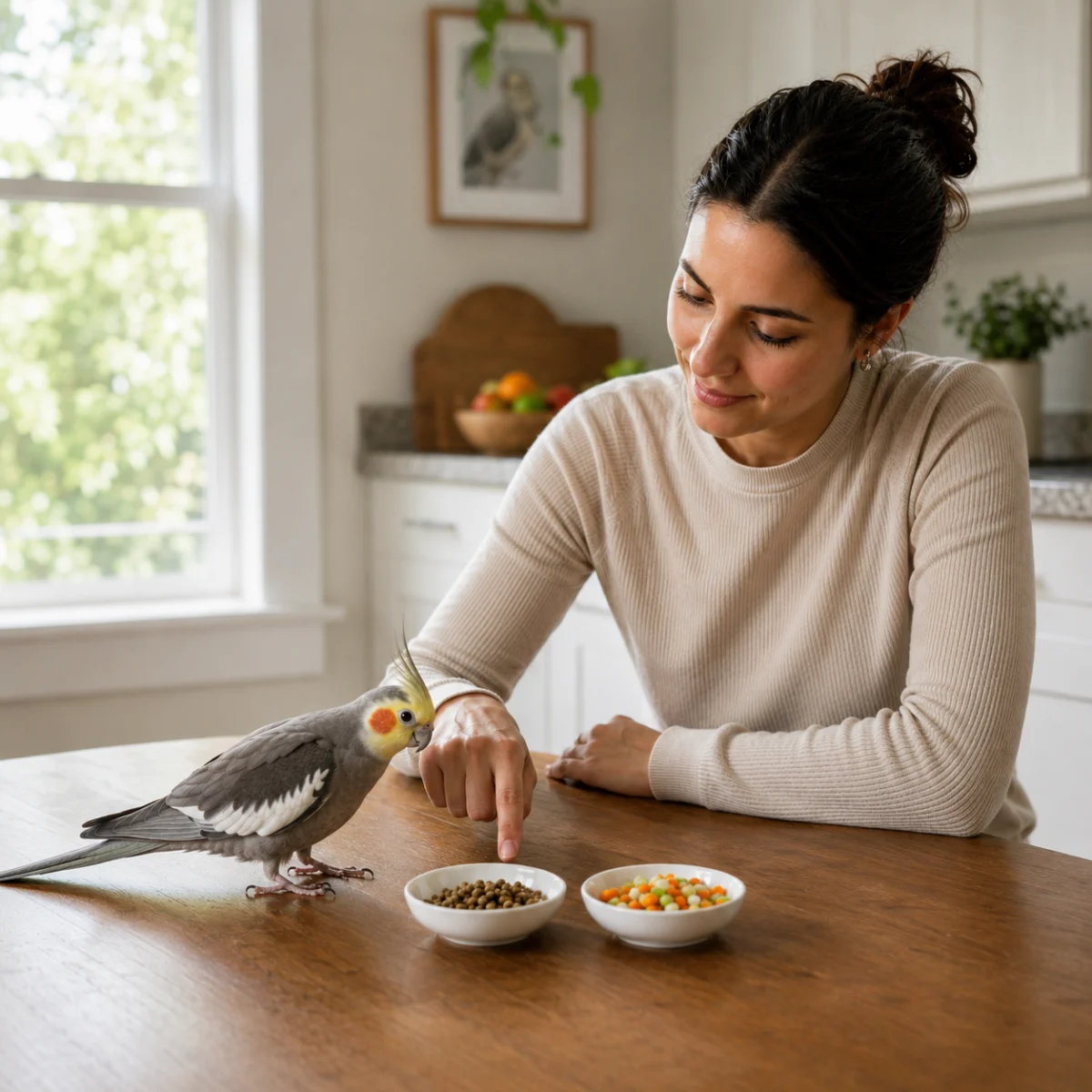
Description: Birdie’s Choice is the most interactive and owner-engaged conversion method, leveraging a bird’s natural curiosity and social instincts. It involves offering a selection of different pellet types, sizes, or colors in a low-pressure, interactive setting, often outside the main cage or during supervised playtime. The owner actively participates by modeling interest in the pellets, tapping near them, or offering praise and attention when the bird investigates. This "flock-style encouragement" makes the new food appear socially safe and desirable. The pellet that garners the most interaction or interest then becomes the primary focus for introduction into the bird’s regular feeding area.
Best For: This method is ideally suited for birds that are finger-tame, highly social, and show genuine interest in their human companion’s activities. Smaller, ground-feeding species such as budgies and cockatiels often respond particularly well to this approach, benefiting from the positive reinforcement and shared foraging experience.
Not Best For: Birdie’s Choice may prove ineffective for extremely fearful, aggressive, or untamable birds that resist human interaction or tabletop exploration. Owners who cannot dedicate consistent, close supervision throughout the process may also find this method challenging, as its success relies heavily on active engagement. If a bird consistently refuses to engage, a more structured approach might be necessary.
2. Slow and Steady: For the Cautious and Routine-Driven Companion
Description: The Slow and Steady method is characterized by timed pellet exposure, designed to gradually acclimate cautious or less tame birds to the new diet. Pellets are consistently offered at specific times of the day, particularly when the bird is naturally inclined to forage. Familiar seed-based food is still provided but in smaller, controlled portions, which are then incrementally reduced over time. The key is to maintain a predictable routine, ensuring pellets are always fresh and available, allowing the bird to repeatedly encounter them as a normal food source without feeling overwhelmed by sudden change.
Best For: This approach is optimal for birds that are less tame, inherently cautious, or easily stressed by abrupt changes to their environment or routine. The gradual introduction and predictable schedule can make the transition feel safer and less threatening for these birds and their owners, who may be hesitant to move too quickly.
Not Best For: The Slow and Steady method can falter if the bird quickly learns that refusing pellets will eventually lead to the return of more familiar seed. It also requires strict adherence from the owner; repeatedly adding back seed out of fear, rather than following the prescribed timing and tapering plan, will undermine the method’s effectiveness. Consistency is paramount to prevent accidental reinforcement of seed refusal behaviors.
3. Tough Love: For the Selective and Seed-Focused Strategist
Description: Despite its name, Tough Love in this context refers to a strategy of maximum pellet exposure, not starvation. It aims to make pellets difficult to avoid and easy to encounter throughout the bird’s daily routine. Pellets are strategically placed in multiple preferred foraging locations, while a small, controlled amount of familiar seed is offered in a less desirable spot. This method forces the bird to engage with pellets more frequently, making them the most readily available food source. It is always paired with rigorous monitoring of the bird’s weight, droppings, and behavior.
Best For: Tough Love is most effective for healthy, selective birds that are adept at eating around pellets, dumping bowls, or holding out for seeds in a mixed diet. It also suits birds that consume a variety of fresh foods but specifically refuse pellets. The goal is to disrupt the selective eating pattern and encourage acceptance of the complete pelleted diet.
Not Best For: This method is unequivocally inappropriate for birds that are underweight, sick, elderly, extremely small, egg-bound, or medically fragile, unless under the direct and continuous guidance of an avian veterinarian. Its intensity requires a bird to be in robust health. Owners who are prone to panic and will repeatedly reintroduce seed outside the plan should also avoid this method, as it demands calm consistency and unwavering adherence to monitoring protocols.
Crucial Safety Protocols: When to Pause and Consult an Avian Veterinarian
Regardless of the chosen conversion method, safety must remain the paramount concern. Diet conversion should never compromise a bird’s health or well-being. Close monitoring of key indicators is non-negotiable:
- Weight Loss: Weight loss is a critical red flag, indicating insufficient food intake even if the food bowl appears disturbed. Owners must use a consistent gram scale to track their bird’s weight throughout the transition. A safe conversion should not result in significant weight loss.
- Emergency Thresholds: Immediately cease the conversion and contact an avian veterinarian if the bird loses more than 3% of its body weight in a single week, or more than 10% of its total body weight over the entire conversion period. For smaller species, even a few grams can be critical.
- Physical and Behavioral Changes: Owners must be vigilant for any signs of illness or weakness. These include the bird appearing fluffed, weak, excessively sleepy, shaky, unusually quiet, or less responsive than normal. Other warning signs include a significant reduction in droppings, complete refusal to eat, vomiting, labored breathing, sitting low on the perch, or any dramatic behavioral shift. These are not normal "pellet conversion" signs but indicators of distress or illness.
- Veterinary Consultation: An avian veterinarian should always be consulted before initiating a diet conversion if the bird is already sick, underweight, elderly, egg-laying, or medically fragile. A vet can assess the bird’s current health status, provide tailored advice, and determine the safest pace for dietary change.
Pausing or slowing down the conversion process is not a failure; it is a responsible and necessary adjustment. It signifies that the bird may require a gentler pace, an alternative method, a different type of pellet, or immediate veterinary support. The ultimate mission is to achieve better nutrition without exposing the bird to unnecessary risk.
Addressing Common Misconceptions and Ineffective Practices
The Ineffectiveness of Mixing Seeds and Pellets: A prevalent but often unsuccessful strategy involves simply mixing pellets into a bird’s seed bowl. While this might appear to offer a balanced diet, birds are remarkably adept at selective eating. They will typically pick out and consume only the familiar, high-fat seeds, leaving the nutritionally superior pellets untouched. The bowl might look balanced, but the bird’s actual dietary intake remains seed-heavy and deficient. Structured conversion methods, utilizing separate pellet dishes, timed offerings, and strategic placement, are crucial because they make it transparent what the bird is truly consuming, guiding the owner’s decision-making process.
Owner Fear and Accidental Reinforcement: A common emotional challenge for owners is the fear that their bird will starve if familiar seeds are restricted. This fear can inadvertently lead to a cycle where the owner, out of concern, repeatedly adds more seed whenever the bird hesitates to eat pellets. Birds are intelligent and quickly learn this pattern: refusing new food results in the return of preferred food. A structured method acts as a protective shield for both the bird and the owner, preventing emotional guesswork from sabotaging the conversion and training the bird into seed refusal.
Speed Versus Safety: The Optimal Timeline for Conversion
While some birds adapt to pellets surprisingly quickly, often within days, speed should never be the sole metric of success. The most effective method is the one that the bird can complete safely, maintaining stable weight, consistent droppings, a healthy appetite, and normal energy levels throughout the process. A structured, consistent plan generally yields better results than erratic changes. While methods like Tough Love might accelerate conversion for certain birds, its suitability depends entirely on the bird’s health, temperament, and the owner’s capacity for vigilant monitoring. A rapid conversion is only a true win if the bird remains healthy and stable. The best method is ultimately the one an owner can implement calmly, consistently, and safely, prioritizing the bird’s well-being over a quick outcome.
Beyond Pellets: A Holistic Approach to Avian Nutrition
Pellets form the essential nutritional foundation, correcting the imbalances of a seed-heavy diet, but they do not constitute the entirety of a healthy avian lifestyle. Birds thrive on a diverse diet that includes a variety of appropriate vegetables, greens, sprouts, and other enrichment foods. Once a bird successfully transitions to pellets, it often becomes more receptive to trying other novel foods. The same behavioral learning principles applied to pellet conversion—repeated exposure, routine, positive modeling, and patience—can be effectively utilized to introduce fresh produce, commonly referred to as "chop." The key distinction is that pellets serve as the balanced base, while chop and other fresh foods provide vital nutrients, fiber, and mental enrichment. Understanding a bird’s textural preferences (e.g., finely minced vs. larger pieces) can further enhance the acceptance of new fresh foods.
Implications for Pet Bird Welfare and the Pet Industry
The widespread adoption of evidence-based diet conversion methods has profound implications for pet bird welfare. By empowering owners with effective strategies, the incidence of diet-related illnesses, which account for a significant portion of avian veterinary visits, can be substantially reduced. This leads to healthier, longer-lived birds and potentially lower long-term veterinary costs for owners. For the pet industry, this shift underscores the increasing demand for high-quality pelleted diets, specialized feeding accessories, and educational resources that support responsible bird ownership. It also highlights the growing role of avian veterinarians and certified behaviorists in guiding owners through these complex nutritional transitions. Ultimately, a successful diet conversion is a testament to an owner’s commitment to providing optimal care, transforming a bird’s diet from a source of potential illness into a foundation for vibrant health and well-being.
References
Cummings, A. M., Hess, L. R., Spielvogel, C. F., & Kottwitz, J. J. (2022). An evaluation of three diet conversion methods in psittacine birds converting from seed-based diets to pelleted diets. Journal of Avian Medicine and Surgery, 36(2), 145–152. https://doi.org/10.1647/21-00025

