


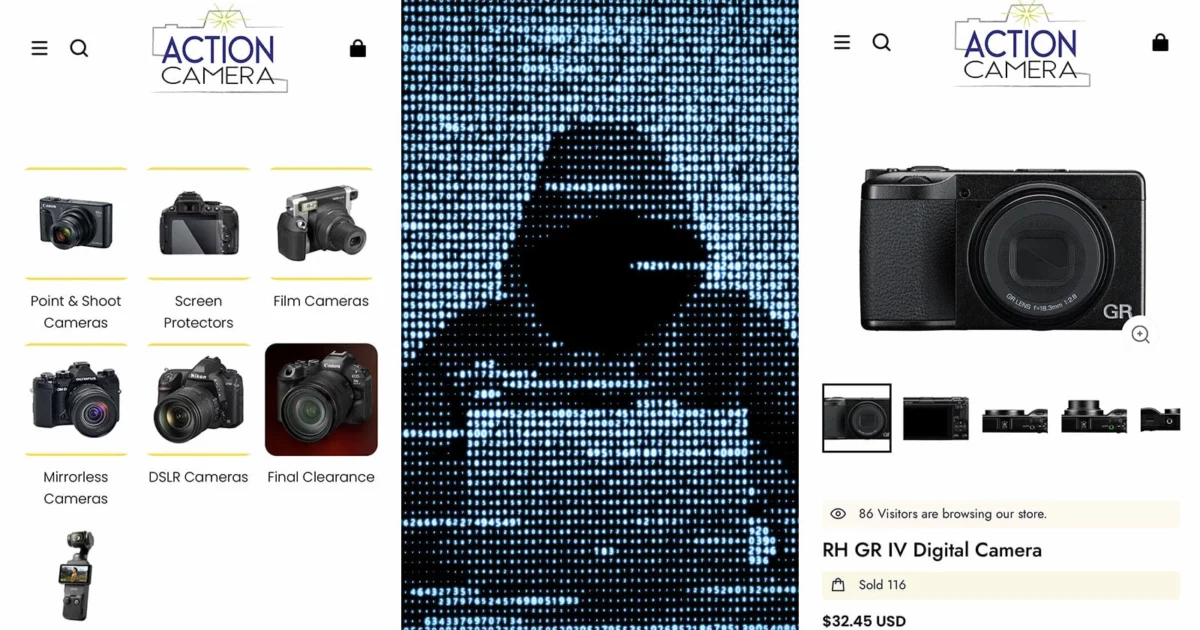
The digital landscape has long been a breeding ground for sophisticated identity theft, but a recent surge in business impersonation is targeting the niche photography market with alarming precision. Action Camera, a respected independent retailer with a four-decade history and physical storefronts in Reno, Nevada, and Rocklin, California, has become the latest victim of a complex online scheme. An unknown entity is currently operating a fraudulent e-commerce platform that misappropriates Action Camera’s branding and logo to deceive consumers into purchasing high-end photographic equipment at impossible price points. The scam, which primarily propagates through social media channels like TikTok, highlights a growing trend where bad actors leverage the reputations of small, trusted businesses to bypass the natural skepticism of online shoppers.
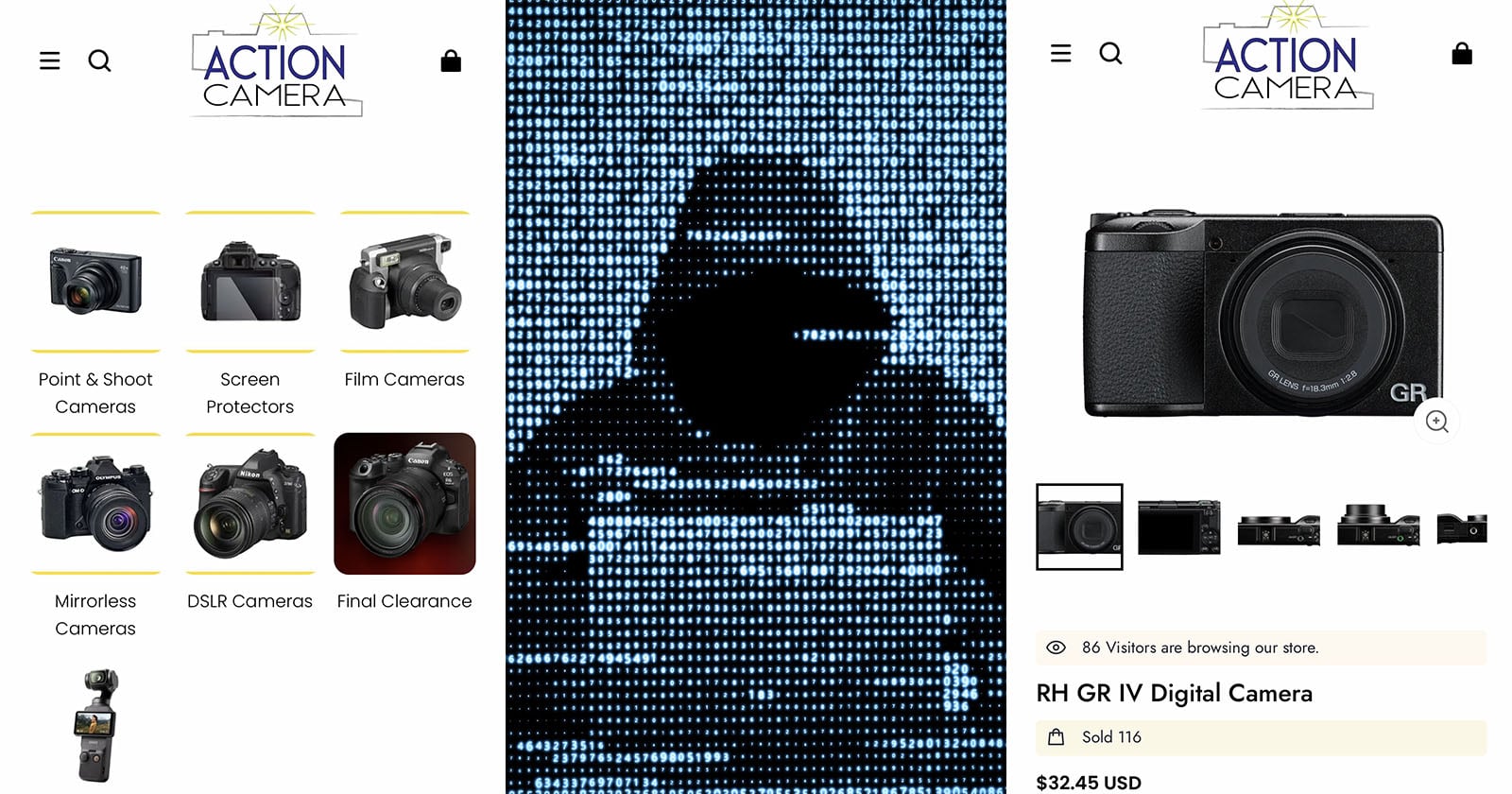
The breach of corporate identity came to light when Brian White, the manager of Action Camera’s Reno location, began receiving inquiries from confused customers. One specific incident involved a consumer who had purchased a Canon PowerShot SX740 through a website they believed was affiliated with the Nevada store. After receiving a receipt for a payment of $73.59—a fraction of the camera’s market value—the customer emailed the real Action Camera to inquire about the shipping status. Upon reviewing the screenshots provided by the victim, White realized that the fraudulent site was using the store’s official logo to provide a veneer of legitimacy to an illegitimate operation.
The Architecture of a Chameleon Website
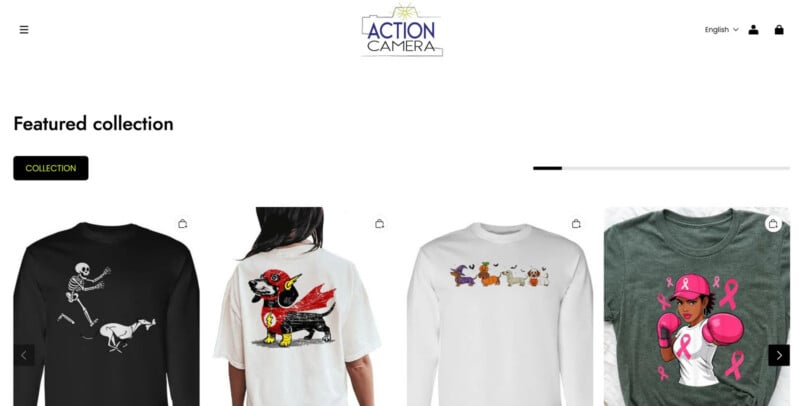
The fraudulent operation is primarily hosted on the domain cucciseru.com, a URL that bears no linguistic or logical connection to the photography industry or Action Camera. Investigative efforts into the website reveal a "chameleon" structure designed to evade detection by automated security scanners and search engine crawlers. When accessed via a standard desktop browser, the site appears to be a disorganized storefront selling a random assortment of clothing and AI-generated novelty items. However, the site’s true purpose is revealed when users navigate to it through specific links embedded in mobile social media applications.
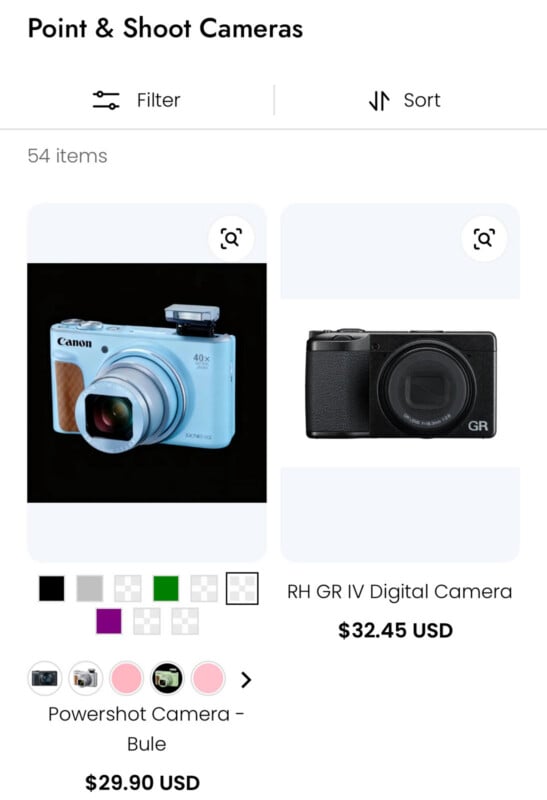
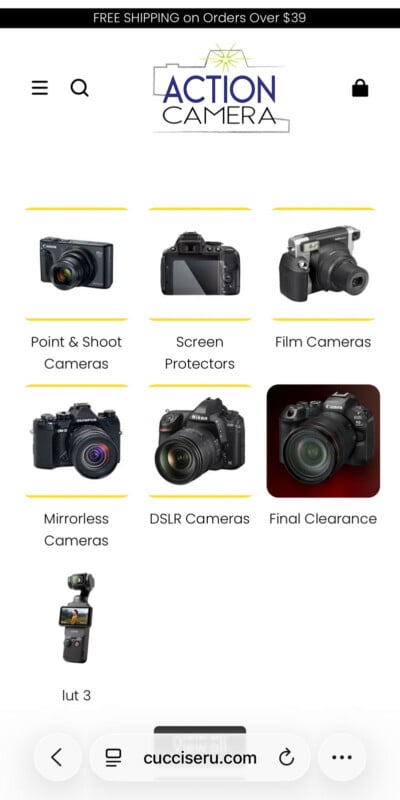
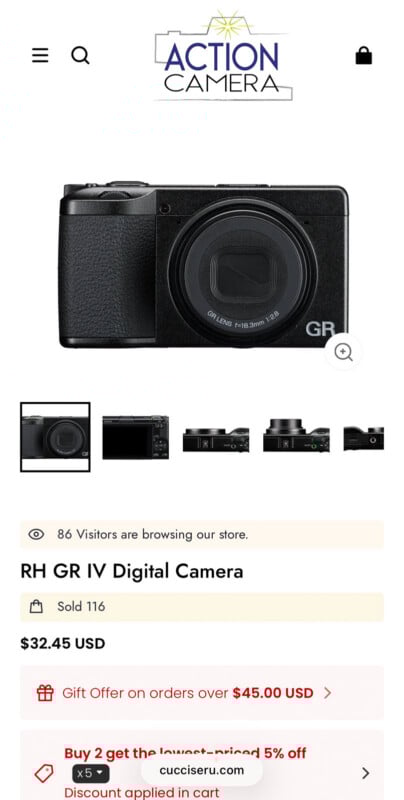
When accessed via mobile devices—specifically through links shared on TikTok—the website undergoes a total transformation. The AI-generated apparel disappears, replaced by a sophisticated digital storefront featuring 54 different camera models. The inventory listed is a "who’s who" of the current photography market, ranging from popular point-and-shoot models to high-end luxury systems. The deceptive site lists the Canon PowerShot SX740, the Ricoh GR IV (a model name that does not officially exist in that specific nomenclature, as the current model is the GR III), the OM System Tough TG-7, and even the Leica Q3 43.
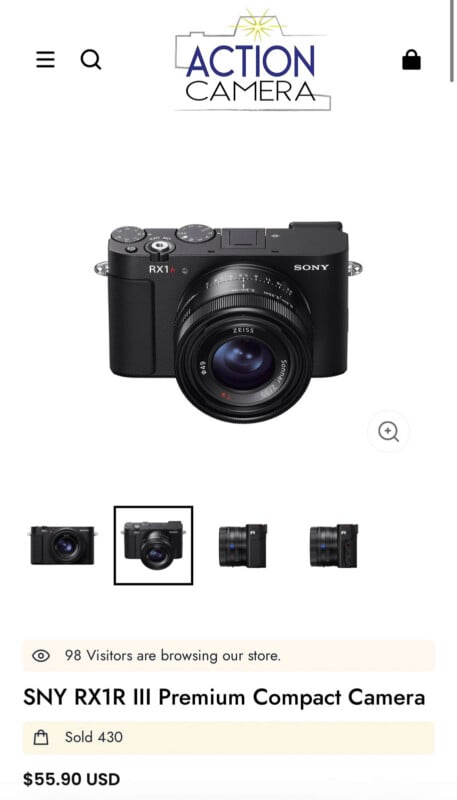
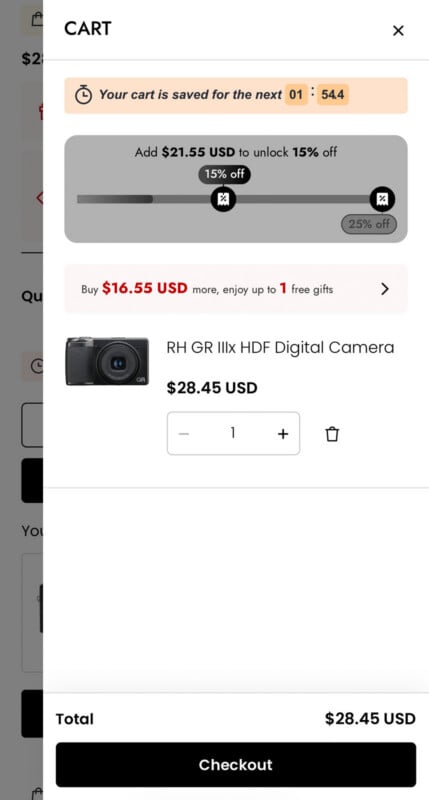
The most glaring red flag is the pricing structure. A Leica Q3 43, which typically retails for approximately $6,800, is listed on the scam site for $55.90. Similarly, the Ricoh GR series, which maintains a high resale value due to its popularity among street photographers, is offered for $32.45. These prices are not merely discounts; they are mathematically impossible within the framework of legitimate retail margins, indicating that the operation is a "clearance scam" designed to harvest credit card information or capture small sums of money from thousands of victims simultaneously.
The Role of Social Media Influencers
The scale of this scam is significantly amplified by its integration into the TikTok ecosystem. Brian White noted that the fraudulent site is being promoted by a network of "influencers" who showcase various point-and-shoot cameras in short-form videos. To date, nearly 80 videos have been identified that demonstrate the hardware and direct viewers to the cucciseru.com URL. These videos often utilize trending aesthetics to appeal to younger demographics or amateur photographers who may not be familiar with the standard pricing of professional-grade equipment.
The use of influencers creates a "trust proxy." When a viewer sees a creator they follow demonstrating a product and providing a direct link, the inherent trust in the creator is transferred to the linked website. This social engineering tactic is particularly effective on platforms like TikTok, where the rapid-fire nature of content consumption discourages deep-dive research into a retailer’s background. The person who alerted White to the scam mentioned that seeing multiple users showing off the cameras made the site appear legitimate, despite the suspicious URL and pricing.
A Growing Trend in Retail Impersonation
This incident is not an isolated case but part of a broader trend of "brand-jacking" within the photography industry. In the summer of 2025, Leica Camera AG was forced to issue a global warning after several fraudulent websites appeared using the Leica Store name and branding. Those sites operated on a nearly identical model: social media advertisements led users to professional-looking storefronts offering massive discounts on the Leica D-Lux 8 and other popular models.
The choice of Action Camera as a target is particularly calculated. Unlike a massive corporation like Amazon or B&H Photo, Action Camera is a small, family-oriented business with a strong community presence. By stealing the logo of a smaller retailer, scammers can exploit the "shop local" sentiment that many consumers feel. Furthermore, if a customer does a cursory search for "Action Camera," they will find a legitimate business with a 40-year history and positive reviews, which may inadvertently confirm their belief that the site is safe, even if the URL does not match.
Technical Obstacles and Jurisdictional Challenges
Combatting these fraudulent sites is a significant challenge for small business owners and law enforcement alike. The domain cucciseru.com was registered through Dynadot Privacy Service, a tool that masks the identity of the registrant. This anonymity, combined with the fact that these operations often host their servers in jurisdictions with lax cybercrime regulations, makes it nearly impossible for a local camera store manager to take down the site.
The "cloaking" technique used—showing different content to mobile and desktop users—also makes it difficult for platform moderators to flag the content as fraudulent. To a TikTok moderator reviewing a link on a desktop computer, the site might look like a harmless, albeit strange, t-shirt shop. The malicious camera storefront only triggers under specific parameters, allowing the scam to persist for longer periods before being blacklisted by browsers or security software.
Official Response and Consumer Guidance
Brian White has taken a proactive stance in educating the public, emphasizing that the survival of the photographic community depends on trust. "Our business is relatively small, but we really pride ourselves on being able to have a positive impact on the photographic community," White stated. "It deeply saddens and alarms me that we are involved with someone else’s scam."
Action Camera has urged consumers to look for several key indicators of fraud when shopping online:
- URL Discrepancy: If the logo says "Action Camera" but the URL is a random string of characters or an unrelated word like "cucciseru," the site is almost certainly fraudulent.
- Impossible Pricing: Professional cameras are high-value items with tight retail margins. No legitimate retailer can sell a $500 camera for $30.
- Product Discrepancies: White pointed out that the scam site offers the Canon SX740 in various colors that the manufacturer does not actually produce.
- Lack of Contact Information: Legitimate stores provide a physical address, a working phone number, and a verifiable history.
White suggests that if a deal seems too good to be true, consumers should call a known local camera store to verify the offer. "I would encourage anyone who is looking for a camera to first call their local camera store… even just to inquire if something like this seems legitimate. Or order one from them," he advised.
Broader Implications for the Industry
The exploitation of Action Camera’s identity serves as a grim reminder of the vulnerabilities inherent in the modern e-commerce ecosystem. For small businesses, the cost of such scams is two-fold: the potential loss of future customers who may become wary of online shopping after being defrauded, and the immediate damage to brand reputation.
The photography industry is particularly susceptible to these scams because of the high demand for "vintage" and compact digital cameras among Gen Z and Millennial consumers. This surge in popularity has created a market where buyers are often searching for deals on gear that is frequently out of stock at major retailers. Scammers capitalize on this scarcity by claiming to have stock at "clearance" prices.
As social media platforms continue to integrate e-commerce features, the responsibility for vetting advertisers and influencers becomes more critical. Until platforms like TikTok implement more rigorous verification for links shared by influencers, the burden of protection remains on the consumer. The real Action Camera continues to operate its legitimate locations in Reno and Rocklin, focusing on community education and professional service—a stark contrast to the digital ghosts currently using their name to facilitate theft.

