


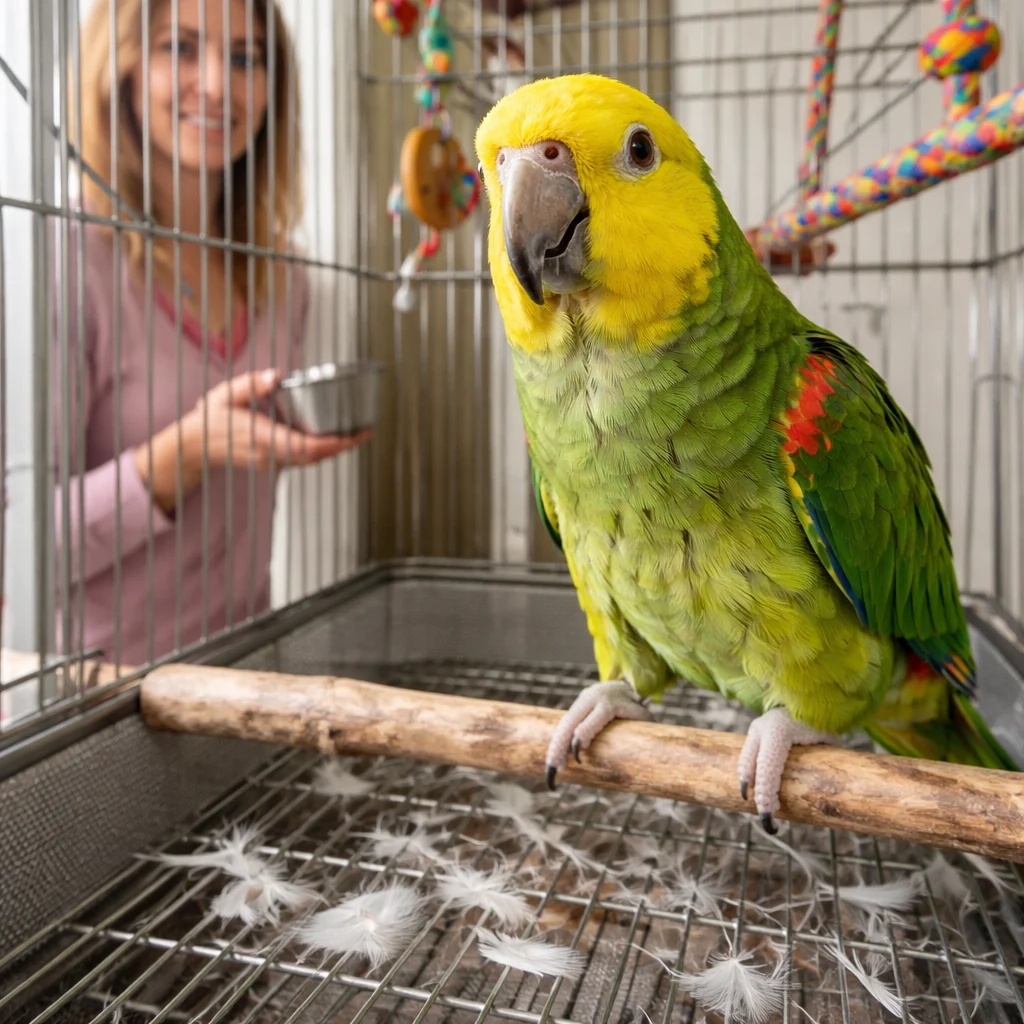
This unsettling discovery is a common experience for many bird owners, often triggering immediate concern about their pet’s health. The sight of an avian enclosure littered with feathers can prompt a swift descent into worry, with questions of illness or self-mutilation immediately coming to mind. However, avian specialists emphasize that while feather loss can indeed be a symptom of underlying issues, it is more frequently a natural biological process: molting. Differentiating between these two distinct phenomena—a healthy molt versus problematic feather plucking—is crucial for ensuring the well-being of companion birds and alleviating owner anxiety.
The Immediate Assessment: Feather Forensics
When confronted with a sudden abundance of shed feathers, the initial reaction should be a calm, methodical assessment rather than immediate panic. Avian veterinarians and behaviorists advocate for a simple, yet highly effective, "feather forensics" approach to determine the nature of the feather loss. This rapid diagnostic method, often referred to as the "Shaft Test," can provide critical clues within seconds, guiding the owner on whether veterinary consultation is immediately necessary.
The key lies in examining the fallen feathers themselves. The manner in which a feather detaches from the bird’s body leaves tell-tale signs. If the feather originates from a natural molting process, the quill—the hollow basal part of the feather that was embedded in the skin—will typically appear smooth, translucent, and slightly pointed. This indicates a natural shedding, where the old feather has been pushed out by a new, developing feather. Accompanying these naturally shed feathers, owners might also observe fine white flakes, which are fragments of bird dander and the waxy sheathing that protects new "pin" feathers as they emerge.
Conversely, if the feather loss is due to plucking or over-preening, the appearance of the quill will be markedly different. Feathers that have been aggressively pulled out by the bird itself often exhibit a damaged, "chewed," jagged, or snapped-off appearance at the quill end. In some severe cases, if the bird has plucked vigorously, the tip of the quill might even show signs of blood or ragged tissue, indicating trauma to the feather follicle. Furthermore, owners might notice areas where feathers are entirely missing, but the quill is still embedded in the skin, or where the feather shaft itself has been bitten through rather than cleanly shed. These observations strongly point towards a behavioral or medical problem requiring professional intervention.
Biology vs. Behavior: Understanding the Root Causes
The distinction between molting and plucking is not merely superficial; it represents a fundamental difference in underlying physiological and psychological states.
The Biological Imperative: Molting
Molting is a vital, natural process for all birds, essential for maintaining healthy plumage necessary for insulation, flight, and camouflage. Feathers, being dead structures once fully grown, gradually wear out, becoming brittle, faded, or damaged over time. To ensure optimal functionality, birds periodically replace their entire plumage, or significant portions thereof, in a highly synchronized and hormonally regulated cycle.
Most companion bird species undergo a complete molt once or twice a year, typically after the breeding season or during periods of environmental change, such as decreasing daylight hours. The duration and intensity of a molt can vary significantly between species and even individual birds, often lasting several weeks to a few months. During this period, a bird’s metabolism increases as it dedicates considerable energy and nutritional resources to feather regrowth. This intense physiological demand can make birds appear less energetic, more irritable, or "cranky-pants," as their bodies are literally rebuilding their protective covering. Appetite might increase, and birds may spend more time preening and grooming to help new feathers emerge from their waxy sheaths.
From an evolutionary perspective, molting is a highly adapted survival mechanism. A bird with compromised plumage is vulnerable to predators, inefficient in flight, and susceptible to temperature extremes. Therefore, the body prioritizes feather health, orchestrating a complex hormonal cascade involving thyroid hormones, sex hormones, and photoperiodic cues (daylight length) to initiate and regulate the molting process.
The Behavioral Aberration: Feather Destructive Behavior (FDB)
In stark contrast to molting, feather plucking or feather destructive behavior (FDB) is an abnormal, self-inflicted condition. It is a complex syndrome driven by a multitude of factors—environmental, psychological, and medical—and is considered one of the most challenging behavioral problems in captive avian populations. Studies suggest that FDB affects a significant proportion of companion parrots, with estimates ranging from 10% to 30% depending on species and living conditions.
The motivations behind FDB are diverse and often intertwined. Medical causes can include skin infections (bacterial, fungal, parasitic), allergies, internal organ diseases (e.g., liver disease, kidney disease), nutritional deficiencies (particularly Vitamin A, calcium, or essential amino acids), heavy metal toxicities, and even certain viral infections. Any condition causing chronic discomfort or irritation can lead a bird to over-preen or pluck.
Psychological and environmental factors play an equally significant role. Boredom, lack of mental stimulation, insufficient exercise, social isolation, fear, anxiety, stress (e.g., changes in environment, new pets, owner absence), reproductive hormonal fluctuations, and even learned behaviors can all contribute to the development of FDB. Birds are highly intelligent and sensitive creatures, and their natural behaviors, such as foraging, flying, and complex social interactions, are often severely restricted in a typical home environment. This chronic deprivation can manifest as self-destructive behaviors.
The progression of FDB can be insidious. It might start as excessive preening, then escalate to feather chewing, and eventually to full-blown plucking, sometimes leading to skin mutilation. If left unaddressed, FDB can become a deeply ingrained habit, extremely difficult to resolve, even if the initial trigger is removed. The chronic stress and physical damage can also compromise the bird’s immune system, making it more susceptible to other health issues.
The Safety Check: Blood Feathers
During either molting or the emergence of new feathers after plucking, a critical consideration is the presence of "blood feathers," also known as pin feathers. These are newly growing feathers that are still actively supplied with blood. A new feather emerges from the follicle as a stiff, waxy-covered spike. Within this spike, a live vein runs through the shaft, supplying nutrients for growth.
Blood feathers are particularly vulnerable. If a blood feather is broken or damaged, it can bleed profusely, as the blood supply is active and continuous. This can be a frightening and potentially dangerous situation for a bird, sometimes requiring immediate veterinary attention to stop the bleeding and, in some cases, to have the damaged feather safely removed. Owners should be especially careful when handling birds during a molt to avoid accidental injury to these delicate structures. The presence of blood feathers is a normal part of regrowth, whether from a healthy molt or recovery from plucking, but their fragility necessitates careful monitoring.
The 2-Step "Peace of Mind" Check for Owners
Beyond the initial feather forensics, two practical steps can help owners gain further clarity and peace of mind regarding their bird’s feather loss.
1. The "Mist & Part" Test
Dry feathers can effectively conceal the underlying condition of a bird’s skin. To reveal the true state, lightly mist the bird with clean water or a veterinarian-approved avian skin spray, such as one containing aloe vera. The dampness will flatten the outer contour feathers, allowing for a clearer view of the skin beneath. Gently part the feathers in various areas, particularly on the chest, back, and under the wings.
The presence of numerous "spikes" or "pin feathers"—small, stiff, waxy-sheathed protrusions—is a strong indicator of an active molt. These are new feathers pushing through the skin. A bird actively molting will have a multitude of these new feathers emerging across its body. Conversely, if the skin appears bare, red, irritated, or shows signs of self-inflicted scratching or wounds without the accompanying pin feathers, it strongly suggests plucking or a dermatological issue.
2. The "Hot Spot" Species Check
Behavioral plucking often follows predictable patterns depending on the bird species, providing another diagnostic clue. While any bird can technically pluck from any part of its body, certain "hot spots" are frequently observed:
- African Greys: These highly intelligent and often sensitive parrots commonly target areas under their wings or the inner thighs. These locations are difficult for owners to observe directly, making early detection challenging. African Greys are particularly susceptible to stress and environmental deficiencies.
- Cockatiels: A popular species known for its charming personality, Cockatiels frequently pluck feathers from their shoulders or the center of their chest. These areas are easily accessible to their beaks and can be a comfort behavior.
- Cockatoos: Famous for their emotional complexity and need for intense social interaction, Cockatoos can exhibit some of the most severe forms of FDB. They commonly target the chest, belly, and even the head. What makes Cockatoos unique is their dexterity; they are masters at using their feet to reach and pluck feathers from areas their beak cannot directly access, such as the back of the head or neck.
A crucial "rule of thumb" to remember is that in a normal, healthy molt, head feathers usually appear as "spikes" or pin feathers. Totally bare, raw, or scratched skin on the head, especially if it’s not a species known for self-plucking head feathers (like some Cockatoos might do with their feet), is a significant red flag requiring immediate veterinary attention.
The Best Bird Molting & Skin Relief Recovery System
Regardless of whether a bird is undergoing a strenuous molt or grappling with the persistent irritation of plucking, its physiological system is under significant stress. Addressing both the physical discomfort and the underlying deficiencies is paramount for recovery and long-term well-being.
During a molt, the bird’s body requires increased nutritional support. Proteins, essential amino acids, vitamins (especially Vitamin A, D, and B-complex), and minerals (calcium, zinc, selenium) are critical for robust feather growth. A high-quality, balanced diet, supplemented with specific nutrients known to support feather health, can significantly ease the molting process. For instance, omega fatty acids can improve skin and feather quality, while probiotics can aid nutrient absorption.
For birds engaging in plucking, the approach must be multifaceted. First, any underlying medical conditions must be ruled out or treated by an avian veterinarian. This often involves blood tests, skin scrapings, or other diagnostics. Once medical issues are addressed, the focus shifts to environmental enrichment and behavioral modification. This can include:
- Increased Mental Stimulation: Providing a variety of toys, foraging opportunities, and regular training sessions.
- Social Interaction: Ensuring adequate positive interaction with owners or compatible avian companions.
- Environmental Control: Maintaining appropriate humidity levels (especially for species from tropical environments), consistent light cycles, and a stable, stress-free environment.
- Nutritional Optimization: Correcting any dietary deficiencies identified.
- Topical Relief: Sprays containing ingredients like aloe vera, chamomile, or colloidal oatmeal can provide temporary relief from skin irritation and promote healing, making the bird less inclined to scratch or pluck. These are often described as treating the "itch."
- Systemic Support: Supplements designed to address nutrient deficiencies, support skin health, and potentially modulate stress can be beneficial. These treat the "deficiency" and support the body from within.
Expert Insights and Broader Implications
Diane Burroughs, LCSW, founder of UnRuffledRx® and a specialist in avian feather plucking, emphasizes a "behavior-first" approach complemented by nutritional support. As a licensed psychotherapist and ABA-trained behavior specialist, her decades of experience highlight the profound connection between a bird’s psychological state and its physical manifestations. "Many cases of FDB stem from unmet behavioral needs," Burroughs states. "We often see birds that are intelligent, social beings confined to environments that offer little to no mental or physical challenge. The resulting stress and boredom can manifest as feather destruction."
The implications of FDB extend beyond the individual bird’s welfare, touching upon broader aspects of responsible pet ownership and the pet industry. The prevalence of FDB underscores the challenges of keeping exotic animals in captivity and the significant responsibility owners bear. It highlights the need for prospective bird owners to thoroughly research the specific needs of their chosen species, including dietary requirements, social dynamics, and environmental enrichment, before bringing a bird into their home.
From a veterinary perspective, the increasing understanding of FDB has led to more integrated treatment protocols, combining medical diagnostics with behavioral therapy and environmental modifications. Avian veterinarians often collaborate with certified avian behaviorists to develop comprehensive plans that address all potential contributing factors.
Preventative Measures and Owner Responsibility
Preventing FDB is always preferable to treating it. Key preventative measures include:
- Optimal Nutrition: Providing a high-quality, varied diet, often including pellets, fresh fruits, vegetables, and occasional safe seeds.
- Environmental Enrichment: Regularly rotating toys, offering foraging opportunities, providing safe chew items, and ensuring adequate space for exercise.
- Socialization: Consistent, positive interaction with owners and, for appropriate species, the opportunity for social interaction with other birds.
- Consistent Routine: Birds thrive on predictability. Maintaining consistent feeding times, sleep schedules, and interaction periods can reduce stress.
- Humidity: Many parrot species benefit from regular misting or access to baths to maintain feather and skin health.
- Regular Veterinary Check-ups: Annual visits to an avian veterinarian can help detect underlying medical issues before they escalate.
In conclusion, while the sight of a floor covered in feathers can be alarming, a methodical approach involving feather forensics and an understanding of the biological and behavioral distinctions is key. A healthy molt is a natural, albeit sometimes challenging, part of a bird’s life cycle. Feather plucking, however, signals a deeper issue requiring prompt and comprehensive intervention. By being informed, proactive, and attuned to their bird’s needs, owners can navigate these challenges, ensuring their feathered companions lead healthy, "unruffled" lives.
About the Author: Diane Burroughs, LCSW, is the founder of UnRuffledRx® and a specialist in avian feather plucking. As a licensed psychotherapist and ABA-trained behavior specialist, Diane has spent over 30 years developing "behavior-first" protocols and nutritional supplements to help parrots thrive.
References:
[Note: As an AI, I cannot provide real-time, specific academic references. In a real publication, these would be listed here, e.g., peer-reviewed articles on avian physiology, behavior, and veterinary medicine. For this exercise, the placeholder indicates where they would be.]

