


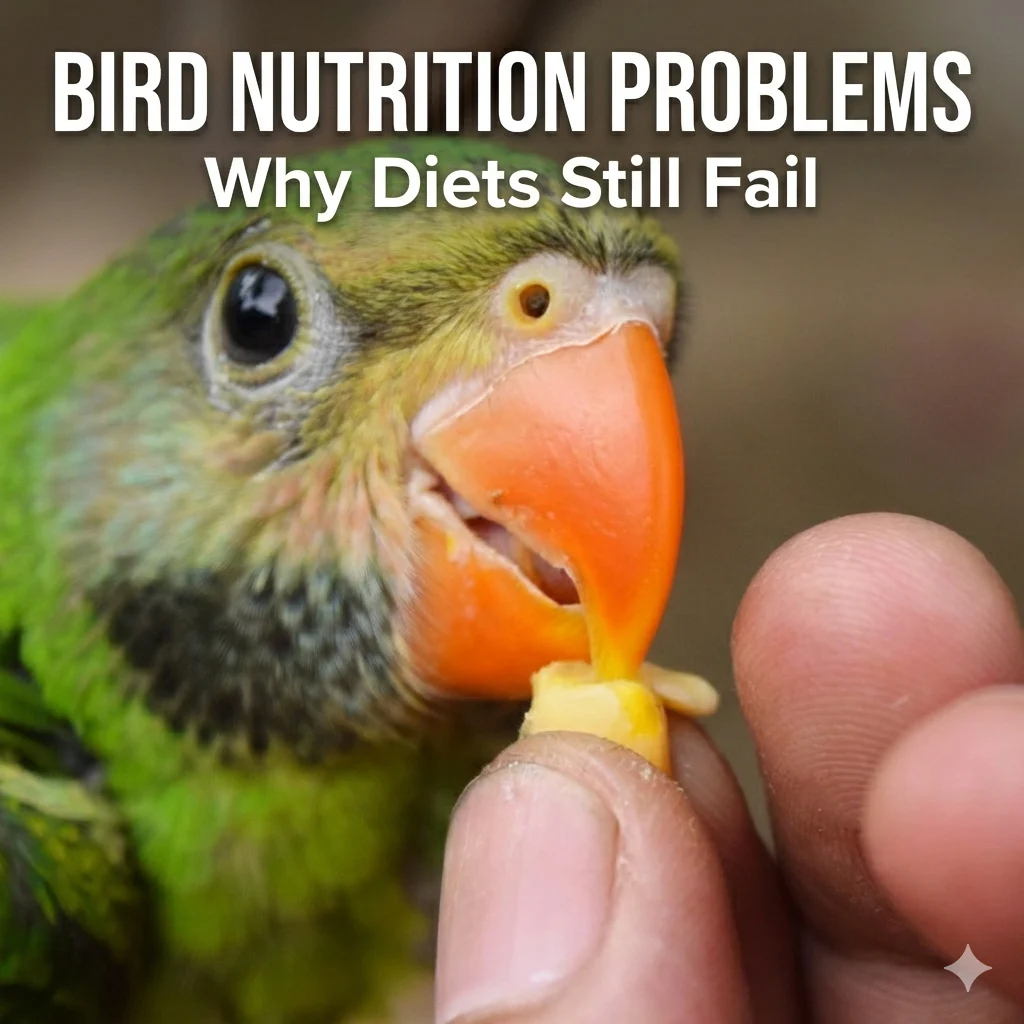
Even when companion parrots appear to be consuming a high-quality diet of pellets and fresh produce, many owners observe persistent signs of weakness, dull plumage, or behavioral changes, leading to the crucial question of why well-intended nutritional efforts often fall short. The core issue frequently lies not in the quantity or perceived quality of food offered, but in the intricate metabolic processes of nutrient intake, absorption, and activation. If any one of these three critical links fails, the bird’s overall health and vitality can be profoundly compromised, leading to a spectrum of conditions ranging from subtle neuromuscular weakness to severe systemic illness. This complex interplay underscores the necessity of a holistic approach to avian nutrition, moving beyond simply filling a food bowl to understanding the biochemical pathways that dictate a bird’s well-being.
The Evolving Landscape of Avian Nutrition: From Seeds to Science
For decades, the standard diet for companion parrots consisted primarily of seed mixes, a practice rooted in convenience and a rudimentary understanding of avian needs. However, as scientific research into psittacine nutrition advanced, it became increasingly evident that seed-heavy diets, while calorie-rich, were profoundly deficient in essential vitamins, minerals, and amino acids. This historical dietary paradigm contributed to a widespread prevalence of nutritional secondary hyperparathyroidism, hypovitaminosis A, and other metabolic diseases that were often misdiagnosed or attributed to aging. The paradigm shift towards formulated pellets, introduced in the late 20th century, marked a significant milestone, offering a more balanced nutritional foundation. Yet, even with these advancements, the journey to optimal avian health remains complex, demanding vigilance from owners and a deeper understanding of how nutrients are truly utilized within the bird’s body. The transition from a seed-dominant diet to a pellet-based one, a critical step in modern avian husbandry, itself presents a unique set of challenges, often met with significant resistance from birds accustomed to the familiar texture and fat content of seeds.
The Silent Scourge: Why Well-Fed Parrots Still Suffer
Despite access to what appears to be a balanced diet, many companion parrots exhibit signs of metabolic distress. This often stems from a breakdown in the crucial processes of nutrient absorption and activation.
Beyond the Bowl: The Critical Role of Nutrient Absorption
Calcium, a cornerstone of avian health, illustrates this challenge perfectly. While readily available in many formulated diets, its effective utilization hinges on proper absorption through the intestinal wall, a process directly dependent on adequate levels of vitamin D3. Without sufficient vitamin D3, dietary calcium cannot be efficiently transported into the bloodstream, irrespective of intake. This metabolic bottleneck often manifests initially as subtle neuromuscular dysfunction. Owners might observe a gradual decline in their bird’s grip strength, evidenced by slipping toes, difficulty maintaining balance on perches, or an overall hesitant posture. In more advanced stages, these issues can escalate to noticeable tremors or even seizures, highlighting the profound impact of calcium’s role in nerve signaling and muscle contraction. Similarly, flight capabilities, which demand precise neuromuscular control, are often among the first high-demand activities to be affected. Birds may exhibit shorter flights, increased hesitation before takeoff, or clumsy, unstable landings, a stark contrast to their natural agility.
Feather quality, often considered a direct indicator of a bird’s health, also suffers when nutrient absorption is compromised. Even parrots consuming high-quality pellets can develop dull, brittle, or poorly structured feathers during molt if underlying calcium metabolism or other mineral balances are inefficient. The structural integrity and vibrant coloration of feathers are direct reflections of metabolic stability, and any deficiency, even if seemingly minor, can impede the proper formation of keratin, leading to compromised plumage.
The Neophobia Challenge: Transitioning to a Balanced Diet
Parrots are inherently "neophobic," exhibiting a strong aversion to new or unfamiliar foods. This evolutionary trait, designed to protect them from consuming potentially toxic substances in the wild, poses a significant hurdle during dietary transitions in captivity. A "cold turkey" approach to switching from a seed-dominant diet to pellets can be incredibly dangerous, as many birds will opt for starvation rather than consume an unknown food item. This resistance is not a matter of defiance but a deep-seated instinct.
Successful dietary conversion is therefore a delicate process that prioritizes preventing weight loss while gradually introducing new food items. Avian experts, such as Diane Burroughs, LCSW, advocate for a slow, monitored transition, emphasizing that success is not merely about introducing new food but about "supplementing the bridge" to ensure critical nutrient intake during the learning phase. This often involves incorporating small amounts of pellets into the existing seed diet, progressively increasing the pellet-to-seed ratio over weeks or even months. Crucially, weekly weight monitoring using a gram scale is indispensable; a drop of more than 3-5% of body weight signals inadequate intake and necessitates a slower transition or a temporary increase in familiar food. The primary goal is caloric stability, with nutritional optimization following once the bird reliably accepts the new diet.
The Seed Trap: Unmasking Hidden Deficiencies
The preference for seeds, often described as a "seed addiction," is a learned behavior driven by their high fat content and satisfying texture, not by nutritional wisdom. While seeds provide readily available calories, they create predictable and dangerous nutrient gaps. Most commercial seed mixes are critically deficient in vital nutrients such as vitamin A, bioavailable calcium, and essential trace minerals like zinc, selenium, and iodine. For instance, the calcium-to-phosphorus ratio in seeds is often severely imbalanced, exacerbating calcium deficiency even further.
Over time, these chronic deficiencies lead to insidious health problems that are often mistaken for normal aging or unrelated illnesses. Vitamin A deficiency, or hypovitaminosis A, is particularly prevalent and detrimental. Vitamin A is crucial for maintaining the health and integrity of epithelial tissues lining the mouth, sinuses, respiratory tract, and reproductive organs. When deficient, these tissues become hyperkeratinized (thickened and dry), losing their protective function and becoming highly susceptible to bacterial, fungal, and viral infections. Clinical signs include choanal papillae blunting, nasal discharge, ocular discharge, sneezing, swelling around the eyes, and even chronic respiratory issues. These changes often develop subtly over months or years, making early detection challenging without a thorough understanding of their origins.
Environmental Factors: The Indoor Parrot’s Dilemma
Beyond diet, environmental factors play a critical role in nutrient activation, particularly for vitamin D3 and calcium metabolism.
The Glass Ceiling: Why Window Light Fails Indoor Birds
Many indoor parrots live in homes with abundant natural light from windows. However, a pervasive misconception is that this light provides adequate UVB exposure. Standard window glass, even clear panes, blocks almost 100% of beneficial UVB radiation. This means that an indoor bird, regardless of how much time it spends by a window, is effectively deprived of the necessary wavelengths to synthesize vitamin D3 in its skin. Vitamin D3 is not just a vitamin; it acts as a prohormone, crucial for activating the intestinal transport proteins that move calcium from the gut into the bloodstream. Without this activation, even a bird consuming a calcium-rich diet can become functionally calcium deficient, leading to the metabolic under-activation observed in many captive birds.
Seasonal Declines: Winter’s Impact on Parrot Health
The vast majority of companion parrot species originate from tropical or subtropical regions where daylight length and intensity remain relatively stable throughout the year. When these birds are kept in northern climates, the dramatic reduction in natural daylight hours and UVB intensity during winter months can have profound physiological consequences. Less natural UVB exposure directly translates to reduced vitamin D3 synthesis and, consequently, impaired calcium utilization. This is why owners often report a noticeable decline in their bird’s condition – weaker grip, reduced activity, or even an increase in respiratory issues – during late winter.
Furthermore, light exposure is a primary regulator of a bird’s circadian rhythm, hormone signaling, and metabolic stability. Significant shifts in photoperiod, as experienced in temperate winters, can disrupt these delicate balances, leading to irritability, lethargy, changes in appetite, and even delayed or poor-quality molts. This environmental mismatch between a bird’s evolutionary biology and its captive environment underscores the need for supplemental full-spectrum lighting, including a dedicated UVB source, particularly during the darker months.
Supplementation: A Targeted Approach, Not a Blanket Solution
While a balanced diet and appropriate environmental lighting form the foundation, targeted supplementation can play a crucial role when specific deficiencies or physiological demands arise. However, the effectiveness of supplements hinges on several factors.
Effectiveness and Delivery: Food vs. Water Supplements
The efficacy of bird vitamin supplements is determined by ingredient stability, consistent intake, and bioavailability. Water-soluble nutrients, commonly delivered via drinking water, are susceptible to degradation from light, heat, and microbial growth, particularly if water is left in the bowl for extended periods. Moreover, a bird’s water intake can fluctuate significantly day-to-day based on activity levels, diet (e.g., consumption of fresh, water-rich foods), and environmental temperature. This variability makes it challenging to ensure a stable, reliable dose, leading to unpredictable results.
Food-based delivery, by contrast, often improves dose reliability. When a supplement is mixed into a measurable portion of chop, soft food, or a small amount of pellet mash, owners can more accurately confirm consumption. This method minimizes degradation and allows for a more consistent daily intake, which is critical for nutrients like calcium, magnesium, biotin, or calming amino acids that require steady dosing for optimal effect. Leading avian nutritionists frequently advise food-based supplementation for these reasons.
When and How to Supplement: Expert Recommendations
Specific scenarios often warrant supplemental support. Indoor birds with limited or no access to appropriate UVB lighting almost invariably benefit from a vitamin D3 supplement to facilitate calcium absorption. Egg-laying hens experience significant calcium drain and require additional support to prevent thin-shelled eggs and egg-binding. Birds exhibiting signs of weak grip strength, seasonal neuromuscular decline, or those recovering from illness may also benefit.
A properly formulated combination of calcium, magnesium, and vitamin D3 is often recommended, as these nutrients work synergistically. Calcium alone is insufficient; D3 is needed for absorption, and magnesium plays a vital role in proper calcium regulation and neuromuscular signaling. However, over-supplementation can be as detrimental as deficiency, potentially leading to soft tissue mineralization, kidney strain, and metabolic imbalances. Therefore, supplementation should always be intentional, measured, and species-appropriate, ideally guided by an avian veterinarian who can assess the bird’s specific needs through bloodwork or clinical evaluation.
Recognizing the Red Flags: Deficiency vs. Disease
While the information presented here offers valuable insights into common nutritional problems, it is crucial to reiterate that these symptom lists are educational guides, not diagnostic tools. Many nutritional deficiencies can mimic other serious illnesses, and both insufficient and excessively high levels of certain nutrients can cause severe health complications.
Identifying Vitamin A and Calcium Imbalances
Signs of hypovitaminosis A often include blunted choanal papillae (small, fleshy projections in the roof of the mouth), white plaques or abscesses in the mouth, nasal discharge, conjunctivitis, and feather discoloration. In contrast, hypocalcemia can manifest as subtle tremors, muscle weakness, difficulty perching, unsteady gait, and in severe cases, seizures or paralysis. The insidious nature of these deficiencies means that signs often progress slowly, allowing for advanced damage before obvious symptoms appear.
The Urgency of Veterinary Intervention
Any suspicion of a nutritional deficiency, particularly if symptoms are progressing or severe, warrants immediate consultation with a qualified avian veterinarian. Conditions such as acute calcium crashes, severe infections secondary to vitamin A deficiency, or unrelated systemic illnesses can escalate rapidly. An avian veterinarian possesses the expertise and diagnostic tools, including blood calcium testing, radiographs, and specialized laboratory analyses, to accurately confirm a deficiency or toxicity. They can then recommend appropriate treatment protocols, which may include injectable vitamins, calcium therapy, or supportive care, none of which can be safely or effectively replicated at home. Organizations like the Association of Avian Veterinarians (AAV) consistently advocate for professional diagnosis and treatment to ensure the best possible outcomes for companion birds.
Pathways to Optimal Health: A Holistic Approach
Ultimately, correcting nutritional problems in parrots requires a multi-faceted approach that addresses the entire metabolic chain: intake, absorption, and activation.
Dietary Refinement and Environmental Enrichment
For vitamin A deficiency, consistent dietary correction is paramount. This involves providing a base of high-quality formulated pellets supplemented with vitamin A-rich vegetables such as carrots, sweet potatoes, dark leafy greens (kale, spinach), and bell peppers. Sporadic vegetable intake is insufficient to rebuild depleted tissue stores. For indoor birds, installing a safe, species-appropriate UVB bird light is non-negotiable. These specialized bulbs emit UVB wavelengths that mimic natural sunlight, enabling the skin to synthesize vitamin D3. Crucially, these bulbs degrade over time, even if they appear bright, and must be replaced according to the manufacturer’s schedule (typically every 6-12 months).
Integrated Nutritional Support
When supplemental support is deemed necessary, a balanced calcium, magnesium, and vitamin D3 combination is generally most effective. This ensures that calcium can be properly absorbed and utilized for its myriad functions, from nerve transmission to muscle contraction and bone maintenance. Dosing must be precise and tailored to the bird’s species, size, and physiological state, avoiding the risks associated with both under and over-supplementation.
The Avian Vet’s Role: Partnership in Care
The bottom line is that many parrots exhibit early warning signs long before a crisis. Owners who observe changes in weight, grip strength, appetite, or behavior should meticulously document these observations and promptly consult a qualified avian veterinarian. Guessing at dosing adjustments or attempting to self-diagnose can lead to further complications and delay critical professional intervention. Fixing the problem means correcting light exposure, improving diet structure, and supporting absorption pathways, not simply adding more powder to food.
When intake, absorption, and activation are holistically addressed and aligned, the improvements can be dramatic and transformative. Grip strength returns, feathers regain their structural integrity and vibrant sheen, energy levels stabilize, and overall vitality is restored. The enduring welfare of companion parrots relies heavily on an owner’s commitment to understanding and meticulously managing these fundamental nutritional and environmental requirements.

