


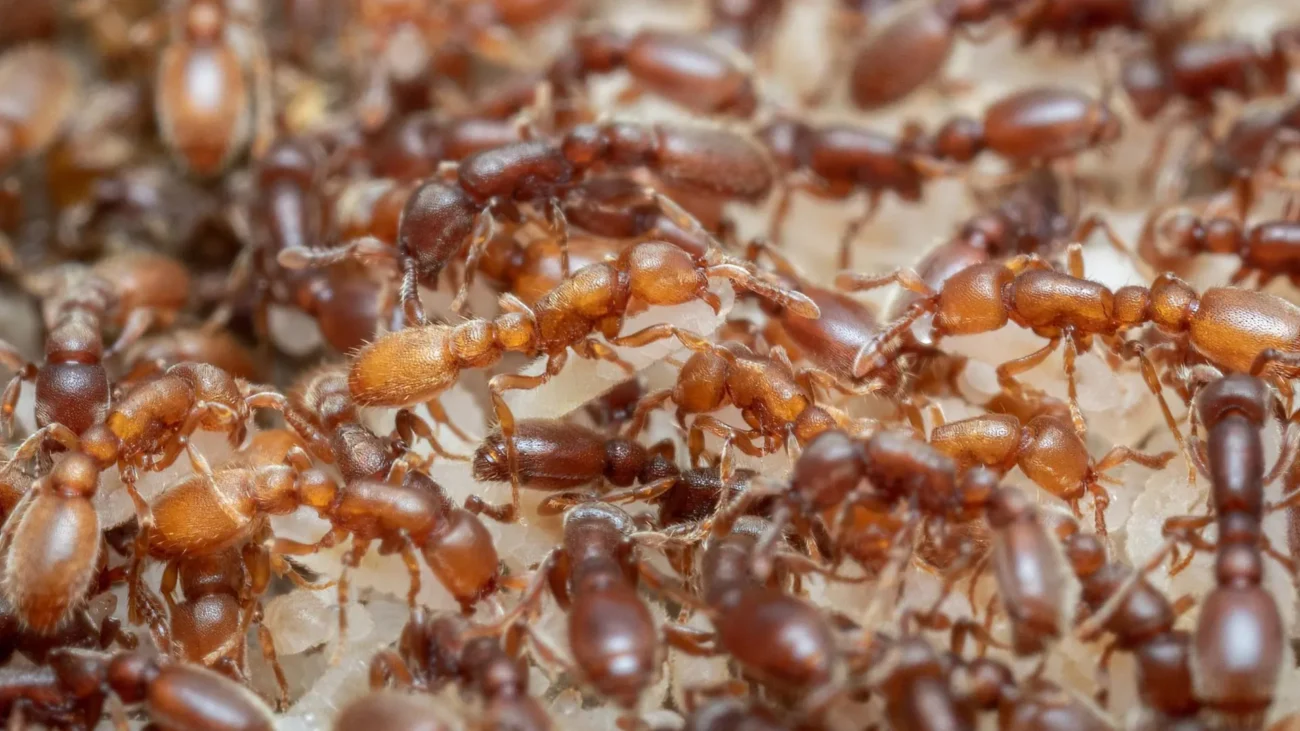
For much of evolutionary history, the dominant reproductive strategy across the animal kingdom was remarkably hands-off: organisms produced offspring and immediately abandoned them to fend for themselves against hostile environments. Yet, over millions of years, complex caregiving behaviors—ranging from avian nest maintenance and mammalian lactation to insect brood-tending—emerged independently across widely separated lineages. A landmark study recently published in the prestigious journal Nature offers a compelling explanation for this evolutionary leap, demonstrating that nature likely did not invent parental care from scratch. Instead, researchers discovered that evolution co-opted ancient neural pathways originally dedicated to hunger and feeding, repurposing them to foster social care and nurturing behavior.
The investigation, spearheaded by scientists at The Rockefeller University using clonal raider ants, bridges a long-standing gap in neuroscience and evolutionary biology. By leveraging the unique biological traits of these social insects, researchers have mapped how specific brain chemistry changes over an organism’s lifespan to govern the profound behavioral shift from self-preservation to offspring care. These findings not only illuminate the deep evolutionary roots of parenting in insects but also offer tantalizing clues about conserved neurological processes that may extend all the way to mammals, including humans.
Unraveling the Mystery of Parental Evolution
The origins of parental care have long puzzled evolutionary biologists. While the adaptive advantages of nurturing young—such as dramatically increased offspring survival rates—are clear, the intermediate evolutionary steps required to transition from abandonment to intensive caregiving have remained obscured. Traditional evolutionary theory posits that complex behaviors evolve through the slow accumulation of genetic mutations that build novel neural circuits. However, the sheer complexity of parenting behaviors suggested that a more efficient mechanism might be at play.
A leading hypothesis among neuroscientists has been the "reuse" or "exaptation" hypothesis, which posits that evolution frequently recycles existing biological machinery for novel functions. Previous studies in mammals hinted that neuropeptides—small signaling molecules used by neurons to communicate—might bridge the gap between metabolism and social behavior, specifically by shifting an animal’s focus from finding food for itself to providing nourishment for dependents.
Despite these theoretical frameworks, proving a direct causal link has historically proven exceptionally difficult. Standard laboratory model organisms presented significant hurdles. Fruit flies (Drosophila melanogaster) and roundworms (Caenorhabditis elegans), two of the most heavily relied-upon workhorses in neurogenetics, exhibit virtually no parental care behaviors. Conversely, mice provide extensive and sophisticated parental care, and scientists have successfully identified numerous neuropeptides involved in these interactions. However, the mammalian mouse brain is extraordinarily complex, containing roughly 100 million neurons, making it exceedingly difficult to isolate and manipulate specific neural circuits with absolute precision at the single-cell level.
This methodological bottleneck prompted researchers to look toward social insects, whose simpler nervous systems offer a powerful window into complex behavioral evolution.
The Clonal Raider Ant as a Neurological Model
To bypass the limitations of mammalian brains while retaining behavioral relevance, researchers turned to the clonal raider ant (Oerapheidole context adapted to Clonal raider ant / Cerapachys biroi). Ant brains contain a modest total of approximately 60ць,000 cells—a fraction of a mouse’s neurological architecture—allowing scientists to map and manipulate underlying neural circuitry with unprecedented granularity and speed.
Furthermore, ants and mammals share deep evolutionary roots in terms of certain brain signaling systems that regulate social interactions and caregiving. Clonal raider ants possess another critical advantage: a rigidly organized division of labor dictated strictly by age. Young ants almost exclusively remain inside the dark confines of the nest, where they nurse and tend to developing larvae. As they age, however, their behavioral profile undergoes a dramatic metamorphosis; they transition from nurses to foragers, leaving the safety of the nest to hunt and gather food for the colony.
This predictable age-dependent behavioral transition provided researchers with an ideal natural laboratory to investigate how brain chemistry shifts over an individual’s lifetime to reshape social roles, and whether those age-related shifts are chemically linked to metabolic states like hunger.
Methodological Breakthroughs: Tracking Interactions One Ant at a Time
To capture the subtle dynamics of ant caregiving, the research team engineered an advanced automated behavioral monitoring system. This technology placed individual ants in controlled environments alongside individual larvae, enabling the team to continuously record and quantify hundreds of distinct caregiving interactions over extended periods.
With the behavioral platform established, the scientists focused on the molecular underpinnings of the insects’ actions. They systematically identified, cataloged, and synthesized the complete set of neuropeptides produced within the ant brain—a comprehensive catalog known as the neuropeptidome.
"We annotated the neuropeptidome of this ant, the complete set of neuropeptides," explains the study’s co-lead researcher. "There were 70 that we could identify. It took a lot of hard work, but now we have a set of molecules that we can investigate in numerous ways."
Once these 70 chemical messengers were mapped, the team tested each one individually to observe whether its introduction or inhibition altered the ants’ propensity to care for larvae. By tracking where these promising molecules were produced, monitoring how their concentration fluctuated across the ant’s lifespan, and experimentally manipulating their activity levels, the researchers sought to construct a mechanistic model of behavioral control.
Two Neuropeptides Dictate the Balance Between Nursing and Foraging
The empirical results revealed that caregiving behavior in ants remains intimately and functionally tethered to the ancient neural systems that govern hunger and food consumption. Specifically, two key neuropeptidic signaling molecules were found to act as biochemical steering wheels, pushing an ant’s behavior in opposite directions depending on its age, physiological state, and nutritional needs.
The first molecule, Neuropeptide F (NPF), was shown to actively stimulate and encourage ants to tend to and care for larvae. The second molecule, Allatostatin A (AstA), exerted the exact opposite effect, suppressing nursing behavior and driving the ants to abandon the brood chamber, leave the nest, and initiate foraging expeditions.
Chemical analysis of the ants’ brains across different life stages revealed a striking correlation. Young nursing ants naturally exhibited high concentrations of NPF and low levels of AstA in critical brain regions associated with motivation and sensory processing. Older, foraging ants displayed the exact inverse chemical signature: depleted NPF and elevated AstA.
When the researchers experimentally manipulated the levels of these molecules—artificially boosting or suppressing NPF and AstA activity—the ants’ behavior shifted accordingly. This intervention proved that these neuropeptides were not merely passive biomarkers associated with age or social status, but were active causal agents directing whether an insect nurtured young or searched for sustenance.
The Metabolic Connection: How Hunger Drives Caregiving
Perhaps the most surprising and illuminating discovery of the study was the revelation that these exact same neuropeptide systems remain acutely responsive to metabolic stress, reacting to food deprivation in ways that directly promote parental behavior.
When the researchers subjected ants to periods of starvation, the insects’ internal chemistry underwent a dramatic transformation. Starved ants developed significantly elevated levels of NPF coupled with reduced levels of AstA. Consequently, food-deprived ants began to behave much like dedicated caregivers, increasing their interactions with larvae despite their own caloric deficit.
Conversely, once the starved ants were fed, the neurochemical balance rapidly reversed. Satiated ants experienced a drop in NPF and a surge in AstA, immediately dampening their interest in tending to the brood and turning their behavioral focus outward toward foraging.
"We learned that parental behaviors build on the neural circuitry for feeding, and that makes some sense," notes Daniel Kronauer, head of the Laboratory of Social Evolution and Behavior at Rockefeller University and senior author of the study. "Parental behavior is a lot about feeding—not just yourself, but your offspring."
This finding strongly reinforces the hypothesis that evolutionary pressures built complex parental care systems by co-opting and expanding upon pre-existing metabolic circuitry. Rather than engineering entirely new neural hardware from the ground up, evolution apparently widened the scope of feeding motivation, transforming a mechanism originally designed to secure self-preservation into one that compels an adult animal to nourish its progeny.
Broader Implications and Shared Evolutionary Blueprints
The discovery that insects and mammals share overlapping neuromodulatory mechanisms for caregiving opens exciting new avenues for comparative neuroscience. Mammals rely on remarkably similar neuropeptide families—including molecules functionally analogous to Neuropeptide F—to regulate maternal behavior, bonding, and infant-directed aggression.
By mapping the precise neural circuits influenced by NPF and AstA in ants, scientists hope to construct a universal comparative framework. This blueprint could ultimately reveal how chemical signals are translated into complex social behaviors across vastly divergent branches of the animal tree of life.
"It amazes me that similar parenting behaviors have evolved so many times in so many distinct animal lineages," remarks the research team. "Our paper suggests that the evolutionary routes to these sorts of behaviors are far more constrained than we may have naively imagined. That’s very exciting, because it may eventually lead to a blueprint of how these complex social behaviors evolve."
Experts unaffiliated with the study have praised its methodological rigor, noting that the integration of automated behavioral tracking with comprehensive neuropeptidomics sets a new benchmark for research into social insect neurobiology. By demonstrating that ancient metabolic pathways can be repurposed for social evolution, the findings provide a parsimonious and elegant explanation for convergent evolution in diverse species.
Unlocking the Secrets of Healthy Brain Aging
Beyond illuminating the evolutionary origins of parenting, the clonal raider ant model holds substantial promise for an entirely different field of biomedical science: the study of healthy brain aging.
Contemporary neuroscience research heavily prioritizes the investigation of pathological neurodegenerative conditions that manifest late in life, such as Alzheimer’s disease and other forms of dementia. Consequently, medical science possesses a relatively rudimentary understanding of the gradual, non-pathological neurochemical shifts that occur within a healthy brain across a normal lifespan.
Because age-dependent behavioral transitions are fundamental to the survival and social organization of ant colonies, these insects provide an accessible, natural framework for investigating how normal physiological aging alters brain chemistry and behavior over time. The researchers strongly suspect that the neuromodulatory shifts observed in ants—whereby internal chemical profiles dictate age-associated behavioral proclivities—represent a fundamental biological principle that operates across the animal kingdom, potentially including humans.
"There’s a lot of research and funding invested in studying late-stage neurodegenerative diseases, but we actually know very little about how the brain changes throughout the normal healthspan of an individual," Kronauer observes. "In ant colonies, these dynamics are central to the organization of the society. Our discovery provides a striking demonstration that neuromodulators can produce age-dependent changes in behavioral proclivities in ants, and I suspect that that’s the case in other animals as well, including in humans."
As the scientific community continues to map the intricate neural circuits downstream of NPF and AstA, this research stands as a testament to the frugality of evolutionary design. By demonstrating how nature repurposed the primitive drive to feed oneself into the selfless act of nurturing the next generation, the study deepens our understanding of both the origins of social care and the fundamental biology of the aging brain.

