


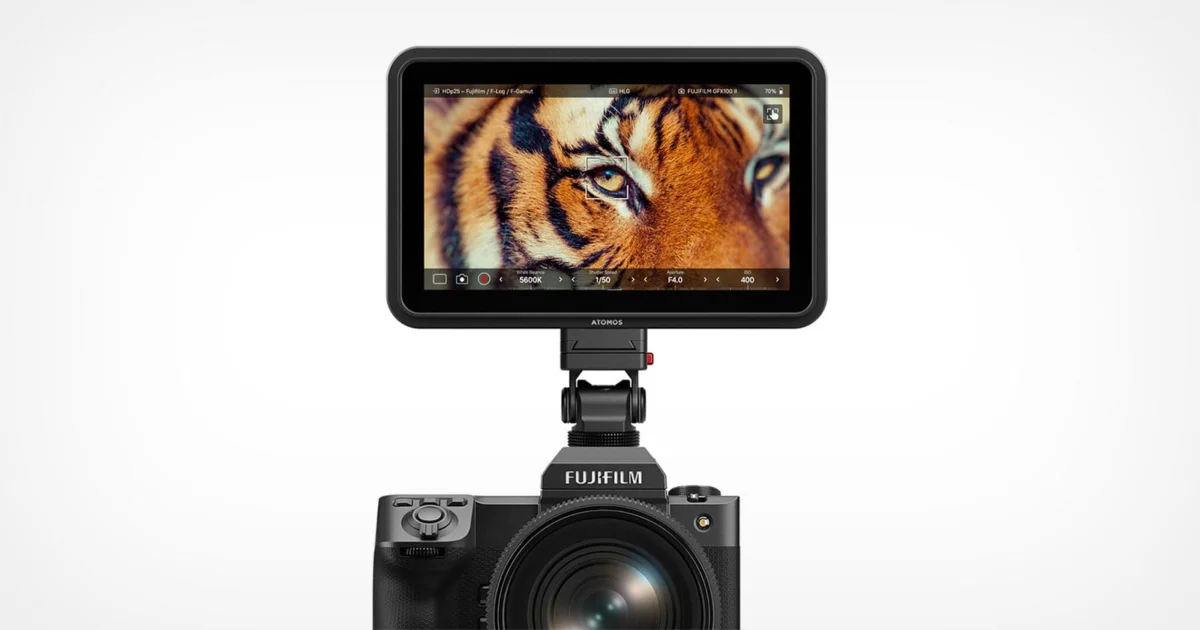
At the International Broadcasting Convention (IBC) 2026 in Amsterdam, Atomos has officially expanded its popular on-camera monitoring lineup with the launch of the Shinobi 7 II. This latest iteration of the 7-inch monitor series arrives as a significant hardware upgrade, specifically designed to address the challenges of field production in high-glare environments. By combining extreme brightness levels with advanced camera control integration, the Shinobi 7 II positions itself as a critical tool for filmmakers operating in diverse, unpredictable lighting conditions.
Technical Specifications and Performance Enhancements
The core appeal of the Shinobi 7 II lies in its display technology. The device boasts a peak brightness of 2,800 nits, a substantial improvement over the standard industry baseline for field monitors, which often struggle to exceed 1,000 to 1,500 nits. This brightness level is essential for HDR monitoring, allowing the device to maintain visibility even under direct, harsh sunlight. The 7-inch panel features a native resolution of 1920 x 1080 pixels and utilizes a responsive touchscreen interface.
Connectivity and control are central to the monitor’s utility. The unit accepts HDMI input up to 4Kp30, ensuring compatibility with a vast majority of mirrorless and cinema cameras. A notable inclusion is the integrated USB-C port, which serves three distinct functions: data transfer for camera control, power delivery for the monitor, and display calibration. This multifunctionality reduces cable clutter, a persistent issue for camera operators utilizing gimbal-mounted setups or compact rigs.

The monitor’s software suite is designed to replicate the workflow of high-end cinema production. It includes a comprehensive array of monitoring tools:
- Exposure and Focus: Waveform, histogram, RGB parade, and focus peaking.
- Compositional Aids: Anamorphic de-squeeze, custom frame guides, and zebra patterns.
- Color Management: Native support for Log, HLG, and PQ signals, with the capacity to monitor up to 10 stops of dynamic range.
- Real-time Preview: Integrated 3D LUT support, allowing cinematographers to apply color grades on-set to ensure the final output aligns with the creative vision before the recording begins.
The Evolution of the Shinobi Series
The release of the Shinobi 7 II follows a multi-year effort by Atomos to consolidate its market position by balancing affordability with professional-grade functionality. The original Shinobi line was introduced as a "monitor-only" alternative to the company’s signature Ninja series, which includes built-in recording capabilities. By removing the storage hardware, Atomos was able to offer a lighter, more cost-effective solution for users who already record internally to their cameras but require better viewing screens.
The chronology of this development is marked by the 2024 launch of the Shinobi II (the 5-inch model), which first introduced seamless camera control for a broader range of manufacturers. The Shinobi 7 II essentially scales the 2024 architecture to a larger form factor while upgrading the display panel. This progression reflects a clear trend in the industry toward standardizing touch-based control across the entire ecosystem, moving away from proprietary physical buttons toward unified screen-based interfaces.
Industry Compatibility and Camera Control
A major factor in the success of Atomos products is their ecosystem interoperability. The Shinobi 7 II is compatible with a wide range of camera brands, including Canon, Fujifilm, Nikon, Panasonic, and Sony. Through the USB-C interface, users can adjust primary camera settings—aperture, shutter speed, ISO, and white balance—directly from the monitor’s screen.

Furthermore, the "touch-to-focus" feature represents a significant bridge between amateur and professional workflows. By allowing the operator to define focus points via the screen, the monitor simplifies complex rack-focus shots for solo operators who may not have a dedicated focus puller. This functionality is supported by the extensive range of Log profiles built into the monitor’s firmware, including support for Arri Log, Canon CLog (1, 2, and 3), Fujifilm F-Log, JVC JLog, Nikon N-Log, Sony SLog (1, 2, and 3), Panasonic V-Log, and RED Log.
Official Commentary and Market Strategy
During the announcement at IBC 2026, Atomos CEO Peter Barber emphasized the importance of user-centric design in the evolving broadcast landscape. "The Shinobi range has become one of the industry’s most trusted on-camera monitors because it delivers the tools creators need without unnecessary complexity," Barber stated.
Barber highlighted that the shift toward a 7-inch display was driven by market feedback from outdoor shooters. "With the Shinobi 7 II, we are giving customers the option of a larger 7-inch display that is still incredibly lightweight, well-balanced, and comfortable to use on-camera. The 2,800-nit HDR display gives creators the confidence to make critical focus and exposure decisions outdoors, even in direct sunlight."
This strategic move appears intended to capture the "prosumer" and independent filmmaker demographic, who require the visibility of a larger screen but operate on budgets that do not permit the high-cost dedicated field monitors often seen on big-budget film sets.

Comparative Analysis: 5-Inch vs. 7-Inch Models
The Shinobi 7 II is positioned as a sibling to the 2024 Shinobi II, rather than a total replacement. While the 2024 model remains a viable option for those prioritizing portability (at 5 inches and 1,500 nits), the 7 II addresses the needs of users who prioritize screen real estate and brightness.
| Feature | Shinobi II (5-inch) | Shinobi 7 II (7-inch) |
|---|---|---|
| Display Size | 5-inch | 7-inch |
| Peak Brightness | 1,500 nits | 2,800 nits |
| Camera Control | Yes | Yes |
| HDMI Input | 4Kp30 | 4Kp30 |
| Primary Use | Compact mirrorless setups | Outdoor/Studio production |
| Launch Price | $349 | $499 |
The $150 price difference between the two models represents a premium for the increased display size and the significant leap in brightness, which is necessary for outdoor daytime operations.
Broader Implications for Filmmaking Workflows
The introduction of the Shinobi 7 II serves as a microcosm of current trends in digital cinematography: the democratization of high-end monitoring. A decade ago, a monitor with 2,800 nits of brightness would have been a specialized, high-cost item found only on high-end production carts. Today, this technology is accessible to individual content creators, freelancers, and small production houses.
The integration of camera control into external monitors is likely to continue growing, potentially leading to a future where the camera body is treated strictly as an imaging sensor, while all operational control is delegated to the external monitor. As manufacturers like Atomos continue to refine these interfaces, the boundary between "camera body" and "monitoring hardware" will likely become increasingly blurred.

Furthermore, the emphasis on HDR monitoring suggests that the industry is moving past the phase of simply "adopting" HDR and into a phase of "standardizing" it. With the ability to monitor 10 stops of dynamic range in real-time, the Shinobi 7 II allows for more aggressive creative choices during the shooting phase, reducing the time required for color correction and grading in post-production.
Pricing and Availability
Atomos has confirmed that the Shinobi 7 II will be available for purchase through authorized global retailers starting later this month. The retail price is set at $499. Prospective buyers are advised to check the official Atomos camera control compatibility list on the manufacturer’s website to ensure that their specific camera model is supported for touch-to-focus and remote setting adjustments, as firmware requirements vary by camera manufacturer.
The launch, timed to coincide with the IBC conference—the premier trade show for the broadcast and media industry—underscores Atomos’ intent to maintain its visibility among traditional broadcast professionals while continuing to cater to the modern, agile creator economy. As the industry looks toward the remainder of 2026, the Shinobi 7 II stands as a testament to the ongoing refinement of field production equipment in an increasingly competitive visual market.

