


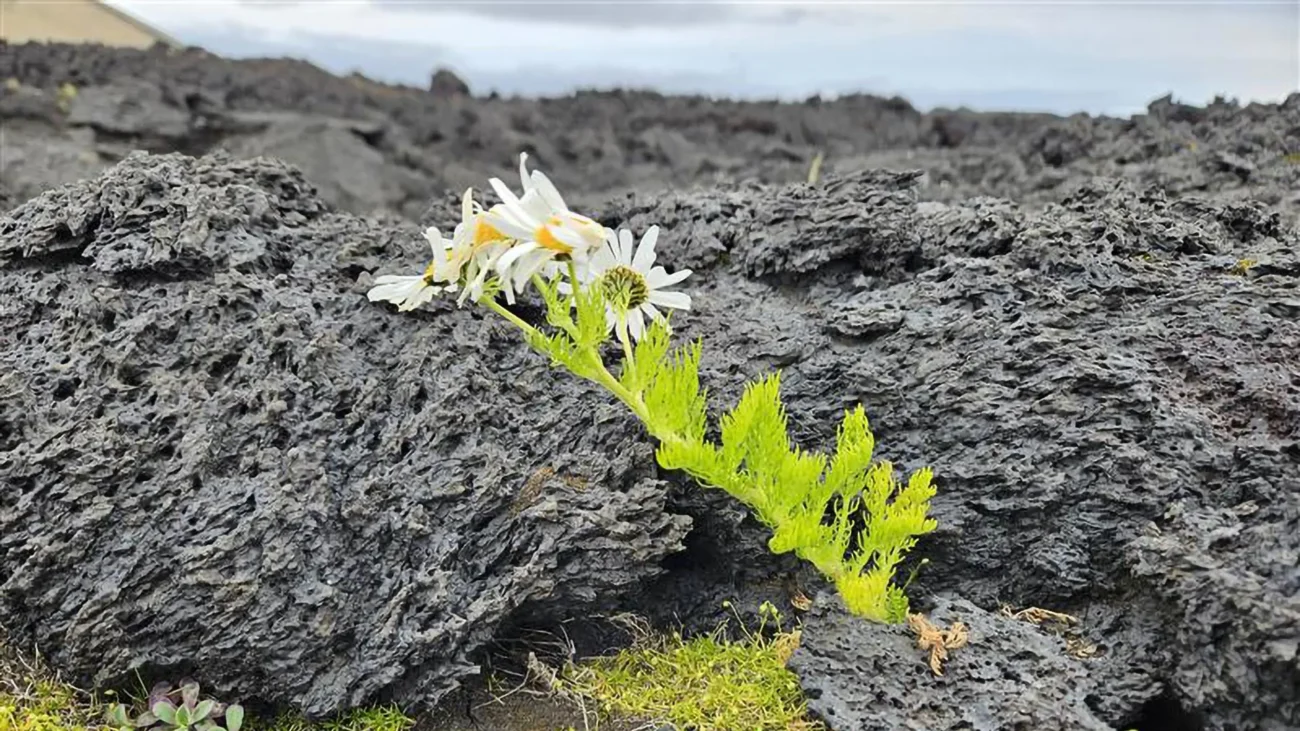
The volcanic island of Surtsey, born from the fiery depths of the North Atlantic Ocean in 1963, has long served as a unique and invaluable natural laboratory for scientists. Its emergence from the sea provided an unprecedented opportunity to observe the nascent stages of life’s colonization of virgin land, a process that has captivated ecologists for decades. For many years, a prevailing scientific assumption held that plants capable of reaching such remote and isolated environments primarily possessed specialized traits facilitating long-distance dispersal. These traits were thought to include features like brightly colored fruits designed to attract avian consumers, whose digestive tracts or droppings would then carry and disperse the seeds across vast oceanic expanses. Species exhibiting such adaptations were considered to possess a distinct advantage in the arduous task of colonizing new and isolated landscapes. This long-accepted paradigm, however, has recently been challenged by a groundbreaking study published in the esteemed journal Ecology Letters.
A Paradigm Shift in Island Colonization Theory
Researchers hailing from Iceland, Hungary, and Spain have meticulously examined the flora of Surtsey, uncovering evidence that dramatically upends this deeply entrenched theory. Their comprehensive analysis of the 78 vascular plant species identified on the island since 1965 has revealed a surprising reality: the vast majority of these species lack the very characteristics traditionally believed to be crucial for long-distance seed dispersal. Instead of relying on wind or specialized seed adaptations, the primary agents responsible for the initial colonization of Surtsey appear to be a diverse array of avian life, including gulls, geese, and shorebirds.
The study’s findings indicate that these birds acted as unwitting transporters, carrying seeds either within their digestive systems or embedded in their droppings. Through their migratory patterns and foraging activities, these avian travelers effectively transported a remarkable diversity of plant seeds to the nascent island, laying the foundational elements for its developing ecosystem. This revelation challenges the long-held notion that plants with robust seed dispersal mechanisms were the sole or even primary drivers of island colonization.
Birds: The Unforeseen Pioneers of Surtsey
Dr. Pawel Wasowicz, a lead author of the study from the Natural Science Institute of Iceland, expressed his astonishment at the findings. "Birds turned out to be the true pioneers of Surtsey," he stated. "They were carrying seeds of plants that, according to conventional theories, shouldn’t be able to get there." This observation directly contradicts the established understanding of how life establishes itself in new territories. Dr. Wasowicz further elaborated, "These results overturn traditional assumptions about plant colonization and show that to understand how life spreads and responds to environmental change, we must look at the interactions between plants and animals. Life does not move in isolation – it follows life." This statement underscores a fundamental shift in ecological thinking, emphasizing the interconnectedness of species and their co-evolutionary roles in shaping ecosystems.
The implications of this research extend far beyond the shores of Surtsey. Dr. Andy Green of the Estación Biológica de Doñana (CSIC, Spain), who co-led the extensive investigation, highlighted the broad applicability of their findings. "Animals – especially birds – are key drivers of plant dispersal and colonization," Dr. Green explained. He further noted the critical role birds will play in the face of escalating climate change. "As migration routes shift under a warming climate, birds will play a vital role in helping plants move and adapt to new environments." This foresight is particularly pertinent as global temperatures rise, altering habitats and forcing species to seek new viable locations. Birds, with their inherent mobility, could become indispensable conduits for plant survival and adaptation in a rapidly changing world.
Surtsey: A Living Laboratory for Evolutionary and Ecological Processes
The island of Surtsey, a UNESCO World Heritage site since 2008, continues to serve as an extraordinary living laboratory. Its very existence, a product of a volcanic eruption that began on November 14, 1963, and lasted until June 5, 1967, created a pristine environment devoid of pre-existing life. This geological event provided scientists with an unparalleled opportunity to witness the raw process of ecological succession and evolution in real-time. The island’s isolation, approximately 32 kilometers (20 miles) south of Iceland’s mainland and rising about 174 meters (571 feet) above sea level, ensures minimal human interference, further enhancing its scientific value.
The ongoing research on Surtsey allows scientists to directly observe the earliest stages of ecosystem development, from the arrival of the first microbes and fungi to the establishment of vascular plants and the subsequent colonization by insects and birds. The current study on plant dispersal agents is a testament to the long-term commitment of scientific inquiry on the island.
The authors of the Ecology Letters study advocate for a recalibration of future ecological models. They propose that these models should place a greater emphasis on the intricate biological interactions between species, rather than solely focusing on the physical attributes of seeds or the taxonomic classifications of plant species. This shift in perspective is crucial for developing more accurate predictions of ecosystem dynamics and for informing effective conservation strategies.
"Long-term research like that carried out on Surtsey is invaluable for biology," Dr. Wasowicz reiterated. "It allows us to witness ecological processes that would otherwise remain invisible – how life colonizes, evolves, and adapts. Such work is essential for understanding the future of ecosystems in a rapidly changing world." The persistence of scientific observation on Surtsey, spanning over five decades, has yielded a rich dataset that continues to refine our understanding of fundamental biological principles.
Chronology of Surtsey’s Emergence and Scientific Observation
- November 14, 1963: Submarine volcanic eruptions begin, leading to the formation of the island.
- 1963-1967: Continuous volcanic activity shapes the island’s initial topography.
- 1965: Scientific expeditions begin to document the island’s emerging flora and fauna.
- 1960s – Present: Ongoing scientific research focuses on various aspects of Surtsey’s ecosystem, including botany, zoology, geology, and microbiology.
- 2008: Surtsey is designated a UNESCO World Heritage site, recognizing its outstanding universal value as a natural laboratory.
- Recent Study (published in Ecology Letters): Analysis of plant species on Surtsey since 1965 reveals the significant role of birds in seed dispersal, challenging previous theories.
Supporting Data and Ecological Significance
The study’s findings are supported by detailed analyses of seed morphology and germination rates in conjunction with observations of avian species present on Surtsey. While traditional theories emphasized features like buoyant seeds for water dispersal or adhesive properties for animal fur, this research highlights the less obvious but highly effective method of internal transport by birds.
For instance, the presence of common European plants on Surtsey, some of which have seeds not typically associated with long-distance dispersal, strongly suggests avian involvement. Birds, particularly migratory species, can consume a wide variety of plant matter, including seeds, during their extensive journeys. The digestive process, while often degrading seeds, can also scarify them, enhancing germination rates upon excretion. Furthermore, droppings themselves can provide a nutrient-rich substrate conducive to seed germination.
The ecological significance of this finding is profound. It suggests that the connectivity provided by animal movement, particularly by mobile species like birds, plays a far more critical role in shaping biodiversity on islands and other isolated habitats than previously understood. This implies that maintaining healthy populations of migratory birds and their traditional routes is not just crucial for their own survival but also for the resilience and adaptability of plant communities worldwide.
Broader Implications for Conservation and Ecological Modeling
The implications of this research extend beyond purely academic interest, holding significant weight for conservation efforts and the development of more robust ecological models. As anthropogenic pressures and climate change continue to fragment habitats and alter environmental conditions, the ability of species to migrate and colonize new areas becomes paramount for their survival.
The study underscores that conservation strategies must increasingly account for the role of mobile species as "ecosystem engineers" or "landscape connectors." Protecting migratory corridors and ensuring the health of bird populations is not merely about preserving avian biodiversity but also about safeguarding the future genetic flow and adaptive potential of plant species.
Furthermore, the call for ecological models to incorporate direct biological interactions is a critical step forward. Traditional models have often relied on simplified assumptions about dispersal based on physical traits or broad environmental categories. By integrating the complex interplay between animals and plants, scientists can develop more predictive and accurate models that better reflect the dynamic nature of ecosystems. This is particularly important for understanding how ecosystems will respond to future environmental changes, such as altered temperature regimes, precipitation patterns, and habitat shifts.
The continued observation of Surtsey, a testament to sustained scientific endeavor, provides a crucial empirical basis for these evolving ecological theories. It demonstrates that our understanding of life’s fundamental processes is a work in progress, constantly being refined by new discoveries and innovative research approaches. The island, born from geological upheaval, continues to offer invaluable lessons about life’s enduring capacity to adapt, evolve, and, as this study reveals, to be carried across vast distances by the most unexpected of architects.

