


Migratory birds, with their extraordinary long-distance journeys, serve as vital connectors across landscapes, nations, and continents. These avian travelers navigate along established routes known as flyways, undertaking epic migrations between their breeding grounds and wintering areas. In a concerted effort to safeguard these crucial journeys, conservationists are working diligently along one of the world’s most significant migratory pathways: the African-Eurasian Flyway. This ambitious initiative, stretching from the Arctic to the southern reaches of Africa, is a collaborative endeavor, notably involving the Royal Society for the Protection of Birds (RSPB) in the UK, with crucial support from the Ecological Restoration Fund (ERF).
The African-Eurasian Flyway: A Global Lifeline
The African-Eurasian Flyway is a complex network of habitats that supports millions of birds annually. Its immense scale means that the health of ecosystems in one country can have profound implications for bird populations in others, highlighting the interconnectedness of global biodiversity. The RSPB, a long-standing partner in international conservation, has been at the forefront of efforts to protect this vital corridor, recognizing that the survival of many species hinges on the preservation of critical stopover and non-breeding sites along its extensive length. The ERF plays a pivotal role in funding these ambitious projects, underscoring a growing global commitment to ecological restoration and the protection of natural heritage.

Spotlight on Malawi: Protecting Chia Lagoon’s Avian Residents
Within this expansive flyway, the Wildlife and Environmental Society of Malawi (WESM), a BirdLife Partner, is undertaking critical work at Chia Lagoon. Blessings Chingagwe, Programme Manager at WESM, spearheads initiatives at this site, which serves as an essential non-breeding and stopover habitat for migratory waterbirds. Chia Lagoon, nestled in Malawi’s Nkhotakota district, has recently been designated as a Key Biodiversity Area (KBA), a testament to its ecological significance within a global network of sites crucial for biodiversity conservation.
The lagoon’s habitat is characterized by a shallow freshwater wetland ecosystem, featuring open water, expansive mudflats, seasonally inundated grasslands, and surrounding agricultural lands. The ebb and flow of seasonal water levels are instrumental in exposing nutrient-rich mudflats, which in turn support a thriving invertebrate population. This abundance of food is a lifeline for both migratory and resident waterbirds, providing essential sustenance during their arduous journeys and the non-breeding season.
Biodiversity Hotspot: The Avian Inhabitants of Chia Lagoon
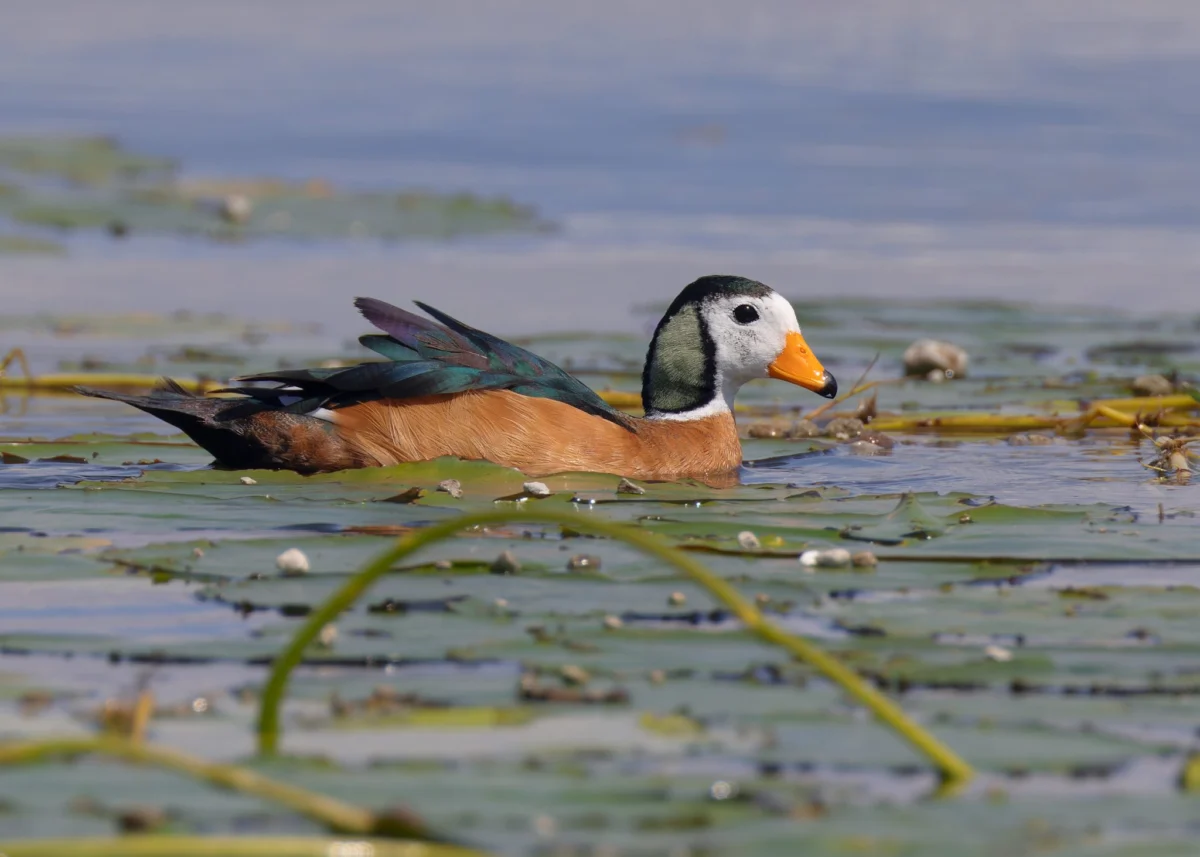
Chia Lagoon is a haven for a diverse array of bird species. Among its notable residents are the Black Heron (Egretta ardesiaca), the Ring-necked Dove (Streptopelia capicola), the Lesser Masked Weaver (Ploceus intermedius), the African Jacana (Actophilornis africanus), and the African Pygmy-goose (Nettapus auritus). These species, along with many others, rely on the lagoon for feeding, resting, and finding refuge. The lagoon’s ecological productivity and its strategic position along the African-Eurasian Flyway make it an indispensable link in the broader conservation network.

Comprehensive Conservation Efforts: Data-Driven Protection
Over the past three years, WESM, with funding from the Darwin Initiative, has undertaken the first comprehensive biodiversity and ecological assessment of Chia Lagoon. This marks a significant milestone, as it is the first unprotected wetland of its kind to undergo such an in-depth study. The initiative has yielded invaluable data, forming the bedrock for informed conservation strategies.
Regular waterbird monitoring has been conducted for over two years, revealing a notable increase in recorded species since 2023. The initial dataset comprised 68 records, a figure that has now surpassed 110, indicating the lagoon’s continued importance and potentially highlighting the success of conservation interventions in attracting and supporting bird populations. This data-driven approach allows WESM to track population trends, identify species of concern, and adapt conservation measures as needed.
Community Engagement: Empowering Local Stewardship
Recognizing that effective conservation is intrinsically linked to community involvement, WESM has implemented a robust engagement strategy. To combat uncontrolled hunting practices, which pose a significant threat to bird populations, 18 bird hunting clubs have been established. These clubs are tasked with ensuring accountability for hunting quotas, target species, and methods. Furthermore, 12 members from these clubs have received specialized training to conduct ongoing monitoring. These trained individuals also play a crucial role in raising awareness within local communities and among stakeholders about the ecological significance of Chia Lagoon and the importance of its birdlife.

This approach not only aims to regulate hunting but also to foster a sense of ownership and responsibility among the local population. By empowering communities to become active participants in conservation, WESM seeks to create a sustainable model for the long-term protection of the lagoon and its inhabitants.
Addressing Threats: Bauxite Mining and Invasive Species
The work at Chia Lagoon is not without its challenges. WESM has also been instrumental in mobilizing local leaders, the Friends of Mulanje Mountain group, and the wider community to voice their opposition to bauxite mining in the iconic Mulanje Mountain, a site of significant heritage value. The Mulhakho wa Alomwe, a cultural group that directly benefits from Mulanje Mountain, has strongly opposed any mining projects. The successful evacuation of miners from the mountain by local communities and the district council, even without direct NGO intervention, is seen as a testament to the growing power of local environmental activism, a movement bolstered by the support of the ERF project.
Another pressing challenge is the proliferation of Invasive Alien Species, specifically Azolla and Water Hyacinth, which threaten the integrity of the lagoon’s habitat. The removal of these invasive plants is complicated by the presence of crocodiles, posing a safety risk to human intervention. WESM is actively seeking feasible and safe methodologies to address this issue, highlighting the complex and often hazardous nature of ecological restoration in sensitive environments.

The Interconnectedness of Wetlands and Flyways
Blessings Chingagwe emphasizes the profound interconnectedness of wetlands and flyways. "Migratory birds connect continents," she states. "A bird feeding at Chia Lagoon may have travelled thousands of kilometres from Europe or Asia. If just one important wetland along the flyway is lost or degraded, it can affect populations across multiple countries. Protecting wetlands in Malawi is part of protecting a global ecological system." This statement underscores the critical importance of safeguarding even seemingly small or isolated wetlands, as they form integral components of much larger ecological networks.
A Symbolic Species: The Whiskered Tern
When asked to choose a species that best represents the flyway, Chingagwe selects the Whiskered Tern (Chlidonias hybrida). "With the tern being a long-range migratory bird, it is the best representation of global connectivity!" she explains. "Arriving in Malawi with the December rains, it reminds us that this small country, let alone a small wetland, is not isolated from the global community. If we are to protect the Whiskered Tern, we mean to protect every marsh, lake, river and wetland along its path. This is a perfect ambassador of the flyway because it knows no boundaries." The Whiskered Tern, with its extensive migratory range, serves as a powerful symbol of the global nature of conservation efforts and the shared responsibility to protect migratory species and their habitats.
Humorous Encounters and Optimistic Outlook
Chingagwe also shares a humorous anecdote from the field, recounting an instance where a local bird was referred to by the name "Jane Tambala." The mystery was solved when it was discovered that Jane Tambala was, in fact, a participant in their monitoring program, and the bird in question was the African Jacana. This lighthearted incident highlights the cultural nuances and local knowledge that are integral to conservation work.

Despite the challenges, Chingagwe expresses a strong sense of optimism. "What makes me optimistic is that we now have solid scientific data for the first time, along with growing community awareness," she states. "When local stakeholders understand the value of their wetland, conservation becomes a shared responsibility, and that gives real hope for long-term protection."
This growing awareness has led to significant policy developments. The District Council is now discussing the development of a comprehensive management plan for the wetland ecosystem, and the Department of National Parks and Wildlife, the focal point for the Convention on the Conservation of Migratory Species, has proposed considering Chia Lagoon as a Ramsar site. These developments signal a shift towards formal recognition and protection of this vital wetland.
Broader Implications and Future Prospects
The work at Chia Lagoon and along the African-Eurasian Flyway has far-reaching implications. The success of such conservation initiatives directly contributes to maintaining global biodiversity, supporting ecosystem services, and mitigating the impacts of climate change. By protecting migratory bird habitats, conservationists are not only safeguarding avian populations but also preserving the health of wetlands, which play a crucial role in water purification, flood control, and carbon sequestration.

The collaboration between organizations like WESM and the RSPB, supported by funders such as the ERF and the Darwin Initiative, demonstrates a commitment to tackling complex environmental challenges through international cooperation and evidence-based strategies. As the project progresses, the insights gained from the comprehensive assessment and ongoing monitoring at Chia Lagoon will undoubtedly inform conservation efforts at other critical sites along the flyway, reinforcing the interconnectedness of our planet’s natural systems and the urgent need for their protection. The future of countless migratory species depends on the continued dedication and collaborative spirit of conservationists and communities worldwide.

