


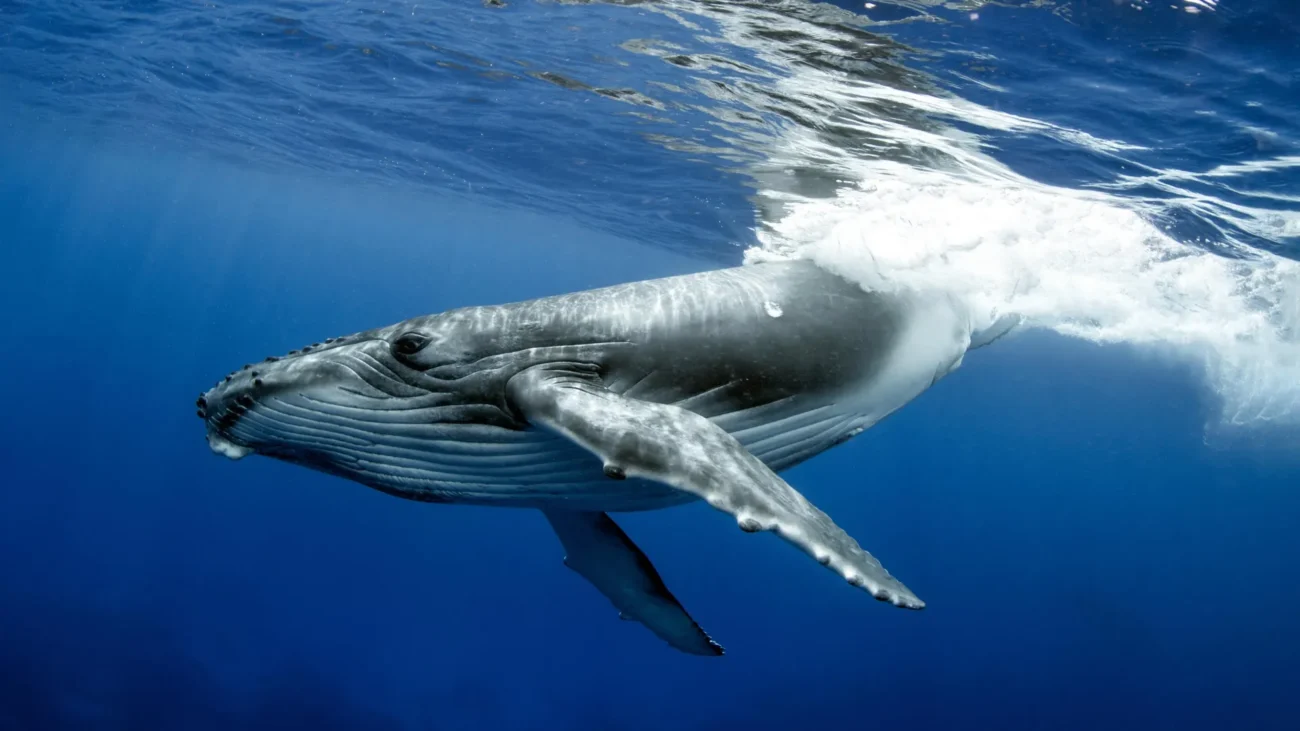
Scientists have documented an extraordinary feat of whale migration for the first time, confirming that humpback whales traveled between breeding grounds in eastern Australia and Brazil across more than 14,000 kilometers of open ocean. This groundbreaking discovery, made possible through decades of dedicated research and the invaluable contributions of citizen scientists, marks the greatest confirmed distance ever recorded between sightings of individual humpback whales anywhere in the world. The findings, published in the prestigious journal Royal Society Open Science, not only rewrite our understanding of humpback whale migratory capabilities but also underscore the critical importance of long-term ecological monitoring and international collaboration in unraveling the mysteries of marine life.
A Tale of Two Oceans: Unraveling the Record-Breaking Journeys
The remarkable journeys of two individual humpback whales have provided unprecedented insights into the migratory prowess of these majestic marine mammals. Researchers meticulously pieced together these epic voyages by comparing tens of thousands of photographs of humpback whale tails, known as flukes. Each whale possesses a unique pattern of scars, nicks, and pigmentation on its fluke, serving as an individual identifier akin to a human fingerprint. This meticulous cataloging of fluke identification has been the cornerstone of humpback whale research for decades, allowing scientists to track individuals and understand their movements across vast ocean expanses.
The first whale that captured researchers’ attention was first photographed in the waters of Hervey Bay, Queensland, Australia, a well-known humpback whale breeding ground, in 2007. It was subsequently sighted again in the same area in 2013. The astonishing revelation came when this same whale was later identified near São Paulo, Brazil, in 2019. The minimum straight-line distance between these two geographically disparate breeding grounds is approximately 14,200 kilometers (about 8,800 miles), a distance roughly equivalent to the journey between Sydney, Australia, and London, England. Scientists emphasize that this measured distance is a minimum, as the whale likely traveled even further given that only the initial and final points of its journey were recorded. The exact migratory route it traversed remains unknown, leaving room for further speculation and research into the specific ocean currents and feeding grounds it may have utilized.
Even more astounding was the journey of a second humpback whale. This individual was first documented in 2003 off Brazil’s Abrolhos Bank, a vital humpback whale nursery located along the coast of Bahia. At the time of its initial sighting, the whale was observed in a vibrant group of nine adult whales, suggesting a healthy and active breeding population in the region. Fast forward twenty-two years, and in September 2025, this same whale was spotted alone in Hervey Bay, Australia. The documented distance between these two sightings was an astonishing 15,100 kilometers (approximately 9,400 miles), thereby establishing a new world record for the longest known movement of an individual humpback whale. This extraordinary feat highlights the immense navigational capabilities and resilience of these creatures.
The Power of Persistent Observation: Decades of Data Collection
The foundation of this groundbreaking discovery lies in the diligent collection of high-quality fluke photographs over nearly four decades. The study incorporated an impressive dataset of 19,283 such images, gathered between 1984 and 2025. These invaluable photographs originated from both professional researchers actively engaged in marine mammal studies and, crucially, from citizen scientists participating through the global whale tracking platform, Happywhale. This collaborative approach, combining rigorous scientific methodology with widespread public engagement, has proven to be exceptionally effective in advancing our understanding of whale populations and their migratory behaviors.
The process of identifying these record-breaking journeys involved sophisticated technology and expert human oversight. Scientists employed automated image recognition software to sift through the vast archive of photographs, efficiently comparing fluke patterns to identify potential matches. Each potential match was then meticulously reviewed and manually verified by experienced researchers to ensure the accuracy and reliability of the findings. This dual approach, leveraging the speed of algorithms and the discerning eye of human experts, is crucial for maintaining the integrity of such extensive datasets.
Dr. Cristina Castro, lead researcher from the Pacific Whale Foundation, emphasized the profound significance of this collaborative effort. "This kind of research highlights the value of citizen science," she stated. "Every photo contributes to our understanding of whale biology and, in this case, helped uncover one of the most extreme movements ever recorded." This sentiment underscores the idea that every contribution, no matter how small it may seem, can play a pivotal role in scientific discovery.
Rarity and Significance: The Importance of Inter-Population Exchange
Despite the astonishing distances covered by these two individuals, researchers stress that such extensive migrations between the eastern Australian and Brazilian breeding grounds appear to be exceptionally rare. Across the more than four decades of data analyzed, encompassing nearly 20,000 identified humpback whales, only these two individuals were found to have made the epic journey between these specific breeding regions. This represents a mere 0.01 percent of the whales included in the records, highlighting the exceptional nature of these movements.
However, scientists are quick to point out that even these infrequent exchanges hold significant implications for the long-term health and viability of whale populations. Stephanie Stack, a PhD Candidate at Griffith University and co-author of the study, explained, "Despite their rarity, these exchanges matter for the long-term health of whale populations. Occasional individuals moving between distant breeding grounds can help maintain genetic diversity across populations and may even carry new song styles from one region to another."
The cultural transmission of songs among humpback whales is a well-documented phenomenon. These complex vocalizations, often referred to as whale songs, are known to spread and evolve across ocean basins, much like musical trends within human societies. The migration of individuals between distant populations could therefore facilitate the dissemination of new song patterns, enriching the cultural repertoire of whale populations across vast geographic areas.
Furthermore, these findings provide strong support for the "Southern Ocean Exchange" hypothesis. This theory posits that humpback whales from various distinct breeding populations may converge in shared feeding areas within the Antarctic Ocean. Following their foraging activities, some of these whales may then opt to return to their natal grounds via different migratory routes. In some instances, this deviation could lead them to settle in entirely new breeding regions, effectively expanding the geographic range and connectivity of breeding populations.
The Shadow of Climate Change: Shifting Migratory Patterns
Looking ahead, researchers suggest that the escalating impacts of climate change could potentially lead to an increase in the frequency of these rare inter-population crossings. Alterations in Antarctic sea ice extent and significant changes in the distribution of Antarctic krill, the primary food source for humpback whales in these feeding grounds, may be actively reshaping whale migration patterns over time. As environmental conditions shift, whales may be compelled to explore new foraging areas or adapt their migratory routes, potentially leading to increased interactions between previously isolated populations.
The study, meticulously detailing these findings, is titled "First evidence of bidirectional exchange between distant humpback whale breeding populations in eastern Australia and Brazil." Its publication in Royal Society Open Science signifies a major contribution to marine biology and conservation science, offering a tangible example of how long-term research, international collaboration, and public participation can unlock profound secrets of the natural world. The implications of this discovery extend beyond mere migratory distances, touching upon the genetic health, cultural evolution, and ecological resilience of humpback whale populations in a rapidly changing planet.
Background and Context: Understanding Humpback Whale Migrations
Humpback whales (Megaptera novaeangliae) are renowned for undertaking some of the longest migrations of any mammal on Earth. Typically, they breed in warmer, tropical or subtropical waters during the winter months and then migrate to colder, polar regions to feed during the summer. This annual cycle is driven by the need for the energy-rich waters of the poles to build up blubber reserves, essential for survival during the breeding season when they do not feed.
Eastern Australia has long been recognized as a critical breeding ground for a distinct population of humpback whales. Each year, thousands of these whales travel from their Antarctic feeding grounds to the sheltered bays and coastlines of Queensland to mate, give birth, and nurse their young. Similarly, the waters off Brazil, particularly the Abrolhos Bank, serve as a crucial nursery for humpback whales that originate from feeding grounds in the Southern Ocean.
Historically, the understanding of these migratory pathways was largely based on general observations and population genetics. However, the advent of photo-identification techniques, and more recently, advancements in satellite tagging and acoustic monitoring, have allowed for increasingly precise tracking of individual whales. The current study represents a significant leap forward, demonstrating that the migratory connections between these two specific, geographically distant breeding populations are not only possible but have now been definitively documented.
The Role of Technology and Collaboration: A Modern Scientific Endeavor
The success of this research hinges on a combination of technological innovation and unwavering dedication. The automated image recognition software used in the study represents a significant advancement in processing large volumes of photographic data. These algorithms are trained on vast datasets of fluke images, enabling them to identify subtle patterns and similarities that might be missed by the human eye, especially when dealing with tens of thousands of images.
The platform Happywhale.com has become a vital hub for global whale identification. It allows researchers and the public alike to upload fluke photographs, which are then cataloged and analyzed. This democratization of data collection has been instrumental in building comprehensive databases that span multiple oceans and decades. The integration of citizen science into formal scientific research not only expands the reach of data collection but also fosters a greater sense of stewardship and connection to marine conservation efforts.
The international collaboration required for this study is also noteworthy. Researchers from Australia and Brazil, along with scientists and citizen scientists from numerous other countries contributing to the Happywhale database, had to work together to connect these long-distance movements. This highlights the increasingly interconnected nature of scientific research, particularly in addressing global environmental challenges.
Implications for Conservation and Future Research
The confirmation of these extreme migrations carries significant implications for the conservation of humpback whale populations. Understanding the full extent of their migratory connectivity is crucial for effective management and protection strategies. If individuals from one breeding population can contribute to the gene pool or cultural traditions of another, then the health of one population can have cascading effects on others. This underscores the need for coordinated conservation efforts across international boundaries.
The findings also raise important questions about the navigational cues and physiological capabilities that enable such arduous journeys. What drives a whale to undertake such a massive migration, and what are the energetic costs involved? Further research employing advanced tagging technologies could shed light on the specific routes taken, the oceanographic features utilized, and the physiological adaptations that allow these animals to survive and thrive across such vast distances.
Moreover, the potential impact of climate change on these migratory patterns warrants continued and intensified monitoring. As oceanographic conditions evolve, it will be essential to track how humpback whale populations adapt. The "Southern Ocean Exchange" hypothesis, if further substantiated, could explain how whale populations may maintain resilience in the face of environmental change by facilitating gene flow and adaptation through inter-population movements.
In conclusion, the documented record-breaking migration of humpback whales between Australia and Brazil is a testament to the enduring mysteries of the ocean and the remarkable resilience of its inhabitants. It is a story of scientific dedication, technological advancement, and the power of collective action, reminding us of the vast, interconnected world that exists beneath the waves and the urgent need to protect it for generations to come.

