


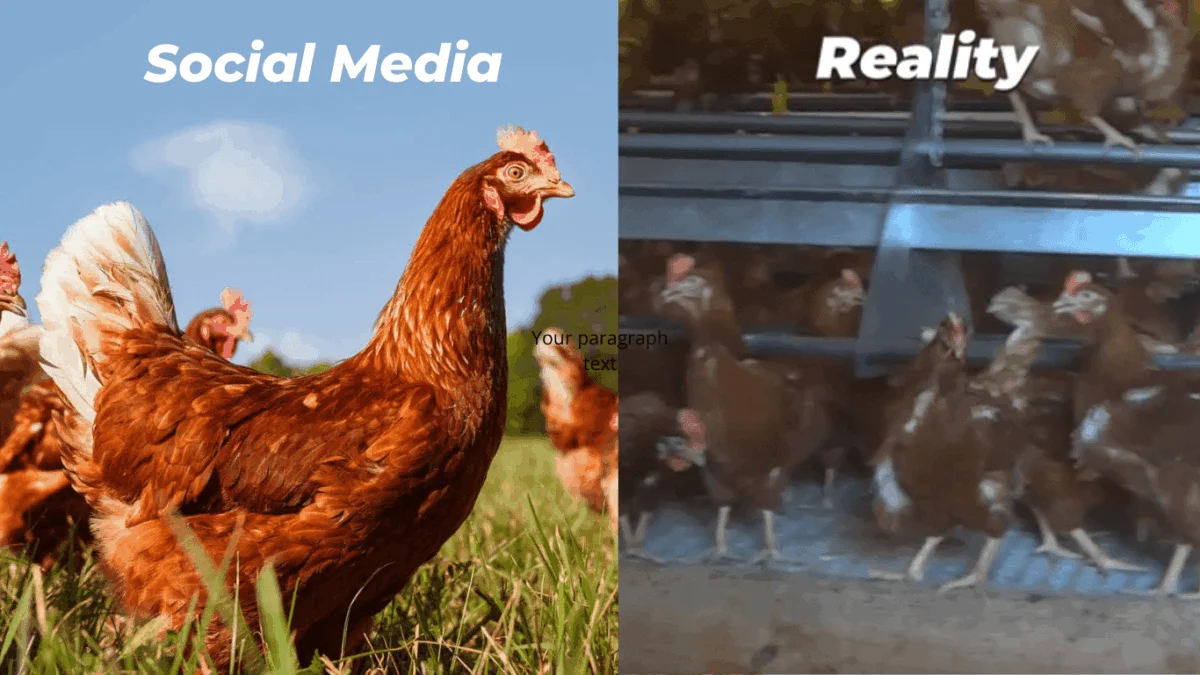
The collapse of a large-scale poultry structure at Triple C Infinity Eggs in Winfield, Kansas, has ignited a significant controversy regarding the transparency of animal welfare standards within the premium egg industry. The facility, a confirmed supplier for the publicly traded company Vital Farms, reportedly suffered a structural failure that trapped more than 20,000 birds within the wreckage. The incident has drawn intense scrutiny from animal rights organizations and industry analysts, who suggest that the conditions at the site contradict the "pasture-raised" and "humane" marketing used to justify the premium pricing of Vital Farms’ products.
Vital Farms, which has built its multi-million dollar brand on the promise of "happy hens" and ethical farming practices, now faces allegations of negligence and "humane-washing." While the company markets its eggs as coming from birds that spend their days outdoors on lush pastures, reports from the scene in Winfield describe a starkly different environment: crowded, poorly maintained sheds and birds subjected to standard industrial practices such as debeaking.
The Winfield Incident: A Chronology of Events
The crisis began over the weekend of June 13–14, 2026, when a primary housing structure at the Triple C Infinity Eggs facility gave way. According to local reports and whistleblower testimony provided to People for the Ethical Treatment of Animals (PETA), the collapse was not a result of an extreme weather event but was allegedly due to poor construction and maintenance of the facility.
Upon the collapse, approximately 20,000 birds were immediately trapped under heavy debris. The situation was further exacerbated when internal water lines burst during the structural failure, leading to reports of birds drowning in the wreckage. On-site witnesses claimed that the remaining birds in unaffected parts of the operation—totaling some 45,000 chickens—were left without adequate food or water as the farm’s infrastructure failed.
By Tuesday, June 16, PETA representatives arrived at the Winfield site to assess the damage and attempt rescues. While the organization managed to remove 36 birds from the site, they reported that the owner of the facility was moving toward a mass-culling strategy to manage the disaster. The owner reportedly claimed that Vital Farms had suggested gassing the remaining hens, a standard but controversial industry method for handling large-scale bird casualties or "spent" flocks.
Discrepancies in Welfare Standards and Marketing
The core of the controversy lies in the disconnect between Vital Farms’ branding and the observed reality at Triple C Infinity Eggs. Vital Farms is a leader in the "pasture-raised" segment, a label that suggests birds have significant access to the outdoors—specifically, 108 square feet per hen, according to Certified Humane standards.
However, investigators at the Winfield site reported that the birds appeared to be confined to large, industrial sheds with little evidence of meaningful pasture access. Furthermore, the birds rescued from the site were found to be "debeaked"—a process formally known as beak trimming. In this procedure, a portion of the hen’s sensitive beak is removed using an infrared laser or a hot blade to prevent feather pecking and cannibalism, behaviors that typically arise from the stress of confinement. While Vital Farms acknowledges that some of its suppliers use infrared beak trimming, many consumers who pay a premium for "humane" eggs are often unaware that such mutilations are part of the production process.
The conditions described by rescuers—birds huddled in dark, filthy sheds rather than roaming on grass—raise questions about the frequency and quality of audits conducted by both Vital Farms and third-party certification bodies.
The Economics of Egg Production and "Retirement"
To understand the scale of the issue, one must look at the biological and economic pressures of the modern egg industry. A wild jungle fowl, the ancestor of the domestic chicken, naturally lays about 10 to 15 eggs per year. In contrast, hens utilized by commercial operations like those supplying Vital Farms have been selectively bred to lay between 320 and 350 eggs annually.
This intense level of production takes a massive physiological toll on the birds, often leading to osteoporosis and reproductive tract infections. When a hen’s production begins to decline—usually around 18 to 24 months of age—she is considered "spent." In its corporate communications, Vital Farms refers to the removal of these birds as "retirement."
The company’s website states, "We consider the end of our hens’ lives as sacred as the rest of their time with us." However, the methods of "retirement" are rarely as serene as the terminology suggests. According to industry standards, "acceptable methods of euthanasia" frequently involve carbon dioxide (CO2) gassing.
Scientific studies on avian welfare indicate that CO2 gassing is far from painless. Birds possess chemoreceptors that are highly sensitive to carbon dioxide; exposure to high concentrations causes "air hunger," respiratory distress, and a sensation of burning in the lungs and nasal passages before the animal loses consciousness. The alternative "retirement" path involves selling the birds to rendering plants or pet food companies, where they are processed for low-grade meat.
Corporate Accountability and Shareholder Pressure
The incident in Kansas has provided fresh ammunition for activists who have long challenged Vital Farms’ business model. During a recent shareholder meeting, PETA representatives questioned the company’s leadership on when they would cease using terms like "humane" and "happy" in their marketing.
The shareholder pitch argued that the company’s reliance on industrial-scale suppliers like Triple C Infinity Eggs makes the promise of individual animal care impossible to keep. The collapse of the shed is being cited as physical evidence of a systemic failure to prioritize animal safety over production volume.
Vital Farms has previously defended its practices, noting that they provide a significantly better life for hens than the "caged" or "cage-free" (but indoor) environments that dominate 90% of the U.S. market. They argue that by scaling pasture-raised eggs, they are moving the entire industry toward a more ethical baseline. However, critics argue that as the company has grown into a public entity (NASDAQ: VITL), the pressure to maintain profit margins and consistent supply has led to a reliance on "factory-farm-lite" facilities that mimic the very systems Vital Farms claims to replace.
Broader Implications for the "Ethical Consumer" Market
The situation at the Kansas farm highlights a growing problem in the food industry: the "labeling gap." As consumers become more conscious of animal welfare, food producers have adopted a variety of labels—"natural," "free-range," "humanely raised," and "pasture-raised"—that often lack rigorous, government-enforced definitions.
In the United States, the USDA’s definition of "free-range" only requires that birds have "access" to the outdoors, with no specification on the size or quality of that outdoor space. "Pasture-raised" is not a legally defined term by the USDA, meaning companies must rely on third-party certifications, such as Certified Humane or Global Animal Partnership (GAP). When these third-party systems fail to prevent incidents like the Winfield collapse, consumer trust in the entire "ethical" food sector is jeopardized.
Industry analysts suggest that this incident could lead to:
- Increased Regulatory Scrutiny: Calls for the Federal Trade Commission (FTC) to investigate "humane-washing" in food advertising.
- Stricter Auditing Protocols: Pressure on premium brands to implement real-time video monitoring or more frequent, unannounced inspections of supplier facilities.
- Market Shifts: A potential rise in plant-based egg alternatives as consumers seek to avoid the ethical complexities of the poultry industry altogether.
Conclusion
The collapse at Triple C Infinity Eggs is more than a localized industrial accident; it is a flashpoint in the ongoing debate over the industrialization of "ethical" farming. For the 20,000 birds caught in the wreckage in Winfield, the promise of a "sacred" life and a "happy" existence ended in a mechanical and structural failure.
As Vital Farms manages the fallout from this event, the company faces a critical turning point. It must decide whether to tighten its oversight and potentially raise prices further to ensure true pasture-based conditions, or continue with a high-volume supplier model that critics say is "humane" in name only. For the consumer, the incident serves as a reminder that behind every comforting label is a complex, industrial supply chain where the reality on the ground may not always match the image on the carton.

