


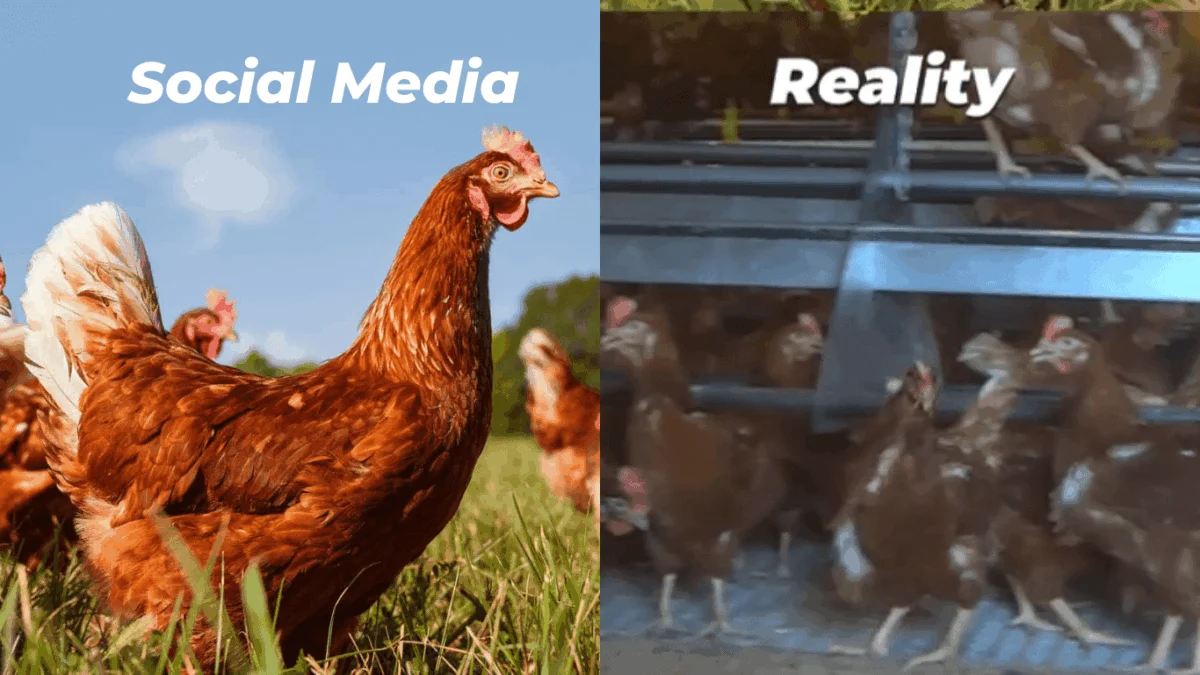
The collapse of a large-scale poultry structure at a Kansas supplier for Vital Farms has reignited a national debate regarding the transparency of "humane" and "pasture-raised" labeling in the commercial egg industry. On June 19, 2026, reports emerged from Winfield, Kansas, detailing a catastrophic structural failure at Triple C Infinity Eggs, a facility confirmed to be a contract supplier for Vital Farms. The incident, which allegedly resulted in the deaths of thousands of birds and left thousands more in precarious conditions, has drawn intense scrutiny from animal welfare advocates, shareholders, and industry analysts.
According to whistleblower reports and subsequent on-site documentation by People for the Ethical Treatment of Animals (PETA), the collapse occurred during the weekend of June 14-15. The facility, which reportedly housed approximately 45,000 hens, suffered a major failure when one of its primary sheds gave way. Initial estimates suggest that over 10,000 birds were trapped within the wreckage. The situation was further exacerbated by the rupture of internal water lines, which reportedly led to the drowning of birds unable to escape the debris.
The Winfield Incident: A Chronology of Failure
The timeline of the incident began with a whistleblower alert directed toward PETA, alleging that the sheds at Triple C Infinity Eggs were poorly constructed and lacked the structural integrity required for safe operation. By the time investigators arrived at the scene on Tuesday, June 23, the scale of the damage was evident. While 36 birds were successfully extracted by rescue teams, the majority of the flock remained within the damaged infrastructure.
Eyewitness accounts from the site described a scene of industrial distress. Despite Vital Farms’ prominent marketing of "pasture-raised" environments, investigators reported that the birds were housed in high-density sheds. The noise levels within the facility were recorded at 80 decibels—equivalent to the sound of a garbage disposal or loud factory machinery—raising questions about the physiological stress endured by the animals even prior to the structural collapse.
Furthermore, the response to the crisis has sparked significant controversy. The owner of Triple C Infinity Eggs reportedly indicated that Vital Farms suggested "gassing" the remaining hens as a means of resolving the situation. This method, often utilized by the industrial egg sector to manage non-profitable or "spent" flocks, stands in stark contrast to the "sacred" end-of-life care promised in the company’s promotional materials.
Marketing vs. Industrial Reality: The "Humane-Washing" Allegation
Vital Farms has built a multi-million dollar brand around the concept of "conscious capitalism." The company’s packaging and marketing campaigns frequently feature imagery of hens roaming open pastures, accompanied by slogans such as "happy hens" and "certified humane." However, the Kansas incident has provided critics with evidence to argue that these labels may be more aspirational than actual.
Under the "Certified Humane" and "Pasture-Raised" standards promoted by Vital Farms, each hen is supposed to have access to at least 108 square feet of outdoor space. However, the discovery of 45,000 birds in a commercial operation in Winfield suggests a reliance on high-density housing that mirrors traditional factory farming methods more closely than the "boutique farm" image presented to consumers.
Industry analysts note that "humane-washing"—the practice of using misleading marketing to portray animal products as more ethical than they are—is a growing concern in the ESG (Environmental, Social, and Governance) investment sector. For a publicly traded company like Vital Farms (NASDAQ: VITL), these discrepancies carry not only reputational risks but also potential legal and financial liabilities.
The Economics of "Retirement" in the Egg Industry
A central point of contention in the wake of the Kansas collapse is the fate of "retired" hens. In natural conditions, a hen might lay 10 to 15 eggs per year. In contrast, modern commercial layers have been selectively bred to produce between 320 and 350 eggs annually. This biological intensity takes a significant toll on the animal’s body, often leading to osteoporosis, reproductive tract infections, and "burnout" after approximately 18 to 24 months.
Vital Farms refers to the removal of these birds as "retirement." According to company literature, when a flock reaches the end of its laying cycle, it is "retired" through "acceptable methods of euthanasia" or sold to pet food manufacturers. The Kansas incident suggests that in times of crisis, the "acceptable method" favored is mass depopulation via carbon dioxide (CO2) gassing.
The use of CO2 is a standard industry practice, but it is heavily criticized by veterinary behaviorists. The process involves displacing oxygen with CO2, which induces "air hunger"—a sensation of respiratory distress and panic—before the animal loses consciousness. For a company that claims to view the end of a hen’s life as "sacred," the recommendation to gas thousands of birds following a preventable building collapse has been characterized by advocates as a betrayal of consumer trust.
Shareholder Activism and Corporate Accountability
The fallout from the Triple C Infinity Eggs incident has already reached the corporate boardroom. During a recent Vital Farms shareholder meeting, PETA representatives formally questioned the company’s board regarding its welfare claims. The shareholder pitch specifically addressed the contradiction between the company’s "happy hen" branding and the documented realities of industrial egg production, including the practice of culling male chicks at hatcheries—a standard procedure in the industry that Vital Farms’ suppliers also follow.
Investors are increasingly wary of "greenwashing" and "humane-washing" as regulatory bodies like the Securities and Exchange Commission (SEC) and the Federal Trade Commission (FTC) tighten guidelines on environmental and social claims. If Vital Farms is found to be systematically misrepresenting the living conditions of its birds or the methods used in their disposal, it could face class-action lawsuits from consumers who paid a premium for what they believed were ethically sourced eggs.
Biological Impact and Veterinary Concerns
The incident in Kansas also highlights the inherent risks of large-scale poultry operations. When 45,000 birds are housed in a single location, the risk of disease transmission and catastrophic accidents increases exponentially. Veterinary experts point out that the high-yield production demanded by the modern market makes birds more vulnerable to environmental stressors.
The physiological demands of laying an egg nearly every day deplete a hen’s calcium reserves, often leading to brittle bones. In a structural collapse, such as the one seen at the Winfield facility, these birds are far more likely to suffer severe fractures and internal injuries than their wild counterparts. The inability of the facility to provide immediate care or a humane exit for these animals underscores the logistical challenges of maintaining "humane" standards at an industrial scale.
Broader Implications for the Food Industry
The situation at Triple C Infinity Eggs serves as a case study for the broader agricultural sector. As consumer demand for "ethical" meat and dairy continues to rise, the supply chain is under pressure to scale up production while maintaining the appearance of small-farm values. This tension often leads to a "decoupling" of marketing and operations.
For the egg industry, the "pasture-raised" label is one of the most lucrative, allowing companies to charge significantly higher prices than those for cage-free or conventional eggs. However, as the Kansas collapse demonstrates, the infrastructure required to support tens of thousands of birds often defaults to industrial shortcuts that compromise the very welfare standards being sold to the public.
Conclusion and Future Outlook
As of late June 2026, Vital Farms has not released a comprehensive statement detailing how it intends to compensate for the loss of life at the Winfield facility or how it will audit its other suppliers to prevent similar structural failures. The 36 birds rescued by PETA serve as a living reminder of the thousands that did not survive the collapse or the subsequent decision to depopulate.
The incident has catalyzed a call for more rigorous, third-party oversight of "humane" certifications. Critics argue that as long as the egg industry relies on high-yield breeds and mass-production facilities, the term "humane" will remain a relative concept rather than an absolute standard. For consumers, the Kansas incident is a prompt to look beyond the pastoral imagery on the carton and demand greater transparency in the complex, often opaque world of industrial agriculture.
The resolution of this crisis will likely involve a combination of regulatory scrutiny, potential litigation, and a forced shift in how Vital Farms communicates its production methods to a more skeptical public. In the interim, the wreckage at Triple C Infinity Eggs remains a stark contradiction to the "happy hen" narrative that has defined the brand’s meteoric rise in the American grocery aisle.

