



The Giorgi Companies, Inc., one of the largest mushroom production and food processing entities in the United States, has officially implemented a comprehensive ban on all animal testing across its global operations. This significant policy shift, announced in March 2026, encompasses all of the organization’s subsidiaries, including the Giorgi Mushroom Company, Giorgio Foods, Inc., and Giorgio Fresh Co. The decision follows a series of high-level discussions between the company’s leadership and scientists from People for the Ethical Treatment of Animals (PETA), marking a major victory for animal welfare advocates and a turning point for the agricultural research sector.
Headquartered in Blandon, Pennsylvania, with significant administrative operations in Wilmington, Delaware, The Giorgi Companies has long been a titan in the mushroom industry. For decades, the family-owned enterprise has supplied fresh, frozen, and canned mushrooms to major retailers and food service providers across North America. However, recent scrutiny into the company’s research and development protocols revealed that while the company did not engage in high-volume testing, its existing policies contained specific "loopholes" that permitted the funding and support of external laboratory experiments involving animals.
The Catalyst for Change: Addressing Policy Loopholes
The transition toward a cruelty-free research model began when PETA scientists identified that The Giorgi Companies’ previous animal testing policy was not absolute. While the company did not maintain internal animal laboratories, it had historically provided financial support or raw materials for third-party academic and private studies. These studies often utilized animal models to investigate the purported health benefits of mushrooms, such as their effects on cancer, neurodegenerative diseases, and metabolic disorders.
Following a period of constructive dialogue, The Giorgi Companies agreed to close these loopholes by adopting a rigorous new standard. The updated policy states: “The Giorgi Companies, Inc. (including Giorgi Mushroom Company, Giorgio Foods, Inc., and Giorgio Fresh Co.), does not conduct, commission, or fund animal or human research or testing.” By including the term "commission" and "fund," the company has effectively severed ties with any research methodology that involves animal subjects, ensuring that its brand identity remains aligned with modern ethical standards.
A History of Controversial Research Practices
To understand the weight of this policy change, it is necessary to examine the types of experiments that were previously conducted under the company’s aegis or with its support. Prior to this ban, mushroom extracts from Giorgi’s facilities were utilized in several invasive laboratory procedures.
One prominent area of research involved oncology. In these experiments, researchers utilized genetically modified mice born with severe immunodeficiencies. These animals were injected with human cancer cells to induce tumor growth. They were then fed various mushroom extracts to observe potential anti-tumor effects. At the conclusion of the study, the mice were subjected to blood draws and subsequently euthanized for organ dissection.
In another series of experiments focused on neurology and Alzheimer’s disease, mice were bred to develop brain pathologies similar to those found in human dementia patients. These mice were fed white button mushrooms and subjected to the Morris water maze test—a behavioral procedure where animals are forced to swim in a tank of opaque water until they find a submerged escape platform. This test, often criticized for the psychological stress it induces in rodents, was used to measure cognitive improvement. Like the oncology studies, these experiments ended with the killing and dissection of the subjects.
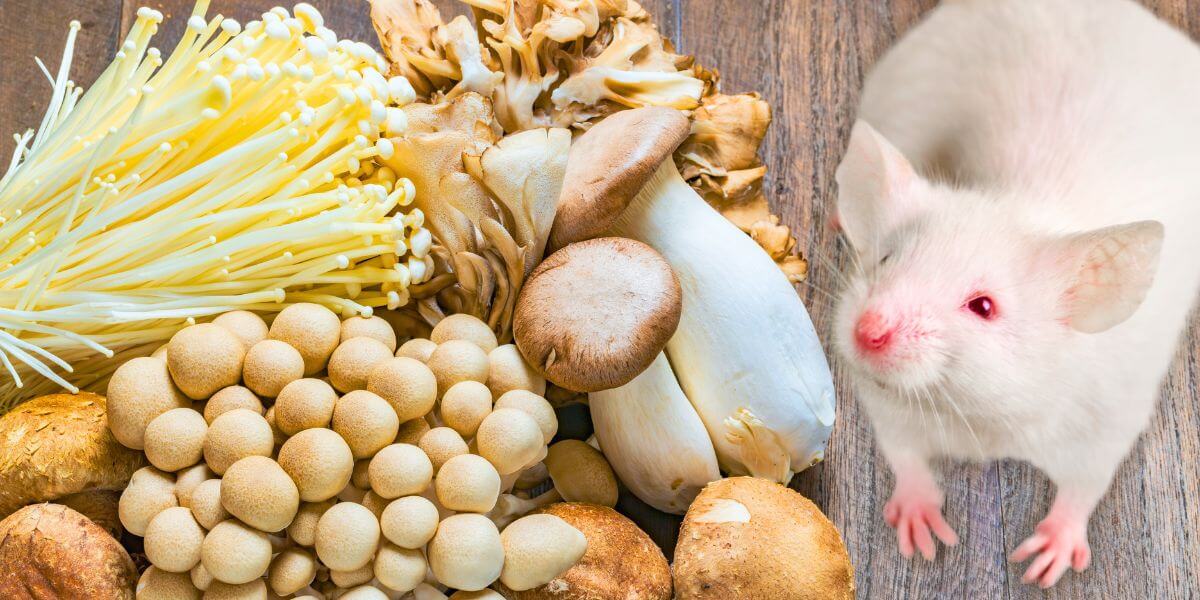
Furthermore, metabolic research involved feeding mushrooms to mice before subjecting them to periods of starvation and glucose injections to monitor blood sugar responses. These protocols, while common in traditional nutritional science, have increasingly come under fire for their lack of "translational value"—the degree to which results in rodents can accurately predict outcomes in human physiology.
Integration into the "Eat Without Experiments" Program
As part of its commitment to transparency, The Giorgi Companies has joined PETA’s "Eat Without Experiments" program. This initiative serves as a consumer-facing directory designed to help shoppers identify food and beverage brands that have pledged to remain 100% cruelty-free in their research and development. By joining this program, The Giorgi Companies joins an elite group of food industry leaders that have recognized that the future of nutritional science lies in human-relevant data rather than animal models.
The "Eat Without Experiments" label is becoming an increasingly important metric for ESG (Environmental, Social, and Governance) reporting. For a company of Giorgi’s size, which operates in a highly competitive commodity market, this designation provides a distinct marketing advantage among younger, ethically-conscious demographics.
The Broader Context of the Food Industry Shift
The decision by The Giorgi Companies is not an isolated incident but rather part of a cascading trend within the global food and beverage sector. Over the past decade, several multinational corporations have moved away from animal testing for food ingredients.
In recent years, Mondelez International—the parent company of iconic brands like OREO—and the Campbell Soup Company have both enacted similar bans after engaging with animal rights organizations. These shifts are driven by a combination of public pressure, ethical considerations, and advancements in biotechnology.
Modern food science is increasingly moving toward "New Approach Methodologies" (NAMs). These include:
- In Vitro Testing: Using human cell cultures to observe metabolic reactions.
- Organ-on-a-Chip Technology: Microchips that mimic the physiological response of entire human organ systems.
- In Silico Modeling: Advanced computer simulations that can predict the toxicity or efficacy of food compounds.
- Human Clinical Trials: Small-scale, non-invasive studies on human volunteers, which provide the most accurate data for nutritional labeling.
The transition at The Giorgi Companies suggests that even specialized agricultural sectors, such as the mushroom industry, are finding that animal models are no longer necessary to validate the health benefits of their products.
Economic and Regional Implications
The Giorgi Companies is a cornerstone of the Pennsylvania economy, particularly in Berks County, which is often referred to as the "Mushroom Capital of the World." The company’s move to ban animal testing reflects a modernization of the state’s agricultural legacy. By adopting a more progressive stance, the company protects its reputation from potential boycotts and aligns itself with the procurement policies of major retail partners who are increasingly demanding cruelty-free supply chains.

Furthermore, this move sets a precedent for other Pennsylvania-based agricultural giants. As the industry watches The Giorgi Companies successfully navigate this transition without a loss in research quality or market share, it is likely that other regional producers will feel the pressure to follow suit.
Reactions and Analysis
While The Giorgi Companies has remained relatively quiet in the mainstream press regarding the specifics of the negotiations, the update to their corporate policy serves as their primary public statement. Industry analysts suggest that the company’s willingness to engage with PETA scientists indicates a pragmatic approach to corporate social responsibility.
"Food companies are beginning to realize that the reputational risk of animal testing far outweighs any perceived scientific benefit," says Dr. Elena Vance, a consultant in corporate ethics. "When you have a product as naturally healthy as a mushroom, you don’t need to prove its worth through invasive rodent studies. The public already accepts mushrooms as a superfood. The Giorgi Companies is simply aligning its research methods with its product’s wholesome image."
Conversely, some traditionalists in the scientific community argue that animal models are still necessary for certain types of high-level nutritional breakthroughs. However, the prevailing trend in regulatory bodies, including the FDA, has been to allow for more non-animal data in safety and efficacy filings, supporting the path taken by Giorgi.
Future Outlook and Industry Pressure
The successful campaign to change the policy at The Giorgi Companies has emboldened animal rights advocates to target other major players in the food retail and production space. PETA has already signaled its next objective: Wegmans Food Markets.
Wegmans, a prominent grocery chain with a significant presence in the Northeast, has been a target of advocacy efforts due to its continued funding of various agricultural and nutritional experiments that utilize animals. Advocates are calling on Wegmans to follow the example set by The Giorgi Companies and join the "Eat Without Experiments" program. The logic presented to these retailers is consistent: if the suppliers (like Giorgi) can eliminate animal testing, the distributors and retailers should have no reason to continue funding it.
Conclusion
The Giorgi Companies’ comprehensive ban on animal testing marks a definitive moment in the evolution of the American food industry. By closing policy loopholes and committing to a future of cruelty-free research, the company has demonstrated that corporate growth and ethical responsibility are not mutually exclusive.
As the mushroom industry continues to expand—fueled by the rising popularity of plant-based diets and functional foods—The Giorgi Companies has positioned itself as a leader in both production and ethics. This transition serves as a blueprint for how large-scale agricultural enterprises can modernize their operations to meet the demands of a 21st-century global market, ensuring that the path to health and nutrition does not come at the cost of animal welfare.

