


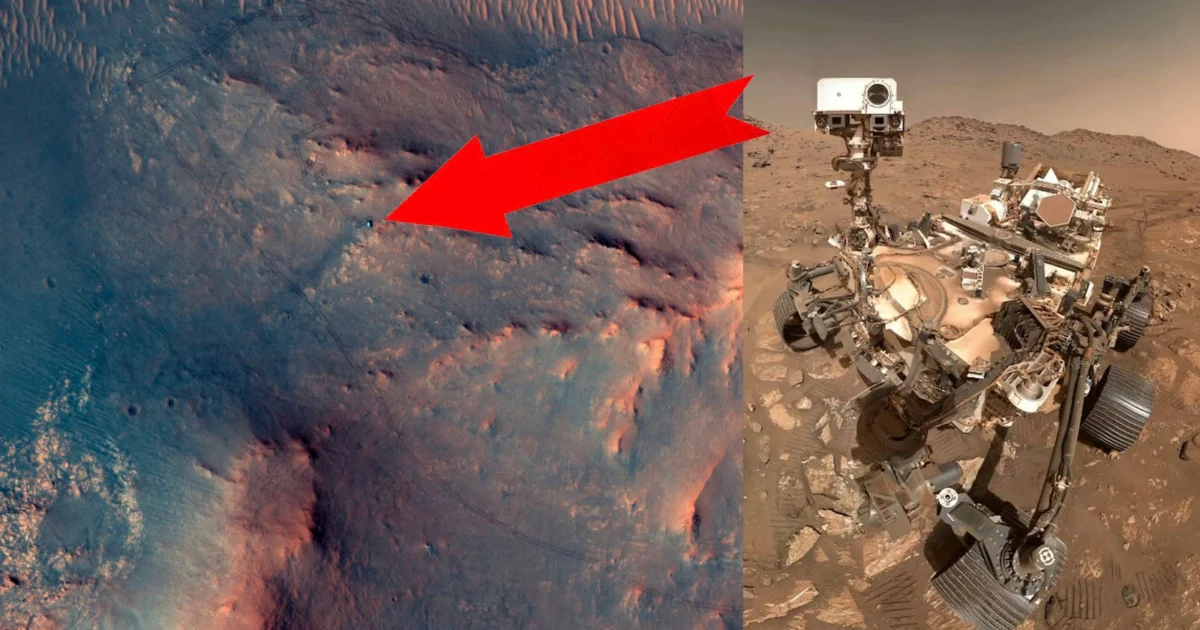
NASA’s Perseverance rover has officially completed a marathon-distance trek across the surface of Mars, clocking in 26.2 miles (42.1 kilometers) of travel since its historic landing in 2021. While elite human athletes on Earth have recently pushed the boundaries of physical endurance by completing the same distance in under two hours, the robotic explorer required 1,890 Martian sols—equivalent to approximately five years and four months in Earth time—to navigate the treacherous, rock-strewn terrain of the Red Planet. This milestone, achieved on June 13, marks a significant chapter in the rover’s mission as it transitions into new, scientifically rich territories within the Jezero Crater.
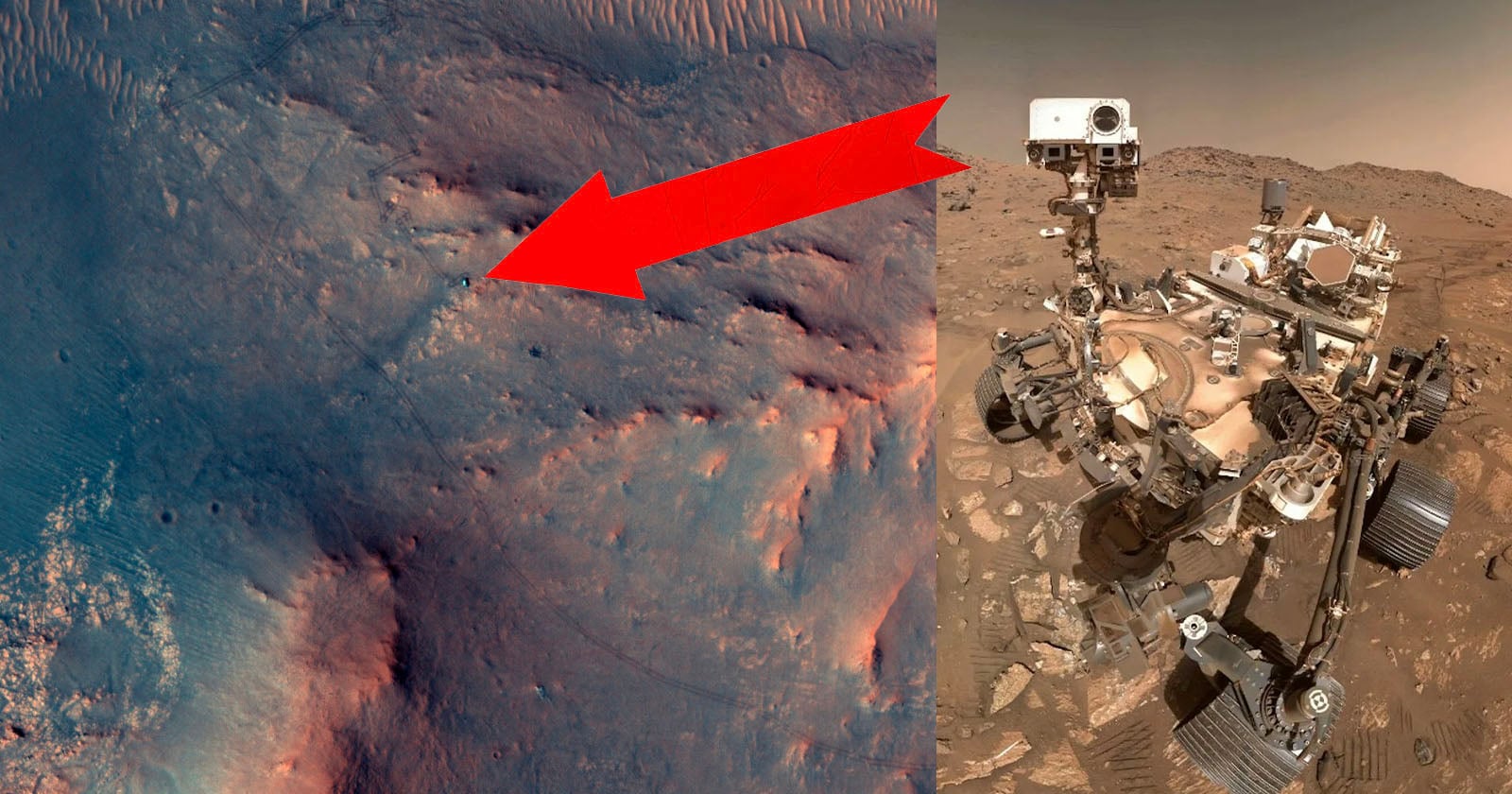
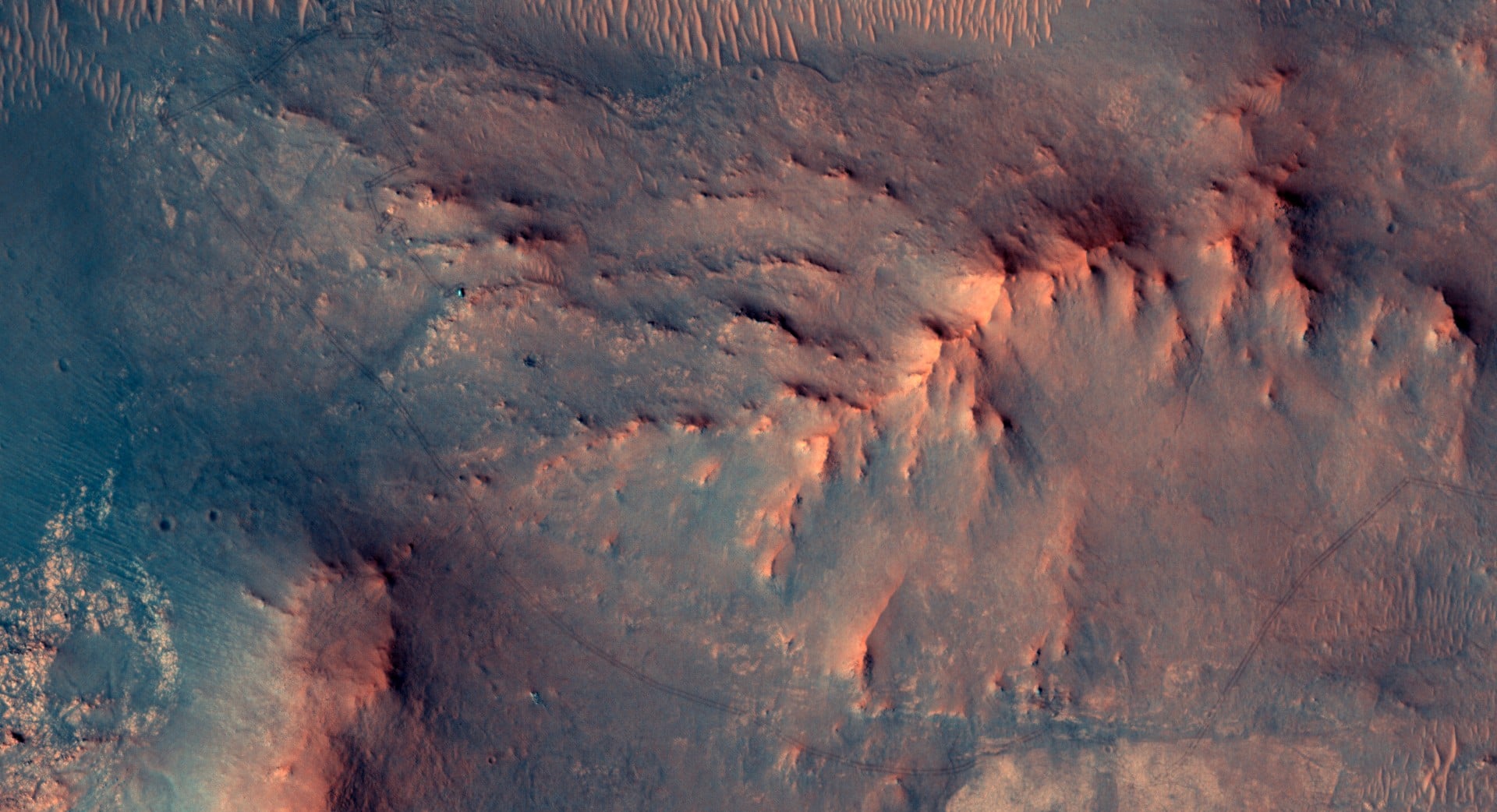
The achievement was commemorated by an orbital perspective provided by NASA’s Mars Reconnaissance Orbiter (MRO). Utilizing its High-Resolution Imaging Science Experiment (HiRISE) camera, the orbiter captured a striking image of the rover appearing as a minuscule green speck against the vast, rust-colored Martian landscape. The high-resolution photograph, taken from hundreds of miles above, clearly displays the intricate tracks left by Perseverance’s six wheels as they etched a path through a region the science team has designated "Arbot," located just west of the Jezero Crater’s primary basin.
A New Record in Martian Exploration
The completion of the 26.2-mile journey highlights the technological leaps made in autonomous planetary navigation. Perseverance’s predecessor, the Opportunity rover, held the previous record for the fastest Martian marathon, though it took significantly longer to reach the milestone. Opportunity required 11 years and two months to cover the same distance, a testament to the advancements in Perseverance’s "AutoNav" system. This upgraded navigation software allows the rover to process images of the terrain and plan its route in real-time, avoiding hazards without waiting for specific steering instructions from engineers at the Jet Propulsion Laboratory (JPL) in California.
This efficiency is critical given the time delay in communications between Earth and Mars, which can range from four to twenty-four minutes depending on the planets’ alignment. By navigating autonomously, Perseverance has been able to maintain a steady pace through the rugged Neretva Vallis, an ancient river channel that once fed water into the Jezero Crater.
The Discovery of Macromolecular Carbon
Parallel to its navigational milestones, Perseverance has provided what may be the most compelling evidence to date in the search for extraterrestrial life. The rover recently detected complex organic molecules, specifically macromolecular carbon (MMC), within mudstone samples collected in the Neretva Vallis. Organic carbon is a fundamental building block of life as we know it, and its presence in ancient Martian rocks suggests that the planet may have once possessed the necessary ingredients for microbial existence.
Macromolecular carbon is characterized by large, complex chains of carbon atoms. On Earth, these structures are frequently associated with biological processes, such as the fossilized remains of microbial mats or the formation of coal. Dr. Ashley Murphy, a researcher at the Planetary Science Institute in Arizona, noted that while the discovery is monumental, it requires cautious interpretation. According to Murphy, while MMC often originates from biological sources, it can also be produced through abiotic (non-biological) means, such as chemical reactions between volcanic rocks and water, or it could have been deposited on the Martian surface via meteorite impacts over billions of years.
The discovery was made using the rover’s SHERLOC (Scanning Habitable Environments with Raman & Luminescence for Organics & Chemicals) instrument. This tool uses a deep ultraviolet laser to scan rocks for organic compounds and minerals that have been altered by watery environments. The detection of MMC in the mudstones of Neretva Vallis is particularly significant because mudstones are formed from fine-grained sediment that settles at the bottom of quiet bodies of water—environments where organic matter is often well-preserved.
Geologic Context: The Jezero Crater and Neretva Vallis
The selection of Jezero Crater as the landing site for Perseverance was a strategic decision based on decades of orbital data. The 28-mile-wide impact crater features a prominent fan-shaped delta, a geologic structure formed when a river enters a standing body of water. Billions of years ago, Jezero was a flourishing lake fed by a network of rivers, including the Neretva Vallis.
"Jezero Crater was once fed water and sediment from rivers, and, billions of years ago, it hosted a lake," Dr. Murphy explained. The presence of water is the primary indicator of habitability, and the river systems that once flowed into Jezero would have transported minerals and organic materials from a wide catchment area, depositing them in the delta where Perseverance is currently exploring.
In late 2024 and early 2025, the rover also transmitted high-resolution images of "leopard-spotted" rocks in an area known as Cheyava Falls. These spots—small, light-colored circular features surrounded by darker rings—are reminiscent of terrestrial rocks where chemical reactions involving organic matter provide an energy source for microbes. These "spots" are considered some of the strongest visual hints of ancient life discovered during the mission, reinforcing the importance of the recent MMC detection.
Chronology of the Perseverance Mission
The journey to the marathon milestone has been a multi-year saga of engineering and scientific endurance. The mission’s timeline reflects the steady progression of exploration:
- July 30, 2020: Perseverance launches from Cape Canaveral Space Force Station aboard a United Launch Alliance Atlas V rocket.
- February 18, 2021: The rover successfully lands at the "Octavia E. Butler Landing" site within Jezero Crater, utilizing a complex "skycrane" maneuver.
- April 2021: The Ingenuity helicopter, which traveled to Mars in the rover’s belly, completes the first powered flight on another planet, eventually becoming a scout for Perseverance.
- September 2021: Perseverance successfully collects its first rock core sample, "Rochette," proving its sampling and caching system works in the Martian environment.
- 2022–2023: The rover explores the "Delta Front," climbing the steep slopes of the ancient river delta and collecting samples of sedimentary rocks.
- June 13, 2024 (Sol 1,179): The rover crosses the 26.2-mile marathon threshold while exploring the Arbot region.
- June 2025 (Estimated Sol 1,890): The mission reaches its five-year, four-month Earth-time milestone, coinciding with the detection of complex carbon molecules in Neretva Vallis.
The Path to Earth: Mars Sample Return
Despite the sophistication of Perseverance’s onboard laboratory, scientists emphasize that a definitive conclusion regarding the origin of the macromolecular carbon cannot be reached on Mars. The rover’s instruments are designed to detect and characterize materials, but they lack the sensitivity and scale of terrestrial laboratories.
To resolve the mystery, NASA and the European Space Agency (ESA) are planning the Mars Sample Return (MSR) mission. Perseverance is currently acting as a primary collector, sealing rock and soil cores into ultra-pure titanium tubes. These tubes are being cached on the surface or held within the rover for future retrieval. A subsequent mission will land a retrieval craft, collect the samples, and launch them into Martian orbit, where a spacecraft will capture them for the journey back to Earth.
If the samples from Neretva Vallis are successfully returned, scientists will be able to perform isotopic analysis to determine if the carbon was produced by living organisms. This would represent one of the greatest discoveries in human history—the first confirmed evidence of life beyond Earth.
Implications for Planetary Science
The dual achievement of completing a marathon and discovering potential biosignatures underscores the evolving nature of space exploration. It shifts the narrative from "following the water" to "seeking the signs of life." The data gathered by Perseverance is not only teaching researchers about the history of Mars but also about the early history of Earth. Because Mars does not have plate tectonics to recycle its crust, its ancient rocks are much better preserved than those on Earth, providing a "time capsule" of the conditions that existed when life first emerged in the solar system.
As Perseverance continues its journey beyond the 26.2-mile mark, it heads toward the crater rim, a region that may contain even older rocks and minerals. Each mile traveled and each sample collected brings humanity closer to answering the fundamental question of whether we are alone in the universe. For now, the "green speck" in the Arbot region remains a lonely but determined pioneer, tracing the path of ancient rivers in search of our cosmic neighbors.

