


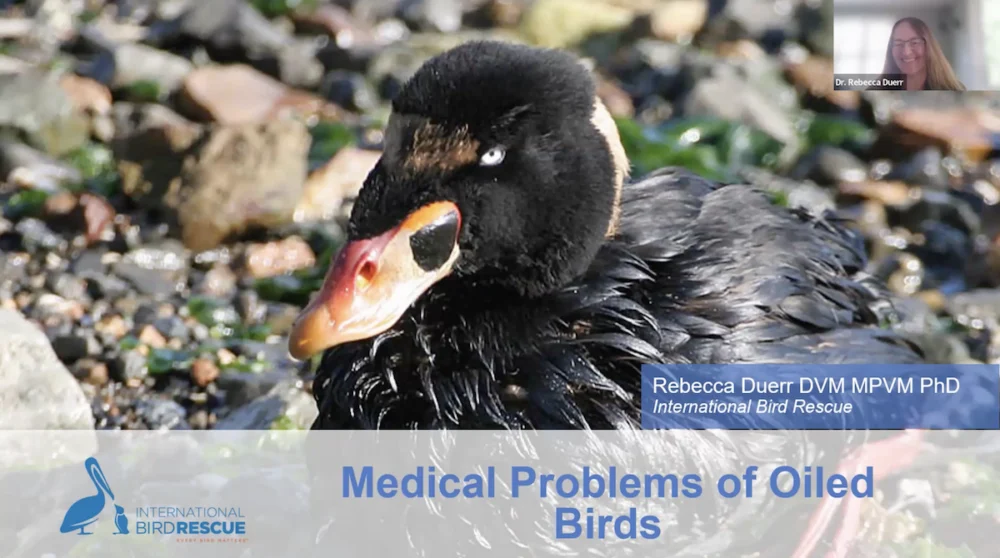
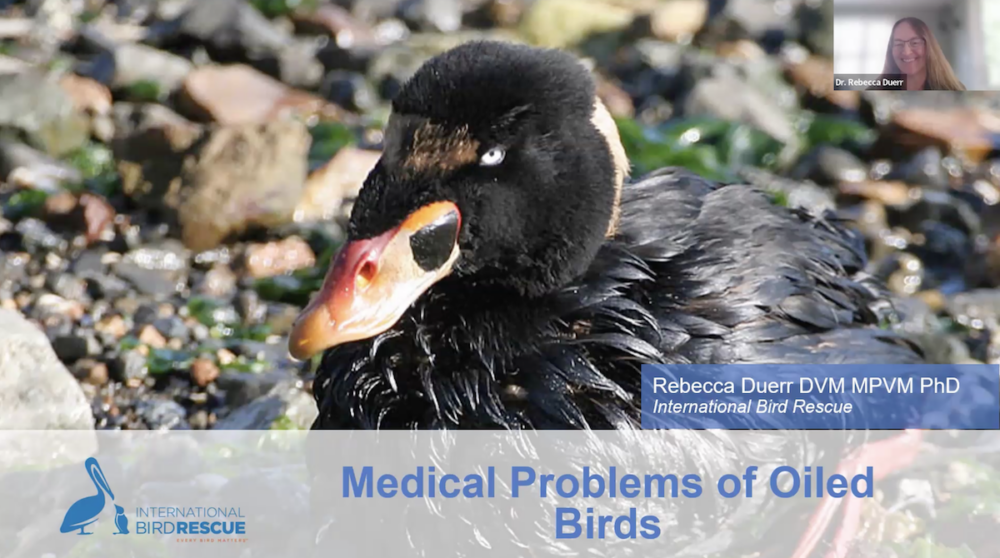
On April 21, 2026, the Kansas State University College of Veterinary Medicine Exotics Club hosted a virtual clinical presentation featuring Dr. Rebecca Duerr, DVM, MPVM, PhD, focusing on the complex medical challenges and decontamination protocols required for wild birds affected by oil spills. This educational event, facilitated through the Lafeber Company Student Program, provided future veterinary professionals with a deep dive into the physiological, pathological, and rehabilitative requirements of avian species exposed to petroleum products. Dr. Duerr, a renowned expert in the field of wildlife medicine and the Clinical Director at International Bird Rescue, leveraged her extensive experience to bridge the gap between emergency field response and advanced clinical care.
The presentation served as a critical update for the veterinary community, addressing both the traditional methods of stabilization and the emerging research regarding the use of sedation during the high-stress decontamination process. As petroleum extraction and transport continue to pose environmental risks globally, the training of specialized veterinarians remains a cornerstone of wildlife conservation and disaster response.
The Pathophysiology of Petroleum Exposure in Avian Species
Dr. Duerr’s lecture began by outlining the multifaceted ways in which oil affects avian physiology. When a bird comes into contact with oil, the primary and most immediate threat is the loss of feather structure. Avian feathers are intricate biological tools that provide waterproofing and thermoregulation through a precise interlocking mechanism of barbs and barbules. Petroleum products disrupt this alignment, causing the feathers to mat and allowing water to penetrate the downy layer. This leads to rapid heat loss and, in many cases, fatal hypothermia, even in temperate climates.
Beyond the external physical damage, the internal effects of oil ingestion are equally devastating. As birds attempt to preen the oil from their feathers, they inevitably ingest toxic hydrocarbons. Dr. Duerr detailed the systemic consequences of this ingestion, which include severe gastrointestinal irritation, ulceration, and hemorrhagic enteritis. Furthermore, the absorption of polycyclic aromatic hydrocarbons (PAHs) leads to hemolytic anemia, as the toxins damage red blood cell membranes. The kidneys and liver also suffer significant insult as they attempt to filter these foreign compounds, often resulting in organ failure if the bird is not stabilized immediately upon rescue.
Chronology of Clinical Intervention and Stabilization
The presentation provided a structured timeline for the medical management of oiled wildlife, emphasizing that the "wash" or decontamination phase is never the first step. Dr. Duerr highlighted a chronological approach to care that prioritizes patient stability over the removal of the contaminant.
- Intake and Triage: Upon arrival at a rehabilitation facility, birds undergo a thorough physical examination. This includes checking for fractures, assessing body condition, and measuring PCV (Packed Cell Volume) and total protein levels to determine the degree of anemia and dehydration.
- Stabilization Phase: This phase typically lasts 48 to 72 hours. Patients are placed in temperature-controlled environments to combat hypothermia. Aggressive fluid therapy is administered to flush toxins and restore hydration. Nutritional support is also vital, as the metabolic demands on an oiled bird are extraordinarily high.
- Decontamination (The Wash): Only once a bird is metabolically stable—showing normal blood parameters and a strong appetite—is it cleared for washing. This process involves a team of specialists using specific concentrations of detergents and temperature-regulated water (typically 102–105°F) to remove every trace of oil.
- Conditioning and Release: Following the wash, birds are moved to outdoor pools where they must demonstrate full waterproofing and the ability to hunt or forage before being cleared for release back into the wild.
Advancements in Sedation and Stress Management
A significant portion of the presentation was dedicated to recent research regarding the psychological and physiological stress experienced by wild birds during the washing process. Dr. Duerr referenced a landmark 2024 study published in the Journal of Avian Medicine and Surgery by Kelley et al., titled "Comparison of manual restraint with and without sedation on outcomes for wild birds undergoing decontamination."
The study compared the outcomes of birds washed under traditional manual restraint versus those given mild sedation. The findings suggested that sedation might significantly reduce the stress response, as measured by heart rate and cortisol-like indicators, without compromising the efficacy of the wash. For veterinary students, this research represents a shift toward more compassionate and medically advanced protocols in wildlife rehabilitation. By incorporating sedative-analgesics, practitioners can mitigate the risk of capture myopathy—a life-threatening condition caused by extreme exertion and stress in wild animals.
Supporting Data and Technical Requirements for Decontamination
Dr. Duerr provided technical data regarding the infrastructure required for successful oiled bird rehabilitation. Effective decontamination is not merely about soap and water; it requires a sophisticated understanding of water chemistry. The "hardness" of the water used during the rinse phase is critical; water that is too soft or too hard can leave mineral deposits on the feathers, preventing them from regaining their waterproof quality.
Furthermore, the choice of detergent is backed by decades of data. While various products exist, the veterinary and rehabilitation community largely adheres to specific surfactants that have been proven to break down heavy crudes and light oils without leaving a toxic residue on the skin. Dr. Duerr emphasized that the goal of the rinse is to achieve "zero residue," a state where water beads off the feathers perfectly, indicating that the microscopic structure of the plumage has been restored.
The Role of the Lafeber Company Student Program
The hosting of this event by the Kansas State University Exotics Club under the auspices of the Lafeber Company Student Program underscores the importance of industry-academic partnerships in veterinary education. The Lafeber Company has long been a proponent of avian health, providing specialized nutritional products that are often the backbone of recovery diets for rehabilitated birds.
By sponsoring lectures from experts like Dr. Duerr, the program ensures that veterinary students are exposed to niche specialties that may not be covered in the standard core curriculum. Exotic and wildlife medicine requires a unique set of skills, including the ability to perform "herd health" management in a disaster context while maintaining high standards of individual patient care.
Broader Implications for Conservation and Disaster Response
The implications of Dr. Duerr’s presentation extend far beyond the classroom. The medical protocols discussed are essential for mitigating the environmental impact of industrial accidents. As climate change and increased maritime traffic heighten the risk of spills in sensitive habitats, the global need for trained "oiled wildlife veterinarians" has never been greater.
The presentation also touched upon the legal and ethical frameworks of wildlife response. Under various international and national laws, such as the Oil Pollution Act in the United States, responsible parties are often required to fund the rehabilitation of affected wildlife. This creates a professional landscape where veterinarians must be able to work alongside government agencies, non-governmental organizations (NGOs), and corporate entities.
The data presented by Dr. Duerr suggests that with modern veterinary intervention, release rates for oiled birds have improved significantly over the last several decades. In the early years of wildlife rehabilitation, survival rates were often dismal; however, with the advent of better stabilization techniques, specialized nutrition, and refined decontamination protocols, many species now see high successful release rates, contributing to the preservation of biodiversity.
Conclusion and Future Directions in Avian Medicine
In closing her presentation, Dr. Duerr encouraged the Kansas State University students to view wildlife medicine as a rigorous scientific discipline. The field is moving toward more evidence-based practices, as seen in the Kelley et al. study on sedation. Future research is expected to delve deeper into the long-term post-release survival of these birds, using satellite telemetry to track their integration back into wild populations.
The virtual dinner presentation concluded with a question-and-answer session, where students inquired about the specifics of avian anesthesia and the challenges of managing large-scale intake during a "mega-spill." Dr. Duerr’s insights provided a roadmap for those interested in pursuing careers in conservation medicine, emphasizing that while the work is demanding, the reward of returning a once-oiled bird to the sky is a pinnacle of the veterinary profession.
Through the dissemination of this knowledge, the Kansas State University College of Veterinary Medicine and the Lafeber Company continue to foster a generation of veterinarians equipped to handle the complex intersection of animal health and environmental stewardship. The recorded session and the accompanying PowerPoint materials remain available as a resource for students and professionals globally, ensuring that the lessons learned from past spills inform the responses of the future.

