


The captivating world of woodpeckers offers a unique glimpse into avian adaptation and resilience. These remarkable birds, known for their distinctive drumming and specialized foraging behaviors, are a fascinating part of Minnesota’s rich biodiversity. While their rapid head movements, capable of exceeding 20 pecks per second and reaching speeds of over 15 miles per hour, often set them apart, understanding the nuances of each species requires a closer look. For enthusiasts and residents of the Gopher State, a deeper dive into the eight woodpecker species found in Minnesota reveals a spectrum of sizes, behaviors, and ecological roles. From the diminutive Downy Woodpecker to the imposing Pileated Woodpecker, each species contributes to the intricate tapestry of the state’s natural landscapes.
The Resilient Residents: An Overview of Minnesota’s Woodpecker Population
Minnesota serves as a vital habitat for a diverse array of woodpeckers, with eight primary species regularly observed within its borders. These birds are not merely feathered curiosities; they play crucial roles in forest ecosystems, from insect control to cavity creation for other species. Their presence is often an indicator of forest health and the availability of suitable nesting and foraging grounds. Understanding their distribution and characteristics is key to appreciating their ecological significance and ensuring their continued presence.
The identification of these species can be a rewarding challenge for birdwatchers, often requiring keen observation of size, plumage, vocalizations, and habitat preferences. The state’s varied topography, from the dense northern forests to the more open woodlands and agricultural areas in the south, provides distinct niches for each species to thrive.
Meet the Minnesota Woodpeckers: A Detailed Exploration
1. Downy Woodpecker (Dryobates pubescens)
The Downy Woodpecker is a ubiquitous presence across North America, and Minnesota is no exception. As the smallest woodpecker in the state, it often goes unnoticed amidst larger avian activity, yet its adaptability makes it a common sight in various habitats, including urban backyards. Weighing less than an ounce, these diminutive birds are smaller than many common robins, a testament to their compact stature.

This small size is a significant advantage for the Downy Woodpecker, allowing it to forage in tight spaces and on smaller branches where larger woodpeckers cannot access. Their diet primarily consists of small insects, such as ants, and they are adept bark foragers, meticulously searching for prey on tree trunks and branches.
Visually, Downy Woodpeckers are characterized by a striking black and white pattern. Their wings and crowns are boldly marked, and a distinctive red patch adorns the back of the male’s head, absent in females. The rest of their plumage is predominantly white.
In Minnesota, Downy Woodpeckers are found wherever trees are present, making them a frequent visitor to bird feeders. Their preference for mixing with other small birds, such as chickadees, offers a glimpse into their social behavior and reliance on flocking for protection. Their call is a series of quick chirps, often accompanied by light, short drumming. Unlike some of their larger relatives, their smaller size and less forceful pecking render them less noisy, making them a more unobtrusive backyard resident.
2. Hairy Woodpecker (Dryobates villosus)
Often described as a larger version of the Downy Woodpecker, the Hairy Woodpecker is a robust bird, with a body size approximately 40% larger and triple the weight of its smaller cousin. Like the Downy Woodpecker, the Hairy Woodpecker is a year-round resident in Minnesota. However, their larger size and preference for mature forests mean they are encountered less frequently than Downy Woodpeckers, particularly in urbanized areas.
Hairy Woodpeckers favor larger trees and are more commonly found in extensive forests rather than parks or suburban backyards. Their plumage closely mirrors that of the Downy Woodpecker, featuring a black and white pattern with males sporting a red patch on the back of their heads.
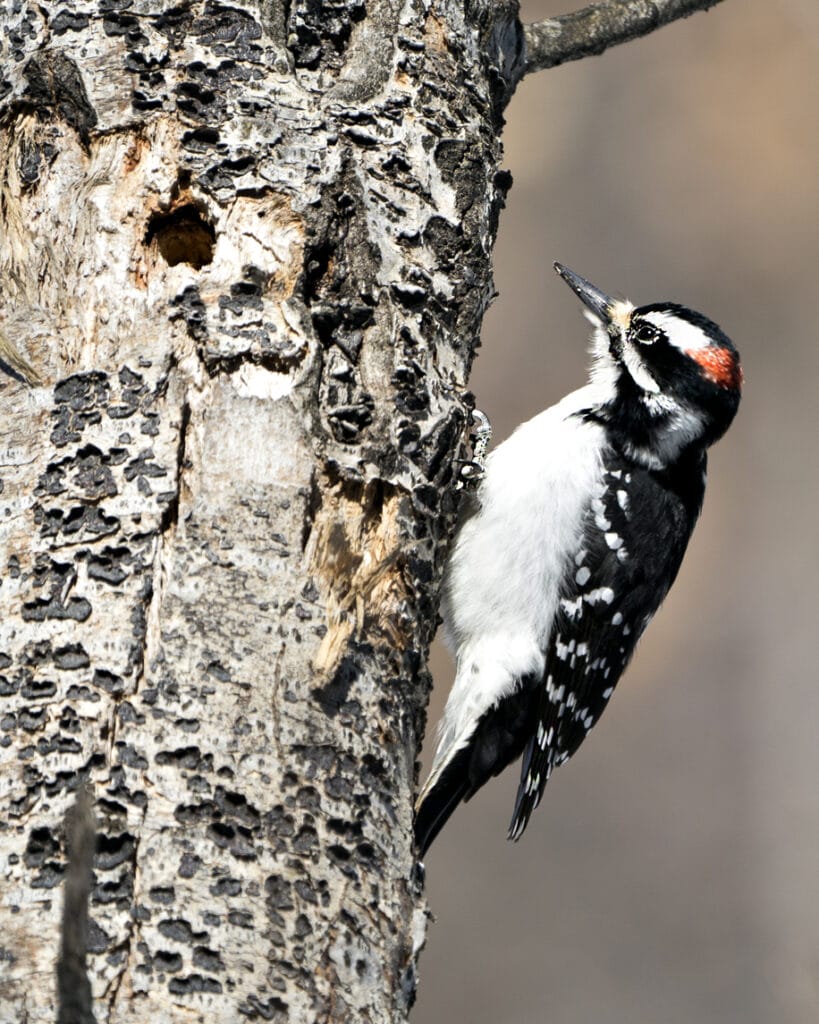
The similarities extend to their vocalizations and drumming patterns, although Hairy Woodpeckers are notably louder and more forceful in their percussive activities due to their size. Distinguishing between the two species can be challenging, especially from a distance. Beyond size, key differentiators include the Hairy Woodpecker’s longer and sharper bill and a straighter back, giving it a more erect posture, akin to a soldier standing at attention. Cultivating the ability to differentiate these closely related species requires patient observation and practice.
3. Black-backed Woodpecker (Picoides arcticus)
The Black-backed Woodpecker shares a similar size with the Hairy Woodpecker but is considerably less common throughout the United States, with its primary range extending across Canada. In Minnesota, these birds are present year-round, particularly in the northern regions bordering Canada, where they are more adapted to cooler climates.
Their name aptly describes their appearance: predominantly black, with distinctive white patches on their wings and a white belly. A striking feature is the black crown marked by two white lines near the bill, resembling a mustache. A key identifier for males is a yellow patch on their forehead, which is present in juveniles of both sexes but typically fades in adult females.
Black-backed Woodpeckers exhibit a remarkable camouflage, blending seamlessly with darker or "burned" trees. This preference for recently burned forests is a significant ecological adaptation, allowing them to thrive in areas where insect populations, particularly wood-boring beetles, are abundant. They employ a specialized foraging technique, drilling test holes to locate beetle tunnels and then using their long tongues to extract their prey. Their calls are among the quietest of all woodpeckers, consisting of single, quick chirps spaced a second apart.
4. Yellow-bellied Sapsucker (Sphyrapicus varius)

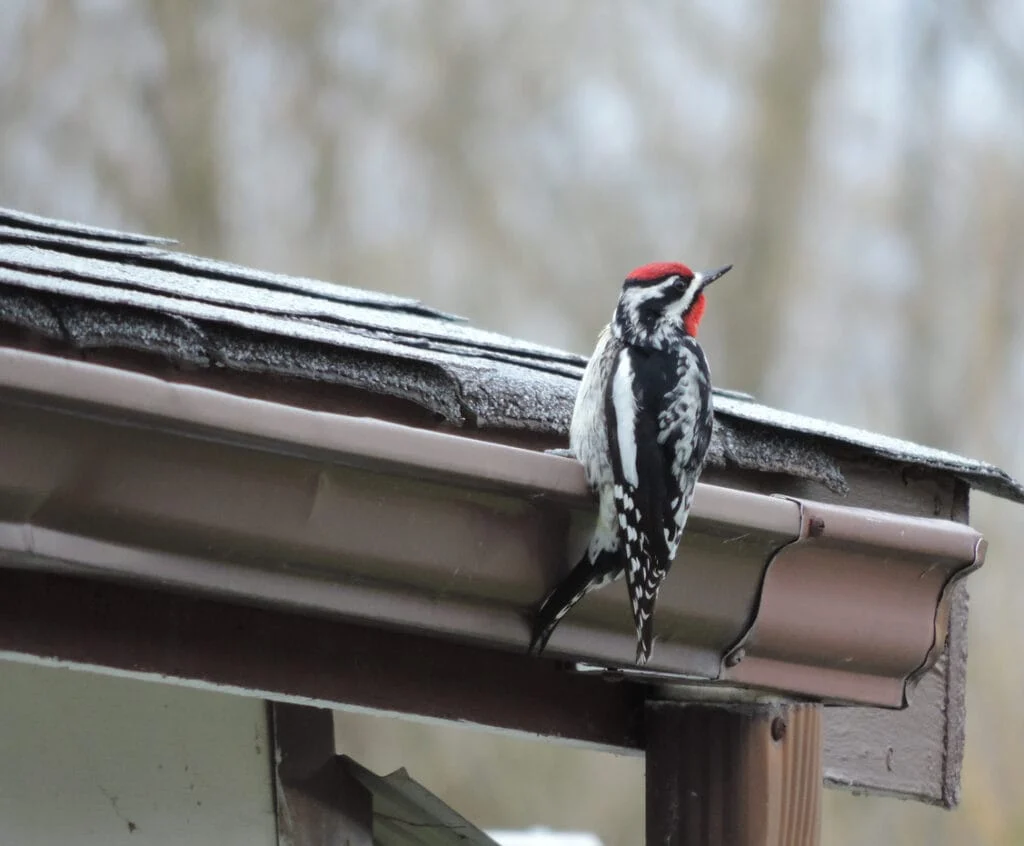
The Yellow-bellied Sapsucker is a beautifully patterned woodpecker, roughly the size of a robin, that breeds in northern Minnesota and migrates to the southern parts of the state during colder months. This seasonal movement ensures their presence in Minnesota for a significant portion of the year.
Their plumage is a captivating blend of black and white, without a rigidly defined pattern. Both males and females share a red forehead, but only the males display a red throat. The species earns its name from a subtle yellow patch on its chest and its unique feeding behavior. Yellow-bellied Sapsuckers are known for drilling rows of small, precise holes, or "sap wells," in tree bark to drink the sweet tree sap. While insects and fruits supplement their diet, sap remains their primary food source.
Interestingly, other bird species, such as Ruby-throated Hummingbirds, often benefit from the sapsucker’s efforts, feasting on the sap from wells they are unable to create themselves. The Yellow-bellied Sapsucker’s call is distinctive, often described as a repetitive "pew pew pew" without a discernible pattern, continuing until the bird decides to cease.
5. Northern Flicker (Colaptes auratus)
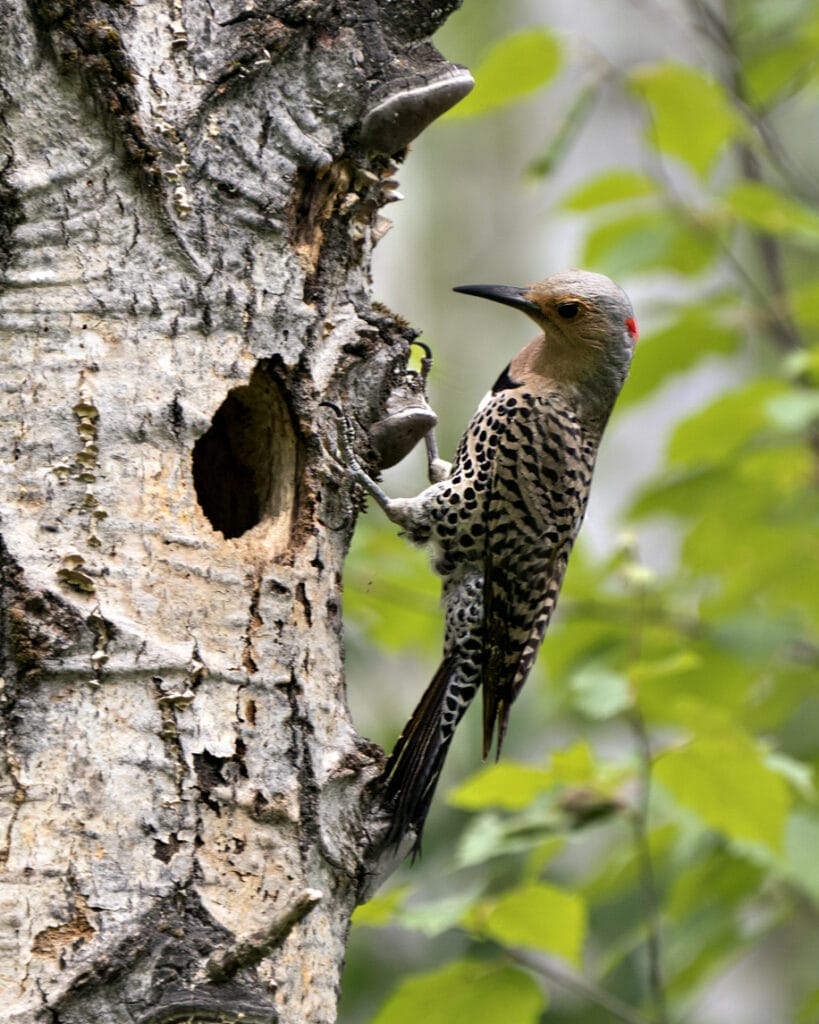
The Northern Flicker is a relatively large woodpecker, slightly smaller than a crow, and is a common year-round resident across Minnesota. They are frequently observed in woodlands, backyards, and parks, showcasing their adaptability to various environments.
Their plumage is a striking mosaic of gray, adorned with black dots. A red patch on the nape and a crest-like black patch on the chest are prominent features. Males are distinguished by a red cheek patch, while females possess a black one.

A unique characteristic of the Northern Flicker is its ground-foraging behavior. They spend a significant amount of time searching for food on the ground, often feeding on ants and their larvae, which constitute a large portion of their diet. While they do forage in trees, their terrestrial habits are noteworthy.
During the mating season, Northern Flickers are known for their rapid drumming, sometimes targeting metal objects to amplify their calls and attract mates. This competitive drumming can be remarkably loud, with a sound often compared to a machine gun. Their ability to adapt to urban environments means that residents may experience this intense drumming from nearby metal structures.
6. Red-headed Woodpecker (Melanerpes erythrocephalus)
Easily identifiable from a distance, the Red-headed Woodpecker is known for its striking red crown, which contrasts with its "checkered body." This unique plumage, featuring bold blue and white patterns, has earned them the moniker "flying checkerboards."
Beyond their visual distinctiveness, Red-headed Woodpeckers possess a loud, harsh-sounding call that can be quite startling. This initial loud vocalization is often followed by softer chirps. In Minnesota, they are present during the breeding season, from spring through summer. However, in the southeastern part of the state, they can be observed year-round.
Juvenile Red-headed Woodpeckers lack the characteristic blue feathers and red crowns of adults. Instead, they sport dark brown plumage that gradually matures into their adult coloration. Like many woodpeckers, they are bark foragers, but their omnivorous diet also includes fruits, seeds, insects, and occasionally the eggs of other birds.

7. American Three-toed Woodpecker (Picoides dorsalis)
The American Three-toed Woodpecker is one of the rarest woodpecker species encountered in Minnesota and the broader United States. Its presence is largely confined to the northeastern regions of the state, making it a prized sighting for dedicated bird enthusiasts.
The species earns its name from its unique foot structure: unlike most woodpeckers which possess four zygodactyl toes (two pointing forward, two backward), the American Three-toed Woodpecker has only three. This adaptation, with the absence of one back toe, allows them to lean back slightly more, contributing to a more forceful drumming action.
These woodpeckers leverage this powerful drumming to bore into tree bark, where they feed on beetles and ants. Their call is a single, loud chirp, while juveniles are considerably noisier, emitting a continuous stream of chirps until they are fed.
8. Pileated Woodpecker (Dryocopus pileatus)
The Pileated Woodpecker is Minnesota’s largest woodpecker, rivaling crows in size. These magnificent birds are found year-round in the state, inhabiting woodlands, forests, and backyards equipped with feeders.
Their plumage is predominantly black, accented by white stripes around the neck and crown. Their most striking feature is the prominent, large crest atop their heads. Males are further identified by a red patch on their cheeks.
While not considered rare, Pileated Woodpeckers are not as abundant as some other species, a decline attributed to the historical removal of eastern forests. Their presence is always announced by their distinctive, loud calls, often described as a series of "wak wak wak wak" sounds. The speed and intensity of these calls can vary, with faster and louder vocalizations indicating a more defensive state.
Ecological Significance and Conservation Considerations
The presence of these eight woodpecker species highlights the ecological richness of Minnesota’s natural environments. Woodpeckers are considered keystone species in many forest ecosystems. Their drumming and excavating activities create cavities that are subsequently utilized by a variety of other birds, small mammals, and insects, providing essential shelter and nesting sites.
The ecological role of woodpeckers extends to insect population control. By consuming vast numbers of wood-boring insects and their larvae, they help to regulate pest outbreaks that could otherwise damage forests. Their foraging habits also contribute to the decomposition of dead and decaying wood, recycling nutrients back into the ecosystem.
However, the populations of some woodpecker species, like the Pileated Woodpecker, have faced challenges due to habitat loss and fragmentation. The decline of mature forests, particularly during the 19th century, significantly impacted their numbers. Ongoing conservation efforts, including the preservation of large tracts of forest and the promotion of sustainable forestry practices, are crucial for their long-term survival.
Furthermore, the increasing prevalence of invasive species, such as the Emerald Ash Borer, can have complex effects on woodpecker populations. While these insects can provide an abundant food source in the short term, the overall degradation of forest health can lead to long-term negative consequences.

Citizen Science and Engagement
The role of citizen scientists in monitoring woodpecker populations cannot be overstated. Organizations like eBird, a project of the Cornell Lab of Ornithology, rely on observations submitted by birdwatchers to track species distribution, abundance, and migratory patterns. Platforms like eBird allow individuals to contribute valuable data, aiding researchers in understanding population trends and identifying areas in need of conservation focus.
For those interested in learning more about local woodpecker sightings, eBird provides a searchable database of recent observations. Users can explore sightings by species, location, or time period, offering a dynamic snapshot of avian activity in Minnesota. This engagement fosters a deeper connection with the natural world and contributes to scientific understanding.
Frequently Asked Questions About Minnesota’s Woodpeckers
What is the most common woodpecker in Minnesota?
The Downy Woodpecker and the Northern Flicker are generally considered the most commonly observed woodpecker species in Minnesota, due to their widespread distribution and adaptability to various habitats, including human-altered landscapes.
Where can I find out more about local woodpeckers in Minnesota?
For up-to-date information on recent woodpecker sightings and distribution in Minnesota, resources like eBird are invaluable. This platform allows users to search for specific species or explore recent sightings in particular areas, providing a comprehensive overview of local avian activity. Additionally, local nature centers, Audubon chapters, and wildlife agencies often offer information and educational programs related to Minnesota’s birdlife.
Conclusion: A Symphony of Drumming and Diversity
The eight woodpecker species found in Minnesota offer a compelling testament to the resilience and adaptability of avian life. From the energetic drumming that echoes through forests to their specialized foraging techniques, these birds are integral to the ecological health of the state’s landscapes. Their continued presence is a reflection of healthy habitats, and their diversity provides endless opportunities for observation and appreciation. By understanding their unique characteristics and ecological roles, Minnesotans can better contribute to the conservation of these remarkable feathered drummers. As the seasons change, the distinctive calls and percussive rhythms of Minnesota’s woodpeckers will continue to enrich the state’s natural symphony, reminding us of the vibrant biodiversity that surrounds us.

