


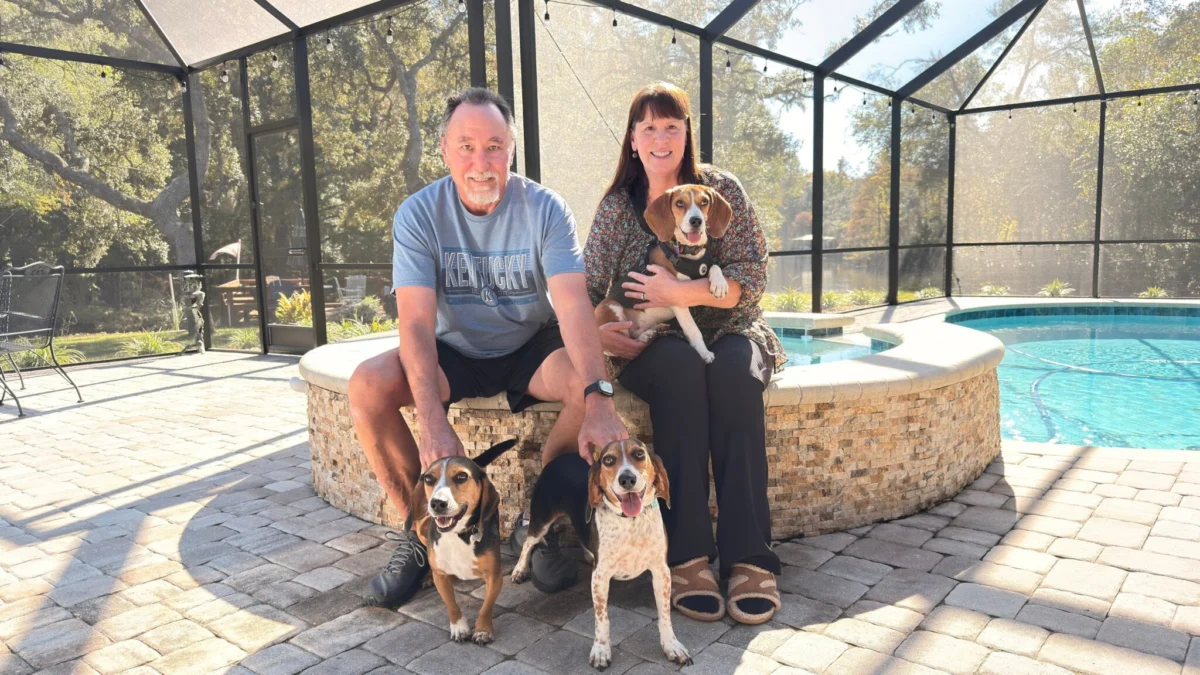
The liberation of a young beagle named Parker from a life of isolation in rural North Carolina has highlighted the ongoing challenges faced by animal welfare organizations in the American South. Parker, who spent nearly two years confined to a makeshift pen, was recently surrendered to People for the Ethical Treatment of Animals (PETA) after a prolonged period of negotiation and field intervention. The case serves as a poignant example of the "bad hunter" phenomenon, where working breeds are discarded or neglected when they fail to meet the performance expectations of their owners. Parker’s transition from a neglected outdoor dog to a domestic companion in Florida underscores the intensive resources required to rehabilitate animals conditioned by social deprivation and environmental exposure.
The Chronology of Neglect and Intervention
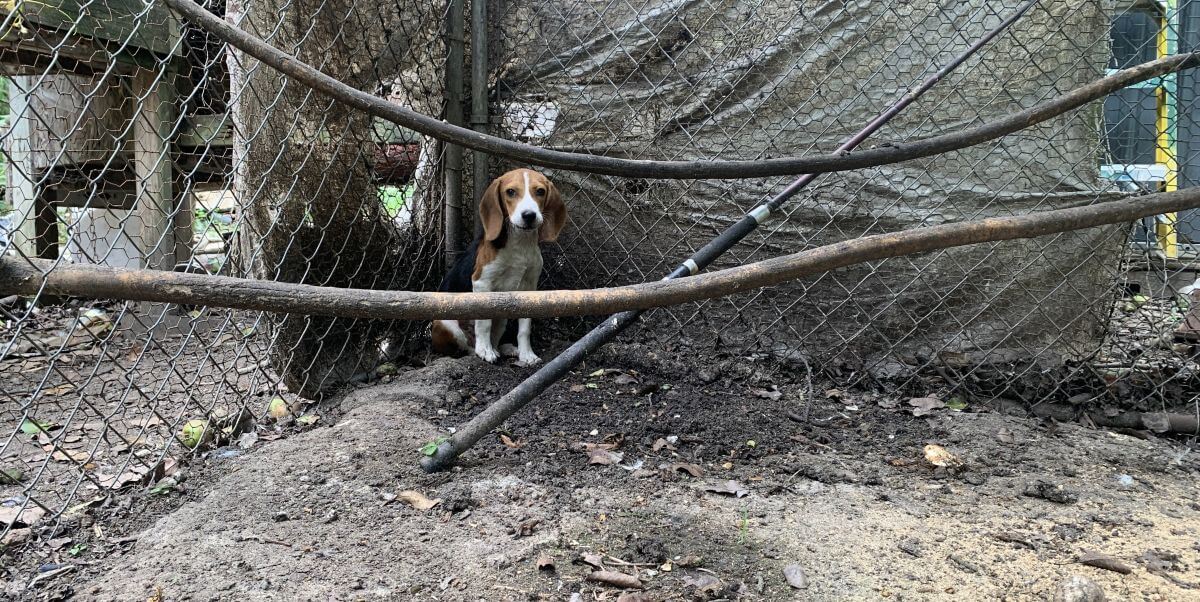
The case began in early 2023 when PETA fieldworkers, operating in the border regions of southeastern Virginia and northeastern North Carolina, first encountered Parker. At the time, he was a puppy less than six months old, already relegated to a primitive enclosure. The structure was constructed from chicken wire and cinderblocks, topped with torn tarps that offered minimal protection from the elements. According to field reports, Parker’s owner had deemed the dog a "bad hunter," a label often applied to hounds that lack the aggressive drive or tracking instinct required for traditional sport hunting. Consequently, the animal was viewed as a failed tool rather than a sentient companion.
For the next two years, PETA’s Community Animal Project (CAP) maintained a consistent presence at the property. The organization’s strategy in such cases often involves a "persistent presence" model, where staff provide essential care that the owners fail to deliver, while simultaneously building the rapport necessary to facilitate a voluntary surrender. Between 2023 and early 2026, fieldworkers made dozens of visits. During the sweltering North Carolina summers, where temperatures frequently exceed 90 degrees Fahrenheit with high humidity, staff provided flea medication and ensured the dog had access to clean water. In the winter months, they delivered insulating straw to help the beagle survive freezing temperatures within his wire-and-block enclosure.
Despite repeated pleas from animal advocates, the owner initially refused to relinquish custody. It was not until June 2026 that the cumulative weight of these interactions led to a breakthrough. The owner finally conceded that Parker deserved a higher quality of life, allowing the beagle to be removed from the property and placed into the organization’s formal rescue pipeline.
The Psychological and Physiological Impact of Penning
The conditions under which Parker lived are typical of many "outdoor dogs" in under-resourced rural communities. Veterinary experts note that beagles, as a pack-oriented scent hound breed, are particularly susceptible to the psychological trauma of isolation. Long-term confinement in small, barren spaces often leads to "kennelosis" or stereotypic behaviors, such as the pacing observed in Parker’s case. These behaviors are indicative of chronic stress and a lack of cognitive stimulation.
Physiologically, dogs kept in makeshift pens face a gauntlet of environmental hazards. In the American South, the lack of proper flooring in such enclosures often leads to the contraction of hookworms and other soil-borne parasites. Exposure to mosquitoes in these regions also places outdoor dogs at an extremely high risk for heartworm disease, a potentially fatal condition that requires expensive and taxing treatment. Upon his rescue, Parker underwent a full veterinary evaluation, which included vaccinations and sterilization—standard procedures that he had been denied during his period of neglect.
Data and Context: The Crisis of Tethered and Penned Dogs
Parker’s story is a singular instance of a systemic issue prevalent across the United States. According to data from animal welfare registries, thousands of dogs spend their entire lives at the end of a chain or inside a pen. North Carolina, while having state-level animal cruelty statutes, often leaves specific regulations regarding tethering and penning to the discretion of local municipalities. This creates a "patchwork" of legal protections where a dog’s safety depends entirely on which side of a county line it resides.
Statistics from PETA’s Community Animal Project indicate that in the regions they serve, fieldworkers assist thousands of animals annually who are living in similar conditions to Parker. In many cases, these animals are not legally "abused" under the strict definitions of local law—which often only require "minimal" food, water, and shelter—but they are profoundly neglected in terms of their social and biological needs.
The "bad hunter" narrative is a significant contributor to these numbers. In regions with deep-seated hunting traditions, hounds are frequently bred in large litters. Those that do not exhibit the necessary traits for the field are often relegated to the back of a property, receiving only the barest essentials for survival. Because these dogs are seen as "livestock" or "equipment" rather than pets, they are rarely socialized, making their eventual transition to indoor homes a complex task for rescue groups.
Rehabilitation and the Transition to Domestic Life
Following his surrender, Parker was placed into a foster home, a critical step in the rehabilitation of "outdoor-only" dogs. This period allows the animal to acclimate to the sights, sounds, and rhythms of a household—elements as simple as the sound of a television or the feel of carpet, which can be overwhelming to a dog that has only known dirt and wire.
Contrary to the initial expectations of his rescuers, Parker adjusted with remarkable speed. His "gentle" nature, which had made him a failure as a hunter, proved to be his greatest asset as a companion. After a period of socialization and medical clearance, he was adopted by a family in Florida. His new environment includes a "pack" of other beagles, providing the social structure and companionship that the breed instinctively craves. This outcome represents the "best-case scenario" for rescued hounds, who often struggle with house-training and separation anxiety after years of neglect.
Legislative Implications and Public Policy
The resolution of Parker’s case has renewed calls for stricter tethering and penning ordinances. Animal rights advocates argue that the "voluntary surrender" model, while successful for Parker, is an inefficient way to address a mass-scale problem. They advocate for proactive legislation that bans the continuous chaining or penning of dogs, arguing that such practices are inherently cruel and pose a public safety risk, as isolated dogs are statistically more likely to exhibit territorial aggression.
Currently, several states and hundreds of municipalities have enacted laws that either ban tethering entirely or strictly limit the amount of time a dog can be restrained. Advocates suggest that if North Carolina and Virginia were to implement more robust state-wide standards, fieldworkers would have more legal leverage to intervene in cases of neglect before they span multiple years.
Furthermore, the case highlights the necessity of supporting animal welfare infrastructure in under-resourced communities. Often, neglect is a byproduct of a lack of access to affordable veterinary care, spay/neuter services, and education regarding animal behavior. By providing these services directly to the community, organizations hope to prevent situations like Parker’s from occurring in the first place.

Broader Impact and Conclusion
Parker’s journey from a cinderblock pen in North Carolina to a loving home in Florida serves as a microcosm of the evolving relationship between humans and "working" breeds. As societal views shift away from seeing dogs as mere tools for labor or sport, the legal and ethical frameworks governing their care are under increasing scrutiny.
The success of Parker’s rescue is attributed to the long-term commitment of field personnel who refused to abandon the animal despite years of legal roadblocks. However, the case also serves as a reminder of the thousands of other animals for whom help has not yet arrived. For animal welfare experts, the primary takeaway is the importance of persistence in advocacy and the need for legislative reform to replace the current reliance on the goodwill of owners who have already demonstrated a capacity for neglect.
As Parker settles into his new life, his story remains a documented victory for field intervention strategies. It underscores the reality that even animals deemed "useless" by their original owners possess the capacity for transformation when provided with the stability of a domestic environment. The broader implication for the public is a call to vigilance: to recognize the signs of neglect in their own communities and to support the systemic changes necessary to ensure that no puppy has to wait two years for a second chance.

