


The landscape of veterinary medicine is undergoing a profound transformation as specialized care for non-traditional species moves from the periphery to the center of clinical education. For nearly two decades, a sustained collaborative effort between industry leaders, academic institutions, and world-renowned specialists has fostered a robust educational pipeline designed to equip the next generation of veterinarians with the skills necessary to treat avian, exotic, and wildlife patients. This initiative, largely spearheaded by the Lafeber Company in partnership with elite veterinary colleges across North America and Europe, represents one of the most consistent and far-reaching professional development programs in the history of exotic animal medicine.
The curriculum, which spans from 2007 through projected events in 2026, encompasses a vast array of disciplines, including nutrition, emergency and critical care, advanced surgical techniques, and conservation medicine. By bridging the gap between theoretical classroom learning and practical clinical application, these programs ensure that veterinary students are prepared for the increasing demand for specialized pet care and wildlife rehabilitation.
The Future of Veterinary Specialization: 2024–2026
As the veterinary field looks toward the mid-2020s, the focus has increasingly shifted toward high-stakes environmental medicine and advanced diagnostic modalities. On April 20, 2026, Dr. Rebecca Duerr, the Senior Director of Research and Veterinary Science for the International Bird Rescue, is scheduled to present a seminar titled "Medical Problems of Oiled Birds" to the Exotic Animal Medicine Club at Kansas State University. This presentation highlights the critical role veterinarians play in environmental disasters and the specialized physiological challenges faced by aquatic avian species.
The 2026 academic calendar also features a significant emphasis on laboratory and production animal medicine. On April 7, 2026, Dr. Amanda Fisher of the University of Pittsburgh will address the ZEWA Club at the University of Arizona, discussing laboratory animal medicine cases. This is followed by specialized nutritional training at Purdue University, where Kara Burns, a multi-certified Veterinary Technician Specialist, will present "Avian Nutrition Fundamentals." Nutrition remains a cornerstone of the educational series, reflecting the clinical reality that a high percentage of exotic animal illnesses stem from improper husbandry and diet.
In the early months of 2026, the Atlantic Veterinary College will host Dr. Andrea Henrik for a session on the surgery of the reproductive tract in female birds, a complex area of avian medicine that requires precise microsurgical skills. This event, co-sponsored by the Association of Avian Veterinarians (AAV), underscores the importance of professional societies in supporting academic growth.
The Rise of Distance Learning and Global Connectivity
A defining characteristic of the educational timeline is the strategic pivot to distance learning, a trend that accelerated significantly after 2020. This shift has allowed for unprecedented global connectivity, enabling students in the United States to learn from experts in Europe and vice versa. A landmark example occurred in January 2025, when Dr. Yvonne van Zeeland of Utrecht University in the Netherlands presented a distance-learning event to Kansas State University and the European Association of Avian Veterinarians. Her lecture, "Behavior & Medical Issues in Birds: Separate Concerns or One and the Same?", explored the psychosomatic intersection of companion parrot health, a field that has gained traction as veterinarians recognize the impact of stress and environment on physical pathology.
Similarly, the University of Minnesota and the University of Florida have utilized distance learning to bring specialized topics like rabbit nutrition, critical care feeding, and transformative parrot conservation to their student bodies. These sessions, led by experts such as Dr. LoraKim Joyner and Kara Burns, have democratized access to high-level expertise that was previously limited by geographic and budgetary constraints.
Clinical Skills and Hands-on Wet Labs
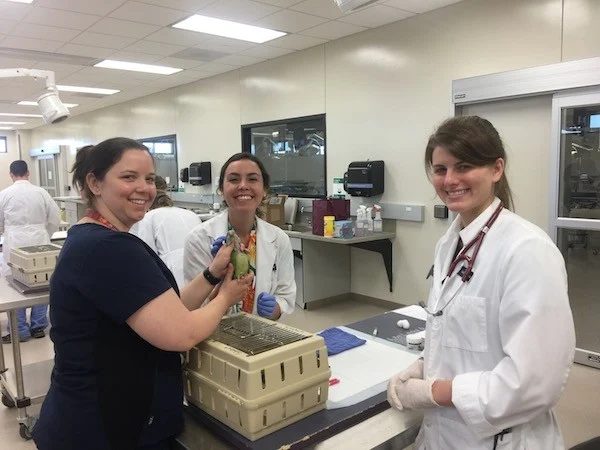
While virtual lectures provide the necessary theoretical framework, the program’s commitment to "wet labs"—hands-on clinical training sessions—remains a vital component of the veterinary curriculum. These labs provide students with the opportunity to practice procedures on cadavers or under-supervision models before entering clinical practice.
Notable examples of this practical training include:
- Rabbit Dentistry: In November 2025, Dr. Javier Nevarez led a Rabbit Dentistry Lab at Louisiana State University. Given that dental disease is one of the most common presentations for domestic rabbits, this hands-on training is essential for general practitioners.
- Avian Orthopedics and Surgery: Texas A&M University has been a consistent hub for surgical training, hosting annual wet labs that cover avian reproductive surgery and birds of prey medicine.
- Handling and Husbandry: Michigan State University and the University of Missouri have frequently hosted handling labs, often in collaboration with local rescues like Birds and Beaks or the House Rabbit Society. These labs teach students the nuances of "low-stress handling" for species that are often highly sensitive to capture and restraint.
Addressing the "Exotic" Reality in General Practice
A recurring theme throughout the two-decade timeline is the preparation of general practitioners to handle "non-traditional" species. Dr. Elizabeth Mackey’s 2024 presentation at the University of Georgia, "Avian Patients in the General Practice," addresses a common challenge: many veterinary graduates feel underprepared for the birds or small mammals that walk through their doors.
The educational series has countered this by offering "Introduction to Exotic Animal Medicine" seminars, such as those presented by Dr. Gregory Rich at Iowa State and Texas A&M. By demystifying the care of reptiles, birds, and small mammals, the program encourages a higher standard of care across the entire veterinary profession, not just within specialized referral centers.
Chronology of Educational Milestones (2007–2023)
The historical data reveals a steady evolution in the complexity of topics discussed.
- 2007–2010: Early programming focused heavily on falconry, basic avian medicine, and elephant conservation. Dr. Michael P. Jones and Dr. Susan Mikota were instrumental in these early years, providing insights into both domestic and mega-vertebrate medicine.
- 2011–2015: This period saw an expansion into behavior and advanced diagnostics. Dr. Susan Friedman and Barbara Heidenreich introduced behavioral science and positive reinforcement training as medical tools. Diagnostic imaging became a focal point with sessions on "The Perfect Image" and avian neurologic exams.
- 2016–2019: The focus shifted toward specialized pathology and emergency care. Dr. Marla Lichtenberger’s work on critical care and Dr. Scott Echols’ innovations in avian surgery and anatomy provided students with a glimpse into the future of the field.
- 2020–2023: Despite the challenges of the global pandemic, the frequency of educational events increased through virtual platforms. Topics became more specific, covering avian atherosclerosis, lead toxicity, and the management of Highly Pathogenic Avian Influenza (HPAI).
Supporting Data and Institutional Impact
The data shows that nearly every major veterinary college in the United States and several international institutions have participated in this educational cycle. Cornell University, the University of California at Davis, the University of Pennsylvania, and Texas A&M emerge as frequent hosts of major symposia.
For instance, the "Special Species Symposium," often held at Cornell or UPenn, has consistently drawn gold and silver-level sponsorship. These events often serve as the primary networking and educational hub for students pursuing residency in the American College of Zoological Medicine (ACZM) or the American Board of Veterinary Practitioners (ABVP).
The impact of these programs is measurable in the rise of board-certified specialists. By providing students with early exposure to leaders in the field—such as Dr. Susan Orosz, Dr. Brian Speer, and Dr. Natalie Antinoff—the program has created a clear pathway from veterinary student to specialized diplomat.
Official Responses and Professional Analysis
While individual student reactions are varied, the consistent re-engagement of veterinary clubs—such as the Zoo, Exotics, and Wildlife (ZEW) clubs and the Avian, Wildlife, and Exotics (AWE) clubs—indicates a high level of institutional value. Faculty members often note that these sponsored lectures provide "real-world" perspectives that supplement the standard veterinary curriculum, which is often heavily weighted toward canine, feline, and equine medicine.
Analysis of the program suggests that by focusing on nutrition and preventative care, the initiative is successfully reducing the incidence of "husbandry-related" diseases. Furthermore, the inclusion of topics like diversity in zoological medicine (presented by Dr. Kemba Marshall at Tufts) and LGBTQ+ diversity in the profession (presented at Oklahoma State) shows an evolving awareness of the social dimensions of veterinary practice.
Broader Implications for Animal Welfare
The long-term commitment to veterinary education in the exotic and wildlife sectors has implications that extend far beyond the classroom. As more veterinarians become proficient in these areas, the welfare of millions of non-traditional pets is improved. Additionally, the training provided in wildlife rehabilitation and conservation medicine ensures that the veterinary profession remains at the forefront of protecting global biodiversity.
From the first lectures on falconry in 2007 to the advanced virtual simulations of reproductive surgery planned for 2026, this educational journey reflects a profession that is becoming more inclusive, more technologically advanced, and more dedicated to the "all-species" approach to medicine. The legacy of these two decades is a better-trained workforce, a more informed public, and, ultimately, a higher standard of life for the animals under veterinary care.

