


The North Carolina General Assembly is currently evaluating a significant piece of animal welfare legislation known as Duke’s Rescue Act, which seeks to implement statewide restrictions on the continuous tethering of dogs. The legislative momentum comes amid rising concerns over the impact of record-breaking summer temperatures and "heat domes" on animals kept outdoors. Advocacy groups, including People for the Ethical Treatment of Animals (PETA), are utilizing the high-profile case of a dog named Cash—a canine survivor of extreme neglect in northeastern North Carolina—to illustrate the urgent need for standardized legal protections for "backyard dogs."
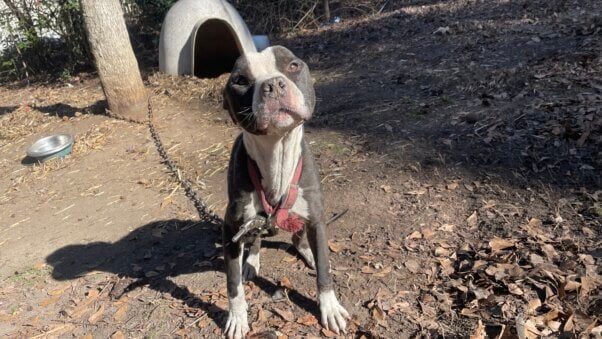
For several years, fieldworkers from the PETA Community Animal Project monitored Cash, a dog who spent the majority of his life chained to a tree. Despite repeated attempts by animal welfare advocates to secure his surrender, the owner maintained custody, and local law enforcement reported a lack of sufficient legal grounds to intervene under existing statutes. This stalemate highlights a broader systemic issue: the discrepancy between what advocates consider inhumane treatment and what current North Carolina law classifies as criminal neglect.
The Case of Cash: A Chronology of Neglect and Intervention
The history of Cash’s confinement serves as a primary case study for the proposed Duke’s Rescue Act. According to field reports, PETA staff began visiting the property in northeastern North Carolina years ago, finding the dog perpetually chained outdoors. During these visits, the team provided essential services that the owner failed to perform, including the delivery of straw bedding during winter months and the administration of flea and tick preventatives during the summer.
In an effort to improve the dog’s quality of life without the ability to remove him from the property, fieldworkers performed several free services:
- Medical Care: Cash was transported to and from a neuter appointment, received essential vaccinations, and was treated for various ailments, including lesions, internal parasites, and chronic diarrhea.
- Infrastructure Improvements: Fieldworkers patched and expanded an existing outdoor pen on the property to provide a brief reprieve from the heavy chain he was forced to wear.
- Maintenance of Basic Needs: Staff members reported filling empty water buckets and providing food during regular check-ins, often finding the animal in various states of dehydration.
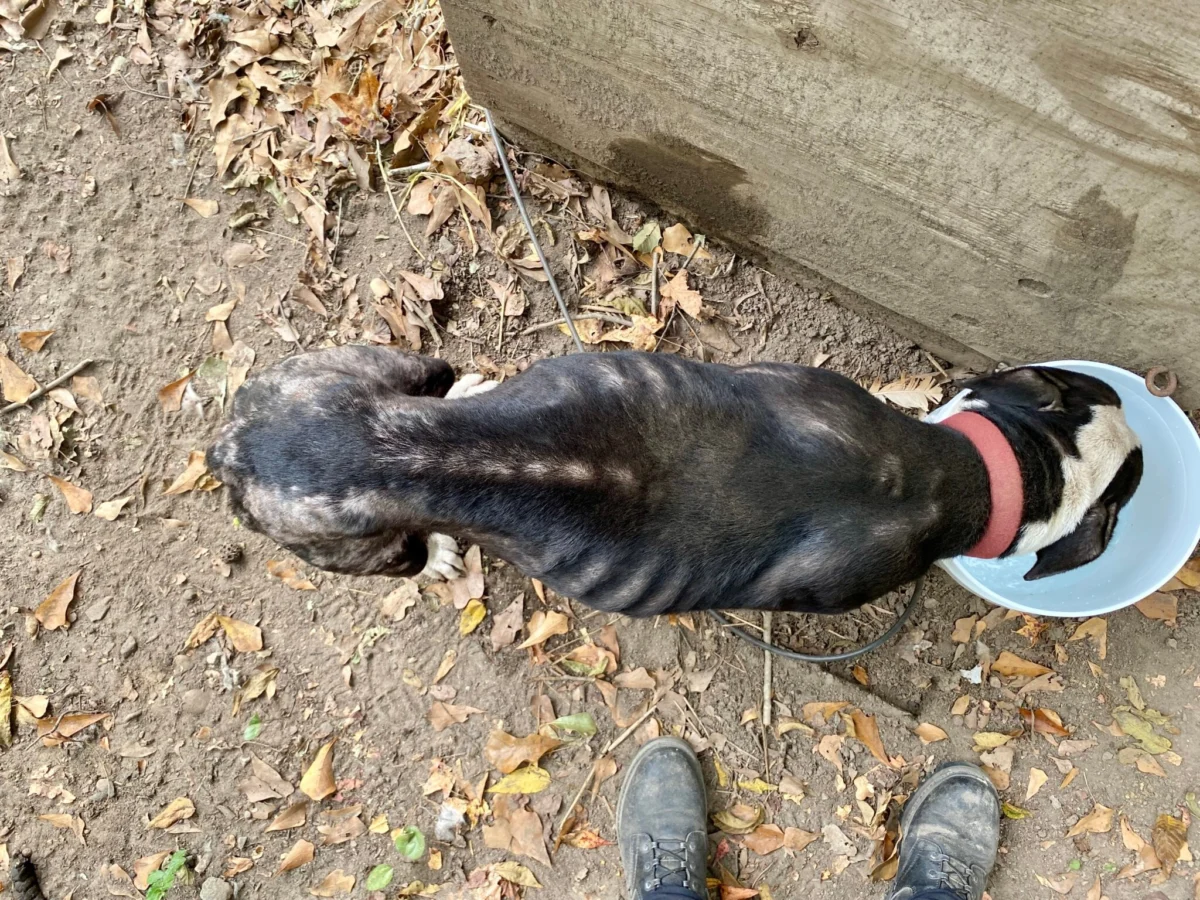
The situation reached a critical tipping point earlier this year. During a routine visit, fieldworkers observed that Cash had reached a state of advanced emaciation. Reports indicate that the dog’s hip bones, ribs, and spine were clearly visible from a distance of 20 yards. The chain around his neck, which had become severely kinked and limited his movement to a radius of approximately three feet, weighed nearly one-third of the dog’s total body mass.

Facing the immediate threat of law enforcement intervention and potential animal cruelty charges, the owner finally surrendered the dog to PETA. A subsequent veterinary examination confirmed the severity of the neglect. The clinical findings revealed that the dog’s stomach was completely empty, and his bloodwork and X-rays were consistent with prolonged starvation. At the time of his rescue, Cash weighed only 30 pounds—exactly half of his ideal body weight of 60 pounds.
Understanding Duke’s Rescue Act and the Legislative Landscape
Duke’s Rescue Act is designed to address the legal loopholes that allow dogs to be kept on short, heavy chains for their entire lives. While some North Carolina municipalities have passed local ordinances restricting tethering, the state lacks a uniform standard, leading to a "patchwork" of enforcement where a dog’s safety depends entirely on their zip code.
The proposed legislation generally focuses on:
- Time Limits: Restricting the number of hours a dog can be tethered within a 24-hour period.
- Weather Contingencies: Prohibiting tethering during extreme weather events, including heat advisories, hurricanes, or freezing temperatures.
- Tether Specifications: Requiring that any restraint used be of a certain length and weight to prevent injury or entanglement.
- Access to Essentials: Mandating that tethered dogs have constant access to clean water, adequate food, and weather-proof shelter.
Proponents of the bill argue that it provides law enforcement with a "bright-line" rule. Under current laws, officers often have to wait until a dog is in visible physical distress—such as the skeletal state Cash was found in—before they can legally seize the animal or charge the owner. Duke’s Rescue Act would allow for intervention based on the conditions of confinement before the animal’s health deteriorates to a life-threatening level.
The Scientific and Public Safety Implications of Tethering
The push for anti-tethering laws is supported by data from veterinary and public safety organizations. The American Veterinary Medical Association (AVMA) and the Humane Society of the United States have long noted that continuous tethering is detrimental to a dog’s psychological and physical well-being.
Psychological Impact: Dogs are naturally social pack animals. Forcing a dog to live in isolation on a chain leads to extreme frustration, boredom, and anxiety. This often manifests in "manic" behavior, as observed in Cash, who was described by fieldworkers as having hyperactivity that bordered on the psychological.
Public Safety Risks: Statistics indicate that chained dogs are significantly more likely to bite than those kept in fenced yards or indoors. Because a tethered dog cannot flee a perceived threat, they often resort to aggression. According to a study published in the Journal of the American Veterinary Medical Association, chained dogs are nearly three times more likely to attack than non-chained dogs. This makes tethering not only an animal welfare issue but a significant public health concern for neighborhoods.
Physical Health Hazards: Beyond the risk of starvation and dehydration, tethering poses the risk of "embedded collars," where the skin grows over a collar that is never loosened as a dog grows. Entanglement is also a frequent cause of death; dogs can become wrapped around trees or posts, leading to strangulation or the inability to reach their water supply.
The Climate Factor: Extreme Heat and Outdoor Confinement
The urgency of the Duke’s Rescue Act is amplified by the current climate crisis. The summer of 2024 has seen unprecedented "heat domes" across the American South, with temperatures in North Carolina frequently exceeding 90 degrees Fahrenheit with high humidity.
For a dog like Cash, these conditions are lethal. Dogs do not sweat like humans; they rely on panting to cool their bodies. When the ambient temperature is high and humidity prevents efficient evaporation, a dog’s core temperature can rise rapidly, leading to heatstroke, organ failure, and death. A dog chained in the sun with a metal water bowl—which can heat water to scalding temperatures—has no means of survival without human intervention.
Perspectives from Stakeholders and Potential Opposition
The debate over Duke’s Rescue Act involves various stakeholders, from animal rights activists to rural property owners.
Law Enforcement: Many animal control officers support the bill because it simplifies enforcement. "It is heartbreaking to see a dog suffering on a chain and know that your hands are tied because the dog isn’t ‘dead enough’ yet for a cruelty charge," noted one anonymous officer from a neighboring district. "Clear tethering laws give us the authority to act early."

Animal Advocacy Groups: Organizations like PETA and the ASPCA emphasize that the bill is about basic decency. They argue that if an owner cannot provide a fenced area or indoor space, they should not possess a dog.
Opposition Concerns: Historically, opposition to tethering bans in North Carolina has come from certain hunting communities and agricultural interests who argue that such laws infringe on property rights. Some argue that tethering is a traditional way to manage working dogs. However, the Duke’s Rescue Act often includes exemptions for specific activities, such as training or temporary tethering during hunting, to address these concerns while still protecting the majority of residential pets.
Comparative Analysis: How Other States Address Tethering
North Carolina is not alone in grappling with this issue. Several states have already passed comprehensive anti-tethering legislation:
- Texas: The "Safe Outdoor Dogs Act," which went into effect in 2022, prohibits the use of heavy chains and requires dogs to have adequate shelter and water. It also bans tethering in extreme weather.
- Delaware: State law prohibits tethering a dog for more than 18 hours in a 24-hour period and sets strict requirements for the length and type of tether used.
- Oregon: One of the most restrictive states, Oregon limits tethering to 10 hours in a 24-hour period and requires that the dog be in the owner’s view.
These states have seen a gradual reduction in animal cruelty cases related to neglect, as the laws encourage owners to find more humane ways to contain their pets.
Conclusion: The Path Forward for North Carolina
The story of Cash ended with a successful rescue, but advocates point out that there are thousands of other dogs in North Carolina currently enduring similar conditions. Cash is now receiving the medical care and nutrition he was denied for years, but his case remains a stark reminder of the limitations of current state law.
As the North Carolina legislature deliberates on Duke’s Rescue Act, the focus remains on whether the state will move toward a more proactive model of animal welfare. By shifting the legal framework from reactive punishment to proactive prevention, lawmakers have the opportunity to set a new standard for how society treats its most vulnerable companions. The bill represents a pivotal moment in the state’s legislative history, potentially ending the era of the "permanently chained dog" and ensuring that the basic necessities of food, water, and safety are no longer optional for pet owners.

