


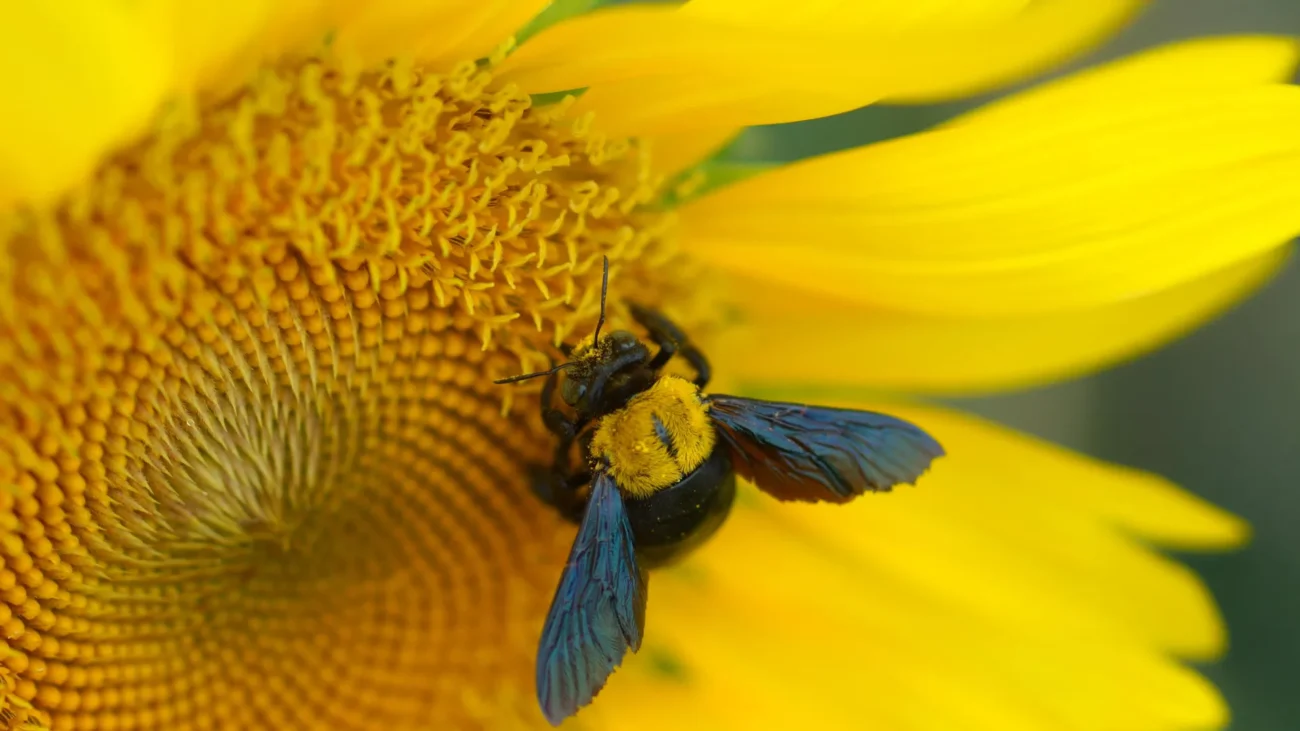
New research published in the prestigious journal Nature Communications has revealed a critical vulnerability within Australia’s diverse native bee populations, identifying stem-nesting species as the most immediately imperiled by rising global temperatures. Conversely, bees that construct their nests underground appear to possess a greater capacity to withstand the escalating heat, offering a stark contrast in their climate change resilience. This groundbreaking study, involving a collaborative effort from leading Australian universities, underscores the intricate relationship between bee nesting habits, thermal tolerance, and the accelerating impacts of climate change.
The Study’s Scope and Methodology
The research team, comprising scientists from Macquarie University, The University of Sydney, La Trobe University, Flinders University, the University of Wollongong, Adelaide University, and The University of Queensland, embarked on an extensive investigation into the heat tolerance of 95 native bee species. These species were meticulously chosen to represent a broad geographical and climatic spectrum across eastern mainland Australia, encompassing environments from the humid tropical north to the cooler, more temperate southern regions. The primary objective was to unravel the evolutionary pathways of heat tolerance within these varied bee species and to assess their susceptibility to a warming planet.
Australia is a global biodiversity hotspot for bees, boasting an estimated 1,700 distinct native species. These remarkable insects exhibit a fascinating array of nesting strategies, broadly categorized into three main types: subterranean nesters who excavate burrows in the soil; cavity nesters who utilize pre-existing spaces within wood, such as tree hollows or fallen branches; and stem nesters who construct their homes within hollow plant stems or small, pre-existing perforations in twigs. This fundamental difference in nesting architecture has emerged as a pivotal factor in their ability to cope with environmental fluctuations.
Nesting Habits: A Shield Against the Heat
Dr. Carmen da Silva, the lead author of the study and a Research Fellow at the Pollinator Futures Research Centre at Macquarie University, articulated the core findings with clarity. "Bees that nest underground are afforded a natural sanctuary from extreme heat," she explained. "As a direct consequence, they do not experience temperatures as elevated as those encountered by above-ground dwellers. This is particularly true for species that inhabit thin plant stems, which offer minimal insulation against the external heat."
This distinction is crucial. While underground nests provide a buffer against surface temperature extremes, plant stems, especially those with thin walls, offer little protection. The study’s data suggests that stem-nesting species are "likely to be the most impacted by anthropogenic climate change in the near term," as they possess the "lowest capacity to escape unfavorable environmental temperatures." This direct correlation between nesting location and thermal exposure highlights a critical evolutionary trade-off, where a seemingly convenient nesting material can become a perilous liability in a warming world.
The implications of this finding are significant. It suggests that conservation efforts may need to be tailored to the specific nesting requirements of different bee species, recognizing that a one-size-fits-all approach will likely fall short. Understanding these nuanced behaviors is paramount for effective biodiversity preservation.
The Indispensable Role of Bees
The importance of these findings extends far beyond entomological curiosity. Bees, both native and managed, are linchpins of global ecosystems and vital components of agricultural productivity. Dr. da Silva emphasized this point, stating, "Bees are critical in ecosystems all over the world because of their role as pollinators, and they’re under threat from warming and drying climates."
Native bees, in particular, are indispensable for maintaining the health and resilience of Australia’s unique flora. They are the primary pollinators for a vast array of native plant species, ensuring their reproduction and the continuation of ecological processes. Furthermore, their role in agriculture cannot be overstated. "Bees sustain native ecosystems and play a crucial role in agricultural crop production," Dr. da Silva noted. "Tropical native bees are vital pollinators for crops like macadamia nuts, avocados, mangos, and lychees." The economic and food security implications of declining bee populations are therefore substantial, affecting both rural livelihoods and global food supplies.
Geographic Patterns of Vulnerability
Beyond nesting habits, the research also uncovered a discernible geographic pattern in bee vulnerability. Species residing in regions closer to the equator, characterized by historically warmer climates, exhibited a greater susceptibility to the impacts of climate change. Tropical native bees, in this context, face the most significant overall risk.
This finding might seem counterintuitive at first glance: why would bees already adapted to heat be more vulnerable? Dr. Vanessa Kellermann, a Senior Lecturer in Ecology at La Trobe University and a senior author of the study, provided critical insight into this apparent paradox. "Predicting which species will be vulnerable to climate change is one of the biggest challenges in ecology," she stated. "We found bee species with the highest heat tolerance were not necessarily the safest from warming, because many of them already live in extremely hot environments."
The implication here is that while some tropical bees possess a higher baseline heat tolerance, their physiological limits may already be close to the current maximum temperatures. This leaves them with very little "room" to adapt to further increases in temperature. Even a modest rise could push these species beyond their thermal optima, leading to physiological stress, reduced reproductive success, and ultimately, population decline. This phenomenon is known as reaching the "edge of tolerance," where further environmental change becomes detrimental even for those species best adapted to warmer conditions.
A Complex Ecological Puzzle
The study’s findings underscore the inherent complexity of predicting species’ responses to global warming. It highlights that simple assumptions about heat tolerance are insufficient. Instead, a more nuanced understanding is required, one that considers a multitude of factors including physiology, behavior, and ecological interactions.
The collaborative nature of this research, drawing expertise from multiple universities, reflects the growing recognition of the need for interdisciplinary approaches to tackle complex environmental challenges. The involvement of institutions like Flinders University and the University of Queensland, with their diverse research strengths, ensures a comprehensive understanding of the issue.
The Uncharted Territories of Native Bee Ecology
Despite decades of research, much remains unknown about the intricate lives of Australia’s native bee populations. This knowledge gap makes studies like this critically important for informing effective conservation strategies. Dr. Ros Gloag, a Senior Lecturer in Evolutionary Biology at the University of Sydney and a co-senior author, emphasized this point: "We still know so little about most of Australia’s amazing native bees," she remarked. "This study helps us recognise that having a better understanding of native bee behavior is key to identifying the greatest threats to their wild populations."
The diversity of Australian native bees is immense, with many species being solitary and rarely observed, making their study a significant undertaking. Their unique life histories, foraging behaviors, and nesting preferences all play a role in their susceptibility to environmental stressors. This research provides a vital starting point for more targeted investigations into specific species and their unique vulnerabilities.
Broader Implications and Future Directions
The implications of this research extend beyond the immediate concern for native bee populations. It serves as a stark reminder of the far-reaching consequences of climate change on biodiversity. The decline of pollinators has a cascading effect throughout ecosystems, impacting plant communities, food webs, and the services that natural environments provide.
Supporting Data and Context:
- Global Temperature Trends: The Intergovernmental Panel on Climate Change (IPCC) has consistently reported accelerating global warming trends. For instance, the IPCC’s Sixth Assessment Report highlighted that global surface temperature has already increased by about 1.1°C since the pre-industrial era (1850-1900). Australia, in particular, has experienced warming at a rate higher than the global average. This context underscores the urgency of the threats identified in the study.
- Economic Value of Pollination: The economic contribution of pollinators to global agriculture is estimated to be in the hundreds of billions of dollars annually. In Australia, native bees are crucial for crops like macadamias, which alone are worth hundreds of millions of dollars annually. The loss of these pollinators could have significant economic repercussions.
- Ecological Services: Beyond agriculture, native bees are essential for maintaining the biodiversity of natural landscapes. They facilitate the reproduction of countless native plant species, which in turn provide food and habitat for other wildlife.
Timeline and Chronology of Research:
While the exact timeline of the study’s execution is not detailed in the provided text, such research typically involves several phases:
- Initial Hypothesis and Grant Funding: Years of planning and securing funding for extensive fieldwork and laboratory analysis.
- Field Data Collection: Multiple seasons of sampling across diverse Australian landscapes to collect bee specimens and environmental data. This would likely have spanned at least two to three years to account for seasonal variations.
- Laboratory Analysis: Morphological identification of species, physiological testing of heat tolerance, and genetic analysis.
- Data Interpretation and Statistical Analysis: Rigorous statistical modeling to identify correlations between nesting habits, geographic location, and heat tolerance.
- Manuscript Preparation and Peer Review: The process of writing the research paper and submitting it to a journal like Nature Communications, followed by a rigorous peer-review process by other experts in the field, which can take several months.
- Publication: The final release of the findings to the scientific community and the public.
Official Responses and Inferred Reactions:
While specific statements from governmental bodies or conservation organizations are not present, the scientific community’s reaction is implied by the publication in a high-impact journal like Nature Communications. Such publications indicate a strong endorsement of the research’s significance and scientific rigor.
- Conservation Agencies: It is highly probable that organizations such as the Australian Department of Climate Change, Energy, the Environment and Water, and state-based environmental protection agencies would be keenly interested in these findings. They are tasked with developing and implementing strategies to protect native biodiversity. This research provides critical data to inform their conservation priorities.
- Agricultural Sector: Industry bodies representing macadamia growers, avocado farmers, and other horticulture sectors that rely on native bee pollination would likely view these findings with concern and potentially seek to collaborate with researchers on mitigation strategies.
- Research Funding Bodies: Bodies like the Australian Research Council (ARC) would see this as validation of their investment in fundamental scientific research, highlighting the importance of supporting studies that address critical environmental challenges.
Broader Impact and Implications:
The study’s findings have several significant implications:
- Targeted Conservation Efforts: The identification of stem-nesting bees as particularly vulnerable allows conservationists to prioritize specific habitats and species for protection. This could involve efforts to preserve suitable plant species that provide nesting materials and to mitigate local climate impacts where possible.
- Ecological Resilience: The health of native bee populations is directly linked to the resilience of Australian ecosystems. A decline in these pollinators could lead to reduced plant diversity, affecting the entire food web.
- Agricultural Adaptation: Farmers may need to explore new strategies to support native bee populations, such as planting diverse flowering plants that provide continuous nectar and pollen sources, or even considering artificial nesting structures for at-risk species.
- Policy and Climate Action: This research adds to the growing body of evidence highlighting the urgent need for robust climate change mitigation policies. Addressing the root cause of rising temperatures is essential for the long-term survival of countless species.
The research from Macquarie University and its collaborators serves as a critical wake-up call. It underscores that while some species may possess a degree of natural resilience, the accelerating pace of climate change is pushing even well-adapted organisms towards their limits. The humble native bee, a vital contributor to both natural landscapes and human food security, faces an uncertain future, with its nesting habits playing a surprisingly significant role in its survival. The scientific community’s continued efforts to understand these intricate relationships are paramount in our collective response to the escalating climate crisis.

