


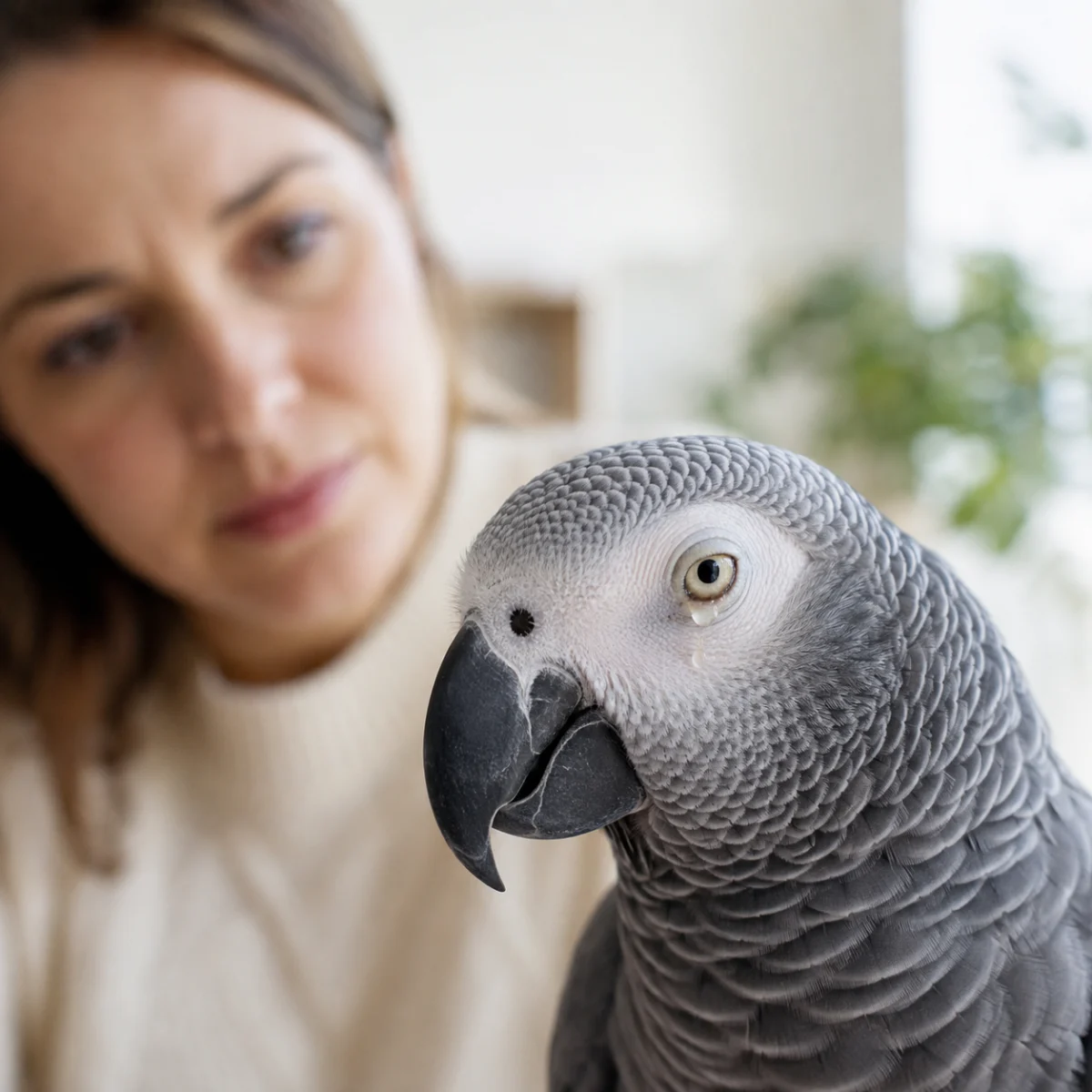
Understanding the ocular health of companion birds requires a nuanced approach, as avian anatomy differs significantly from that of mammals. For bird owners, the appearance of moisture, crusting, or discharge around the eye often serves as the first indicator of underlying health issues. While transient moisture resulting from environmental factors—such as preening or bathing—can be considered a normal physiological response, persistent or recurring discharge is rarely benign and frequently necessitates professional veterinary intervention.
The Physiology of Avian Eye Health
To determine whether eye discharge is a cause for alarm, one must first distinguish between normal ocular lubrication and clinical pathology. Birds possess a complex lacrimal system designed to keep the cornea moist and free of debris. In a healthy avian subject, the eye should appear bright, clear, and fully open.
"Morning tears" or brief periods of moisture following a bath or grooming session are typically inconsequential, provided the eye returns to a pristine state within minutes. However, the anatomy of the avian head—characterized by closely linked ocular and sinus cavities—means that localized eye symptoms often reflect systemic issues. Because the infraorbital sinuses are located directly beneath and behind the eye, inflammation in the respiratory tract frequently manifests as ocular swelling or discharge.
Chronology of Symptoms and Clinical Progression
The timeline of symptom development is a critical diagnostic tool. A sudden onset of ocular discharge following a known environmental trigger, such as a dusty cage or a recent bath, may suggest minor irritation. However, a clinical timeline that extends beyond 24 hours without resolution indicates a shift from acute irritation to potential infection or trauma.
When discharge becomes chronic—defined as lasting several days or recurring at intervals—the potential for bacterial, fungal, or viral involvement increases significantly. Furthermore, the presence of specific behaviors serves as a marker for progression. A bird that begins to rub its eye against a perch, squints repeatedly, or keeps the eye partially closed is signaling pain. In the veterinary context, these signs represent a departure from minor discomfort and suggest the potential for corneal ulceration or severe conjunctivitis.
Categorizing Discharge: A Diagnostic Framework
While visual assessment cannot replace laboratory testing, the physical characteristics of discharge provide essential data for veterinary triage.
- Clear and Watery: Often associated with early-stage environmental irritation or the onset of mild sinus congestion. If this persists, it may point toward an initial allergic reaction or a localized foreign body.
- White, Cloudy, or Viscous: This indicates an active inflammatory response. The presence of mucus or cloudiness suggests that white blood cells are actively fighting an infection, necessitating a professional diagnostic workup.
- Yellow or Green (Purulent): This is a high-priority clinical finding. Purulent discharge is a definitive indicator of bacterial infection. In avian medicine, this requires immediate diagnostic intervention, such as cytology or culture and sensitivity testing, to determine the appropriate antibiotic regimen.
- Crusty or Dried: This is often the secondary result of previous discharge. While it can be gently softened with warm water for patient comfort, it is merely a symptom of the underlying issue that must be identified.
The Impact of Nutritional Deficiencies
Evidence from avian nutrition studies suggests that long-term ocular health is inextricably linked to dietary intake, specifically Vitamin A. Birds maintained on seed-only diets—which are notoriously deficient in essential micronutrients—are significantly more susceptible to metaplasia, a condition where the protective epithelial tissues of the sinuses and eyes lose their integrity.
When the mucosal lining of the upper respiratory tract is compromised due to hypovitaminosis A, the bird’s natural barrier against pathogens fails. This creates a "perfect storm" for opportunistic infections. Clinical data from avian practitioners indicates that patients with poor dietary histories often present with recurring ocular discharge, which is frequently unresponsive to topical treatment until the systemic nutritional deficiency is corrected.
Veterinary Intervention and Diagnostic Protocols
The standard of care for persistent eye discharge involves a systematic clinical examination. Veterinarians typically begin with an inspection of the ocular surface to rule out corneal abrasions, which are common in active, climbing birds that may encounter sharp cage components or toy fibers.
Diagnostic tools employed by avian specialists often include:
- Fluorescein Staining: A non-invasive dye used to identify corneal ulcers or scratches.
- Cytology: Microscopic evaluation of discharge samples to identify the presence of bacteria, fungi, or inflammatory cells.
- Imaging: Radiographs or CT scans to assess the state of the infraorbital sinuses and check for evidence of systemic respiratory disease.
- Culture and Sensitivity: If an infection is suspected, this test determines the specific strain of bacteria and the most effective antibiotic to treat it.
The importance of early intervention cannot be overstated. Because avian eyes are highly delicate, a minor scratch can rapidly evolve into an ulcer, leading to vision loss or systemic sepsis if the infection penetrates the deeper tissues of the globe.
Managing Expectations: Why Home Remedies Fail
A common pitfall in avian care is the application of human-grade eye drops or leftover medications. Medical professionals emphasize that this practice is dangerous. Different conditions, such as a scratch, a fungal infection, and a sinus obstruction, require diametrically opposed treatments. Applying an anti-inflammatory steroid drop to a viral or fungal infection, for example, can exacerbate the condition and lead to permanent damage.
Owners are advised to provide supportive care—such as maintaining a clean, stress-free environment and ensuring optimal humidity—while awaiting a professional diagnosis. If discharge is present, the primary objective is to maintain cleanliness around the eye without causing further mechanical trauma to the eyelid.
Broader Implications for Bird Welfare
The presence of eye discharge serves as a bellwether for the bird’s overall wellness. Because birds are prey animals, they are evolutionarily hardwired to mask signs of illness until a condition is quite advanced. Consequently, an owner who notices eye discharge is often observing the final stages of a problem that has been developing internally for some time.
The implications for the bird’s long-term health are clear: ocular issues are rarely isolated. They are frequently a manifestation of environmental stressors, poor air quality (such as smoke, aerosol sprays, or excessive dust), nutritional deficits, or underlying systemic infections.
Conclusion: A Proactive Stance
For the conscientious bird owner, the protocol for eye discharge is straightforward: observe, clean, and act. A brief moment of watering after a bath is normal, but any persistent change in the eye’s appearance or the bird’s behavior requires a call to an avian veterinarian. By prioritizing preventative nutrition, maintaining a clean habitat, and seeking professional guidance at the first sign of abnormality, owners can significantly reduce the risk of serious ocular complications.
When in doubt, the most prudent course of action is to err on the side of caution. Veterinary teams are equipped to differentiate between a passing irritation and a serious medical emergency. By acting quickly, owners not only safeguard their bird’s vision but also ensure that the underlying systemic issues—whether nutritional, infectious, or environmental—are addressed before they compromise the bird’s quality of life. The health of the eye is, in many ways, the window into the health of the entire avian patient.

